Author: TM Compiled by Tim, PANews I probably shouldn’t have posted this because it’s so insightful. Let’s delve into the world of crypto marketing: A masterclass in psychological tactics. If you don't know what psychological tactics mean? It means you've been manipulated your entire adult life. Welcome to the world of Meme Wars. Milady Example 1: Kalshi enters the crypto market Let's start with Kalshi. This isn't to spread FUD; in fact, I admire their execution. I'm just sharing my personal thoughts on the Kalshi case, though nothing here is confirmed. As the meme coin craze faded, prediction markets began to gain traction, and some influencers, including John Wang, began to push the narrative. There's no doubt that prediction markets are fairer than memecoins. Memecoins are a brutal 1-vs-1,000 game, while prediction markets at least even out the odds. But let's be honest: crypto enthusiasts simply love tokens, and they always have. So the question becomes: How to capture the memecoin market share without issuing new coins while challenging leading platforms like Polymarket? Answer: Psychological warfare This is what happened: John Wang signed with Kalshi long before the official announcement. In the previous months, social interactions and researcher citations had boosted his account's popularity. When the news finally broke, the publicity campaign was coordinated: news outlets, influencers, and "research" pages all reported the hiring of the same KOL. News reports on hiring cryptocurrency influencers This was framed as a major event, as if Kalshi had just poached an executive from Google or Apple. A simple yet clever psychological tactic: turning a personnel change into a full-scale marketing campaign. Kalshi isn’t just entering the crypto space; he’s making it look like a paradigm shift. They paid these websites, research institutions, and influencers to discuss the announcement. A personnel shakeup that caused a stir. Kalshi officially entered the crypto market with a fanfare comparable to the FAANG stock listings. A simple but effective psychological tactic: they take the announcement and spin it into a massive marketing campaign. Is John Wang the marketing manager of Kalshi? Example 2: ai16z flywheel Now, let's talk about ai16z This idea was truly genius, and it made people (including me) really look forward to the future of Crypto x AI integration. The script is this: They launched a Meme DAO around the idea of tokenizing venture capital giant a16z. Marc Andreessen himself responded, verifying the dissemination value of this meme. Suddenly, the entire industry's attention was focused on this "new AI fund." Then came the product launch: Eliza AI Agent. It quickly shot to the top of the GitHub charts. The timing was perfect, and the buzz was unstoppable. Shaw is showing off But at the bottom level, it is just a GPT wrapper. To put it bluntly, it just connects the API of the existing large language model to the front end, which is nothing groundbreaking. Who cares? Actually, no one cares. The product works, the atmosphere is right, and that's all that matters. The psychological tactics here are as much about narrative as they are about technique. Joining the ai16z DAO has become a status symbol. Like wearing a Rolex in its early days, becoming an "ai16z partner" signifies insider status, a title that attracts developers from top universities and deep-pocketed believers. The DAO’s market capitalization soared to $2.5 billion (but liquidity was laughably low). This set in motion a flywheel effect: hype attracted liquidity, liquidity attracted investors, and investors fueled more hype. But then the question arises: how to cash out without ruining the chart? Answer: You don’t. Instead, ai16z “sells” their technology to other crypto AI projects in exchange for up to 10% of the token distribution agreement and marketing support. The result? An overflow of half-baked AI projects. Support, pump-and-dump. Shaw after selling off his free crypto AI tokens The psychological tactics worked. Liquidity was drained, and now ai16z is plotting a comeback. The essence of psychological tactics The problem is: the same routine cannot succeed twice Once people figure out the gimmick, it's gone. They'll move on to the next new thing. That's why so many projects keep recycling the same old buzzwords: airdrop Roadmap Buyback flywheel Economic Model If you're listening to this, it's early days for this project. In this market, talking is out; delivering is key. Welcome to the Meme Wars Crypto marketing today is not advertising, it’s warfare. Narratives are weapons, and interactions are ammunition. Every announcement, collaboration, or controversy is a battle for mindshare. Winning projects aren’t just selling technology; they’re executing coordinated psychological tactics: weaving stories, memes, and strategies that the target audience is willing to believe. Not everyone plays by the same rules. So if you want to grab market share in this industry, you better arm yourself. Assemble your team like a Roman warlord ready to conquer. Because in crypto, it’s a war.Author: TM Compiled by Tim, PANews I probably shouldn’t have posted this because it’s so insightful. Let’s delve into the world of crypto marketing: A masterclass in psychological tactics. If you don't know what psychological tactics mean? It means you've been manipulated your entire adult life. Welcome to the world of Meme Wars. Milady Example 1: Kalshi enters the crypto market Let's start with Kalshi. This isn't to spread FUD; in fact, I admire their execution. I'm just sharing my personal thoughts on the Kalshi case, though nothing here is confirmed. As the meme coin craze faded, prediction markets began to gain traction, and some influencers, including John Wang, began to push the narrative. There's no doubt that prediction markets are fairer than memecoins. Memecoins are a brutal 1-vs-1,000 game, while prediction markets at least even out the odds. But let's be honest: crypto enthusiasts simply love tokens, and they always have. So the question becomes: How to capture the memecoin market share without issuing new coins while challenging leading platforms like Polymarket? Answer: Psychological warfare This is what happened: John Wang signed with Kalshi long before the official announcement. In the previous months, social interactions and researcher citations had boosted his account's popularity. When the news finally broke, the publicity campaign was coordinated: news outlets, influencers, and "research" pages all reported the hiring of the same KOL. News reports on hiring cryptocurrency influencers This was framed as a major event, as if Kalshi had just poached an executive from Google or Apple. A simple yet clever psychological tactic: turning a personnel change into a full-scale marketing campaign. Kalshi isn’t just entering the crypto space; he’s making it look like a paradigm shift. They paid these websites, research institutions, and influencers to discuss the announcement. A personnel shakeup that caused a stir. Kalshi officially entered the crypto market with a fanfare comparable to the FAANG stock listings. A simple but effective psychological tactic: they take the announcement and spin it into a massive marketing campaign. Is John Wang the marketing manager of Kalshi? Example 2: ai16z flywheel Now, let's talk about ai16z This idea was truly genius, and it made people (including me) really look forward to the future of Crypto x AI integration. The script is this: They launched a Meme DAO around the idea of tokenizing venture capital giant a16z. Marc Andreessen himself responded, verifying the dissemination value of this meme. Suddenly, the entire industry's attention was focused on this "new AI fund." Then came the product launch: Eliza AI Agent. It quickly shot to the top of the GitHub charts. The timing was perfect, and the buzz was unstoppable. Shaw is showing off But at the bottom level, it is just a GPT wrapper. To put it bluntly, it just connects the API of the existing large language model to the front end, which is nothing groundbreaking. Who cares? Actually, no one cares. The product works, the atmosphere is right, and that's all that matters. The psychological tactics here are as much about narrative as they are about technique. Joining the ai16z DAO has become a status symbol. Like wearing a Rolex in its early days, becoming an "ai16z partner" signifies insider status, a title that attracts developers from top universities and deep-pocketed believers. The DAO’s market capitalization soared to $2.5 billion (but liquidity was laughably low). This set in motion a flywheel effect: hype attracted liquidity, liquidity attracted investors, and investors fueled more hype. But then the question arises: how to cash out without ruining the chart? Answer: You don’t. Instead, ai16z “sells” their technology to other crypto AI projects in exchange for up to 10% of the token distribution agreement and marketing support. The result? An overflow of half-baked AI projects. Support, pump-and-dump. Shaw after selling off his free crypto AI tokens The psychological tactics worked. Liquidity was drained, and now ai16z is plotting a comeback. The essence of psychological tactics The problem is: the same routine cannot succeed twice Once people figure out the gimmick, it's gone. They'll move on to the next new thing. That's why so many projects keep recycling the same old buzzwords: airdrop Roadmap Buyback flywheel Economic Model If you're listening to this, it's early days for this project. In this market, talking is out; delivering is key. Welcome to the Meme Wars Crypto marketing today is not advertising, it’s warfare. Narratives are weapons, and interactions are ammunition. Every announcement, collaboration, or controversy is a battle for mindshare. Winning projects aren’t just selling technology; they’re executing coordinated psychological tactics: weaving stories, memes, and strategies that the target audience is willing to believe. Not everyone plays by the same rules. So if you want to grab market share in this industry, you better arm yourself. Assemble your team like a Roman warlord ready to conquer. Because in crypto, it’s a war.

Uncovering the Secrets Behind the Popularity of Kalshi and ai16z: The "Psychological Tactics" of the Crypto Market

2025/09/01 18:35
5 min read

Author: TM

Compiled by Tim, PANews

I probably shouldn’t have posted this because it’s so insightful. Let’s delve into the world of crypto marketing: A masterclass in psychological tactics.

If you don't know what psychological tactics mean? It means you've been manipulated your entire adult life.

Welcome to the world of Meme Wars.

 Milady

Example 1: Kalshi enters the crypto market

Let's start with Kalshi. This isn't to spread FUD; in fact, I admire their execution. I'm just sharing my personal thoughts on the Kalshi case, though nothing here is confirmed.

As the meme coin craze faded, prediction markets began to gain traction, and some influencers, including John Wang, began to push the narrative.

There's no doubt that prediction markets are fairer than memecoins. Memecoins are a brutal 1-vs-1,000 game, while prediction markets at least even out the odds. But let's be honest: crypto enthusiasts simply love tokens, and they always have.

So the question becomes: How to capture the memecoin market share without issuing new coins while challenging leading platforms like Polymarket?

Answer: Psychological warfare

This is what happened:

  • John Wang signed with Kalshi long before the official announcement.
  • In the previous months, social interactions and researcher citations had boosted his account's popularity.
  • When the news finally broke, the publicity campaign was coordinated: news outlets, influencers, and "research" pages all reported the hiring of the same KOL.
 News reports on hiring cryptocurrency influencers

This was framed as a major event, as if Kalshi had just poached an executive from Google or Apple.

A simple yet clever psychological tactic: turning a personnel change into a full-scale marketing campaign.

Kalshi isn’t just entering the crypto space; he’s making it look like a paradigm shift.

They paid these websites, research institutions, and influencers to discuss the announcement. A personnel shakeup that caused a stir. Kalshi officially entered the crypto market with a fanfare comparable to the FAANG stock listings.

A simple but effective psychological tactic: they take the announcement and spin it into a massive marketing campaign.
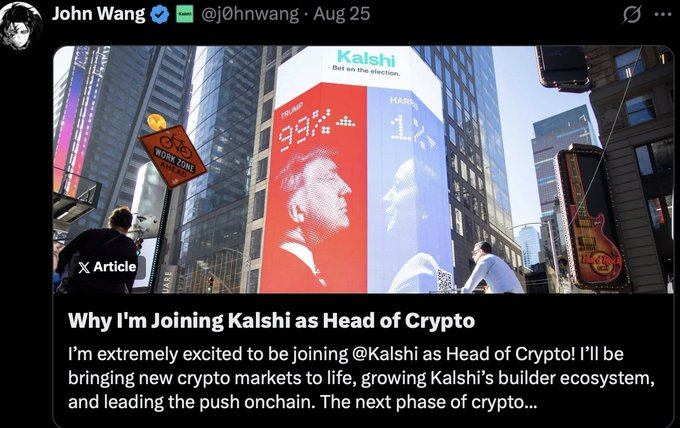
 Is John Wang the marketing manager of Kalshi?

Example 2: ai16z flywheel

Now, let's talk about ai16z

This idea was truly genius, and it made people (including me) really look forward to the future of Crypto x AI integration.

The script is this:

  • They launched a Meme DAO around the idea of tokenizing venture capital giant a16z.
  • Marc Andreessen himself responded, verifying the dissemination value of this meme.
  • Suddenly, the entire industry's attention was focused on this "new AI fund."
  • Then came the product launch: Eliza AI Agent.

It quickly shot to the top of the GitHub charts. The timing was perfect, and the buzz was unstoppable.

 Shaw is showing off

But at the bottom level, it is just a GPT wrapper. To put it bluntly, it just connects the API of the existing large language model to the front end, which is nothing groundbreaking.

Who cares? Actually, no one cares. The product works, the atmosphere is right, and that's all that matters.

The psychological tactics here are as much about narrative as they are about technique.

Joining the ai16z DAO has become a status symbol. Like wearing a Rolex in its early days, becoming an "ai16z partner" signifies insider status, a title that attracts developers from top universities and deep-pocketed believers.

The DAO’s market capitalization soared to $2.5 billion (but liquidity was laughably low). This set in motion a flywheel effect: hype attracted liquidity, liquidity attracted investors, and investors fueled more hype.

But then the question arises: how to cash out without ruining the chart?

Answer: You don’t. Instead, ai16z “sells” their technology to other crypto AI projects in exchange for up to 10% of the token distribution agreement and marketing support.

The result? An overflow of half-baked AI projects. Support, pump-and-dump.

 Shaw after selling off his free crypto AI tokens

The psychological tactics worked. Liquidity was drained, and now ai16z is plotting a comeback.

The essence of psychological tactics

The problem is: the same routine cannot succeed twice

Once people figure out the gimmick, it's gone. They'll move on to the next new thing. That's why so many projects keep recycling the same old buzzwords:

  • airdrop
  • Roadmap
  • Buyback
  • flywheel
  • Economic Model

If you're listening to this, it's early days for this project. In this market, talking is out; delivering is key.

Welcome to the Meme Wars

Crypto marketing today is not advertising, it’s warfare.

Narratives are weapons, and interactions are ammunition. Every announcement, collaboration, or controversy is a battle for mindshare.

Winning projects aren’t just selling technology; they’re executing coordinated psychological tactics: weaving stories, memes, and strategies that the target audience is willing to believe.

Not everyone plays by the same rules.

So if you want to grab market share in this industry, you better arm yourself. Assemble your team like a Roman warlord ready to conquer.

Because in crypto, it’s a war.

Market Opportunity
MemeCore Logo
MemeCore Price(M)
$1.49542
$1.49542$1.49542
-1.40%
USD
MemeCore (M) Live Price Chart
Disclaimer: The articles reposted on this site are sourced from public platforms and are provided for informational purposes only. They do not necessarily reflect the views of MEXC. All rights remain with the original authors. If you believe any content infringes on third-party rights, please contact service@support.mexc.com for removal. MEXC makes no guarantees regarding the accuracy, completeness, or timeliness of the content and is not responsible for any actions taken based on the information provided. The content does not constitute financial, legal, or other professional advice, nor should it be considered a recommendation or endorsement by MEXC.

You May Also Like

Wormhole launches reserve tying protocol revenue to token

Wormhole launches reserve tying protocol revenue to token

The post Wormhole launches reserve tying protocol revenue to token appeared on BitcoinEthereumNews.com. Wormhole is changing how its W token works by creating a new reserve designed to hold value for the long term. Announced on Wednesday, the Wormhole Reserve will collect onchain and offchain revenues and other value generated across the protocol and its applications (including Portal) and accumulate them into W, locking the tokens within the reserve. The reserve is part of a broader update called W 2.0. Other changes include a 4% targeted base yield for tokenholders who stake and take part in governance. While staking rewards will vary, Wormhole said active users of ecosystem apps can earn boosted yields through features like Portal Earn. The team stressed that no new tokens are being minted; rewards come from existing supply and protocol revenues, keeping the cap fixed at 10 billion. Wormhole is also overhauling its token release schedule. Instead of releasing large amounts of W at once under the old “cliff” model, the network will shift to steady, bi-weekly unlocks starting October 3, 2025. The aim is to avoid sharp periods of selling pressure and create a more predictable environment for investors. Lockups for some groups, including validators and investors, will extend an additional six months, until October 2028. Core contributor tokens remain under longer contractual time locks. Wormhole launched in 2020 as a cross-chain bridge and now connects more than 40 blockchains. The W token powers governance and staking, with a capped supply of 10 billion. By redirecting fees and revenues into the new reserve, Wormhole is betting that its token can maintain value as demand for moving assets and data between chains grows. This is a developing story. This article was generated with the assistance of AI and reviewed by editor Jeffrey Albus before publication. Get the news in your inbox. Explore Blockworks newsletters: Source: https://blockworks.co/news/wormhole-launches-reserve
Share
BitcoinEthereumNews2025/09/18 01:55
Kalshi debuts ecosystem hub with Solana and Base

Kalshi debuts ecosystem hub with Solana and Base

The post Kalshi debuts ecosystem hub with Solana and Base appeared on BitcoinEthereumNews.com. Kalshi, the US-regulated prediction market exchange, rolled out a new program on Wednesday called KalshiEco Hub. The initiative, developed in partnership with Solana and Coinbase-backed Base, is designed to attract builders, traders, and content creators to a growing ecosystem around prediction markets. By combining its regulatory footing with crypto-native infrastructure, Kalshi said it is aiming to become a bridge between traditional finance and onchain innovation. The hub offers grants, technical assistance, and marketing support to selected projects. Kalshi also announced that it will support native deposits of Solana’s SOL token and USDC stablecoin, making it easier for users already active in crypto to participate directly. Early collaborators include Kalshinomics, a dashboard for market analytics, and Verso, which is building professional-grade tools for market discovery and execution. Other partners, such as Caddy, are exploring ways to expand retail-facing trading experiences. Kalshi’s move to embrace blockchain partnerships comes at a time when prediction markets are drawing fresh attention for their ability to capture sentiment around elections, economic policy, and cultural events. Competitor Polymarket recently acquired QCEX — a derivatives exchange with a CFTC license — to pave its way back into US operations under regulatory compliance. At the same time, platforms like PredictIt continue to push for a clearer regulatory footing. The legal terrain remains complex, with some states issuing cease-and-desist orders over whether these event contracts count as gambling, not finance. This is a developing story. This article was generated with the assistance of AI and reviewed by editor Jeffrey Albus before publication. Get the news in your inbox. Explore Blockworks newsletters: Source: https://blockworks.co/news/kalshi-ecosystem-hub-solana-base
Share
BitcoinEthereumNews2025/09/18 04:40
Optimizely Named a Leader in the 2026 Gartner® Magic Quadrant™ for Personalization Engines

Optimizely Named a Leader in the 2026 Gartner® Magic Quadrant™ for Personalization Engines

Company recognized as a Leader for the second consecutive year NEW YORK, Feb. 5, 2026 /PRNewswire/ — Optimizely, the leading digital experience platform (DXP) provider
Share
AI Journal2026/02/06 00:47