Capitec, South Africa’s leading financial services group, has launched its in-branch Smart ID service in partnership with the Department of Home Affairs (DHA). Capitec, South Africa’s leading financial services group, has launched its in-branch Smart ID service in partnership with the Department of Home Affairs (DHA).

Capitec Introduces Industry-Leading Tech To Scale Smart ID Access Across South Africa

2026/03/09 18:25
4 min read
For feedback or concerns regarding this content, please contact us at crypto.news@mexc.com

Capitec, South Africa’s leading financial services group, has launched its in-branch Smart ID service in partnership with the Department of Home Affairs (DHA). Following a successful piloting phase, the service is now live in select branches, marking the beginning of a phased national rollout that will expand to 100 locations by mid-2026.

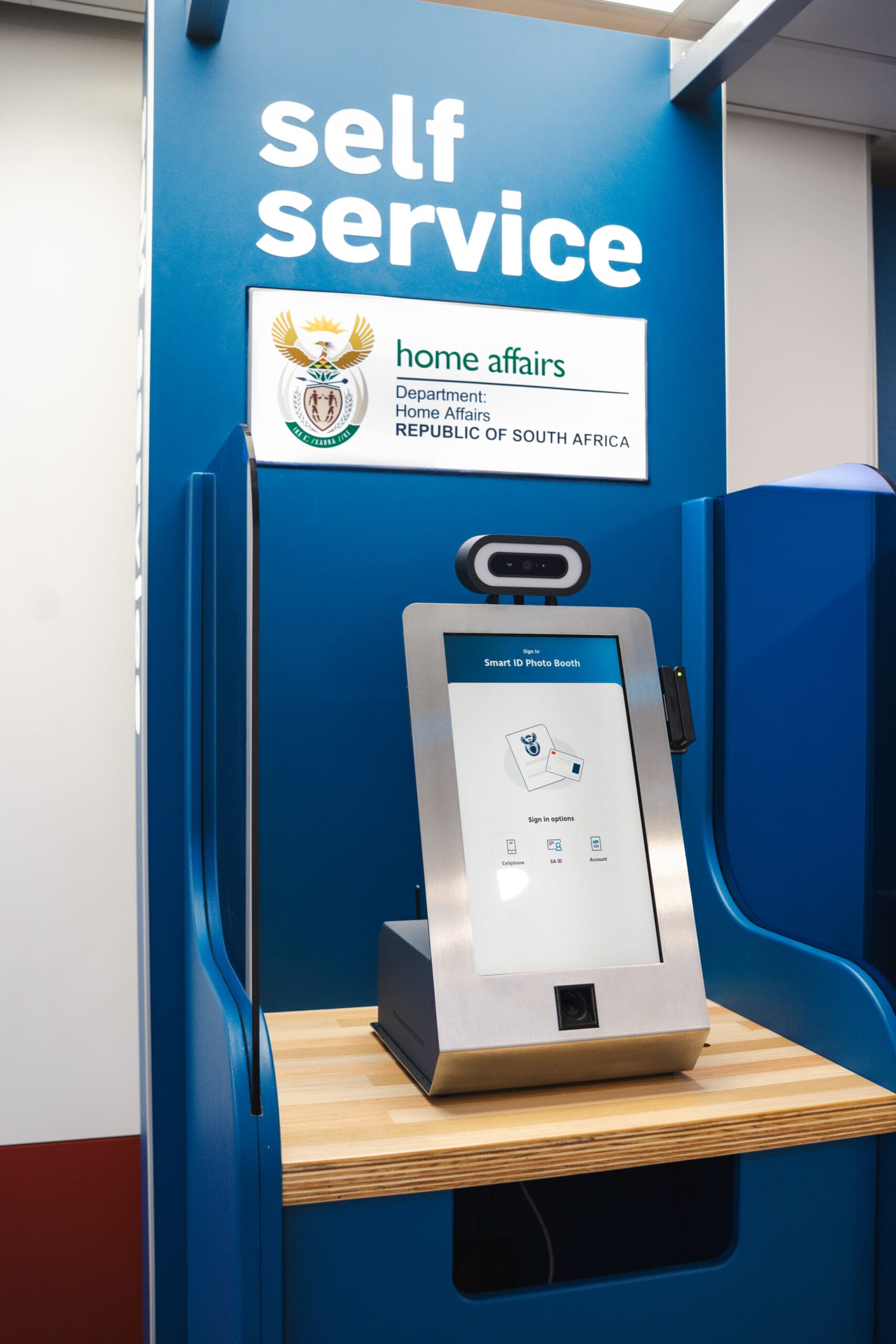
Capitec clients can now apply for a Smart ID via a dedicated in-branch Self-Service Terminal (SSTs) with no prior booking required. The seamless, paperless process takes less than five minutes to complete, and is fully integrated with DHA systems, enabling secure, real-time processing right in the heart of these communities. They will receive a notification when their ID is ready and can then collect it from the branch.

 The dignity of access

For millions of South Africans, the fundamental right to an identity has long been a source of anxiety, requiring taxing journeys, long queues, and sometimes lost income. Minister of Home Affairs Leon Schreiber has noted that more than 4.4 million South Africans over the age of 16 have neither a green ID book or Smart ID card. The human cost of this exclusion is profound. The World Bank’s latest Global Findex report notes that lacking an ID effectively locks people out of the modern economy. Without an ID, people cannot vote, open a bank account or secure formal employment. Added to this, Findex data shows that the distance people travel for document applications is one of the largest barriers keeping them away from opportunities.

Meeting this high demand in every corner of the country puts significant pressure on the Department of Home Affairs. With a nationwide network of 349 offices, the department continues to provide access to essential services, however only 190 offices are currently equipped to process Smart IDs. By working together, Capitec aims to provide the necessary support and remove the friction that has been preventing widespread access.

With more than 860 branches across suburbs, townships and rural areas, Capitec is uniquely positioned to extend access and help ease the pressure in the DHA offices that can issue Smart IDs. As the rollout expands, Capitec’s network will come to serve as a hub that simplifies services by bringing critical services under one roof.
Capitec and smart IDsCapitec and smart IDs

Industry-leading tech

Capitec is the first bank to move beyond reliance on stationed Home Affairs officials. Instead, it has developed a proprietary digital integration, built on Amazon Web Services, that connects dedicated in-branch SSTs directly to DHA systems. This enables Capitec to scale the service quickly with strong stability and lower operational costs. The terminals are centrally managed so new features and critical security updates can be deployed rapidly.

This architecture is already proving its value. Capitec’s SSTs are designed to streamline everyday transactions by digitising and simplifying processes, reducing time spent in queues and returning valuable hours to clients.

“This is purposeful innovation,” says Lee. “By democratising access to essential identity documents, we support the government’s mandate for socio-economic transformation. This partnership also ensures every citizen has the chance to participate in the nation’s progress.”

Growing the value ecosystem

Consistent with Capitec’s promise of simplicity and transparency, there are no hidden fees. The application fee is R150, made up of the standard DHA fee of R140 and a Capitec service fee of R10 to cover logistics. Meanwhile, Capitec’s proprietary biometric technology means applications can be completed without paperwork.

“We are building an ecosystem where banking, connectivity and identity live side-by-side,” says Lee. “Our clients trust us with their money, their data bundles and connectivity, along with services that support their daily lives. Through this partnership with the DHA, we are honouring that trust by handing them the most important key to their financial future – their identity.”

Market Opportunity
Smart Blockchain Logo
Smart Blockchain Price(SMART)
$0.004352
$0.004352$0.004352
+1.92%
USD
Smart Blockchain (SMART) Live Price Chart
Disclaimer: The articles reposted on this site are sourced from public platforms and are provided for informational purposes only. They do not necessarily reflect the views of MEXC. All rights remain with the original authors. If you believe any content infringes on third-party rights, please contact crypto.news@mexc.com for removal. MEXC makes no guarantees regarding the accuracy, completeness, or timeliness of the content and is not responsible for any actions taken based on the information provided. The content does not constitute financial, legal, or other professional advice, nor should it be considered a recommendation or endorsement by MEXC.

You May Also Like

The Channel Factories We’ve Been Waiting For

The Channel Factories We’ve Been Waiting For

The post The Channel Factories We’ve Been Waiting For appeared on BitcoinEthereumNews.com. Visions of future technology are often prescient about the broad strokes while flubbing the details. The tablets in “2001: A Space Odyssey” do indeed look like iPads, but you never see the astronauts paying for subscriptions or wasting hours on Candy Crush.  Channel factories are one vision that arose early in the history of the Lightning Network to address some challenges that Lightning has faced from the beginning. Despite having grown to become Bitcoin’s most successful layer-2 scaling solution, with instant and low-fee payments, Lightning’s scale is limited by its reliance on payment channels. Although Lightning shifts most transactions off-chain, each payment channel still requires an on-chain transaction to open and (usually) another to close. As adoption grows, pressure on the blockchain grows with it. The need for a more scalable approach to managing channels is clear. Channel factories were supposed to meet this need, but where are they? In 2025, subnetworks are emerging that revive the impetus of channel factories with some new details that vastly increase their potential. They are natively interoperable with Lightning and achieve greater scale by allowing a group of participants to open a shared multisig UTXO and create multiple bilateral channels, which reduces the number of on-chain transactions and improves capital efficiency. Achieving greater scale by reducing complexity, Ark and Spark perform the same function as traditional channel factories with new designs and additional capabilities based on shared UTXOs.  Channel Factories 101 Channel factories have been around since the inception of Lightning. A factory is a multiparty contract where multiple users (not just two, as in a Dryja-Poon channel) cooperatively lock funds in a single multisig UTXO. They can open, close and update channels off-chain without updating the blockchain for each operation. Only when participants leave or the factory dissolves is an on-chain transaction…
Share
BitcoinEthereumNews2025/09/18 00:09
Solana Price Prediction: ARK Projects $300B Liquidity Rebound as Pepeto Targets 267x From Presale

Solana Price Prediction: ARK Projects $300B Liquidity Rebound as Pepeto Targets 267x From Presale

After months of pressure on risk assets, the tide may finally be turning. ARK Invest expects roughly $300 billion to flow back into markets as the Treasury General
Share
Techbullion2026/03/10 09:06
Dogecoin ETF DOJE smashes day-one line with nearly $6M in first hour

Dogecoin ETF DOJE smashes day-one line with nearly $6M in first hour

REX-Osprey’s Dogecoin ETF, ticker DOJE, opened on Sept. 18 and logged about 5.8 million dollars in its first hour of trading, according to Bloomberg’s Eric Balchunas as relayed by market coverage. That level exceeds typical first-day prints for new ETFs. Before the bell, Balchunas had set an opening-day “over under” of 2.5 million dollars in […] The post Dogecoin ETF DOJE smashes day-one line with nearly $6M in first hour appeared first on CoinChapter.
Share
Coinstats2025/09/19 01:23