

RBI Clamps Down on NDFs: Structural Headwinds Threaten Rupee Stability – Societe Generale
BitcoinWorld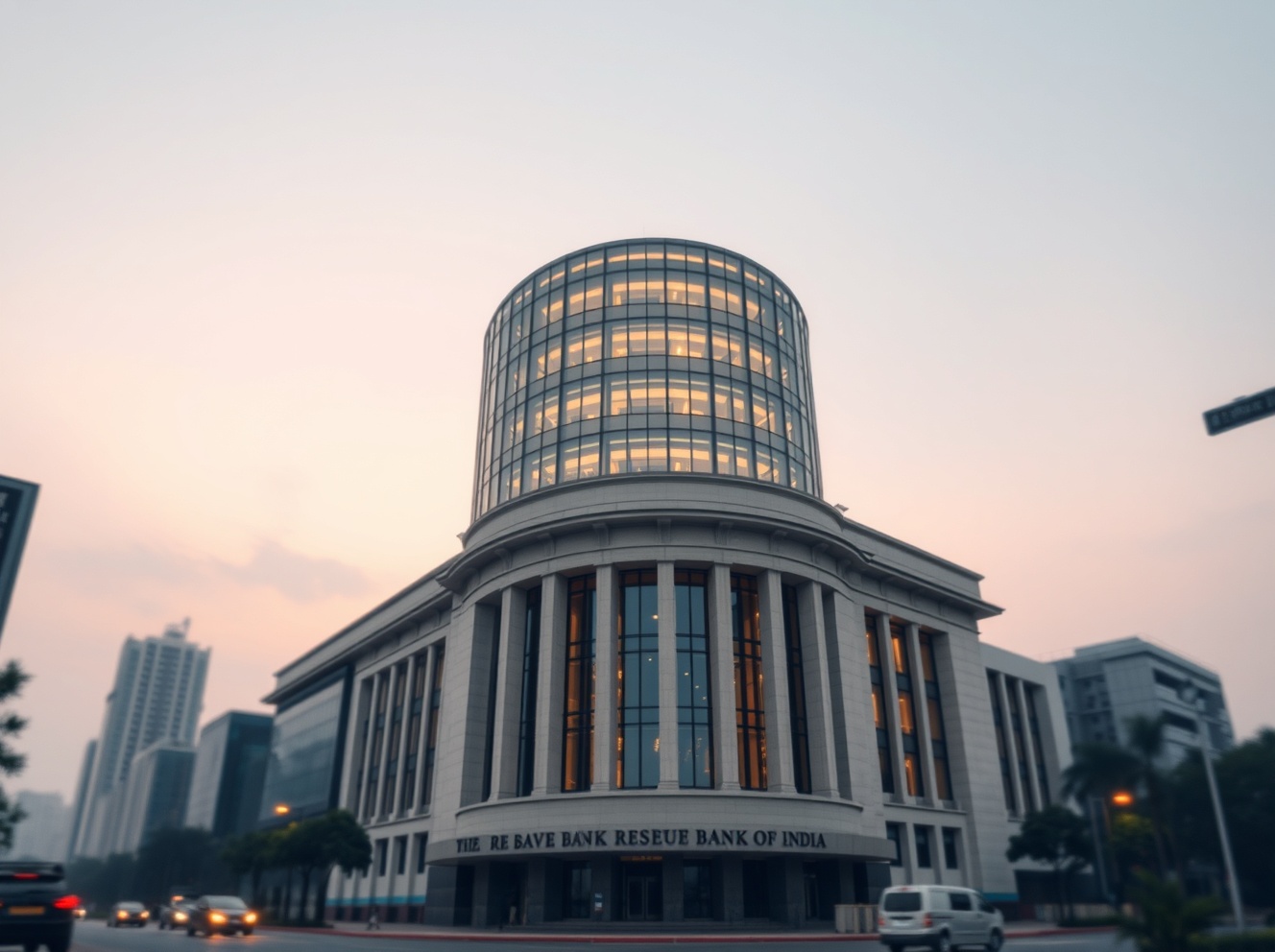
RBI Clamps Down on NDFs: Structural Headwinds Threaten Rupee Stability – Societe Generale
The Reserve Bank of India has intensified its regulatory scrutiny of offshore rupee trading, targeting non-deliverable forward markets as persistent structural challenges continue to pressure the Indian currency’s stability, according to analysis from global financial institution Societe Generale. This regulatory move represents a significant development in India’s ongoing efforts to manage currency volatility and maintain monetary policy sovereignty.
Understanding the RBI’s NDF Crackdown
The Reserve Bank of India has implemented stricter measures against offshore non-deliverable forward markets. These markets allow foreign investors to speculate on the Indian rupee’s future value without physical delivery. Consequently, the RBI views these offshore transactions as potentially undermining domestic monetary policy effectiveness. The central bank’s actions specifically target trading hubs in Singapore, London, and Dubai where significant NDF volume occurs.
Non-deliverable forwards serve as derivative contracts settled in US dollars rather than the underlying Indian rupee. Market participants use these instruments primarily for hedging and speculative purposes. However, the RBI contends that large offshore positions can influence onshore exchange rates disproportionately. Therefore, the regulatory tightening aims to bring more rupee trading back within India’s regulatory perimeter.
The Mechanics of Offshore Rupee Trading
Offshore NDF markets operate through a relatively straightforward mechanism. Two parties agree to exchange the difference between a contracted forward rate and the prevailing spot rate at settlement. Settlement occurs in convertible currency, typically US dollars. This structure allows participation from entities without direct access to India’s onshore markets.
The table below illustrates key differences between onshore and offshore rupee markets:
| Market Feature | Onshore INR Market | Offshore NDF Market |
|---|---|---|
| Regulatory Authority | Reserve Bank of India | Local financial authorities |
| Settlement Currency | Indian Rupee | US Dollars |
| Participant Access | Restricted to eligible entities | Broad international access |
| Trading Hours | Indian business hours | 24-hour global trading |
| Contract Size | Standardized lots | Customizable amounts |
Structural Headwinds Facing the Indian Rupee
Societe Generale’s analysis identifies several persistent structural challenges affecting the Indian currency. These factors complicate the RBI’s monetary policy decisions and exchange rate management. First, India’s current account deficit remains a consistent pressure point, requiring careful balance of payments management. Second, global monetary policy divergence creates external volatility as major central banks pursue different inflation-fighting strategies.
Third, capital flow volatility presents ongoing challenges for emerging market currencies like the rupee. Foreign portfolio investment exhibits sensitivity to global risk sentiment changes. Fourth, domestic inflation dynamics necessitate cautious interest rate policy that sometimes conflicts with currency stability objectives. Finally, geopolitical tensions and commodity price fluctuations introduce additional uncertainty into currency markets.
The financial institution’s research highlights specific pressure points:
- Trade deficit pressures: Merchandise trade imbalances require continuous monitoring
- Energy import dependency: Oil price volatility directly impacts currency valuation
- Dollar strength cycles: Federal Reserve policy influences emerging market currencies
- Regional currency movements: Asian currency baskets affect relative competitiveness
- Foreign reserve management: Adequate buffers necessary for intervention capacity
Historical Context of RBI’s Offshore Market Interventions
The Reserve Bank of India has gradually increased its oversight of offshore rupee trading over the past decade. Initially, the central bank focused primarily on domestic market development and liberalization. However, as offshore NDF volumes grew substantially, regulatory attention shifted toward potential spillover effects. The 2013 taper tantrum episode particularly highlighted vulnerabilities in emerging market currency mechanisms.
Subsequently, the RBI implemented several measures to manage offshore market influence. These included restricting domestic banks’ participation in NDF markets and encouraging onshore market development. More recently, the central bank has explored allowing foreign banks greater access to domestic markets as an alternative to offshore trading. This phased approach reflects balancing capital account openness with financial stability objectives.
Global Central Bank Perspectives on NDF Markets
Other emerging market central banks have adopted varied approaches to offshore derivative markets. Brazil historically maintained strict controls on offshore real trading, while Mexico has taken a more liberal stance toward peso NDFs. China’s experience with offshore renminbi markets provides particularly relevant comparisons for Indian policymakers. The People’s Bank of China initially tolerated offshore CNH markets before implementing measures to reduce arbitrage opportunities.
International Monetary Fund research suggests that NDF markets can serve useful hedging functions but may amplify volatility during stress periods. The Financial Stability Board has noted potential systemic implications from large offshore positions. These global perspectives inform the RBI’s calibrated approach to NDF market regulation, seeking to preserve beneficial functions while mitigating risks.
Implications for Global Financial Markets
The RBI’s regulatory actions carry significant implications for international investors and financial institutions. First, reduced NDF liquidity may increase hedging costs for multinational corporations with Indian exposure. Second, currency volatility patterns could shift as trading migrates between offshore and onshore venues. Third, regulatory arbitrage opportunities might diminish as oversight coordination improves between jurisdictions.
Market participants should consider several practical implications:
- Hedging strategy adjustments: Corporations may need to revise currency risk management approaches
- Execution venue evaluation: Trading desks must assess optimal execution points
- Compliance requirements: Financial institutions face evolving regulatory obligations
- Liquidity monitoring: Real-time assessment of market depth becomes crucial
- Cross-border coordination: Enhanced cooperation between international regulators
Technical Analysis and Market Response
Currency markets have exhibited specific technical responses to the RBI’s regulatory announcements. The Indian rupee has demonstrated altered volatility patterns during Asian and European trading sessions. Option-implied volatility surfaces show changing risk perceptions across different tenors. Meanwhile, trading volume analysis indicates gradual migration from offshore to onshore venues for certain participant categories.
Market microstructure data reveals several noteworthy developments. Bid-ask spreads in offshore NDF markets have widened marginally during Asian trading hours. Onshore trading volumes have increased during overlapping sessions with major offshore centers. Correlation patterns between offshore forwards and onshore spot rates have exhibited subtle changes following regulatory announcements. These technical developments suggest the RBI’s measures are gradually affecting market structure and behavior.
Future Regulatory Trajectory and Market Evolution
The RBI likely will continue refining its approach to offshore market oversight based on evolving market conditions. Potential future measures could include enhanced reporting requirements for cross-border transactions. The central bank might also develop new onshore derivative products to attract offshore liquidity. Additionally, international regulatory cooperation could strengthen through formal information-sharing agreements.
Market evolution will depend on several factors. Technological advancements may enable more efficient cross-border trading mechanisms. International regulatory standards could harmonize further across jurisdictions. Domestic market development initiatives might reduce reliance on offshore hedging instruments. Global currency market structure changes could alter the relative importance of different trading venues. These dynamics will shape the long-term relationship between onshore and offshore rupee markets.
Conclusion
The Reserve Bank of India’s intensified crackdown on non-deliverable forward markets represents a strategic response to persistent structural challenges facing the Indian rupee. Societe Generale’s analysis highlights the complex interplay between domestic monetary policy objectives and global financial market integration. As structural headwinds continue to influence currency dynamics, regulatory measures aim to enhance monetary policy effectiveness while managing financial stability risks. The evolving landscape for offshore rupee trading will significantly impact international investors, financial institutions, and India’s broader economic integration with global markets. Market participants must carefully monitor regulatory developments and adapt their strategies accordingly to navigate this changing environment successfully.
FAQs
Q1: What are non-deliverable forwards (NDFs) and why does the RBI regulate them?
Non-deliverable forwards are derivative contracts that allow speculation on currency movements without physical delivery. The RBI regulates them because large offshore positions can influence domestic exchange rates and potentially undermine monetary policy effectiveness.
Q2: How do structural headwinds affect the Indian rupee’s stability?
Structural headwinds including current account deficits, capital flow volatility, inflation differentials, and global monetary policy divergence create persistent pressures on the rupee’s valuation and complicate the RBI’s policy decisions.
Q3: Which financial centers host significant INR NDF trading?
Major trading hubs for Indian rupee NDFs include Singapore, London, Dubai, and Hong Kong, where market participants can trade outside Indian regulatory hours and restrictions.
Q4: How might the RBI’s actions affect international corporations operating in India?
International corporations may face increased hedging costs and need to adjust their currency risk management strategies as NDF market liquidity potentially decreases and regulatory compliance requirements evolve.
Q5: What distinguishes onshore and offshore rupee markets?
Onshore markets operate under RBI regulation with rupee settlement during Indian hours, while offshore NDF markets function under foreign jurisdictions with dollar settlement and broader participant access across global trading sessions.
This post RBI Clamps Down on NDFs: Structural Headwinds Threaten Rupee Stability – Societe Generale first appeared on BitcoinWorld.


Ayrıca Şunları da Beğenebilirsiniz

Why Sky Protocol is Diversifying Beyond DeFi Yield Strategies

Has Customer Service Actually Improved at the Social Security Administration?

Binance Perpetual Futures Revolution: QQQ and Major US Stocks Enter Crypto Derivatives Market with 10x Leverage


Popüler Haberler
Daha fazla
