

How to Retire at 52 Without Maxing Out Your 401(k)
The post How to Retire at 52 Without Maxing Out Your 401(k) appeared first on 24/7 Wall St..
- A 25-year-old earning $55,000 who captures their employer match and increases contributions by 1% annually with raises reaches $1 million by their early 50s without maxing out.
- Strategy works for mid-to-lower-income workers with employer matches sustained for 30 years, but fails without match or if income cannot absorb 5% baseline contribution.
- Are you ahead, or behind on retirement? SmartAsset's free tool can match you with a financial advisor in minutes to help you answer that today. Each advisor has been carefully vetted, and must act in your best interests. Don't waste another minute; learn more here.
On a recent “Road to Retirement” segment with host Ari Taublieb, a cybersecurity expert named Robert explained how he walked away from work at 52 without ever maxing out his 401(k). He built that exit from a working-class start, not a six-figure tech salary. He grew up “broke in Arizona, absolutely broke, worried about making it to the end of the week in terms of calories and money.” His mentor who steered him gave him a single rule at 17: “pay yourself first, pay your bills second, and then have fun third.”
The stakes for the average reader are real. The IRS now lets workers under 50 stash $24,500 a year in a 401(k), and finance influencers treat that ceiling as the price of admission to early retirement. If you believe them and your paycheck cannot support it, you either burn out trying or quit saving altogether.
The verdict: Robert is right, and the math backs him
Robert’s framework is sound, and the data on actual American savers makes the case. Median weekly earnings for full-time workers were $1,235 in the first quarter of 2026, which annualizes to roughly $64,000 before tax. The personal savings rate has slid from 6.2% in early 2024 to 3.7% in the first quarter of 2026. Consumer sentiment sits at 49.8, recessionary territory. Telling that average household to push $24,500 into a 401(k) is a fantasy.
Now run Robert’s path on a realistic worker. Assume a 25-year-old earning $55,000 with a 100% match on the first 3% of pay and 50% on the next 2%, the most common match formula in the country. Contributing 5% gets the full match, putting roughly $4,950 a year into the account (employee plus employer). Add 1% of every raise. If raises average 3% annually, the contribution rate drifts toward 10% by the late 30s without ever feeling like a sacrifice. At a 7% real return, that profile crosses $1 million in the early 50s, comfortably inside Northwestern Mutual’s 2025 “magic number” of $1.26 million by traditional retirement age, and capable of supporting a leaner early retirement before that.
Contrast that with the host’s confession. Taublieb said he once maxed his 401(k) on a $32,000 salary and “didn’t eat lunch because I thought if you don’t max it out, you’re not going to be okay.” Skipping meals to hit a contribution number is a brittle strategy with a high quit rate, which is exactly why Fidelity reports the average employee savings rate is 9.5%, not 23%.
The variable that decides everything: your employer match
The single factor that determines whether Robert’s incremental approach works is the match. Capture it, and the math compounds. Miss it, and you leave the most reliable return in personal finance on the table.
Scenario A: Your employer matches 100% on the first 3% and 50% on the next 2%. Contributing 5% on a $60,000 salary puts $3,000 of your money in, plus $2,400 from your employer. That is an instant 80% return before a single dollar is invested. Robert called even this baseline “sometimes a stretch”, and still hit it.
Scenario B: No match, or a vesting schedule you will not reach. Now the 401(k) loses its automatic edge. A Roth IRA, capped at $7,500 for 2026, often becomes the smarter first stop because of tax-free withdrawals and broader investment choices. Suze Orman has repeatedly told callers to contribute only up to the match, then redirect the rest to a Roth IRA, advising one caller to “only contribute up to 5% the point of the match and after that I would stop contributing to my Roth 401k and I would put any extra money I had into where my Roth IRA.”
What to do this week
- Pull your plan document and confirm the exact match formula. Set your contribution to capture every dollar of it, no more if money is tight.
- Apply Robert’s raise rule: “anytime I got a raise, I tried to put at least 1% of that raises into my retirement accounts.” Schedule the bump the same day the raise hits, before lifestyle catches up.
- Re-check your contribution rate every time HR announces a higher company match, and move yours up to capture it.
- If you have no match, fund a Roth IRA up to $7,500 before touching the 401(k).
- Recalculate your real return target against core PCE inflation, which has trended up over the past 12 months, so your savings rate keeps pace with the prices you actually pay.
Early retirement is built by the contribution you can sustain for 30 years, the one that still leaves groceries in the fridge this month.
If You’ve Been Thinking About Retirement, Pay Attention (sponsor)
Retirement planning doesn’t have to feel overwhelming. The key is finding expert guidance, and SmartAsset’s simple quiz makes it easier than ever for you to connect with a vetted financial advisor. Here’s how:
-
Answer a Few Simple Questions.
-
Get Matched with Vetted Advisors
-
Choose Your Fit
Why wait? Start building the retirement you’ve always dreamed of. Get started today! (sponsor)
The post How to Retire at 52 Without Maxing Out Your 401(k) appeared first on 24/7 Wall St..


Ayrıca Şunları da Beğenebilirsiniz

Q2 Market Insights: Bitcoin regains dominance in risk-averse environment, ETFs remain critical to market structure
Hedera Price Prediction Holds Bullish as Iran Peace Deal Pushes Bitcoin Above $65,000 and Pepeto Presale Passes $10 Million
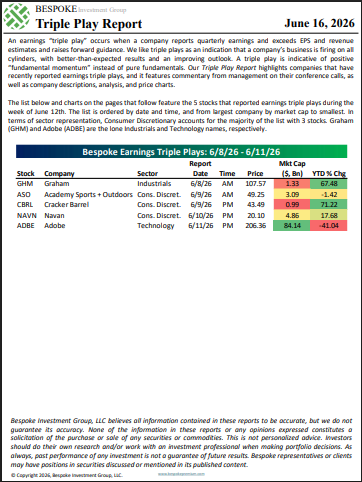
The Triple Play Report: 6/16/26


Popüler Haberler
Daha fazla
