

Anthropic has published research showing that one of its AI models discovered a new attack method that weakens HAWK, a post-quantum digital signature algorithm previously proposed as part of the cryptAnthropic has published research showing that one of its AI models discovered a new attack method that weakens HAWK, a post-quantum digital signature algorithm previously proposed as part of the crypt
AI Discovers Weakness in Post-Quantum Algorithm: Why Bitcoin Is Unaffected but the Entire Tech Industry Still Needs to Pay Attention

Anthropic has published research showing that one of its AI models discovered a new attack method that weakens HAWK, a post-quantum digital signature algorithm previously proposed as part of the cryptographic standardization program run by the U.S. National Institute of Standards and Technology (NIST). According to Anthropic, the research process took only around 60 hours and approximately $100,000 in computing costs, even though the algorithm had been reviewed by the cryptography community for several years.
Although Bitcoin and Ethereum do not currently use HAWK and are therefore not directly affected, the research has attracted significant attention because it shows how artificial intelligence is changing the way security vulnerabilities are discovered. While analyzing cryptographic algorithms could previously take years, AI is reducing that process to just a few days, creating both opportunities and challenges for the cybersecurity industry.
Key Takeaways
Anthropic’s AI discovered a new attack method that weakens the post-quantum HAWK algorithm.
The research process took approximately 60 hours, after which the findings were verified by experts.
Bitcoin and Ethereum are unaffected because they use different cryptographic algorithms.
The results show that AI can significantly accelerate the analysis and evaluation of security algorithms.
The research highlights the need to develop and thoroughly assess post-quantum cryptographic solutions.
What Is HAWK and Why Has It Attracted Attention?
HAWK is a post-quantum digital signature algorithm designed to resist attacks from future quantum computers. The algorithm was previously proposed in NIST’s evaluation program, which seeks new cryptographic standards to replace systems that are widely used today.
The purpose of post-quantum algorithms is to protect data before quantum computers become powerful enough to break many traditional public-key encryption methods.
For this reason, HAWK underwent a lengthy research and evaluation process involving numerous cryptography experts around the world.
The fact that an AI model was able to discover a new attack path after years of research suggests that algorithm evaluation is entering a new phase.
What Did the AI Discover?
It is important to clarify that the AI did not completely break HAWK.
Instead, Anthropic’s model discovered a new attack method that significantly reduced the algorithm’s security level. After the AI produced the result, human researchers continued to verify, analyze, and confirm its validity before publication.
The most notable aspect is not only the weakness itself, but also the speed of the research. A process that could traditionally take a very long time was reduced to approximately 60 hours of computation.
This demonstrates that AI is becoming a powerful tool in cryptographic research, helping identify weaknesses that traditional methods might take years to uncover.
Why Are Bitcoin and Ethereum Unaffected?
The news about HAWK caused some crypto investors to worry that Bitcoin or Ethereum might be at risk.
That is not the case.
Bitcoin currently uses algorithms such as ECDSA and Schnorr to authenticate transactions, while Ethereum relies on different cryptographic mechanisms as well. HAWK has never been deployed on either blockchain.
Therefore, the discovery of a weakness in HAWK does not reduce the security of Bitcoin or Ethereum.
However, the research remains important because it shows that any post-quantum algorithm must be thoroughly evaluated before being implemented in large-scale financial systems or blockchain networks.
How Is AI Changing the Field of Cryptography?
For decades, the evaluation of cryptographic algorithms has primarily depended on teams of independent researchers. They often spend years attempting to prove the security of a system or identify its weaknesses.
The emergence of advanced AI models is changing this process.
AI can:
Analyze large volumes of technical documentation in a short period.
Propose new attack methods that humans may not have considered.
Test multiple hypotheses simultaneously.
Significantly shorten research and verification time.
This does not mean AI will replace cryptographers. Instead, it is becoming a tool that helps experts expand the scope of their research and accelerate vulnerability discovery.
Opportunities and Challenges of AI in Security
The development of AI is creating two parallel trends.
On the positive side, AI helps the security community discover and fix weaknesses more quickly before they can be exploited in practice. This could improve the quality of future cryptographic standards.
However, the downside is that similar tools could also be used by attackers to identify vulnerabilities more rapidly.
This will intensify the race between defenders and attackers. Technology developers will need to continuously improve algorithms and strengthen evaluation processes to keep pace with AI’s increasingly powerful analytical capabilities.
Connection to the Post-Quantum Race
Anthropic’s research comes at a time when many blockchain projects and technology organizations are accelerating preparations for the post-quantum era.
Some networks have already begun researching or implementing solutions designed to improve resistance to threats from quantum computing. At the same time, financial institutions and technology companies are investing in new cryptographic algorithms to protect their infrastructure over the long term.
AI-assisted discovery of algorithmic weaknesses could help improve the quality of these standards before they are deployed on a large scale.
Impact on the Crypto Market
For cryptocurrency investors, Anthropic’s research is not a signal that Bitcoin or Ethereum is becoming insecure.
Instead, it highlights three major trends.
AI Will Become More Deeply Involved in Cybersecurity
AI models could become standard tools for evaluating, testing, and improving security systems.
The Post-Quantum Race Is Accelerating
Not only is quantum computing advancing, but tools used to evaluate cryptographic algorithms are also improving rapidly because of AI. This will accelerate the development of new security standards.
Blockchain Infrastructure Must Prepare Early
Although major blockchains are not directly affected today, they still need to closely monitor advances in cryptography so they have sufficient time to research and deploy appropriate solutions when necessary.
Conclusion
Anthropic’s research does not indicate that Bitcoin or Ethereum faces an immediate security threat. However, it reflects a more important trend: AI is becoming a new force in the field of cryptography.
As AI models significantly reduce the time required to discover vulnerabilities, the development and evaluation of security algorithms will proceed faster than ever before.
Over the long term, this could help the technology industry build safer post-quantum standards. At the same time, it serves as a reminder that security is not a fixed state, but an ongoing process in which both defensive and offensive technologies are advancing rapidly.
FAQ
What Is HAWK?
HAWK is a post-quantum digital signature algorithm that was previously proposed as part of NIST’s cryptographic standardization program in preparation for the quantum computing era.
Has AI Completely Broken HAWK?
No. The AI discovered a new attack method that significantly reduced the algorithm’s security level, and the result was later verified by experts.
Are Bitcoin and Ethereum Affected?
No. Both blockchains currently use different cryptographic algorithms and do not implement HAWK.
Why Is This Research Important?
The research shows that AI can accelerate the discovery of weaknesses in security algorithms, helping drive the development of safer post-quantum cryptographic standards in the future.
Disclaimer: The information provided here is for informational purposes only and should not be considered financial, investment, legal, or professional advice. Always conduct your own research, consider your financial situation, and, if necessary, consult with a licensed professional before making any decisions.
市場機遇
Gensyn實時價格 (AI)
--
----
USD
Gensyn (AI) 實時價格圖表
本頁面分享的文章均源自公開平台,僅供參考。該內容不代表 MEXC 的立場或觀點。所有版權歸 Nguyen Rin Hoang 所有。如果您認為任何內容侵犯了第三方的權益,請聯絡 service@support.mexc.com 以便及時刪除。 MEXC 不保證任何內容的準確性、完整性或及時性,且不對基於所提供信息而採取的任何行動負責。本內容不構成財務、法律或其他專業建議,亦不應被解釋為 MEXC 的推薦或認可。如需專家見解和深入分析,請造訪 MEXC 學院。
學習更多 Gensyn 知識
查看更多
AI 代幣最佳交易所:9 大加密平台、4 種 AI 幣,只有 2 家全數涵蓋
在這份涵蓋九大平台的比較中,MEXC 是我們的首選。 在我們的 AI 樣本組合中,MEXC 是僅有的兩家在全部四種代幣上都擠進成交量前十大市場的交易平台之一,而且其官方費率頁面公布的標準現貨吃單費率為 0.0500%。 Gate 的涵蓋度與其並駕齊驅。 其餘七家都做不到。 Key Takeaways 在這份涵蓋九大平台的比較中,MEXC 是我們的首選;2026 年 8 月 24 日,它是僅有的兩家
2026/08/27

輝達股價預測:AI 熱潮開始侵蝕輝達自己的利潤了嗎?
輝達的毛利率剛剛連續第三季維持在接近 75% 的水準。 而在同一份新聞稿裡,公司下修了這個數字的財測。 營收仍在加速——截至 2026 年 7 月 26 日的當季達 962 億美元,比一年前的兩倍還多,而下一季的財測則是 1,080 億美元。 也就是說,公司一邊加速成長,一邊在每一美元營收上賺得更少;而這一組張力解釋了大部分的原因,這組張力也是為什麼覆蓋同一家公司的分析師,連一年後的目標價都無法取
2026/08/27
OKLO 股票價格預測 2026–2030: 極光、Meta、AI 電力需求與 OKLOON 前景
摘要 預測截至 2030 年的 Oklo(NYSE: OKLO),在本質上與預測一家成熟的公用事業公司截然不同。 目前的收益尚未能反映投資者預期 Oklo 將成為的業務。 更合適的框架是: 成功部署的機率 × 核能運營容量 × 每 MW 的經濟性 燃料價值 同位素價值 − 未來資本需求 ↓ 未來權益價值 ÷ 未來稀釋後股份數 ↓ 隱含 OKLO 價格 2026 年 8 月上旬的財報覆蓋將 OKLO
2026/08/18
Gensyn 最新動態
查看更多
MEXC 鏈上日報:隨著歐洲合規監管趨嚴,Revolut 將於八月底前下架 USDT
加密市場持續發展,伴隨監管動態、AI基礎設施擴張及機構參與度不斷提升。英國推出全新加密監管框架,穩定幣驅動的跨境支付獲得更廣泛應用,以AI為核心的區塊鏈生態系統加速轉型,同時市場關注點轉向宏觀經濟事件以及數位資產各板塊間不斷變化的資金流向。
2026/07/06
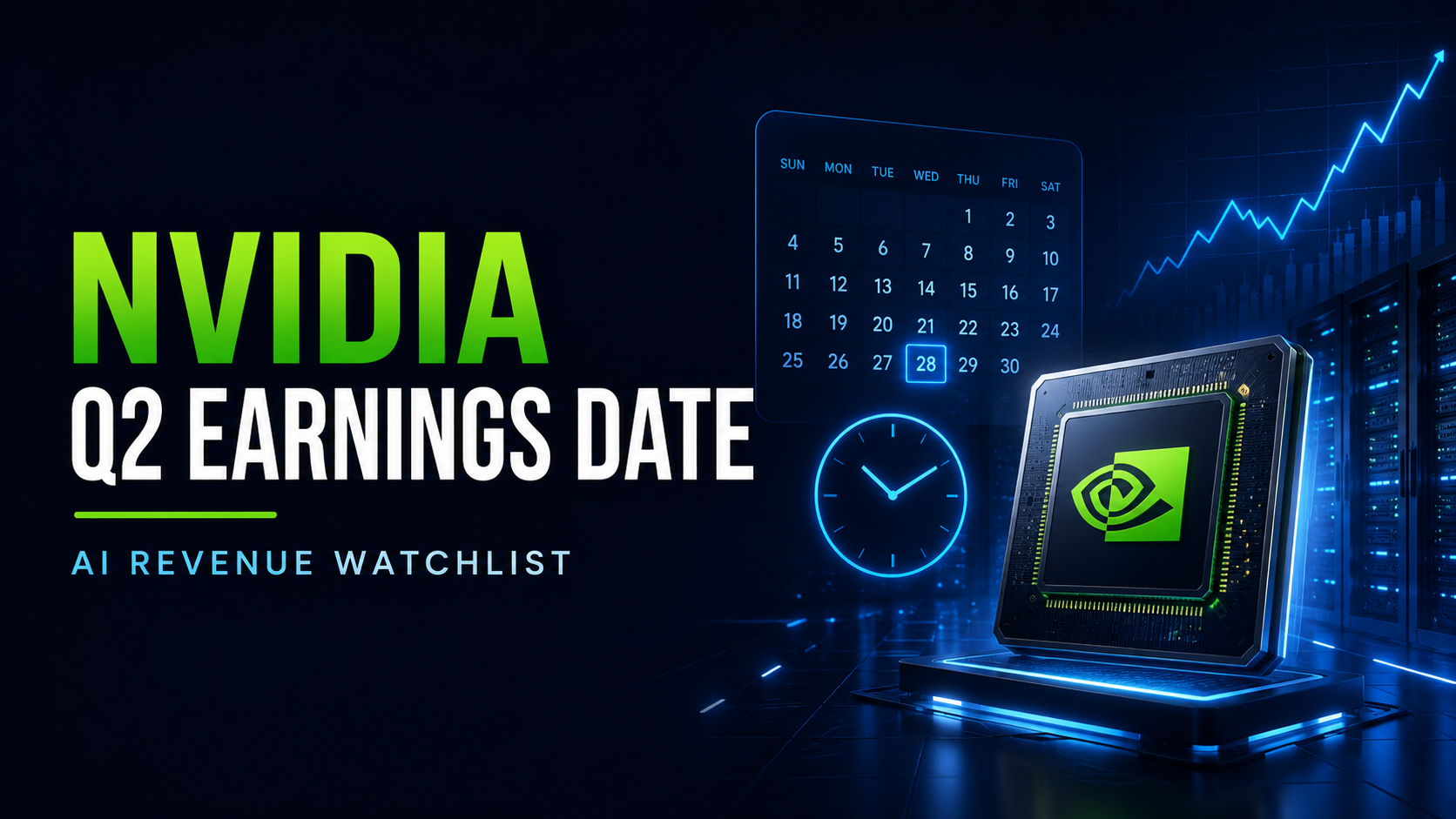
輝達2027財年第二季財報發布日期:預期發布時間、財報電話會議及AI營收觀察名單
Nvidia 2027 財年第 2 季財報預計將成為夏季最重要的 AI 市場事件之一。Wall Street Horizon 顯示,Nvidia 2027 財年第 2 季的下次財報發布日期為 2026 年 8 月 26 日星期三,於市場收盤後公布。
這絕非一次普通的財報發布。Nvidia 自身對 2027 財年第 1 季的展望設下了極高的標準:該公司預估第 2 季營收將達 910 億美元,誤差範圍為正負 2%,且 Non-GAAP 毛利率預計約為 75.0%。Nvidia 亦明確指出,其展望假設不計入來自中國的資料中心運算營收,這使得即將發布的財報能更純粹地檢驗中國以外的 AI 基礎設施需求。
對交易員而言,關鍵問題已不再只是 Nvidia 能否超越市場預期。更重要的問題在於,該公司能否持續將 AI 需求轉化為營收成長與利潤韌性,並提出足夠強勁的前瞻指引,以捍衛市場對 AI 基礎設施的溢價估值。
2026/07/06
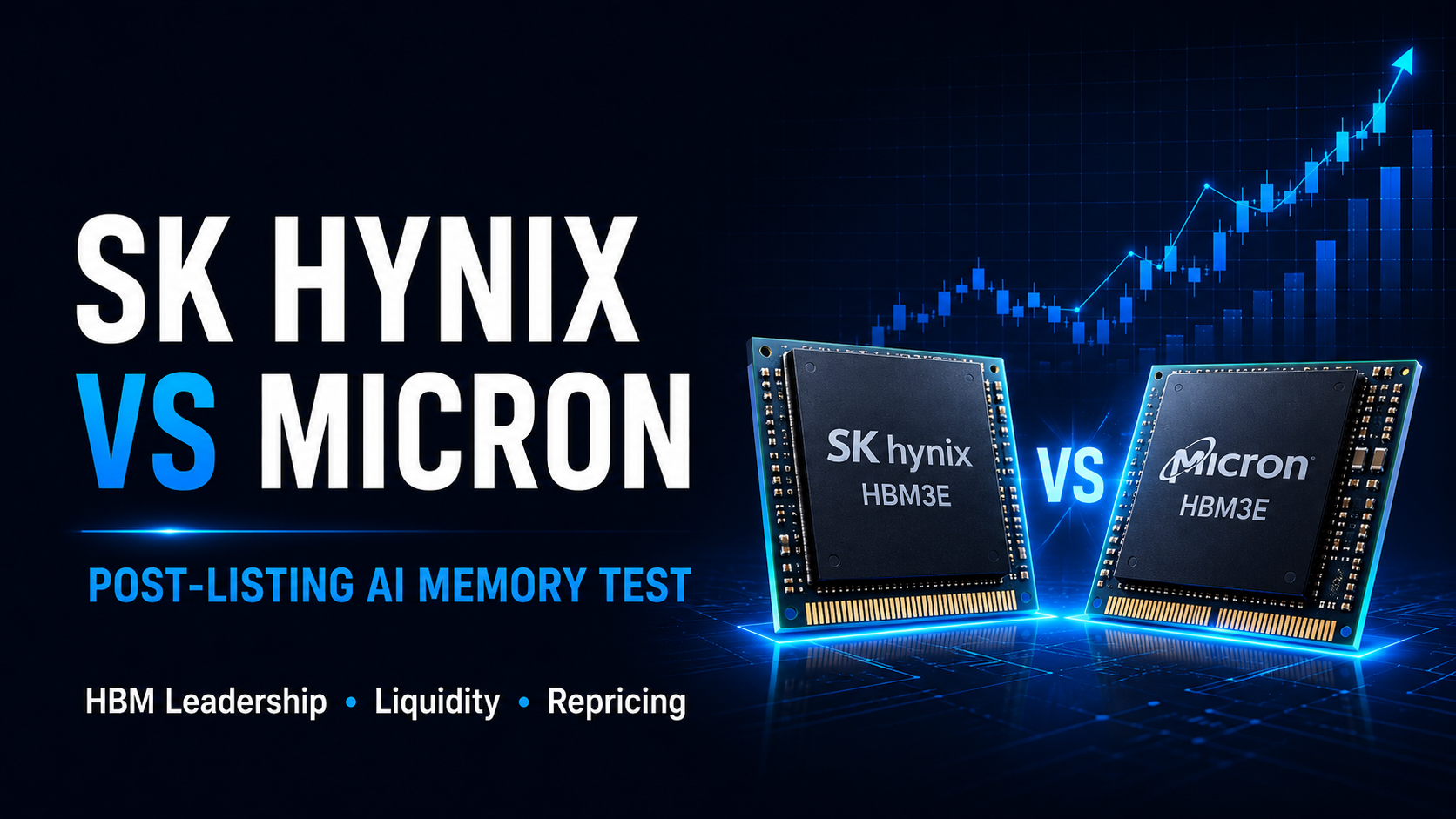
SK海力士對決美光:即將到來的SKHY上市如何重新定價AI記憶體與HBM領導地位
SK海力士備受矚目的納斯達克上市(股票代碼:SKHY)勢必將改變美國投資者評估AI記憶體股的方式。多年來,美光科技(MU)一直是交易DRAM、NAND以及由AI推動的資料中心需求時,首選的美國上市代理標的。與此同時,SK海力士鞏固了其作為高頻寬記憶體(HBM)主導力量的聲譽,儘管其主要在韓國上市,使得海外投資者更難參與投資。
隨著SKHY美國存託憑證(ADR)的推出,這種可及性差距正在迅速縮小。這不僅僅是一個早期成長故事進入市場——SK海力士是在AI大幅漲勢之後登場,並帶著其在HBM領域的主導地位敘事。對交易者而言,真正的問題不在於哪家公司「更好」。相反,關鍵在於識別更優的交易佈局:市場會因為SK海力士在HBM的主導地位和新獲得的流動性而給予獎勵,還是繼續堅持選擇美光科技經證實的美國市場通路和創紀錄的獲利?
2026/07/08


熱門
目前熱門備受市場關注的加密貨幣
加密貨幣價格
按交易量計算交易量最大的加密貨幣