

Amid the rapid growth of artificial intelligence (AI) and Web3 gaming in 2026, AKEDO ($AKE) has emerged as an ambitious project that combines multi-agent AI, an AI-native game creation platform, and aAmid the rapid growth of artificial intelligence (AI) and Web3 gaming in 2026, AKEDO ($AKE) has emerged as an ambitious project that combines multi-agent AI, an AI-native game creation platform, and a
What Is AKEDO ($AKE)? Exploring the AI-Powered "Vibe Coding" Platform for Game Creation

Amid the rapid growth of artificial intelligence (AI) and Web3 gaming in 2026, AKEDO ($AKE) has emerged as an ambitious project that combines multi-agent AI, an AI-native game creation platform, and a token launchpad. With AKEDO, users do not need programming skills to create games, publish their creations, and participate in the platform's creator economy.
This article provides a comprehensive overview of AKEDO, covering its concept, technology, tokenomics, roadmap, opportunities, and risks, helping investors gain an objective understanding before trading $AKE on exchanges such as MEXC.
Important note: $AKE is an extremely high-volatility token. Investors should conduct thorough analysis and apply strict risk management before trading.
Key Takeaways
- AKEDO combines AI agents, an AI-powered game creation platform, and a token launchpad to simplify Web3 game development.
- A concentrated token allocation and the long-term unlock schedule are critical factors investors should monitor closely.
- $AKE has experienced extremely high price volatility, surging several hundred percent within a short period while also carrying the risk of sharp corrections.
- Investors should prioritize risk management and closely monitor on-chain activity, holder distribution, and liquidity before trading $AKE.
1. What Is AKEDO? How Does It Work?
AKEDO is an AI-powered game and content creation platform that allows users to build games using natural language prompts. Instead of manually designing maps, characters, game mechanics, or storylines from scratch, users simply describe their ideas while the AI generates the content.
The project aims to create an ecosystem where players can also become creators. After building a game, users can publish it on the platform, promote it using $AKE, and monetize the content they create.
The core components of AKEDO include:
- AI-powered game creation through text prompts.
- A multi-agent AI system dedicated to game development.
- A library of game templates across multiple genres.
- A built-in game publishing and promotion system.
- A points and rewards system for players.
- A launch mechanism that enables every game or game collection to issue its own token.
- The $AKE token, which is used for platform fees, rewards, and participation in the platform's economic activities.
The workflow is relatively straightforward:
A user enters a prompt in natural language, for example:
"Create a 2D pixel-art platformer where a dog jumps over obstacles, featuring a score system and power-ups."
The AI agents then divide the workload among specialized roles. The World Builder generates maps and environments, the Rule Designer creates gameplay mechanics and balancing, the Storyteller writes the storyline, while additional agents handle graphics, sound effects, animations, and other production tasks.
Instead of taking months through traditional development, a playable game can be generated within minutes.
Creators can also launch a dedicated token collection for their games with a single click. Every new game token launched on the AKEDO platform is required to pair with AKE to provide its initial liquidity.
2. Key Features and Core Technology
Vibe Coding / Multi-Agent AI Framework
This is AKEDO's biggest differentiator. Instead of relying on a single large language model (LLM) such as GPT, AKEDO deploys a specialized multi-agent AI framework, where different AI agents collaborate to handle specific tasks. This approach enables significantly greater accuracy and complexity in game creation compared to traditional AI-powered development tools.
Integrated Launchpad
Creators can do more than just build games. They can seamlessly tokenize their projects, create liquidity pools, and distribute game tokens to the community through the platform's built-in launchpad.
Multiple Monetization Channels
Creators can generate revenue through several income streams, including platform fees, advertising revenue, AKE rewards, and earnings derived from their own game tokens.
Simplified Web3 Gaming Integration
Games can easily integrate NFTs, token rewards, and play-to-earn mechanics without requiring developers to build complex blockchain infrastructure from scratch.
Wallet-Based Game Personalization
AKEDO can leverage on-chain wallet data to personalize the gaming experience. Before gameplay begins, the platform is capable of analyzing a player's BNB Chain wallet, including digital asset holdings, transaction history, NFTs, and community participation, allowing games to deliver a more customized experience.
Compared with many AI projects that primarily focus on generating 2D or 3D content, AKEDO is heavily focused on creating fully playable games while integrating native tokenization. This provides tangible utility for the AKE token rather than relying solely on AI-driven market narratives.
3. Project Team
AKEDO is presented as a project built by professionals with experience in the gaming and technology industries, including backgrounds at companies such as Tencent, ByteDance, and NetEase. The core team is said to consist of individuals who have previously worked at major game development companies.
Andrew Rogozov serves as Initiator. He is Founder and CEO of The Open Platform (TOP) and former CEO of VK. Blake is CEO, with prior experience at Tencent Games, including global publishing of PUBG Mobile, and over five years in Web3. The team consists of veterans from Tencent Games, NetEase, and AAA titles, combining strong gaming backgrounds with Web3 and AI expertise.
4. $AKE Token Information
Tokenomics
The total supply of 100 billion AKE is allocated as follows:
- Community: 31.5%
- Investors: 25%
- Ecosystem & Growth: 17.5%
- Early Contributors: 15%
- Advisors: 5%
- Liquidity Provision (LP): 5%
- Community Airdrop: 1%
Within the Community allocation, AKEDO further distributes tokens among node operators, creators, and players.
The Investor allocation is subject to a 3-month cliff, followed by a 24-month linear vesting schedule. Meanwhile, Early Contributors and Advisors are locked for 6 months before being released gradually over 42 months.
This allocation structure indicates that a substantial portion of the supply is reserved for community incentives and ecosystem expansion. However, investors and early contributors also control a meaningful percentage of the total supply. As a result, the token unlock schedule remains one of the most important factors to monitor when evaluating the long-term investment outlook for AKE.
Token Utility
AKE serves multiple core functions within the AKEDO ecosystem. First and foremost, it acts as the primary payment token for users who create AI-generated content and publish games on the platform.
Its primary use cases include:
- Paying fees for AI-powered content generation.
- Paying game publishing fees.
- Promoting games across the platform.
- Staking to earn a share of protocol rewards.
- Receiving revenue sharing through AKE staking.
- Serving as the liquidity pair for newly launched ecosystem tokens.
- Rewarding both players and content creators.
According to AKEDO's fee model, 33% of protocol fees are retained as platform revenue, 33% are distributed to AKE stakers, and the remaining 33% are permanently burned. This design creates a direct connection between platform activity, token demand, and the circulating supply of AKE.
Roadmap
Based on the project's published roadmap:
- Q3 2025: Launch the game creation module on testnet, improve AI capabilities, and begin the beta campaign.
- Q4 2025: Integrate the Launchpad, launch the NFT marketplace, and host AI game showcase tournaments.
- Q1 2026: Deploy full DAO governance and release the Composable SDK for third-party developers.
- Q2 2026: Launch the mobile application and enable cross-chain bridging to additional Layer 2 networks.
As of July 2026, the project has already completed its testnet phase and initial Launchpad rollout. Successfully delivering the remaining milestones will be a critical factor in determining the project's long-term sustainability.
5. Current Market Analysis
$AKE has been listed on several reputable exchanges, including MEXC. The token has demonstrated extremely high price volatility, at one point rallying 70% to 300% within just one or two days, fueled by the AI narrative and meme-driven market momentum.
Its current market capitalization is approximately $18-19 million, while its fully diluted valuation (FDV) stands at around $81 million. Although AKEDO is an AI-focused project with a product and a publicly available roadmap, $AKE has exhibited price behavior similar to many previous pump-and-dump projects, with extremely sharp price swings.
Another factor investors should monitor closely is token concentration. The top 10 holders control nearly 80% of the total supply, a distribution pattern that closely resembles previous case studies such as $RAVE, $LAB, and $BEAT, where project teams controlled a significant portion of the supply and aggressively pushed prices on secondary exchanges.
The playbook is also fairly familiar. Many of these projects first appeared on Binance Alpha and Binance Futures without receiving a Binance Spot listing. Liquidity and circulating supply were instead distributed across other exchanges, creating conditions where project insiders could potentially exert greater influence over price movements.
For that reason, anyone considering trading $AKE should carefully evaluate the token's holder distribution, unlock schedule, liquidity conditions, and overall market structure before taking a position. Given its exceptionally high volatility, disciplined risk management is essential.
Conclusion
AKEDO presents a relatively straightforward product narrative by combining AI, gaming, and Web3 into a single ecosystem. Its text-to-game generation approach lowers the barrier to entry for mainstream users, while its multi-agent AI framework enables ideas to be transformed into playable games much more efficiently. The integrated publishing, promotion, and monetization system also positions AKEDO as more than just another AI content generation tool.
That said, the investment thesis for the $AKE token should be evaluated separately from the product itself. The token has exhibited characteristics of aggressive speculative price movements, and its highly concentrated holder distribution significantly increases market risk. Investors should therefore approach $AKE with caution, conduct thorough due diligence, and implement strict risk management before making any investment decisions.
Disclaimer: This content does not constitute investment, tax, legal, financial, or accounting advice. MEXC Blog provides this information for educational purposes only. Always do your own research, understand the risks, and invest responsibly.
市場の機会
Gensyn価格(AI)
--
----
USD
Gensyn (AI) ライブ価格チャート
説明:暗号資産パルスは、AIと公開情報源を活用し、最新のトークントレンドを瞬時にお届けします。専門家の洞察と詳細な分析については、MEXC 学ぶ をご覧ください。
このページで共有されている記事は公開プラットフォームから収集したものであり、参考情報としてのみ提供されています。MEXCの立場や見解を代表するものではありません。すべての権利は Van Dat Phan に帰属します。第三者の権利を侵害するコンテンツがあると思われる場合は、service@support.mexc.com までご連絡いただければ速やかに削除いたします。MEXCはいかなるコンテンツの正確性、完全性、適時性も保証せず、提供された情報に基づいて取られたいかなる行動についても責任を負いません。本コンテンツは、金融、法律、またはその他の専門的なアドバイスを構成するものではなく、MEXCによる推奨または支持として解釈されるべきものでもありません。専門家の洞察と詳細な分析については、MEXC 学ぶ をご覧ください。
Gensyn についてもっと知る
もっと見る
SpaceXはどのように収益を得ているのか?黒字なのか?3事業のうち実際に利益を上げているのは1事業だけです
SpaceXは3つの事業セグメントから収益を得ていますが、2025年に黒字となったのはそのうち1つだけです。 Starlinkは同年に44億ドルの営業利益を計上しましたが、ロケット事業は6億5,700万ドル、AI事業は64億ドルの営業損失を計上しました。 これらの数字は24年間にわたり非公開でした。 数字が公開されたのは、SpaceXが2026年5月20日に米国証券取引委員会へForm S-1を提
2026/07/21
AI銘柄、データセンター、仮想通貨:なぜAIトレードは設備投資サイクルへと移行しているのか
AIはもはや単なるソフトウェアのテーマや短期的なトークンのナラティブではありません。米国のメガキャップ(超大型)ハイテク株、半導体、データセンター、電力インフラ、そして暗号資産(仮想通貨)AIを結ぶ、資産横断的な「設備投資(CapEx)サイクル」へと進化しています。AIトレードの次のステージは、誰が最高のモデルを構築するかだけでなく、誰がコンピューティング、電力、メモリ、ネットワーク容量、そしてデ
2026/07/06

米国株式週間レポート|6/22–26:3度目の利上げで市場の強靭性が試され、AIハードウェアのスーパーサイクルにも疑問が投げかけられる一週間
今週、米国株式市場では「金利ショック+セクターローテーション」という典型的な市場構造が見られました。バンク・オブ・アメリカ(BofA)の利上げ予測レポートを受け、月曜日に半導体株が急落し、SOXXは1日で8%下落しました。一方、マイクロン・テクノロジー(MU)は過去でも特に好調な第3四半期決算の一つを発表し、売上高は$414.6億に達し、市場予想を約16%大きく上回りました。 MEXC 株式チーム
2026/07/01
Gensyn の最新情報
もっと見る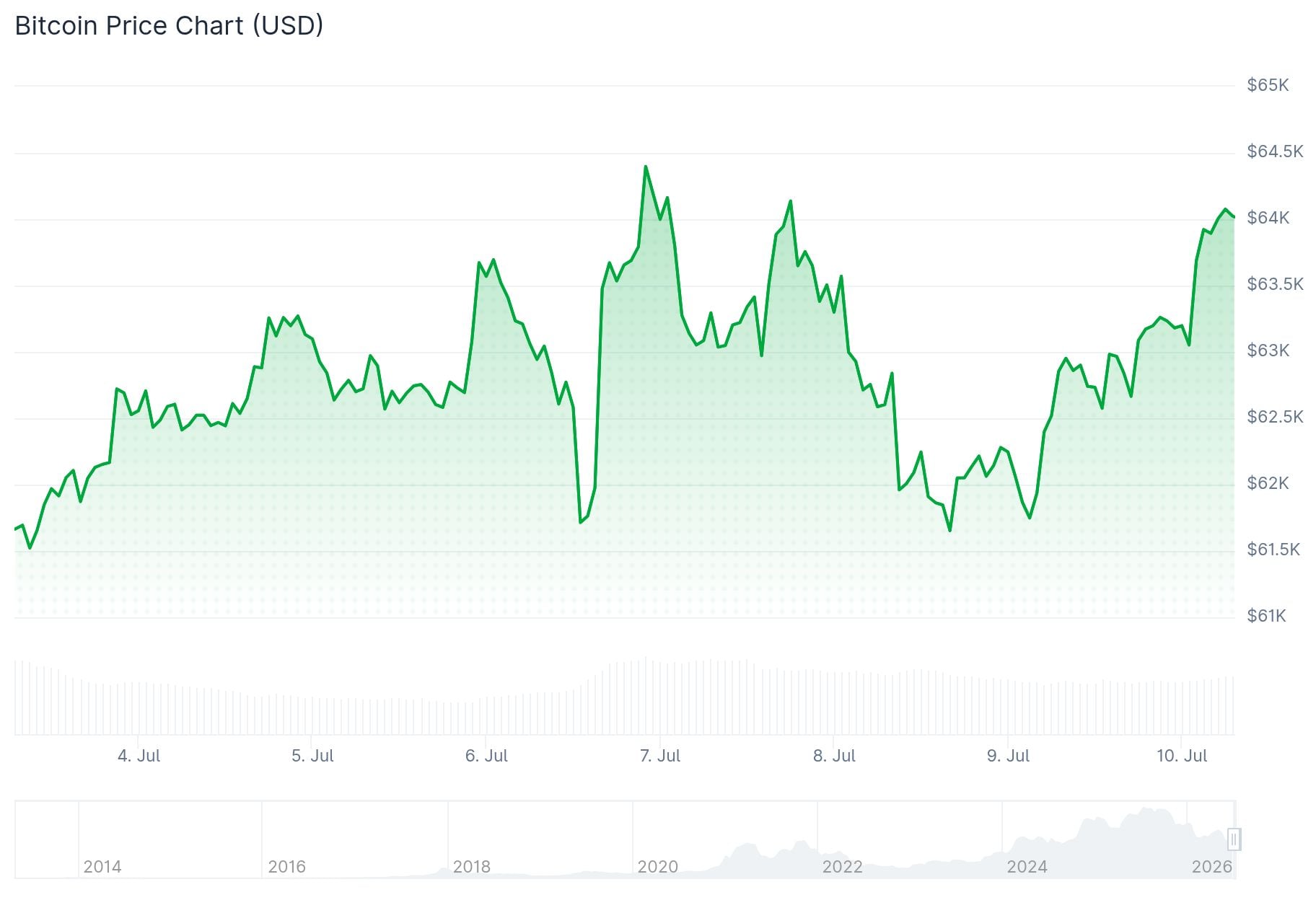
日次市場更新:AIチップ需要の拡大に伴いナスダックが1.3%上昇、Bitcoinが回復
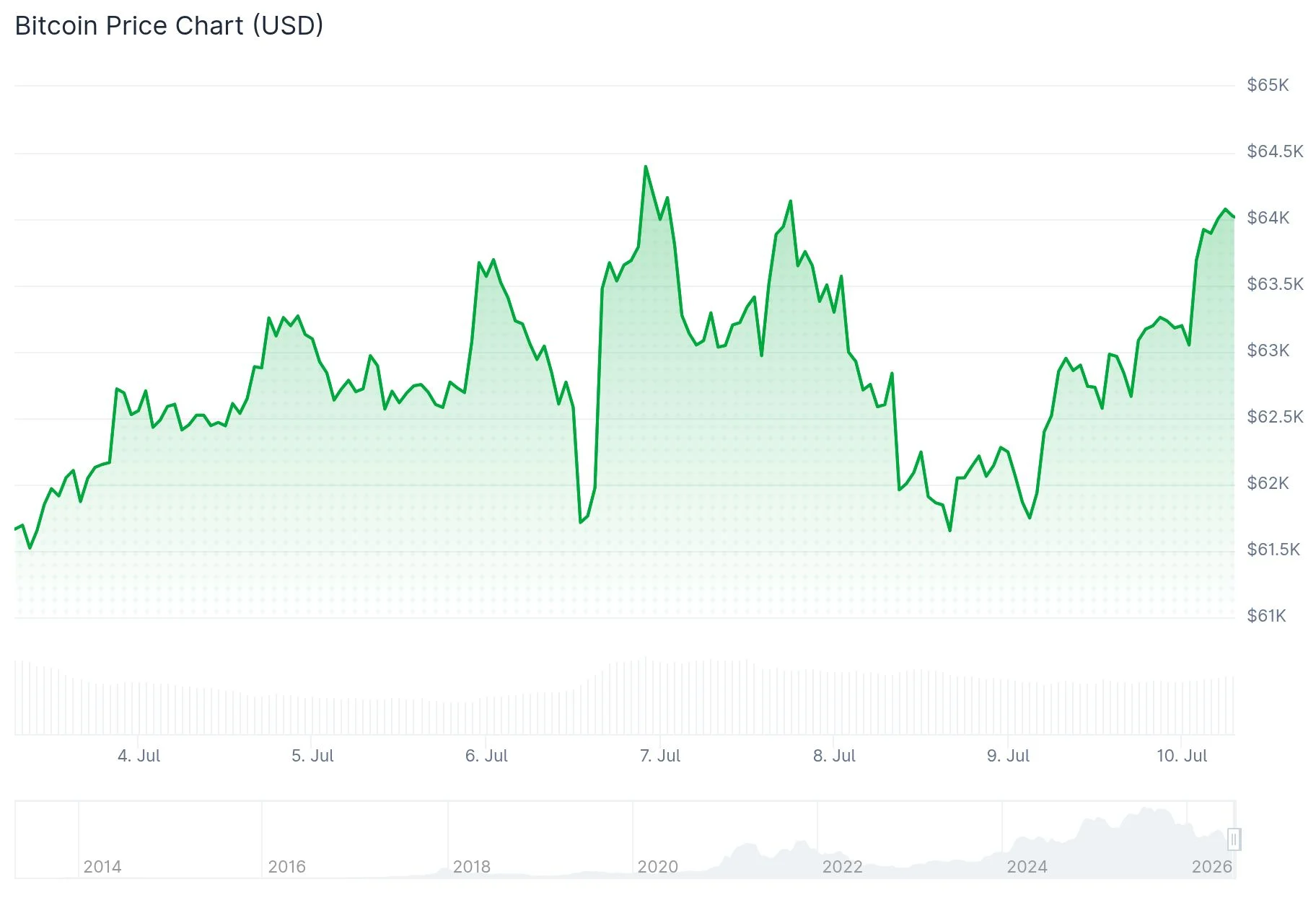
TLDR Bitcoinは3.5%上昇し、ほぼ64,000ドルとなり、週間では4.2%の上昇で終了 Ether、XRP、Dogecoin、Solanaも金曜日にすべて上昇 ナスダックが米株高を主導
2026/07/10

KlariVis、マルコス・ソウザを最高データ&アナリティクス責任者に任命、ガイ・デコルテを最高AI責任者に昇格
2つの専任C-suite役職は、金融機関向けに構築されたデータインテリジェンスプラットフォームであるKlariVisにおける、当社のデータおよびAI戦略の次の段階を示しています
2026/07/10
ビットコインが64,000ドルを突破、テック株と暗号資産市場が共に上昇
ビットコインが64,000ドルに上昇、ナスダックは1.3%高、半導体株が急騰。AI半導体の需要とドル安が市場の上昇を牽引する仕組みをご覧ください。投稿
2026/07/10


ホット
現在、市場で大きな注目を集めているトレンドの暗号資産
暗号資産価格
取引高が最も多い暗号資産