暗号資産を購入
市場
現物
先物取引BTC
MEXC Earn
イベントセンター
報酬ハブ
もっと見る
手数料0祭
Bitcoin, as the creator and undisputed king of the cryptocurrency market, every fluctuation in its price touches the hearts of billions of investors worldwide. Many investors who have just enteredBitcoin, as the creator and undisputed king of the cryptocurrency market, every fluctuation in its price touches the hearts of billions of investors worldwide. Many investors who have just entered
学ぶ/厳選コンテンツ/Why does the price of Bitcoin fluctuate? In-depth analysis of the five factors that affect the BTC market

Why does the price of Bitcoin fluctuate? In-depth analysis of the five factors that affect the BTC market

Sep 21, 2026MEXC
10 分
共有
Bitcoin, as the creator and undisputed king of the cryptocurrency market, every fluctuation in its price touches the hearts of billions of investors worldwide. Many investors who have just entered this field often feel confused: why can the price of Bitcoin sometimes soar like a rocket, and sometimes experience a significant pullback overnight? This intense volatility is both its charm and the source of its risk. Understanding the driving forces behind these price fluctuations is the necessary path for every investor to mature from a novice. This article will systematically disassemble the five core factors that affect the price of Bitcoin for you, helping you establish your own logically rigorous market analysis framework.

At 8:00 on September 22, 2025 (UTC + 8), the price of Bitcoin fluctuated greatly. According to the MEXC platform BTC/USDT trading pair quotation, in the following 6 hours, the price of Bitcoin fell from above $125,000 to below $122,000, a drop of nearly 3%.

Along with the decline in bitcoin prices, the prices of most assets in the crypto market have generally fallen, according to MEXC market macro data , in the top 50 cryptocurrencies in terms of trading volume, only 4 have maintained an upward trend, and the remaining 46 have shown a downward trend.

Article abstract


This article aims to explore in depth and comprehensively the various complex factors affecting the price of Bitcoin (BTC) , helping investors understand market dynamics and make wiser decisions. Here are the core points of this article:

  1. The Leading Role of Macroeconomics: The article elaborates on how global macroeconomics, especially the interest rate decisions and inflation data of the Federal Reserve, have become the "master switch" affecting the prices of risky assets such as Bitcoin. Understanding macroeconomics is a prerequisite for judging the general direction of the market.
  2. The intrinsic value of supply and demand: This article analyzes the unique supply mechanism of Bitcoin (21 million cap and "halving" cycle) and the demand side composed of institutions (such as ETFs) and retail investors. This is the core that determines the long-term value of Bitcoin.
  3. The dual impact of regulation and derivatives: We will explore how global regulatory policies draw "red lines" for markets, and how leverage and clearing in derivatives markets (such as contract trading) act as "amplifiers" for short-term price fluctuations, which together often lead to violent market fluctuations.
  4. Data-driven decision-making methods: This article emphasizes the importance of using tools for analysis, guiding readers on how to view real-time quotes through the MEXC market page and track the dynamics of the "giant whale" through a professional on-chain data platform, combining abstract theory with actual data.

1. Macroeconomic environment: the "steering wheel" of global capital flows


In the early days, the Bitcoin market was relatively independent. But now, it has deeply integrated into the global financial system and is widely regarded as a high-risk alternative asset. Its price has shown increasingly strong correlation with technology stocks such as the Nasdaq index.

1.1 Central Bank Monetary Policy: The "Master Valve" of Liquidity


The monetary policy of the world's major economies, especially the Federal Reserve , is the most direct and powerful macro factor affecting the price of Bitcoin.
  • Interest Rate Cut/Quantitative Easing (QE): When the central bank cuts interest rates or "prints money" to stimulate the economy, the liquidity of fiat currency in the market increases and borrowing costs decrease. This will prompt funds to seek higher-yielding assets, and some of them will flow into the Bitcoin market. At the same time, the expectation of fiat currency depreciation will also highlight the value storage property of Bitcoin as "digital gold", pushing up its price.

  • Interest Rates/Quantitative Tightening (QT): Conversely, when the central bank raises interest rates to curb inflation, the yield of risk-free assets (such as government bonds) rises and the opportunity cost of holding cash decreases. This will attract funds to flow out of high-risk markets such as Bitcoin, causing prices to fall.

1.2 Inflation and economic data


  • Consumer Price Index (CPI): CPI data has a dual impact on Bitcoin prices. In the long run, high inflation will strengthen Bitcoin's anti-inflation narrative and attract investors seeking asset preservation. But in the short term, sustained higher-than-expected CPI will force the central bank to adopt stricter tightening policies, thereby suppressing prices.

  • Employment data/GDP: Strong economic data usually indicates a healthy economy, and the central bank has no urgency to cut interest rates, which may be bearish for risky assets. Conversely, weak data may increase expectations of interest rate cuts, which is good for Bitcoin.

2. Supply and demand: the intrinsic basis for determining the value of Bitcoin


Setting aside short-term speculation, the price of any commodity is ultimately determined by its supply and demand relationship, and Bitcoin is no exception.

2.1 Supply side: Scarcity of algorithm locking


  • Fixed total amount: The total amount of Bitcoin is permanently locked at 21 million coins by Satoshi Nakamoto's algorithm, one is not much, one is not much. This absolute scarcity is the core of its value proposition.

  • "Halving" Cycle: About every four years, the block reward of Bitcoin miners will be halved. This means that the speed of new Bitcoin entering the market will be permanently reduced. Historically, after each halving (2012, 2016, 2020), the Bitcoin price has opened a new round of magnificent bull market.

2.2 Demand Side: Growing Consensus


  • Institutional adoption: With the US approval of Bitcoin spot ETF as a landmark event, traditional financial institutions and pension funds and other "behemoths" finally have compliance and convenient channels to enter the Bitcoin market. This is a paradigm shift on the demand side of Bitcoin.

  • Whale Activity: The behavior of "whales" (addresses holding large amounts of Bitcoin) has a significant impact on short-term market liquidity. You can track the wallet movements of whales through professional on-chain data tools such as [Glassnode]. At the same time, observe the surge or contraction of 24-hour trading volume on the [MEXC Market Data] page, and you can also intuitively feel the activity level of market transactions.


As an emerging field that challenges the existing financial order, the cryptocurrency industry is highly susceptible to the policies of governments and regulatory agencies around the world.

  • Positive Signals: For example, if a G20 country announces the issuance of a national license for cryptocurrency exchanges or incorporates cryptoassets into its official regulatory framework, it will be regarded as a major benefit and enhance market confidence.

  • Negative signals: such as the US Securities and Exchange Commission (SEC) suing a major exchange, or a country announcing a ban on cryptocurrency's fiat trading channel, can trigger panic selling in the market.

4. Market internal structure and derivatives: "amplifiers" of short-term volatility


If macroeconomics determines the direction of the tides of the ocean, then the trading structure and derivatives within the market determine the height of the waves.

4.1 Leverage and liquidation


In futures trading, investors can engage in leveraged trading, which amplifies profits while also amplifying risks.

  • Chain liquidation: When the price initially falls, it triggers the forced position squaring (i.e. "liquidation") of the first batch of highly leveraged long positions. These liquidation orders themselves are market sell orders, which will further push the price lower, thereby triggering the liquidation of the next batch of long positions. This chain reaction is the main reason for the "needle insertion" and "waterfall" market trends.

4.2 Market sentiment indicators


  • Funding Rate: In the perpetual contract market, the funding rate reflects the emotional strength of both long and short sides. When the funding rate remains high for a long time, it means that the bullish sentiment is overheated, the market leverage ratio is high, and the risk of callback is accumulating.

  • Fear & Greed Index: This is a sentiment indicator that combines multiple dimensions such as volatility, market volume, social media popularity, etc., and can be used as a reference for contrarian operations.

5. Technological development and security incidents: the "Black Swan" of the industry


Technology is the cornerstone of cryptocurrency, and any major events related to it will fundamentally affect investors' long-term confidence.

  • Hacker attacks and security bugs: If there are large exchanges or well-known DeFi protocols are hacked, resulting in huge amounts of user funds being stolen, it will seriously undermine the sense of security of the entire industry, leading to capital outflow.

  • Network Upgrades and Innovations: Important technical upgrades to the Bitcoin network (such as Taproot, Lightning Network), if they go well, will enhance its narrative as a payment network and value storage network, which is good for long-term prices. Conversely, if there is a major technical failure, it will constitute a major negative.

6. Frequently Asked Questions (FAQ)


Q1: What is Bitcoin? Bitcoin is a decentralized digital currency created in 2009 by an individual or group using the pseudonym "Satoshi Nakamoto". It does not rely on any central authority (such as a bank or government), and transactions are recorded on a public distributed ledger called "blockchain".

Q2: Why is Bitcoin valuable? A: Bitcoin's value mainly comes from its scarcity (total 21 million coins), decentralization, security (protected by global computing power), and growing global network consensus.

Q3: Will the price of Bitcoin go to zero? In theory, it is possible, but the probability is extremely low in reality. As long as the Bitcoin network continues to operate safely and enough people and institutions around the world believe in its value and use it, it will not go to zero. Its strong decentralized characteristics are the guarantee of its vitality.

Q4: What is the Bitcoin "halving" ? Why is it important? A: "Halving" refers to the event in which the reward for bitcoin miners mining new blocks decreases by about half every four years. This directly decreases the new supply of bitcoin. Looking at historical data, each halving is seen as an important catalyst for starting a new bull market.

Q5: How can I buy my first bitcoin? The easiest way is through a reputable and highly liquid centralized exchange like MEXC. You only need to register an account, complete identity verification (KYC), deposit funds through P2P or bank card, and then find the BTC/USDT trading pair on Spot Market to purchase.

Q6: Where can I check the real-time, accurate bitcoin price? You can visit the [MEXC's real-time quotes page] at any time to view the latest price, price fluctuations, trading volume and other key data of Bitcoin and thousands of other cryptocurrencies. The data on this page is updated in a timely manner and is a reliable tool for monitoring the market.

Q7: What is the difference between spot trading and contract trading? Spot trading is the direct buying and selling of Bitcoin itself, and you own ownership of the asset. Contract (or futures) trading is the buying and selling of a contract that stipulates the settlement of Bitcoin at a specific price in the future, usually using leverage, with higher risks and potential returns. You can experience both trading modes on the MEXC platform.

Q8: Is it really useful to track the movements of "whales"? Very useful. The fund movements of whales (large holders), especially large transfers from personal wallets to exchanges, are usually seen as potential sell signals. Conversely, withdrawals from exchanges to personal wallets are seen as long-term bullish signals. This is an important reference for judging short-term market pressure.

Q9: Besides Bitcoin, what other cryptocurrencies are worth paying attention to? In addition to Bitcoin, there is also Ethereum (ETH), which is the leader in smart contract platforms; and various projects called "counterfeit products coins" (Altcoins), which may focus on different fields such as DeFi, gaming, AI, etc. You can find potential new projects on the [MEXC's new coin list].

Q10: How should I store my Bitcoin securely? Safety comes first. For large assets, the safest way is to use a hardware wallet (cold wallet) to store private keys offline. For small assets in daily transactions, they can be stored in top exchanges like MEXC with strong security measures and reserve proof, making it convenient to trade at any time.

Q11: Do I need to pay taxes when investing in Bitcoin? In the vast majority of countries, profits from selling Bitcoin are subject to capital gains tax. The specific tax rates and reporting rules vary by country/region. It is strongly recommended that you consult a local professional tax advisor to ensure compliance.

Q12: What is the "blockchain impossible triangle"? This is a theory that states that no blockchain project can simultaneously and optimally achieve three goals: decentralization, security, and scalability (high performance), at most only two of them. Understanding this concept helps you evaluate the pros and cons of different public chain projects.

Disclaimer: This material does not constitute advice on investments, taxes, legal matters, finance, accounting, consulting, or any other related services, nor is it a recommendation to buy, sell, or hold any assets. MEXC Learn provides information for reference only and does not constitute investment advice. Please ensure you fully understand the risks involved and invest cautiously. All investment decisions and outcomes are the sole responsibility of the user.
市場の機会
ビットコイン ロゴ
ビットコイン価格(BTC)
$81,294.64
$81,294.64$81,294.64
-0.48%
USD
ビットコイン (BTC) ライブ価格チャート

人気記事

もっと見る
MEXC Alpha Trader 週間分析 | インフレが全体的に予想を上回り、ETFは週間で$2億2,800万の流出を記録 — 利下げシナリオは「ストレステスト」に直面しているのか?

MEXC Alpha Trader 週間分析 | インフレが全体的に予想を上回り、ETFは週間で$2億2,800万の流出を記録 — 利下げシナリオは「ストレステスト」に直面しているのか?

2026年10月第3週 統計期間:2026年10月14日~10月20日 データ締切:2026年10月20日 主要ストーリー 先週、暗号資産市場は弱含みでレンジ相場が続き、予想を上回るインフレデータとETFからの継続的な資金流出が重しとなりました。ビットコイン は週初に約$83,000で始まった後、CPI発表を受けて週前半に一時$81,000付近まで下落しました。その後は米国債利回りの高止まりと変動

Kraken(クラーケン)の手数料を徹底解説(2026年):2026年7月9日のティア改定でエントリーティアのテイカー手数料が0.80%に倍増

Kraken(クラーケン)の手数料を徹底解説(2026年):2026年7月9日のティア改定でエントリーティアのテイカー手数料が0.80%に倍増

2026年9月9日に取得したKrakenの手数料体系によると、Krakenはインスタント購入(Instant Buy)に1%の手数料とスプレッド、カスタム注文に1.5%を課しています。Kraken Proの現物取引はティア1でメイカー0.40%・テイカー0.80%、先物はメイカー0.02%・テイカー0.05%で、暗号資産の出金には銘柄ごとに定額の手数料がかかります。 Key Takeaways K

Kraken KYCを解説(2026年):Krakenのページは2つのルートしか示していないのに、なぜガイドはいまだに4段階を掲載しているのか?

Kraken KYCを解説(2026年):Krakenのページは2つのルートしか示していないのに、なぜガイドはいまだに4段階を掲載しているのか?

Krakenでは入金・取引・出金の前に本人確認(KYC)が必要です。個人アカウントの認証には政府発行の身分証明書と発行から3か月以内の住所証明書が求められ、Krakenによると認証は通常30分以内に完了します。 Key Takeaways 2025年12月31日に更新されたKrakenの認証ページでは、個人向けのルートは「認証済み」(Verified)と「上限引き上げ」(higher limits

OKXの手数料を徹底解説(2026年版):3つの手数料体系のうち、ご自身のアカウントに知らないうちに適用されているのはどれ?

OKXの手数料を徹底解説(2026年版):3つの手数料体系のうち、ご自身のアカウントに知らないうちに適用されているのはどれ?

2026年9月9日に取得したOKXの手数料ページによると、OKXのグローバル版手数料体系では、標準ティアのアカウントに現物でメイカー0.08%・テイカー0.10%、先物でメイカー0.02%・テイカー0.05%の手数料がかかります。一方、デリバティブアカウントを開設していない欧州経済領域(EEA)のアカウントと、すべての米国アカウントは、メイカー0.20%・テイカー0.35%からのスタートです。 K

人気暗号資産情報

もっと見る
ビットコイン(BTC)ハッシュレート・採掘難易度チャート|ネットワーク健全性の見方を徹底解説

ビットコイン(BTC)ハッシュレート・採掘難易度チャート|ネットワーク健全性の見方を徹底解説

概要 ハッシュレートとマイニングの難易度は、Bitcoinネットワークの状態を観察するための最も直接的な2つの指標ですが、それらはしばしば2つの独立したものとして誤解されます。実際、両方は同じものの2つの表現です。難易度は過去のブロック速度によって決定され、ブロック速度はハッシュレートによって決定されます。 2026年10月23日現在、CoinWarzのデータによると、採掘難易度は140.58 T

ビットコインのCME窓埋めは本当に起こる?BTC先物の「窓」とトレード手法を徹底解説

ビットコインのCME窓埋めは本当に起こる?BTC先物の「窓」とトレード手法を徹底解説

概要 CMEギャップはビットコイン取引で最も広く伝わっている技術的な言い方の一つで、その核心的な主張はギャップが遅かれ早かれ埋められることで、価格目標として使うことができる。 この主張は、2つの理由で徹底的にテストできるようになりました。1つは、CMEが2026年5月29日に暗号通貨先物とオプションを24時間取引に切り替え、週末のギャップが発生しなくなったため、この現象が閉じた完全なデータセットを

【9月米PPIプレビュー】卸売物価はCPIショックを裏付けるか?インフレ再燃の行方

【9月米PPIプレビュー】卸売物価はCPIショックを裏付けるか?インフレ再燃の行方

概要 米労働統計局は10月15日、米国東部時間8時30分(UTC 12時30分、シンガポール時間20時30分)に9月の生産者物価指数を発表するが、このタイミングはPPIプレスリリースの前号の発表スケジュールに書かれていた。前日には9月の消費者物価指数が前年同月比3.7%に上昇し、市場予想の3.6%を上回り、8月の3.4%を上回ったというデリケートな位置に落ちた。 したがって、PPIに対する市場の注

バイナンスプール閉鎖:ビットコインマイニングの中央集権化とBTCへの影響を徹底解説

バイナンスプール閉鎖:ビットコインマイニングの中央集権化とBTCへの影響を徹底解説

概要 Binanceは10月13日にBinance Poolサービスの閉鎖に関する発表を行い、2026年11月10日07: 00(UTC)以降、マイニングマシンの接続が切断され、マイニングエンドポイントがハッシュレート提出の受信を停止し、その後提出されたシェアが記録または決済されなくなることを確認しました。影響を受けるのはプール自体だけではなく、プールセービング、クラウドマイニング、トランザクショ

トレンドニュース

もっと見る
MEXCオンチェーン日次レポート:米国スポットビットコインETFは7日間で12億9000万ドルの資金流出

MEXCオンチェーン日次レポート:米国スポットビットコインETFは7日間で12億9000万ドルの資金流出

暗号資産市場はビットコインETFからの資金流出が加速し、市場が今年後半のFED追加利上げの可能性をますます織り込む中、引き続き圧力下に置かれた。同時に、AI搭載の決済インフラとトークン化金融サービスは急速な拡大を続け、一方で世界の規制当局は予測市場、ステーブルコイン、および個人投資家保護に対する監視を強化した。フィッシング攻撃や偽補償ポータルを巡るセキュリティリスクも、業界全体で引き続き重大な懸念

MEXCオンチェーンデイリーレポート:ロシア中央銀行、個人投資家にBTC、ETH、USDTのみの取引を制限

MEXCオンチェーンデイリーレポート:ロシア中央銀行、個人投資家にBTC、ETH、USDTのみの取引を制限

機関投資家の参加が暗号資産市場における主要な成長ドライバーになりつつある。ステーブルコイン決済ネットワークやトークン化証券から、ブロックチェーンを活用した公共サービスやAI関連の金融インフラに至るまで、伝統的金融とデジタル資産はますます一つの統合されたエコシステムへと収束している。

MEXCオンチェーンデイリーレポート:米国スポットビットコインETFは先週3億1900万ドルの純流出を記録

MEXCオンチェーンデイリーレポート:米国スポットビットコインETFは先週3億1900万ドルの純流出を記録

暗号資産市場はETFの資金流出、規制の変化、そしてトークン化トレンドの台頭を経験しました。主なハイライトとして、SpaceX IPOへの楽観的見通し、SECのトークン化政策計画、CFTCのデリバティブ拡大、AIエージェント金融インフラの成長が挙げられます。ステーブルコインの普及と機関投資家向け暗号資産サービスは、規制強化と市場ボラティリティの高まりの中、世界的に拡大し続けています。

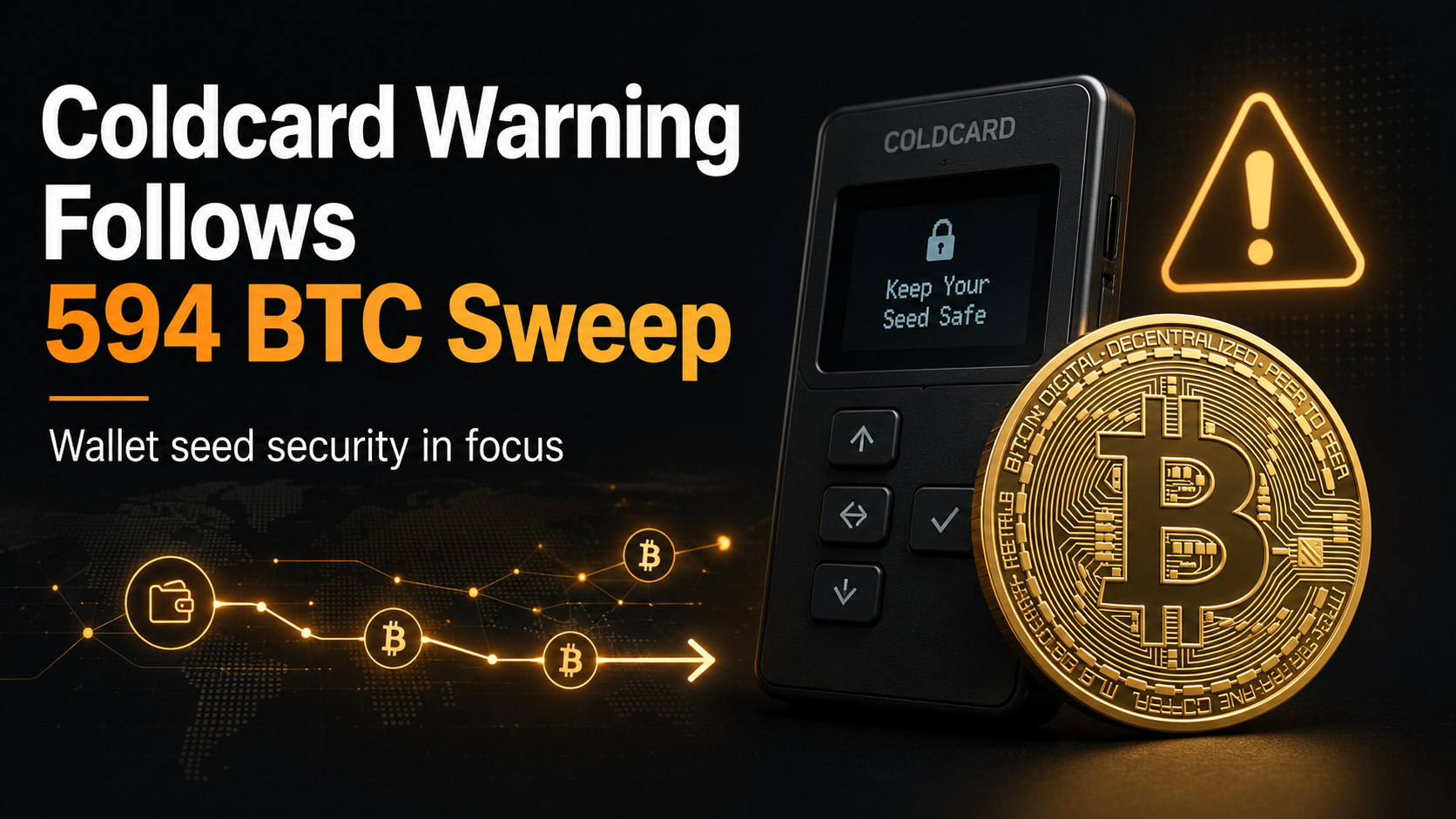
Coldcard Mk3の警告、3800万ドル相当のBitcoin掃討後に発生、原因は未確認

Coldcard Mk3の警告、3800万ドル相当のBitcoin掃討後に発生、原因は未確認

ビットコインハードウェアウォレットメーカーのCoinkiteは、4.0.1以降のすべてのMk3ファームウェアバージョンを含むColdcardデバイスに影響を与えるシード生成の問題についてユーザーに警告しました。この警告は、セキュリティ研究者が約3,800万ドル相当の594.48 BTCの組織的な移転を調査している中で出されました。しかし、Coldcardの問題がこれらの送金を引き起こしたことを確認

関連記事

もっと見る
WTI原油価格、81ドルを2%下回る:トレーダーが注目すべきポイント

WTI原油価格、81ドルを2%下回る:トレーダーが注目すべきポイント

WTI 原油価格は日中2%下落し、1バレルあたり81ドルを割り込みました。OIL(WTI) は中東リスク、在庫関連のニュース、そしてマクロ見通しの見直しによって引き起こされた変動局面を経て、再び下落圧力を受けています。この動きは単なる日中の調整ではありません。供給逼迫リスクと需要鈍化という2つの対照的なシナリオの間で、原油トレーダーがどれほど迅速にポジションを切り替えているかを示しています。重要な

AMZN株価、決算後に急騰:アマゾン社のAI投資、ついに実を結んでいるか?

AMZN株価、決算後に急騰:アマゾン社のAI投資、ついに実を結んでいるか?

Amazonの2026年第2四半期決算後、AMZN株は急騰しました。投資家は、AWSの成長加速、小売事業の執行力強化、広告収入の増加、そして大幅に拡大したAI投資計画に対して反応しました。AMZNUSDT を注視するトレーダーにとって、重要な問いはもはや「AmazonがAIに積極的な投資を行っているかどうか」ではありません。その点は明らかです。真の問いは、その投資がコストを正当化する十分な成長をも

AIテックセクターは弱気相場に入っているのでしょうか?

AIテックセクターは弱気相場に入っているのでしょうか?

AI技術セクターには本格的な圧力がかかっています。半導体株は今年最も急激な調整の一つを経験し、ナスダック100も修正ゾーンに近づき、トレーダーたちは NVDAUSDT と SOXLUSDT を押し上げたAI取引がとうとう行き過ぎたのではないかと疑問を抱いています。明確な答えはこうです:AI取引の一部はすでに弱気相場に入っていますが、より広範なAI技術サイクルはまだ明確に崩れていません。この区別は重


CXMT株式、時価総額4兆円突破で13%超上昇

CXMT株式、時価総額4兆円突破で13%超上昇

長鑫存儲(CXMT)は、上場初日の始値から13%以上上昇し、時価総額が4兆元を超え、CXMTUSDT が再び中国半導体取引の中心に位置することになりました。この動きは、今年最も劇的なA株デビューの一つをさらに拡大するもので、CXMTは上海STAR市場に8.66元のIPO価格で上場し、初日の終値は49元で、時価総額は約3.28兆元となりました。時価総額が4兆元を超えると、議論の焦点が変わります。CX

MEXCに新規登録
新規登録 & 最大 10,000 USDT 先物ボーナス を獲得

MEXCコミュニティに参加する

公式Telegramチャネルから、最新の上場情報・イベント・アップデートをリアルタイムで受け取れます。

2.5万人以上のメンバー

先物

BTC/USDT
ETH/USDT
GOLD(XAU)/USDT