Crypto gaming has long failed to meet expectations, but Animoca posted $97 million in profits last year, up 185% from 2023.Crypto gaming has long failed to meet expectations, but Animoca posted $97 million in profits last year, up 185% from 2023.

Animoca Seeks US IPO, Is GameFi Still Worth Betting On?

2025/05/23 14:35
7 min read

By Steven Ehrlich , Unchained

Compiled by: Felix, PANews

Cryptocurrencies are all the rage again. Bitcoin hit an all-time high of $111,814, Coinbase became the first cryptocurrency company to enter the S&P 500, and more crypto companies are looking to go public.

Among them is Animoca Brands, a Hong Kong-based Web3 company whose shares are traded in the private market and whose business scope covers various fields such as NFT and crypto games as well as investment platform (with a portfolio of more than 500 companies).

The company, which was delisted from the Australian Stock Exchange in 2020 due to its links to cryptocurrencies, has seen its valuation grow from $100 million to $5.9 billion in 2022, a dramatic turnaround during the pandemic. However, it faded from public view during the crypto winter, the NFT crash, and the subsequent memecoin craze. Adding insult to injury, the GameFi craze has failed to attract much attention to a $180 billion global gaming market estimated by Oppenheimer & Co.

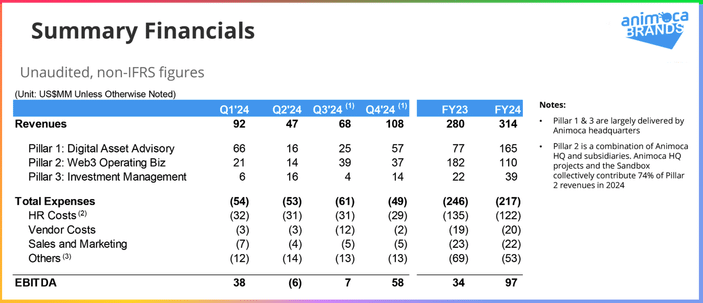
Now, under the leadership of CEO Yat Siu, Animoca has developed a profitable business strategy. According to unaudited financial statements published on the company's website, Animoca made $97 million in profit last year, an increase of 185% from 2023.

Now, Animoca has become one of many multinational companies seeking to strengthen business ties with the United States, including listing on the Nasdaq or New York Stock Exchange, as the Trump administration's crypto-friendly policies have swayed it. "We think the U.S. is going to be the largest crypto market in the world, so it would be foolish for us not to try to enter that market," Siu said in an interview. But he was careful to say that listing in the U.S. is just one of many opportunities the company is currently exploring.

What happens to Animoca? That will depend on how well GameFi and NFTs raise money, and whether investors buy into Animoca’s claims that it’s the best “shovel” investment in the GameFi movement.

Gaming industry faces a cold reception

Although the Trump administration's tariffs have little impact on the global gaming industry, the industry is still highly susceptible to changes in the macroeconomic situation. Martin Yang, senior analyst at Oppenheimer Equity Research, said: "Overall, the gaming industry is doing OK, but not as well as during the COVID-19 pandemic. The gaming industry has experienced two years of strong growth, but now the overall growth rate may only be 3% to 6% per year."

For GameFi, which primarily exists in the mobile gaming market, the situation is even more worrying. The market downturn may seem counterintuitive to outside observers due to the freemium model and relatively low costs of mobile games, but it is an important detail to understand about the gaming industry because it explains why crypto games have had difficulty catching on.

“The feeling was, ‘Oh, people either don’t pay for games at all or they pay very little,’ so the mobile model was thought to be viable and the macro environment was challenging,” Mike Hicke, senior analyst at The Benchmark Company, said in an interview. “But in fact, starting a few years ago, we found that this is the most vulnerable market.” He also said that even many large independent mobile game studios, such as Zynga, have been acquired, and many studios are facing layoffs.

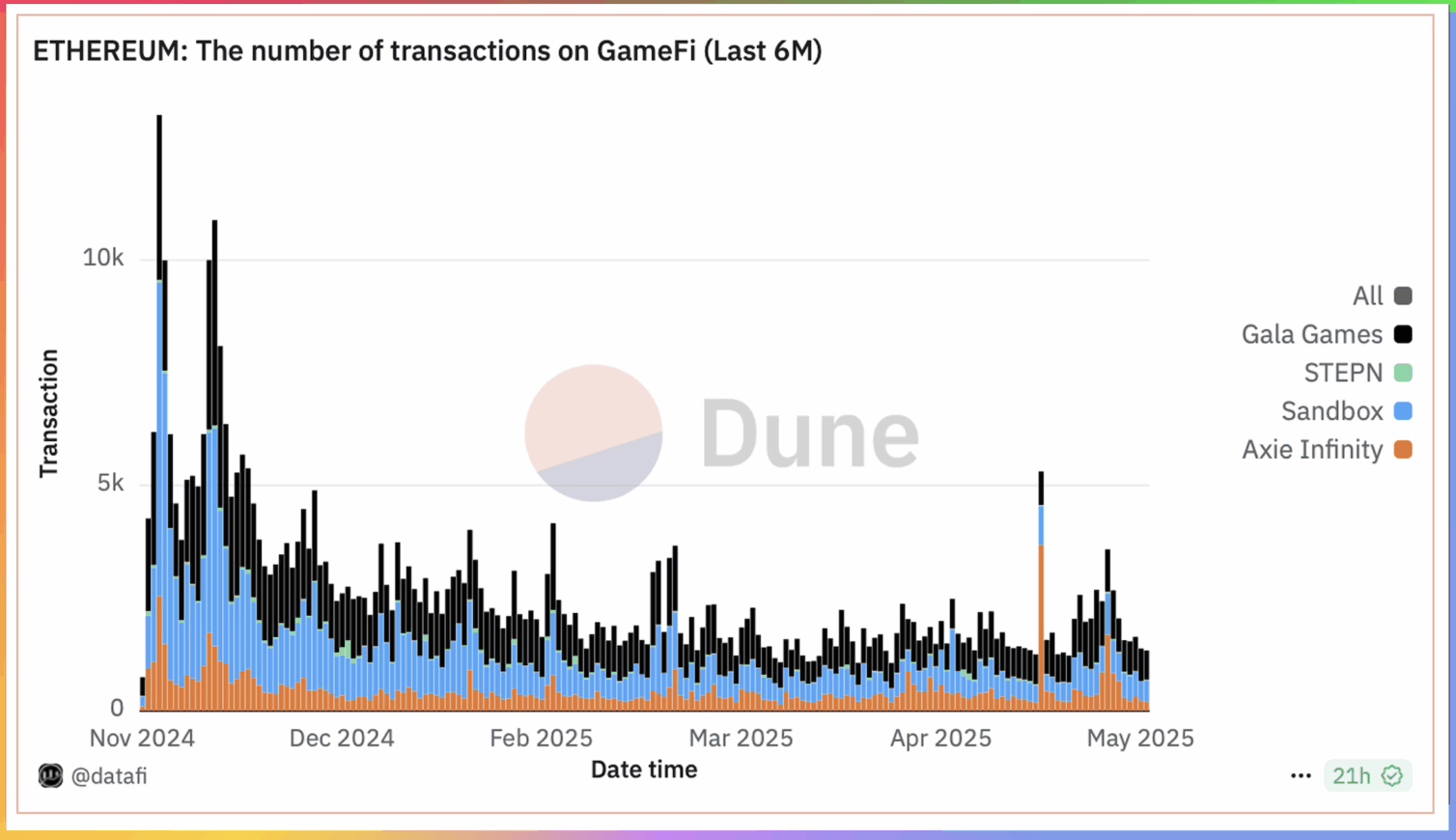
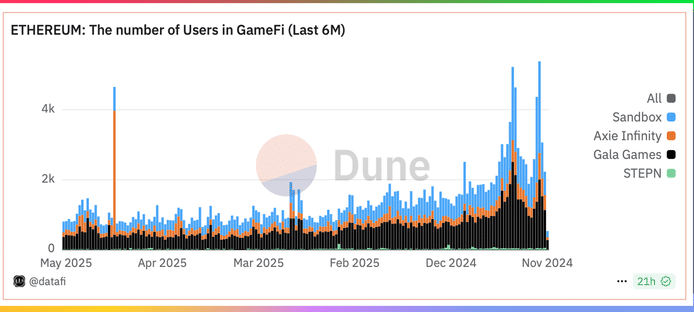
How do these trends relate to the crypto space? The data shows that GameFi is underperforming, though this may also be exacerbated by the fact that GameFi’s loyal user base is much smaller than the overall gaming market. Ethereum, the dominant blockchain in the space, has seen a significant drop in key metrics such as transaction volume and number of users, as shown in the chart below (the second chart should be read from right to left).
Animoca Seeks US IPO, Is GameFi Still Worth Betting On?

Animoca Seeks US IPO, Is GameFi Still Worth Betting On?

Animoca ’s B2B layout

In this environment, Animoca’s profitability has almost tripled in a year. How did it do it? By becoming the primary liquidity engine, or market maker, for GameFi. Siu believes that for Animoca, providing financial infrastructure support to these companies, such as an over-the-counter trading desk, is more stable, safer, and potentially more profitable than launching more games in an already crowded environment. “This is the evolution of the business,” he said. “We know that a lot of small companies launching games lack this infrastructure and don’t know how to do it. We buy their tokens and provide capital market support.” It sounds like a financial business, but it’s actually just an extension of the so-called issuance business.

How does this affect Animoca’s business? In 2023, the company generated the majority of its revenue from Web3 operations, including wholly owned projects such as virtual worlds, chess games, and online education platforms. But that revenue fell 39.5% from 2023 to 2024, an extremely boom year for cryptocurrencies. Yet the company’s profits soared 185% year-over-year. The reason? A 114% increase in its digital asset advisory business, where all capital markets activity is concentrated.
Animoca Seeks US IPO, Is GameFi Still Worth Betting On?

Can this situation continue?

Delta-neutral strategies such as market making are profitable both in and outside of crypto, and the data suggests that Animoca has found product-market fit in its unique area of expertise. But investors in this business need to believe that the company can continue to grow this aspect of revenue, especially as GameFi's key metrics continue to be sluggish.

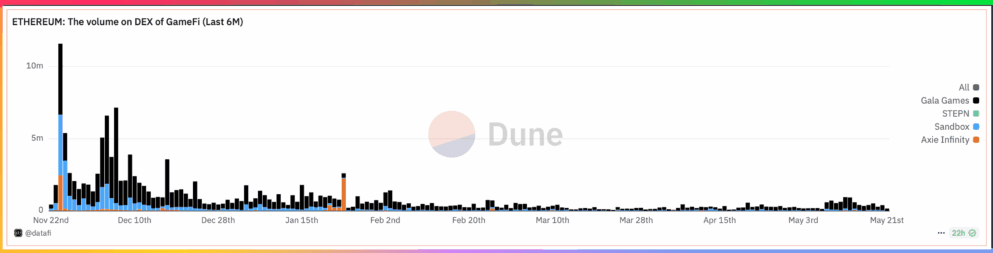
This is a difficult question to answer. One telling indicator is the volume of GameFi tokens on DEXs. As shown in the chart below, which focuses only on Ethereum-based tokens, the overall trend is downward, although daily trading volume does reach several hundred thousand dollars. Other blockchains such as Polygon and BNB also show the same trend.

This is important because DEX volume is a truer reflection of actual user demand for certain tokens, while CEX volume is more often seen as speculative. It is unclear what percentage of this volume is derived from work Animoca does for its clients, which is a significant blind spot for investors.
Animoca Seeks US IPO, Is GameFi Still Worth Betting On?

The optimistic reading of Animoca’s performance is that the company has found a way to operate profitably until it can catch the next GameFi wave, if and when it arrives. To that end, Siu said Trump’s support for the crypto market will be particularly important, as the poor regulatory environment in the U.S. has prevented major U.S. gaming companies from getting involved in the space.

“We work with large institutions and we’re actually guiding them into crypto,” Siu said. “It’s somewhat credible to do that [globally], but in the U.S. it can be difficult to talk to the big gaming companies. They do talk to us a lot and say, ‘Tokens are interesting, we’ve got to look into this.’ But… if the legal nature of something [the legality of tokens] isn’t completely clear, then you have to listen to the lawyers’ speculation.” Siu’s implication is that his call for his involvement in crypto will be rejected.

If Siu and Animoca can get a giant like EA Sports on board (a big if, of course), then perhaps another major problem with crypto gaming can be solved: poor playability and a lack of enthusiasm from players about the industry’s over-financialization. “When you force a mechanism into the normal gaming experience that’s just for profit and doesn’t improve the gaming experience, players are going to resent that kind of corporate-led monetization strategy,” says analyst Mike Hicke.

Related reading: A look at 17 Web3 games that will be discontinued in 2025: The decline of blockchain games is due to financial difficulties and a crisis of confidence

Disclaimer: The articles reposted on this site are sourced from public platforms and are provided for informational purposes only. They do not necessarily reflect the views of MEXC. All rights remain with the original authors. If you believe any content infringes on third-party rights, please contact service@support.mexc.com for removal. MEXC makes no guarantees regarding the accuracy, completeness, or timeliness of the content and is not responsible for any actions taken based on the information provided. The content does not constitute financial, legal, or other professional advice, nor should it be considered a recommendation or endorsement by MEXC.

You May Also Like

Botanix launches stBTC to deliver Bitcoin-native yield

Botanix launches stBTC to deliver Bitcoin-native yield

The post Botanix launches stBTC to deliver Bitcoin-native yield appeared on BitcoinEthereumNews.com. Botanix Labs has launched stBTC, a liquid staking token designed to turn Bitcoin into a yield-bearing asset by redistributing network gas fees directly to users. The protocol will begin yield accrual later this week, with its Genesis Vault scheduled to open on Sept. 25, capped at 50 BTC. The initiative marks one of the first attempts to generate Bitcoin-native yield without relying on inflationary token models or centralized custodians. stBTC works by allowing users to deposit Bitcoin into Botanix’s permissionless smart contract, receiving stBTC tokens that represent their share of the staking vault. As transactions occur, 50% of Botanix network gas fees, paid in BTC, flow back to stBTC holders. Over time, the value of stBTC increases relative to BTC, enabling users to redeem their original deposit plus yield. Botanix estimates early returns could reach 20–50% annually before stabilizing around 6–8%, a level similar to Ethereum staking but fully denominated in Bitcoin. Botanix says that security audits have been completed by Spearbit and Sigma Prime, and the protocol is built on the EIP-4626 vault standard, which also underpins Ethereum-based staking products. The company’s Spiderchain architecture, operated by 16 independent entities including Galaxy, Alchemy, and Fireblocks, secures the network. If adoption grows, Botanix argues the system could make Bitcoin a productive, composable asset for decentralized finance, while reinforcing network consensus. This is a developing story. This article was generated with the assistance of AI and reviewed by editor Jeffrey Albus before publication. Get the news in your inbox. Explore Blockworks newsletters: Source: https://blockworks.co/news/botanix-launches-stbtc
Share
BitcoinEthereumNews2025/09/18 02:37
Unprecedented Surge: Gold Price Hits Astounding New Record High

Unprecedented Surge: Gold Price Hits Astounding New Record High

BitcoinWorld Unprecedented Surge: Gold Price Hits Astounding New Record High While the world often buzzes with the latest movements in Bitcoin and altcoins, a traditional asset has quietly but powerfully commanded attention: gold. This week, the gold price has once again made headlines, touching an astounding new record high of $3,704 per ounce. This significant milestone reminds investors, both traditional and those deep in the crypto space, of gold’s enduring appeal as a store of value and a hedge against uncertainty. What’s Driving the Record Gold Price Surge? The recent ascent of the gold price to unprecedented levels is not a random event. Several powerful macroeconomic forces are converging, creating a perfect storm for the precious metal. Geopolitical Tensions: Escalating conflicts and global instability often drive investors towards safe-haven assets. Gold, with its long history of retaining value during crises, becomes a preferred choice. Inflation Concerns: Persistent inflation in major economies erodes the purchasing power of fiat currencies. Consequently, investors seek assets like gold that historically maintain their value against rising prices. Central Bank Policies: Many central banks globally are accumulating gold at a significant pace. This institutional demand provides a strong underlying support for the gold price. Furthermore, expectations around interest rate cuts in the future also make non-yielding assets like gold more attractive. These factors collectively paint a picture of a cautious market, where investors are looking for stability amidst a turbulent economic landscape. Understanding Gold’s Appeal in Today’s Market For centuries, gold has held a unique position in the financial world. Its latest record-breaking performance reinforces its status as a critical component of a diversified portfolio. Gold offers a tangible asset that is not subject to the same digital vulnerabilities or regulatory shifts that can impact cryptocurrencies. While digital assets offer exciting growth potential, gold provides a foundational stability that appeals to a broad spectrum of investors. Moreover, the finite supply of gold, much like Bitcoin’s capped supply, contributes to its perceived value. The current market environment, characterized by economic uncertainty and fluctuating currency values, only amplifies gold’s intrinsic benefits. It serves as a reliable hedge when other asset classes, including stocks and sometimes even crypto, face downward pressure. How Does This Record Gold Price Impact Investors? A soaring gold price naturally raises questions for investors. For those who already hold gold, this represents a significant validation of their investment strategy. For others, it might spark renewed interest in this ancient asset. Benefits for Investors: Portfolio Diversification: Gold often moves independently of other asset classes, offering crucial diversification benefits. Wealth Preservation: It acts as a robust store of value, protecting wealth against inflation and economic downturns. Liquidity: Gold markets are highly liquid, allowing for relatively easy buying and selling. Challenges and Considerations: Opportunity Cost: Investing in gold means capital is not allocated to potentially higher-growth assets like equities or certain cryptocurrencies. Volatility: While often seen as stable, gold prices can still experience significant fluctuations, as evidenced by its rapid ascent. Considering the current financial climate, understanding gold’s role can help refine your overall investment approach. Looking Ahead: The Future of the Gold Price What does the future hold for the gold price? While no one can predict market movements with absolute certainty, current trends and expert analyses offer some insights. Continued geopolitical instability and persistent inflationary pressures could sustain demand for gold. Furthermore, if global central banks continue their gold acquisition spree, this could provide a floor for prices. However, a significant easing of inflation or a de-escalation of global conflicts might reduce some of the immediate upward pressure. Investors should remain vigilant, observing global economic indicators and geopolitical developments closely. The ongoing dialogue between traditional finance and the emerging digital asset space also plays a role. As more investors become comfortable with both gold and cryptocurrencies, a nuanced understanding of how these assets complement each other will be crucial for navigating future market cycles. The recent surge in the gold price to a new record high of $3,704 per ounce underscores its enduring significance in the global financial landscape. It serves as a powerful reminder of gold’s role as a safe haven asset, a hedge against inflation, and a vital component for portfolio diversification. While digital assets continue to innovate and capture headlines, gold’s consistent performance during times of uncertainty highlights its timeless value. Whether you are a seasoned investor or new to the market, understanding the drivers behind gold’s ascent is crucial for making informed financial decisions in an ever-evolving world. Frequently Asked Questions (FAQs) Q1: What does a record-high gold price signify for the broader economy? A record-high gold price often indicates underlying economic uncertainty, inflation concerns, and geopolitical instability. Investors tend to flock to gold as a safe haven when they lose confidence in traditional currencies or other asset classes. Q2: How does gold compare to cryptocurrencies as a safe-haven asset? Both gold and some cryptocurrencies (like Bitcoin) are often considered safe havens. Gold has a centuries-long history of retaining value during crises, offering tangibility. Cryptocurrencies, while newer, offer decentralization and can be less susceptible to traditional financial system failures, but they also carry higher volatility and regulatory risks. Q3: Should I invest in gold now that its price is at a record high? Investing at a record high requires careful consideration. While the price might continue to climb due to ongoing market conditions, there’s also a risk of a correction. It’s crucial to assess your personal financial goals, risk tolerance, and consider diversifying your portfolio rather than putting all your capital into a single asset. Q4: What are the main factors that influence the gold price? The gold price is primarily influenced by global economic uncertainty, inflation rates, interest rate policies by central banks, the strength of the U.S. dollar, and geopolitical tensions. Demand from jewelers and industrial uses also play a role, but investment and central bank demand are often the biggest drivers. Q5: Is gold still a good hedge against inflation? Historically, gold has proven to be an effective hedge against inflation. When the purchasing power of fiat currencies declines, gold tends to hold its value or even increase, making it an attractive asset for preserving wealth during inflationary periods. To learn more about the latest crypto market trends, explore our article on key developments shaping Bitcoin’s price action. This post Unprecedented Surge: Gold Price Hits Astounding New Record High first appeared on BitcoinWorld.
Share
Coinstats2025/09/18 02:30
China Bans Nvidia’s RTX Pro 6000D Chip Amid AI Hardware Push

China Bans Nvidia’s RTX Pro 6000D Chip Amid AI Hardware Push

TLDR China instructs major firms to cancel orders for Nvidia’s RTX Pro 6000D chip. Nvidia shares drop 1.5% after China’s ban on key AI hardware. China accelerates development of domestic AI chips, reducing U.S. tech reliance. Crypto and AI sectors may seek alternatives due to limited Nvidia access in China. China has taken a bold [...] The post China Bans Nvidia’s RTX Pro 6000D Chip Amid AI Hardware Push appeared first on CoinCentral.
Share
Coincentral2025/09/18 01:09