Airdrop

An Airdrop is a distribution of free tokens to a community, typically used as a marketing tool or a reward for early protocol adopters and testers. In 2026, the "points-to-airdrop" model has matured into merit-based incentive programs that utilize Sybil-resistance and Proof-of-Humanity to filter out bots. Airdrops remain a primary method for decentralized governance (DAO) bootstrapping. Follow this tag for the latest on retroactive rewards, eligibility criteria, and how to participate in the most anticipated token distributions in the ecosystem.

5460 Articles
Created: 2026/02/02 18:52
Updated: 2026/02/02 18:52

Top 7 Upcoming Crypto Airdrops in 2025 (UPDATED)

Top 7 Upcoming Crypto Airdrops in 2025 (UPDATED)

Discover the top 6 upcoming crypto updates and airdrops for 2025, including IPO Genie ($IPO) presale priced at $0.0012. Don’t miss these next big trends.

Author: Blockchainreporter
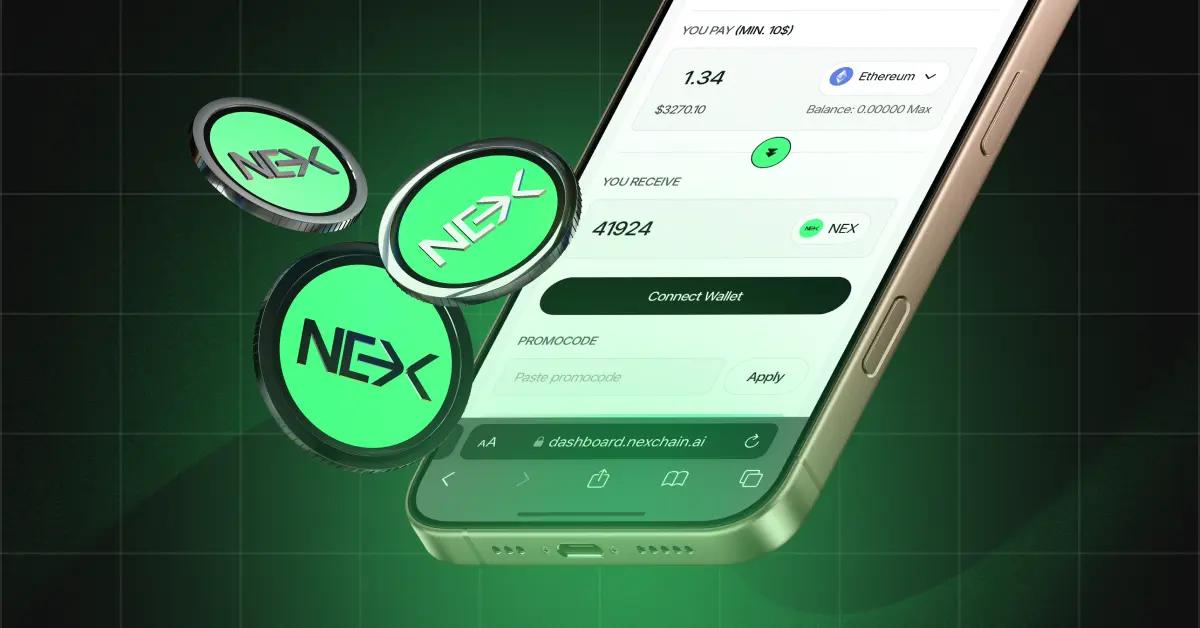
Humanity Protocol Achieves Record High as Nexchain AI Presale Nears Target, Driven by Testnet 2.0 and 100% Bonus

Humanity Protocol Achieves Record High as Nexchain AI Presale Nears Target, Driven by Testnet 2.0 and 100% Bonus

The crypto market has entered an exciting phase as Humanity Protocol has achieved record growth. With a strong focus on […] The post Humanity Protocol Achieves Record High as Nexchain AI Presale Nears Target, Driven by Testnet 2.0 and 100% Bonus appeared first on Coindoo.

Author: Coindoo
Speculation recedes, infrastructure rises, and the NFT market turns to pragmatism in 2025

Speculation recedes, infrastructure rises, and the NFT market turns to pragmatism in 2025

NFT trading activity showed signs of recovery in the third quarter of 2025, breaking the long-term downward trend in the post-hype period. After two years of market contraction and narrative shift, on-chain markets have found a new foothold, with growth no longer driven by blue-chip collectibles or speculative art, but by lower-cost infrastructure, loyalty programs, and sports-related assets. These assets are traded for utility, not status. NFT transaction volume rebounds, sales hit record high As Ethereum's scaling upgrades drive transaction activity to L2, Solana has established itself with its high throughput and compression technology, while Bitcoin inscriptions have evolved into a collectible culture that rises and falls in tandem with the transaction fee market. The focus of the NFT market has shifted to low-cost infrastructure and practical application scenarios. Today, the key to driving market growth is the level of transaction fees and distribution channels, rather than avatar-based NFTs. The Dencun upgrade reshaped the economic landscape. Ethereum's EIP-4844 proposal reduced the data costs of rollups, lowered L2 transaction fees to a few cents, and supported gas-free or sponsored minting processes for mainstream users. After the upgrade, L2 layer transaction fees have decreased by more than 90%, a change that has been reflected in minting behavior and has also driven Base to become a core distribution channel. Within the Solana ecosystem, compression technology enables large-scale NFT issuance for loyalty programs and access-based applications. The deployment cost of 10 million compressed NFTs is approximately 7.7 SOL, and even under high load, the median transaction fee is close to $0.003. Bitcoin Inscriptions, on the other hand, have developed independently, with their development closely tied to the memory pool cycle and miner revenue. As of February 2025, the number of Inscriptions has exceeded 80 million, ranking among the top three in terms of historical NFT sales. Demand rebounds but concerns remain According to DappRadar data, NFT transaction volume nearly doubled in the third quarter of 2025, reaching $1.58 billion, with 18.1 million transactions, setting a new record for the number of quarterly transactions. Sports NFTs performed particularly well, with trading volume surging 337% month-over-month to $71.1 million. The cyclical utility value, rights, and loyalty benefits of these assets decouple consumption behavior from floor prices. The market initially rebounded rapidly in the summer, but then cooled down: According to CryptoSlam, sales reached $574 million in July 2025 (the second highest for the year), but in September, sales fell by about 25% month-on-month due to a decline in risk appetite in the overall crypto market. This trend confirms that the market has entered a new phase of "lower average selling prices," and also indicates that even if the number of unique users and the category of utility applications remain stable, the total transaction value of NFTs will still fluctuate with the overall crypto market. The crucial role of distribution channels is becoming increasingly apparent. Wallets with built-in key functionality and sponsorship fee mechanisms eliminate the friction costs that previously hindered user adoption. Coinbase smart wallets offer key login and gas fee sponsorship services in supported apps; Phantom announced 15 million monthly active users in January 2025, a user base that provides traffic support for mobile and social minting channels. In blockchain networks where culture and social traffic mutually empower each other, this distribution and reach capability is crucial, and Base is a typical example. This year, thanks to low-cost minting, Zora's rapid minting pace, and distribution channels associated with Farcaster, Base has surpassed Solana in NFT transaction volume on some metrics. This trend means that creators are now starting to model distribution data and then match fee schemes when choosing a distribution platform. Royalties are no longer the core of the revenue structure After the market peak in 2022, creators' royalty income fell sharply as competition among trading platforms made royalties optional in most markets. According to Nansen data, royalty revenue hit a two-year low in 2023 and failed to recover to previous levels. In contrast, a growing trend is the emergence of trading platforms that support mandatory royalty collection. In late 2023, Magic Eden and Yuga Labs jointly launched an Ethereum trading platform that mandates royalty collection from creators, providing a protected distribution channel for influential brands. The current market has formed a dual-track structure: in the open market, low commission rates, primary market sales, intellectual property (IP) cooperation, and retail linkage constitute the main sources of profit for creators; while the closed ecosystem mandates royalties through contractual agreements and undertakes the issuance of high-end NFTs. In areas where incentive mechanisms drive fund flows, the market share of trading platforms remains dynamic. In the Solana ecosystem, Magic Eden and Tensor form a duopoly, with their market share fluctuating depending on the rewards program and program design. Their respective market share usually ranges from 40% to 60% at different times. This is not a structural change, but rather the result of the incentive cycle; the market share chart may appear to be shifting, but it will eventually revert to the mean. For creators, the key takeaway is to negotiate distribution plans during the distribution planning stage, rather than defaulting to a single platform. User flow reveals short-term development path The reason why sports, ticketing and loyalty programs can scale up is because their benefits are cyclical and repetitive, and the core on-chain functions are already embedded in existing ticketing and e-commerce processes. DappRadar's data for the third quarter of 2025 shows that the growth rate of sports NFT trading volume has surpassed the overall market, and this does not yet include full season or league-level collaboration projects. The growth in the gaming sector has been more robust. According to Messari data, Immutable's zkEVM architecture and real-time data show continued transaction growth. Its design, which "ensures security at the Ethereum level and optimizes user experience at the L2 layer," is highly compatible with the needs of asset custody and continuous secondary transaction fees. Intellectual property and licensing partnerships are another important bridge for NFTs to move from digital collectibles (JPEGs) to consumer channels. Pudgy Penguins has entered more than 3,000 Walmart stores, building a channel from NFTs to physical retail and licensing revenue. For creators, the costs and user experience of various blockchains are now clearly discernible: Ethereum's L1 layer still dominates the fields of traceability authentication and high-value artworks. Gas fees on most platforms fluctuate greatly, and royalty collection is an optional model. After the Dencun upgrade, transaction fees on Ethereum L2 layers (such as Base) dropped to a few cents, supporting sponsored or gas-free transactions, and Base and the Farcaster ecosystem provide social distribution channels. Solana's compression technology keeps the issuance cost of millions of NFTs at the dollar level, and it achieves wide reach by relying on a mobile-first wallet ecosystem. Bitcoin inscriptions focus on the realm of scarce collectibles, and rising transaction fees are a characteristic of the market rather than a flaw. Evolution of the macro-environment The annualized transaction volume of the NFT market is expected to be between $5 billion and $6.5 billion in 2025, with the average selling price remaining between $80 and $100 in the first half of the year. This level forms the baseline for the market scenario next year. Taking CryptoSlam’s monthly sales as the core data, combined with DappRadar’s category analysis: Bear Market Scenario: If the crypto market stagnates and the average selling price falls, the total NFT transaction volume may drop to $4 billion to $5 billion. Fee-sensitive applications will be concentrated in Solana and Ethereum L2 layer, the Ethereum L1 layer art market will remain stable, and the inscription market will fluctuate with the Bitcoin transaction fee cycle. Baseline Scenario: If embedded wallets and social minting channels continue to expand, sports and live events projects scale up across seasons, and brands try to issue new products on mandatory royalty platforms, the total NFT transaction volume is expected to reach $6 billion to $9 billion. Bull Market Scenario: If mobile distribution achieves breakthrough growth (Base and key login become the standard for minting processes, Phantom's monthly active users exceed 20 million, ticketing pilot projects become the mainstream solution, and game assets generate continuous trading), the total NFT transaction volume could reach $10 billion to $14 billion. In all three scenarios, Ethereum L2 and Solana will dominate market share, Ethereum L1 will focus on niche markets, and Bitcoin inscriptions will remain a stable sector as a scarce collectible. Six key variables determine the pace of growth 1. Wallet User Experience and Distribution Capabilities: Key metrics include key adoption rate, sponsorship fee usage, and monthly active users of Phantom and Coinbase smart wallets. 2. The scope of mandatory royalty collection: affecting the issuance of high-end NFTs, including OpenSea’s policy shift and the health of trading platforms in the Ethereum ecosystem that support creators. 3. Scaling sports and ticketing partnerships: Expanding from pilot projects to full-season partnerships, converting one-time transactions into recurring revenue. 4. The issuance pace of Base and Zora: The sustainability of social distribution channels can be judged by the monthly minting volume, the proportion of Base in the total NFT transaction volume, and the linkage effect of Farcaster Frames. 5. Solana compression technology adoption rate: By compressing the amount of NFT minted and the deployment cost per million assets, we can determine whether loyalty programs and media applications have moved from pilot programs to normalization. 6. Bitcoin transaction fee cycle: Its correlation with inscriptions and runes will vary depending on the congestion of the mempool, continuously affecting the pricing of collectibles. However, two risks remain. Wash trading and spam can still distort GMV and sales, so it’s safer to look at the dashboard filtered by average sales and organic search. Trading platform incentive mechanisms can create the illusion of a “market share shift” on market share charts (which is actually the effect of airdrop cycles), especially in Solana’s duopoly. Therefore, creators should take this volatility into account in their distribution planning from the outset. Another operational constraint is revenue design: in an open market where royalties are mostly optional, primary market sales, intellectual property licensing, and retail partnerships bear a greater share of the revenue burden. Closed platforms with mandatory royalties can only provide high-end distribution channels for a few brands, which are difficult for most creators to use. Industry transformation from "end game" to "migration" The hype surrounding JPEG has subsided, NFT infrastructure costs have decreased significantly, and applications are shifting towards ticketing, sports, gaming, and intellectual property. Wallets and distribution systems are also beginning to penetrate users' existing scenarios. The blue-chip NFT flagship project, "Boring Ape Yacht Club," remains in a precarious position for investors who poured six figures into purchasing AWS-hosted JPEGs. An NFT from this series that was sold for over 74 ETH in 2021 is now worth only 9 ETH, a drop of 87% in three years. The speculative frenzy in the non-fungible token space may have ended, but will this allow the underlying technology to gain acceptance in real-world practical applications? The answer remains to be seen, but the existing signs are encouraging, though this hope is irrelevant to those who are trapped at high prices. In the third quarter of 2025, the NFT market closed with a transaction volume of US$1.58 billion and 18.1 million sales, and the market structure has continued to evolve towards practicality.

Author: PANews
The Reload airdrop has distributed a total of 22,283 BNB to 120,000 wallets.

The Reload airdrop has distributed a total of 22,283 BNB to 120,000 wallets.

PANews reported on October 29 that, according to Lookonchain, the third $45 million "Reload" airdrop has been completed—distributing 7,768 BNB (worth $8.64 million) to 40,000 wallets. To date, the $45 million Reload airdrop initiated by BNB Chain and Four.meme has airdropped 22,283 BNB (worth $24.78 million) to approximately 120,000 wallets in three batches.

Author: PANews
Solana's Junk.Fun, a platform for recycling scrap tokens: On-chain "AiRecycle" helps reduce costs and increase revenue.

Solana's Junk.Fun, a platform for recycling scrap tokens: On-chain "AiRecycle" helps reduce costs and increase revenue.

Did you know that every time you receive a junk airdrop in your Solana wallet, it will deduct 0.002 SOL from your account? That's right, this is Solana's account rental mechanism. Some of you might be wondering, "I wasn't charged any rental fees when I created my Solana address." Okay, before understanding the Solana account mechanism, let's distinguish between the concepts of address and account. In the Solana architecture, an account is not the same as an address. Solana addresses are free to create, can receive assets, sign transactions, and do not occupy on-chain storage. This is crucial; it doesn't consume on-chain storage. When will "rent" be charged? It will be when on-chain storage is used. How is on-chain storage usage calculated? Let's say someone transfers USDC to you. The Solana system needs to create a "USDC Token" account, at which point 0.002 will be deducted from your SOL balance as a rental fee. Once the account is created, the USDC will be credited to your account. Another common situation is passively receiving junk coin airdrops. The system will automatically create a junk coin token account for you and deduct 0.002 SOL as rent. Your wallet will have more junk airdrops and less SOL. Therefore, the relationship between an address and an account is similar to having multiple accounts under your name, each receiving different tokens. Each account requires a 0.002 SOL rental fee. However, in many cases, opening an account is involuntary. The image below, created by Solscan, shows the status of the MEME token SBAE, where SOL Balance 0.002039 represents the rental fee. On the USDC page, although the SOL Balance is not displayed, the Owner Program is a Token Program, which means that rent still needs to be paid. Why is there a "rent"? The purpose of this system is actually to prevent state explosions, similar to DDoS attacks, and to prevent malicious individuals from endlessly issuing tokens on the blockchain. However, in reality, the goal is to reduce the cost of airdrops for legitimate projects, implementing a system where those who benefit pay for the rewards. Ironically, this has been exploited by many spam meme creators to fabricate fake token-holding address data. Is there any chance of recovering the rent? Junk.Fun addresses this issue. Junk.Fun is a token recycling platform within the Solana ecosystem. After recycling zero-value MEME or NFTs, users receive Credits. Credits can be directly withdrawn as SOL, or users can exchange them for Junk.Fun treasure chests to win $SOL tokens, physical prizes (such as iPhones), NFTs, and other rewards in future airdrops. During the first month of the campaign, Junk.Fun will be giving away at least $50,000 in prizes. Each time a user redeems a token, a fixed percentage of the transaction fee goes into a growing reward pool. Early adopters and partners will also receive a unique referral link. Access will be by invitation only for the first 48 hours. In fact, Solana’s current recycling tool has processed over 400,000 SOL, valued at over $900,000 USD, with over 100,000 addresses. The market demand is substantial and real. The Junk.Fun core modules include: 1) Bulk destruction and rental income recovery Select all junk tokens/NFTs with one click; destroy them in batches and close accounts; rent is automatically deposited into your Junk.Fun account. 2) Treasure Chest Lottery Purchase treasure chests with your Junk.Fun balance; There is a 46% chance of winning a prize in the lucky draw; Opening a legendary treasure can earn you up to 60% of the total prize pool. 3) Friend Recommendation System When a friend opens a treasure chest, the referrer receives a commission. In the later stages, Junk.Fun will become more gamified and fun. Several new PVP game modes will be added, allowing players to win treasure chests through battles and ultimately earn SOL (Skill Points). This scenario not only gives rise to PVP battles, but also to tournaments, social games, team competitions, and other scenarios. It evolves from "one-time use" to "continuous participation," from "recycling tools" to "gaming platforms," and from "wallet cleanup" to "entertainment ecosystem."

Author: PANews
Best Crypto to Buy Now as Truth Social Partners with Crypto.com for Web3 Expansion

Best Crypto to Buy Now as Truth Social Partners with Crypto.com for Web3 Expansion

President Trump’s Truth Social, one of the leading new-age right-wing social media platforms, has pushed its entire weight into crypto by partnering with Crypto.com. With hopes that the prediction market will be disrupted in a major way, eyes are now on whether this could influence people’s decisions when deciding the best crypto to buy now. […]

Author: The Cryptonomist
Don’t Miss The Crucial Season 2 Snapshot On Nov. 4!

Don’t Miss The Crucial Season 2 Snapshot On Nov. 4!

The post Don’t Miss The Crucial Season 2 Snapshot On Nov. 4! appeared on BitcoinEthereumNews.com. Spacecoin Airdrop: Don’t Miss The Crucial Season 2 Snapshot On Nov. 4! Skip to content Home Crypto News Spacecoin Airdrop: Don’t Miss the Crucial Season 2 Snapshot on Nov. 4! Source: https://bitcoinworld.co.in/spacecoin-airdrop-snapshot-guide/

Author: BitcoinEthereumNews
Solana Holds $185 Support, & Worldcoin Faces $0.40 Risk, While BlockDAG’s $432M+ Presale Marks It as the Best Crypto for 2025

Solana Holds $185 Support, & Worldcoin Faces $0.40 Risk, While BlockDAG’s $432M+ Presale Marks It as the Best Crypto for 2025

Crypto markets are showing renewed resilience as major altcoins attempt to stabilise after volatile weeks. The Solana (SOL) short term outlook remains constructive, holding firm above $185 despite consolidation after a 3,700% rally since 2022. Meanwhile, the Worldcoin (WLD) price prediction tilts cautiously bearish as WLD tests critical support around $0.80 amid a sharp drop […] The post Solana Holds $185 Support, & Worldcoin Faces $0.40 Risk, While BlockDAG’s $432M+ Presale Marks It as the Best Crypto for 2025 appeared first on Live Bitcoin News.

Author: LiveBitcoinNews
Charles Hoskinson Sees 10M Cardano Users, Big Privacy Push

Charles Hoskinson Sees 10M Cardano Users, Big Privacy Push

The post Charles Hoskinson Sees 10M Cardano Users, Big Privacy Push appeared on BitcoinEthereumNews.com. Charles Hoskinson predicts Cardano will reach over 10 million users by 2030. Privacy-focused blockchain could offer a 10x to 100x opportunity for crypto sector growth. Hoskinson criticizes H-1B visa abuse while praising India as a major talent producer globally. Cardano founder Charles Hoskinson shared his vision for the blockchain’s future in a recent podcast with Sujal Jethwani. The discussion covered adoption projections, privacy technology opportunities, and policy considerations affecting the cryptocurrency industry. Hoskinson shared his expectations for Cardano by 2030 and stated the network will likely have more than 10 million users. He noted that the blockchain has completed its governance and full decentralization phases, positioning it for recursive improvement and adoption growth. Founder Talk Ep 5 (@IOHK_Charles) Had fun conversation with the founder of the cult @Cardano Fav insights>Future of Cardano till 2030>Privacy last 100x opportunity?>Trump policies & Indian talent>Building billion dollar company Redemption arc of the $ETH killer pic.twitter.com/QQstWnMdCj — Sujal Jethwani (@SujalJethwani) October 27, 2025 Privacy Sector Presents Major Growth Potential The founder identified computational privacy as a major opportunity in cryptocurrency. “I think there’s a 10x to 100x opportunity in the computational privacy side,” Hoskinson stated. He explained that programmable privacy technologies are necessary to bring real-world assets and institutional players into the space. According to Hoskinson, approximately $10 trillion in real-world assets want to enter cryptocurrency but cannot do so on current platforms like Ethereum, Bitcoin, or Cardano without privacy capabilities. He highlighted technologies like Midnight as critical for enabling this institutional adoption. On blockchain durability, Hoskinson praised Solana’s resilience following the FTX collapse. “They have been able to improve their technology and recover from a catastrophic event,” he said. The network’s ability to ride meme coin adoption and build a strong DeFi ecosystem demonstrated the creativity needed for long-term survival. Indian Market Faces Policy…

Author: BitcoinEthereumNews
IPO Genie’s Crypto Marketing With Real World Asset Tokenisation

IPO Genie’s Crypto Marketing With Real World Asset Tokenisation

The post IPO Genie’s Crypto Marketing With Real World Asset Tokenisation appeared on BitcoinEthereumNews.com. Crypto News Crypto Marketing takes on a new avatar with IPO Genie’s real world asset tokenisation crypto 2025 Crypto marketing is maturing and fast! Hype-driven promos might cut it for some, but the real players are drawn to value-driven narratives. Celebrities who promote coins they barely understand, projects that make high promises of “revolutionizing DeFi,” then go radio silent post-launch, and Airdrop spams where projects give away tokens purely to boost follower counts don’t fool investors anymore. The antidote to hype is crypto marketing with value-driven narratives; solid tokenomics that are built to endure market cycles, and community-led governance that anchors transparency and accountability in every decision. 2025 Brings Real World Asset Tokenisation For Crypto Investors While some meme-coins might beat the odds and rally on pure sentiment, their momentum often fades as quickly as it rises. However, projects built on real utility, airtight tokenomics, and a community-led governance model outlast the noise due to their structure and substance. IPO Genie Sets An Example of Value-Driven Crypto Marketing While IPO Genie is not a traditional marketing platform, it is redefining what “crypto marketing” means in 2025. It is an AI-powered platform that tokenises private market deals like start-ups and pre-IPOs, and gives retail investors a chance to pick and choose the best deals and invest in them using their $IPO utility token. It leverages trust and credibility by giving investors direct access to tokenised private equity. Each listing on the IPO Genie platform is audited on-chain and carefully vetted using AI and human insights, filtering out speculative noise and spotlighting projects with tangible fundamentals. This approach turns the platform itself into a marketing statement that demonstrates transparency, structure, and measurable opportunity. Investors now respond to proof and product – IPO Genie is the poster child of this new era. Here…

Author: BitcoinEthereumNews