CEX

CEXs are platforms managed by centralized organizations that facilitate the trading of cryptocurrencies, offering high liquidity and user-friendly fiat on-ramps. Leaders like Binance, OKX, and Coinbase serve as the primary gateways for institutional and retail entry. In 2026, the industry focus is on Proof of Reserves (PoR), enhanced regulatory compliance, and hybrid models that offer self-custody options. This tag provides updates on exchange security, listings, and global market trends.

4213 Articles
Created: 2026/02/02 18:52
Updated: 2026/02/02 18:52

Base Lianchuang: A certain CEX's listing fee is as high as 9% of the total token supply, calling for permissionless on-chain listings

Base Lianchuang: A certain CEX's listing fee is as high as 9% of the total token supply, calling for permissionless on-chain listings

PANews reported on October 13th that Base co-founder Jesse Pollak posted on the X platform: "I've learned that a centralized exchange (CEX) is charging projects applying for listing a 9% fee on their token supply, and many other exchanges are charging fees of several percentage points. This practice is extremely harmful and has formed an industry monopoly. We must break this situation as soon as possible and promote a permissionless, on-chain coin listing mechanism."

Author: PANews
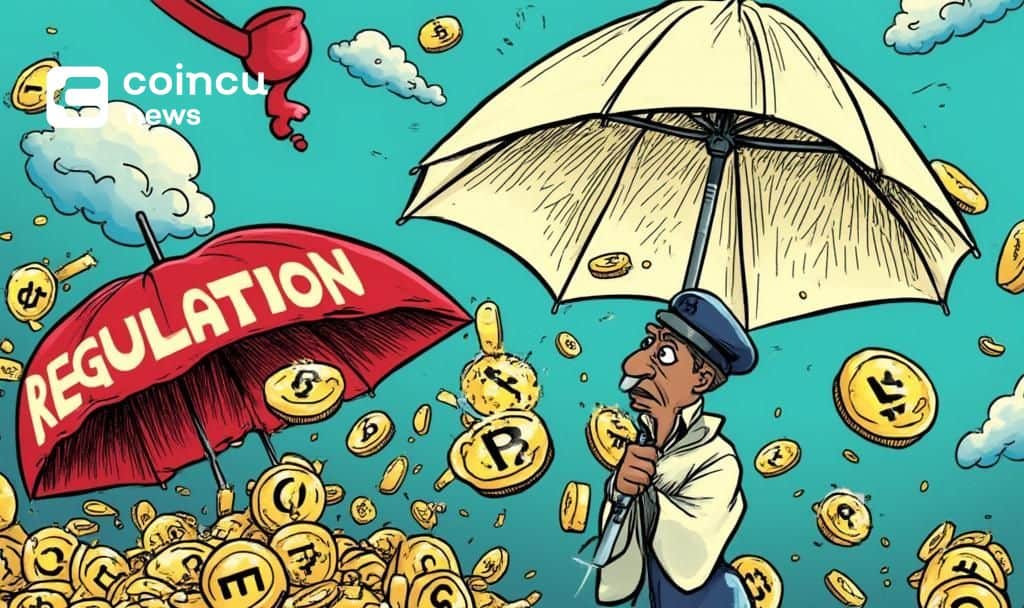
Altcoin Declines Triggered by CEX Liquidations, Says Arthur Hayes

Altcoin Declines Triggered by CEX Liquidations, Says Arthur Hayes

Detail: https://coincu.com/markets/cex-liquidations-altcoin-drops/

Author: Coinstats
Could Digitap ($TAP) Hit $22? The Viral Potential of its No-KYC Card Suggests It’s Possible

Could Digitap ($TAP) Hit $22? The Viral Potential of its No-KYC Card Suggests It’s Possible

The post Could Digitap ($TAP) Hit $22? The Viral Potential of its No-KYC Card Suggests It’s Possible appeared on BitcoinEthereumNews.com. The crypto market is cooling off after a strong October start. Bitcoin’s pump has slowed, Ethereum is consolidating below $4,400, and traders are once again hunting for the next crypto to explode. Amid all of this, one project is steadily becoming widely popular—Digitap ($TAP). This new crypto aims to change the rules for how no-KYC crypto cards work. Even though most crypto platforms tighten verification, Digitap is opening the door to true financial freedom—one that’s global, private, and built for the real world. And with an ongoing presale already closing in on the $1 million mark, investors are beginning to see why TAP might be one of the best altcoins to buy for the rest of 2025. Digitap’s No-KYC Card Model At the very center of Digitap’s success is its no-KYC card model, which lets users access crypto payment services without mandatory identity verification. This makes it an ideal choice for privacy-conscious users, freelancers, and those in regions where traditional banking access is limited. The Digitap card supports instant global transactions, multi-currency IBANs, and offshore account options, all connected to a smart wallet that features biometric and two-factor authentication. That means security without friction—users can spend crypto, swap to fiat, or hold multiple currencies in one place, all while maintaining full control of their data. It’s Visa-backed enabling full Apple Pay and Google Pay integration. With one tap, users can spend their crypto instantly—no middlemen, no waiting periods. Users can access fast, borderless finance at a fraction of the cost of traditional systems. Digitap wants to position itself as a privacy-first payment solution—one that could easily gain viral popularity as mainstream users seek alternatives to restrictive financial platforms. Roadmap: Digitap’s Path Toward Global Expansion Digitap’s roadmap shows the project is actually delivering. Under the Development phase, the team has already…

Author: BitcoinEthereumNews
Dogecoin Turned $10,000 into $14,100 in Q3 2025, This DOGE Rival Could Turn a Similar Bet into $100k by Year-End

Dogecoin Turned $10,000 into $14,100 in Q3 2025, This DOGE Rival Could Turn a Similar Bet into $100k by Year-End

The post Dogecoin Turned $10,000 into $14,100 in Q3 2025, This DOGE Rival Could Turn a Similar Bet into $100k by Year-End appeared first on Coinpedia Fintech News Dogecoin has roared higher through Q3 2025, fueling big gains for early believers. At the start of the quarter, DOGE hovered near $0.178, and by its close, it had pushed past $0.250, representing a surge of approximately 41%. That rally meant a $10,000 stake would have grown to roughly $14,100 in just three months. However, …

Author: CoinPedia
Top 5 Reactions From Experts On Historic Crypto Market Crash

Top 5 Reactions From Experts On Historic Crypto Market Crash

The post Top 5 Reactions From Experts On Historic Crypto Market Crash appeared on BitcoinEthereumNews.com. Top 5 experts in the crypto market took to the social media platform X today to share their opinions on the latest crash. In the past 24 hours, the crypto market has experienced intense volatility, led by Bitcoin (BTC). The crypto market plunge is primarily due to heightened U.S.-China trade tensions. U.S. President Donald Trump recently announced plans to impose a 100% tariff on Chinese imports. Researcher Emphasizes Patience Julien Bittel, Macro Research at Global Macro Investor, outlined a set of “crypto rules of engagement” for navigating the volatile crypto market. The first rule spotlighted by Bittel is to avoid leverage. In the crypto market, leverage allows investors to control a larger position size than their initial capital by borrowing funds from a platform. While it can magnify gains, leverage increases risk, as losses can exceed the initial investment during downturns. Crypto Investment Rules | Source: Julien Bittel The second rule is to avoid Fear Of Missing Out (FOMO). The rule advises staying disciplined and avoiding emotional decisions based on short-term market excitement. Bittel also advised investors to focus on the top 3 to 5 cryptocurrencies, HODL over a longer time horizon, and self-custody with good wallet hygiene. The crypto market researcher emphasized that Bitcoin is still up over 620% despite the current 17% pullback. He believes sticking to a disciplined strategy will help investors weather volatility and avoid emotional decisions. Kris Marszalek, CEO of Crypto.com, expressed frustration over the ongoing market volatility. The CEO, therefore, urged regulators to conduct a detailed review of exchanges that had the most liquidations in the last 24 hours. His statement highlights potential failures in exchange operations that could have increased user losses. Call for CEX Probe | Source: Kris Marszalek The Crypto.com CEO urged regulators to question whether exchanges halted during peak volatility,…

Author: BitcoinEthereumNews
Hyperliquid leads $10B liquidation — Should ‘regulators look into the exchanges’?

Hyperliquid leads $10B liquidation — Should ‘regulators look into the exchanges’?

The post Hyperliquid leads $10B liquidation — Should ‘regulators look into the exchanges’? appeared on BitcoinEthereumNews.com. Key Takeaways Why did Hyperliquid record massive liquidations?  Most positions were forcefully closed to ensure the platform remains debt-free.   What’s next post-market crash?  Leaders are calling for better use of insurance funds to safeguard traders’ capital.  Hyperliquid [HYPE] faced massive criticism following its massive liquidation during the recent crash. It topped the charts with $10 billion worth of positions wiped out.  In response, Kris Marszalek, CEO of the exchange Crypto.com, called for a probe into Hyperliquid and other top platforms.  “Regulators should look into the exchanges that had most liquidations in the last 24h and conduct a thorough review of fairness of practices.” Source: X Hyperliquid slams criticism However, Jeff Yan, CEO and Co-Founder of Hyperliquid, said the claims were “irresponsible.” He clarified that DEX’s liquidation was the highest because it was the most transparent and shared full data.  Most CEXs only allow CoinGlass to sample a limited amount of liquidation data. In fact, some estimated that the overall liquidation could be as high as $40 billion. That’s double the reported amount of about $20 billion.  Yan added that the move was per the Hyperliquid standard procedures to ensure there is no “irresponsible gambling” and bad debt.  “Any system that does not liquidate the necessary users is irresponsibly gambling with other users’ funds. On Hyperliquid, every order, trade, and liquidation is transparently verifiable on-chain.” Source: X Yan said Hyperliquid didn’t target profitable positions and used auto-liquidation to maintain the platform’s solvency. “Contrary to misconceptions, HLP is a non-toxic liquidator that does not pick profitable liquidations.” For the unfamiliar, perpetual trading or leveraged positions are a zero-sum game by design. For every short, there should be a corresponding long. In this setup, winning shorts earn profits funded by losses from leveraged longs. But if one side is wiped out (bulls) and…

Author: BitcoinEthereumNews
DeFiance Capital CEO: It will take time for DeFi to catch up with CeFi in terms of distribution and user base

DeFiance Capital CEO: It will take time for DeFi to catch up with CeFi in terms of distribution and user base

PANews reported on October 12th that DeFiance Capital CEO Arthur Cheong tweeted that DeFi outperforms CeFi in terms of transparency and fairness, the most critical aspects of the market. That said, it will still take some time for DeFi to catch up with CEX in terms of distribution and user base.

Author: PANews
How to empower the most popular L2 network? A look at the BASE token economics proposal

How to empower the most popular L2 network? A look at the BASE token economics proposal

By Achim Struve, Outlier Ventures Compiled by AididiaoJP, Foresight News Since several of our portfolio companies are building on Base, we have a strong interest in the success of this ecosystem. This proposal aims to build community engagement by outlining a token design that challenges traditional L2 models. It solves the fundamental revenue-growth paradox through an adaptive quote currency mechanism. The BASE token represents an opportunity to redesign L2 economics from first principles. BASE Token Discussion: Redesigning L2 Token Economics Layer 2s face a fundamental economic challenge: competitive pressure to keep transaction fees low erodes revenue generation. Base boasts $4.95 billion in TVL, 1 million daily active users, and $5.1 million in monthly transaction fees, primarily due to its native connection to Coinbase, competitively low fees of just $0.02 per transaction, and deep integration with the broader EVM-based ecosystem. source This proposal outlines solutions for designing a possible token for Base. It's not just about staying ahead, it's about establishing leadership. A key recommendation is to reduce reliance on fees as a primary revenue source. Combining a quote currency mechanism implemented with a proven bribery mechanism with adaptive economics creates sustainable value capture for Coinbase, Base, and the BASE token. BASE Token Opportunities Traditional L2 focus on transaction fees ignores the primary value driver of successful cryptoassets. As @mosayeri observed, "The crypto community has long misjudged the value accumulation narrative for L1 assets, assuming that the primary driver is transaction fees." The value of ETH and SOL primarily comes from being locked in AMM pools as the quote currency, not from gas fees. This presents an opportunity for BASE to establish itself as the primary quote currency on whitelisted approved Base Ecosystem DEXs. Rather than competing for dwindling fee revenue, BASE can generate demand through real liquidity demand across trading pairs. Quote currency mechanism Users lock up BASE tokens to receive veBASE (voted escrow BASE), which provides governance rights over the fee distribution algorithm. VeBASE holders channel rewards to an AMM pool that uses BASE as its quote currency, with the distribution ratio automatically adjusted based on network health metrics. Ecosystem growth directly increases demand for locked BASE tokens, as they are tied to liquidity incentives. This system builds on the established quote currency concept of Virtuals, while adding a voting escrow mechanism similar to Aerodrome, but without redistributing liquidity pool fees to voters. A portion of sequencer revenue is used to sustainably generate incentives for voting on the BASE denominated pool. This applies even after the initial launch phase. Furthermore, unlike static allocation models, dynamic fee allocation responds to real-time conditions via fine-tuned machine learning algorithms. These algorithms analyze network utilization, DEX trading volume patterns, and ecosystem growth metrics to determine overall incentive distribution. This mechanism will trigger a Curve Wars-like liquidity competition, with protocols accumulating BASE governance tokens to ensure liquidity incentives. As the Base ecosystem expands, more protocols will demand BASE liquidity, reducing the circulating supply and creating natural demand pressure. This approach also provides opportunities for large-scale token swaps with leading protocols already established on Base, further strengthening decentralized ownership within the ecosystem. Base can use tokens from other ecosystems to build its own BASE quote liquidity pool. Trading fees collected from the protocol's own liquidity can serve as a sustainable, long-term revenue stream. Adaptive economic system Current L2 token designs use fixed distribution schedules and are unable to respond to changing market conditions. BASE introduces a complex adaptive system that goes beyond simple fee adjustments like Ethereum’s EIP-1559. Building on previously published adoption-adjusted attribution principles, BASE implements a dynamic emissions plan that responds to ecosystem demand signals through two strategic allocation pools: Distribution-focused allocation pools (Coinbase Strategic Reserve, Protocol Treasury, Community, and User): receive increased emissions during periods of strong KPI performance to optimize value distribution when adoption is high. Growth and Construction Allocation Pools (Ecosystem Fund and Builders, Validators, and Infrastructure): Receive increased incentives during periods of weak KPI performance to stimulate development and network security when additional support is most needed. The Growth and Construction Allocation Pool includes all quote currency pool incentives, distributed through the Ecosystem Fund to protocols using BASE as their primary trading pair. This directly aligns the adaptive emission system with quote currency value capture. Emissions never reach zero during the vesting period of any allocation pool, and the system adjusts the relative weights between allocation pools based on market conditions and ecosystem health. Machine learning models analyze multiple factors to prevent governance bottlenecks while ensuring optimal stakeholder alignment across market cycles. BASE token distribution framework Examples of BASE token distribution and maximum vesting periods. Actual vesting periods may change depending on the precise adaptive emission parameterization. Key Features: Adaptive Emission System: All allocations use a dynamic schedule, with the allocation-focused allocation pool receiving increased emissions during periods of strong adoption, and the Growth & Build allocation pool receiving increased incentives during periods of weakness. COIN Shareholder Alignment: Coinbase’s 20% Strategic Reserve creates direct value alignment without regulatory complexities. Progressive decentralization: Validator incentives (20%) ensure network security during the launch phase, while community allocation supports sustainable decentralized ownership of BASE tokens. Balanced Development: Equal weight between community rewards and ecosystem development ensures success in both adoption and builder retention. The final distribution requires extensive token engineering analysis, legal review, and community input to achieve economic sustainability, regulatory compliance, and user alignment. Strategic value and impact on Coinbase Tokenizing Base represents a fundamental shift in revenue diversification. While Base currently generates modest sequencer fees (kept low for competitive reasons), tokenization could immediately create over $4 billion in value through strategic reserve holdings. The current model faces limitations. Brian Armstrong mentioned the emphasis on low fees, recognizing that higher fees drive users to competitors offering token incentives, creating a revenue-growth paradox. Tokenization breaks this paradox by shifting incentives from fee extraction to ecosystem acceleration and value accumulation. A 20% strategic reserve aligns Coinbase's interests with the long-term success of Base while removing the pressure to maximize fees. Token emission funds growth without impacting the balance sheet, enabling competitive rewards that match other L2 incentives. The strategic impact goes beyond immediate returns through multiple revenue diversification opportunities. Tokenization enables Coinbase to offer institutional custody services for BASE holdings, generating recurring custody fees while positioning itself as the premier institutional gateway for BASE exposure. The Coinbase One integration reduces customer acquisition costs by offering subscribers BASE rewards, discounts, and platform perks, creating stickier customer relationships and higher lifetime value. Allocation Strategy The distribution strategy should balance Coinbase's customer base with Base ecosystem participants. While @Architect9000 suggested "airdropping only to Coinbase One members" for Sybil protection and customer alignment, a fair distribution needs to include active Base chain users and verified builders from the Discord community. Roles earned on the Base community Discord server can be used to measure user consistency and commitment and are tied to an individual's BASE airdrop allocation. This dual approach ensures CEX user retention and true L2 ecosystem participation. Tokenization positions BASE as institutional-grade collateral bridging TradFi and DeFi. As @YTJiaFF noted, "With COIN backing, the BASE token will serve as a secure bridge between public companies and crypto assets." Institutions can custody their BASE holdings at Coinbase and simultaneously use them as both on-chain collateral in DeFi protocols and off-chain collateral in traditional credit markets. This dual-collateralization capability creates the first crypto token designed specifically for the corporate credit market, enabling traditional financial institutions to access crypto liquidity while maintaining regulatory compliance through established custodial relationships. The path to progressive decentralization The transition follows a three-phase approach, balancing innovation with stability. As @SONAR observes, Base has achieved “decentralization in Phase 1 of 3,” and “once Phase 2 arrives, fees will need to be paid to third-party sequencers,” making tokenization a strategic necessity. Phase 1: Coinbase maintains control of the sequencer while initiating token incentives and community governance for fee allocation. In this controlled environment, the quote currency model is validated through some basic KPI-driven incentive allocation. Phase 2: A hybrid model, with an initial set of decentralized validators requiring BASE staking, with Coinbase reserving three permanent seats to ensure transitional stability. This phase introduces prediction market governance (Futarchy), where veBASE holders stake on the success of the implementation, and market proof-of-stake proposals are fast-tracked for approval. Phase 3: Full decentralization, open validator participation, and complete community control. Coinbase transitions to a regular network participant while maintaining strategic token holdings. Advanced cross-chain MEV coordination becomes operational, and institutional credit markets expand into traditional finance. Market positioning and competitive advantages BASE enters a landscape where existing L2 tokens struggle to capture network value. Despite significant ecosystem growth, ARB, OP, and MATIC continue to underperform ETH, highlighting structural issues in traditional L2 token design. These protocols face selling pressure from token unlocks without matching demand. BASE's quote money model solves these structural problems by creating real utility demand through AMM-quoted liquidity deposits. This generates organic buying pressure that scales as the ecosystem grows, moving beyond speculative utility to necessary infrastructure participation. Competitive differentiation goes beyond token design and extends to regulatory clarity, institutional access, and enterprise-grade compliance. Coinbase’s regulatory expertise provides an advantage unmatched by decentralized competitors, while the quote currency model creates a clearer definition of utility and reduces securities classification risk. Conclusion: A Decisive Choice Between Fee Capture and Exponential Value The fundamental question is not whether Coinbase should launch a token, but whether they should capture limited fee revenue or create exponential value through tokenization. The current revenue structure indicates that $180 million will be generated over three years ($5 million per month x 12 months x 3 years). On the other hand, strategic BASE tokenization can be achieved through token distribution ($10 billion initial fully diluted valuation x 0.2 = $2 billion) and due to Quote currency demand Adaptive intelligent incentive distribution POL provides revenue comparable to current sequencer fees Ecosystem acceleration Valuation of another $2 billion And create a comprehensive value of approximately US$4 billion. These are conservative estimates, assuming valuations are in line with other L2s, and adjusted for current fees and TVL data. Note that the Coinbase premium is not included. This represents a significant value creation opportunity for Coinbase. The quote currency model solves the growth-revenue paradox while positioning BASE as the infrastructure for the expanding BASE ecosystem. The early dominance afforded by this L2 token design creates a competitive advantage that can further strengthen BASE's leading market position. For the broader crypto ecosystem, BASE tokenization could signal a further maturation of L2 economics, moving beyond a reliance on transaction fees toward true utility-driven value capture. As @jack_anorak observed, “The BASE token was a product decision. Base needed a token incentive, and it had to be blockspace neutral.” Coinbase’s choice between constrained fee capture and exponential tokenized value represents a defining moment that will determine the trajectory of BASE and Coinbase’s position in the crypto landscape.

Author: PANews
OpenAI becomes a $500 billion private powerhouse, reshaping Silicon Valley with secretive spending and nonstop expansion

OpenAI becomes a $500 billion private powerhouse, reshaping Silicon Valley with secretive spending and nonstop expansion

The post OpenAI becomes a $500 billion private powerhouse, reshaping Silicon Valley with secretive spending and nonstop expansion appeared on BitcoinEthereumNews.com. OpenAI has changed how Silicon Valley operates, turning the old startup survival game into something far more unpredictable. The company, which remains privately held and secretive about its finances, has built a reputation for spending other people’s money faster and louder than any tech giant has ever done before. According to CNBC, its expansion up and down the stack (from massive data centers to coding tools and consumer devices) has left the startup scene struggling to find breathing space. In less than three years, OpenAI has gone from a startup led by ex–Y Combinator head Sam Altman to a $500 billion heavyweight. It is now building data centers approved by the White House and teaming with Nvidia, the world’s most valuable company. OpenAI’s flagship ChatGPT chatbot now serves 800 million users every week, while its new Sora video app hit one million downloads in under five days. At DevDay in San Francisco, attended by around 1,500 developers, Sam announced that Codex, the company’s software engineering agent, is now fully available, and Sora 2 can be accessed through the API. Investors chase niches as OpenAI dominates every lane Nina Achadjian, a partner at Index Ventures, said the biggest question for entrepreneurs is, “Where is the white space?” Her firm just led a $25 million round in Quilter, a startup using AI for printed circuit boards, founded in 2019 by ex-SpaceX engineer Sergiy Nesterenko. Nina described the company as “pretty niche” and “not built on top of any model.” She explained that OpenAI probably won’t compete in such a deep engineering space dominated by firms like Cadence Design and Synopsys, but still, “there is no predictability,” she said. Relative to past cycles, “it’s more opaque and hard to predict which direction those guys are going to go.” At DevDay, Sam appeared on…

Author: BitcoinEthereumNews
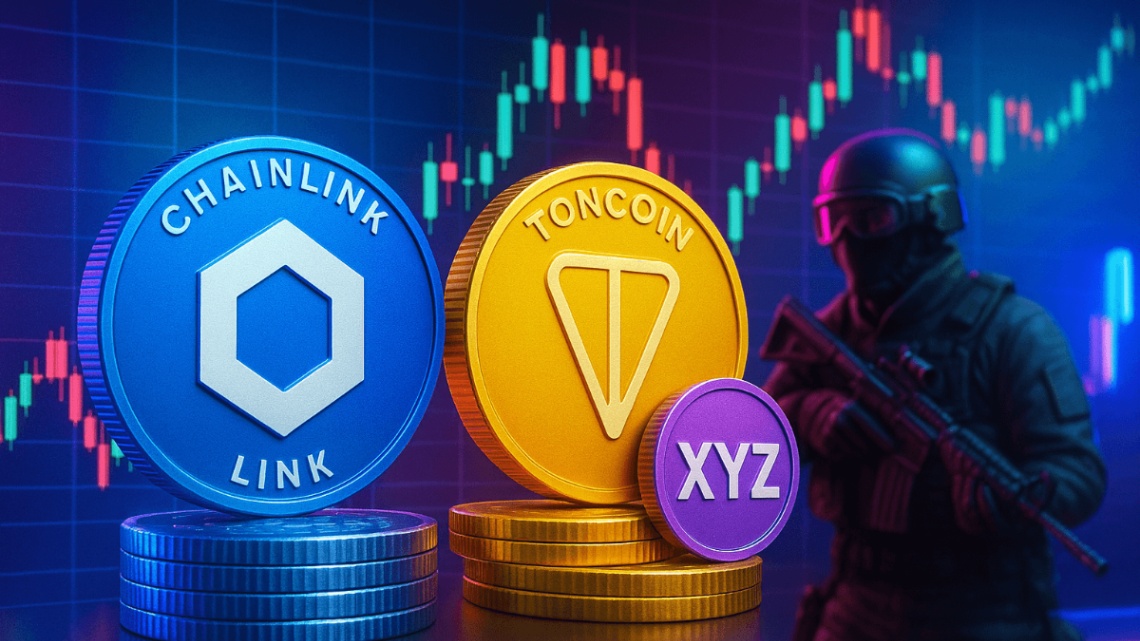
Chainlink Powers Oracles, Toncoin Gains Institutional Backing, XYZVerse Launches Esports 5.5M CS2 League

Chainlink Powers Oracles, Toncoin Gains Institutional Backing, XYZVerse Launches Esports 5.5M CS2 League

The post Chainlink Powers Oracles, Toncoin Gains Institutional Backing, XYZVerse Launches Esports 5.5M CS2 League appeared on BitcoinEthereumNews.com. Fresh moves reshape the digital asset space. A major infrastructure project sees growing adoption. A rising token attracts support from large investors. A new gaming venture unveils a multimillion-dollar tournament for a top action title. These events hint at changing trends and opportunities. More details reveal the forces driving these shifts and who stands to benefit. Chainlink: The Bridge Bringing Real-World Data to Smart Contracts Blockchains are powerful, yet they cannot read the outside world. Chainlink fixes this. Its network of oracles pulls data, checks it twice, and sends it to smart contracts. Each oracle earns a reputation score, so only the most honest stay active. The system works both on the chain, where requests sit, and off the chain, where data lives. The LINK token oils the machine. Node operators get paid in LINK, users pay fees in LINK, and holders can stake LINK to guard the network. After a slow 2022, the market is warming up. Coins with clear use cases now lead the rally. Chainlink fits this trend. It already feeds prices to many top apps, while rivals still chase pilots. New staking rounds cut supply, and big firms like SWIFT test the tech. If the next cycle rewards real demand, LINK could stand out, much like Ether did in 2017. Prices move with the crowd, but a bridge that others depend on often grows faster than the road itself. Undervalued $XYZ Meme Coin Gears Up for Listing on a Major CEX XYZVerse ($XYZ) is the meme coin that has grabbed headlines with its ambitious claim of rising from $0.0001 to $0.1 during a presale phase. So far, it has gone halfway, raising over $15 million, and the price of the $XYZ token currently stands at $0.0055. At the next stage of the presale, the $XYZ token…

Author: BitcoinEthereumNews