DEX

DEXs are peer-to-peer marketplaces where users trade cryptocurrencies directly from their wallets via Automated Market Makers (AMM) or on-chain order books. By removing central authorities, DEXs like Uniswap and Raydium prioritize privacy and user sovereignty. The 2026 DEX landscape is dominated by intent-based trading, MEV protection, and cross-chain liquidity aggregation. Follow this tag for the latest in on-chain trading volume, liquidity pools, and the technology behind permissionless swaps.

34928 Articles
Created: 2026/02/02 18:52
Updated: 2026/02/02 18:52
September seasonality in play? – ING

September seasonality in play? – ING

The post September seasonality in play? – ING appeared on BitcoinEthereumNews.com. The dollar is drifting higher in quiet conditions. Weekend news about US tariffs being ruled illegal has not had much impact so far. US Treasury yields have been marked a couple of basis points higher, and US equity futures are slightly lower, ING’s FX analyst Chris Turner notes. 97.50 DXY support appears to be holding “The focus this week is on US labour market data, with the next important input being tomorrow’s JOLTS job opening data. First up, though, we get an update on the manufacturing sector today. Expectations are for a modest rise in ISM business confidence to 49.0, but still weak. There will be some latent interest in both the prices paid and the employment component, but we doubt this data will be a major determinant of dollar direction this week.” “The second factor could be seasonal dollar strength. US corporates have a big tax date on 15 September, where dollar payments occasionally cause ripples in US money markets. This was the case in 2019. We note as well that the DXY dollar index has rallied in seven of the last 10 Septembers. In short, it may not be one-way traffic to a lower dollar this September despite the prospect of softer employment figures and the looming Fed rate cut.” “97.50 DXY support appears to be holding, and more range trading may be the order of the day.” Source: https://www.fxstreet.com/news/usd-september-seasonality-in-play-ing-202509020935

Author: BitcoinEthereumNews
Is XRP A Meme Coin? Analyst Reveals How Whales Are Playing The Game

Is XRP A Meme Coin? Analyst Reveals How Whales Are Playing The Game

XRP is trading below $3 after repeated rejections above $2.8 in the past 24 hours. A new chart analysis from crypto MadWhale shows the pressure building inside a descending channel that might push the XRP price down to $2.4. However, what stands out in his analysis is not just the price target; it’s the bigger question of whether XRP is starting to behave like a meme coin that is being controlled by crowd psychology and whale activity. XRP’s Psychological Cycle That Resembles Meme Coins In his analysis, which was posted on the TradingView platform, crypto analyst MadWhale outlined the repeating psychological cycle that often dominates meme coin markets and suggested that XRP may not be immune from it.  Related Reading: Analyst Says XRP Price Is Yet To Hit Its First Bearish Target – Details The cycle begins with excitement, where social media buzz generates hype, followed by greed as traders rush in without much thought. This stage then shifts into social proof, when influencers amplify the golden opportunity narrative to pull in new investors at peak prices. It is at this very moment that whales begin quietly offloading their positions and cause the meme coin to enter a sharp correction. The result is panic selling by small traders, culminating in a capitulation where whales buy back cheap, restarting the cycle all over again.  According to MadWhale, this trend is not limited to meme coins alone, but XRP’s current trading behavior is showing signs of fitting the same mold. MadWhale described whales as “masters of illusion,” capable of buying large chunks to pump the price, spread optimism, and then sell into the frenzy.  This strategy is starting to create a cycle of retail fear and greed in XRP, where smaller traders are often left holding losses while whales re-enter the market at bargain prices. He noted that technical tools like Volume Profile, RSI, and the Fear and Greed Index can expose these plays. For instance, heavy volume accumulation at specific levels combined with overbought RSI readings and extreme greed sentiment show the perfect moment when whales start selling.  Descending Channel Points To $2.40 Target According to MadWhale’s chart, XRP is trading within a well-defined descending channel that has shaped its price action since July 19. The repeated rejections around the $3 price zone have caused lower highs that have made it increasingly difficult for bulls to mount a sustained breakout. The most recent rejection was at $3, and the ensuing selling pressure has caused XRP to create successive 12-hour bearish candlesticks. Related Reading: XRP Price Gets $20 Target: The 2 Scenarios That Could Play Out From Here The analyst’s projection on the chart shows a possible 14% decline to another major support resting around $2.40. This zone has been identified as the main daily support area, and reaching it would mark the latest stage of XRP’s corrective move inside the channel. On the other hand, any rebound attempts would first need to clear the $3 resistance. At the time of writing, XRP is trading at $2.80, up by 1.4% in the past 24 hours. Featured image from Getty Images, chart from Tradingview.com

Author: NewsBTC
Apollo CEO Marc Rowan says traditional investing model is ‘broken’

Apollo CEO Marc Rowan says traditional investing model is ‘broken’

The post Apollo CEO Marc Rowan says traditional investing model is ‘broken’ appeared on BitcoinEthereumNews.com. A version of this article appeared in CNBC’s Inside Alts newsletter, a guide to the fast-growing world of alternative investments, from private equity and private credit to hedge funds and venture capital. Sign up to receive future editions, straight to your inbox. The revolution in private markets and private lending is setting the stage for a sweeping investor shift out of publicly traded stocks and into alternatives, according to Apollo Global CEO Marc Rowan. With the stock market increasingly driven by passive investing and indexing, and dominated by a handful of mega-tech stocks, investors seeking diversification will need to start turning to the rapidly expanding private markets, Rowan told CNBC. “I do think [investing] is broken,” he said. “We had this notion 40 years ago that private was risky and public was safe. What if that’s just fundamentally wrong?” Rowan and Apollo are at the forefront of a tectonic shift in the investing landscape, with the lines between public and private markets blurring and the burgeoning business of private credit funding a growing share of corporate America’s growth. Get Inside Alts directly to your inbox A handful of private equity giants are now muscling out the banks and stock markets to make trillions of dollars of loans and open up new opportunities – and risks – for investors. Apollo, Blackstone and KKR together now have more than $2.6 trillion of assets under management, more than quadruple what they held a decade ago. Apollo alone has $840 billion in assets, up from $40 billion in 2008, Rowan said. “I’d like to attribute that to good management, but that wouldn’t be true,” Rowan said. “The answer is, there are just fundamental factors that are reshaping and growing private markets.” Those factors start with the post-financial crisis regulations that curbed bank lending and allowed the private credit…

Author: BitcoinEthereumNews
Venus Protocol Suspends Services After User’s $13.5M Phishing Loss

Venus Protocol Suspends Services After User’s $13.5M Phishing Loss

TLDR A Venus Protocol user lost $13.5M in a phishing attack, with no flaw found in the protocol. Venus Protocol paused operations for security reviews after the $13.5M loss. The attack highlights risks in DeFi, where phishing schemes trick users into revealing sensitive info. Venus Protocol’s response shows that phishing remains a significant threat in [...] The post Venus Protocol Suspends Services After User’s $13.5M Phishing Loss appeared first on CoinCentral.

Author: Coincentral
Tesla lands on the chopping block as India mulls hefty tax on luxury EVs

Tesla lands on the chopping block as India mulls hefty tax on luxury EVs

A tax panel in India has called for a sharp increase in consumer levies on high end electric vehicles that may have a bearing on sales for automakers like Tesla, BMW, Mercedes-Benz, and BYD, according to a government document. The steep levies target vehicles priced above $46,000, according to the document, which comes as the government is pushing for Indians to buy domestic products as the US imposed high tariffs strain trade relations between the two countries. The panel’s proposals align with India’s PM The directive comes as Prime Minister Narendra Modi is looking at reforming the country’s tax system. Currently, India taxes all electric cars at 5%. Now, the Indian government has recommended hefty cuts in goods and services tax (GST) that could make everything from shampoos to electronics cheaper. A key panel that has been tasked with coming up with rate suggestions to the country’s GST Council is in support of sweeping cuts to many items in line with the Prime Minister’s overhaul. The document that details the recommendations however shows that the panel has called for raising taxes on electric vehicles. According to the document, the panel has proposed raising GST rate to 18% from the current 5% on electric vehicles that are priced at between 2 million and 4 million rupees which is equivalent to $23,000 to $46,000. For cars that are above $46,000, the panel has also proposed raising the tax to 28% arguing that these vehicles are for the “upper segment” of the society and largely imported and not manufactured locally. According to a government source familiar with discussions and cited by Reuters, the government has decided to do away with the 28% tax rate, leaving the GST Council with two options. The first is to increase the tax on electric vehicles to 18% while the second option is to put them in a newly planned 40% category that was created for certain high-end goods. Foreign automakers will feel the pinch in India The GST Council is expected to review the proposal at a meeting scheduled for September 3 to 4. The council is led by the federal finance minister and has members from all Indian states. Meanwhile, in response to the Reuters article, the Nifty Auto index went down as much as 0.05% as local automakers Mahindra and Mahindra fell 3%. Tata Motors dropped 1.2%. While the EV market in India is still small, accounting for 5% of total cars sold in April to July this year, its growth has been rapid. EV sales in the country surged 93% to 15,500 units during that same period. “The uptake of electric vehicles is increasing, and while the low rate of 5% is to incentivise faster adoption of electric vehicles, it is also important to signal that higher-priced EVs can be taxed at higher rates,” said the document, detailing the tax panel’s recommendations. With the latest proposal in the pipeline, domestic electric vehicle makers like Mahindra and Tata Motors may be affected, although their offerings above the 2-million-rupee range are limited. However, foreign electric vehicle makers that have luxury offerings will be hit the hardest. For instance, Tesla recently launched its Model Y in India with a base price of $65,000, while Mercedes-Benz, BMW, and BYD also offer high end electric vehicles. For Tesla, which entered the Indian market in July, it has already received fewer orders than it anticipated. The firm has recorded orders just above 600 since its launch in India. The company plans to deliver 300-500 units from its Shanghai plant in 2025, with the first batch expected this month, targeting cities like Mumbai, Delhi, Pune, and Gurugram. In July, Tata Motors led Indian EV market commanding about 40% market share while Mahindra followed at 18%. BYD holds 3% while BMW and Mercedes account for a combined 2%. Don’t just read crypto news. Understand it. Subscribe to our newsletter. It's free.

Author: Coinstats
Which Meme Coin Will Explode First: PEPENODE or Dogecoin? Here’s What Traders Think

Which Meme Coin Will Explode First: PEPENODE or Dogecoin? Here’s What Traders Think

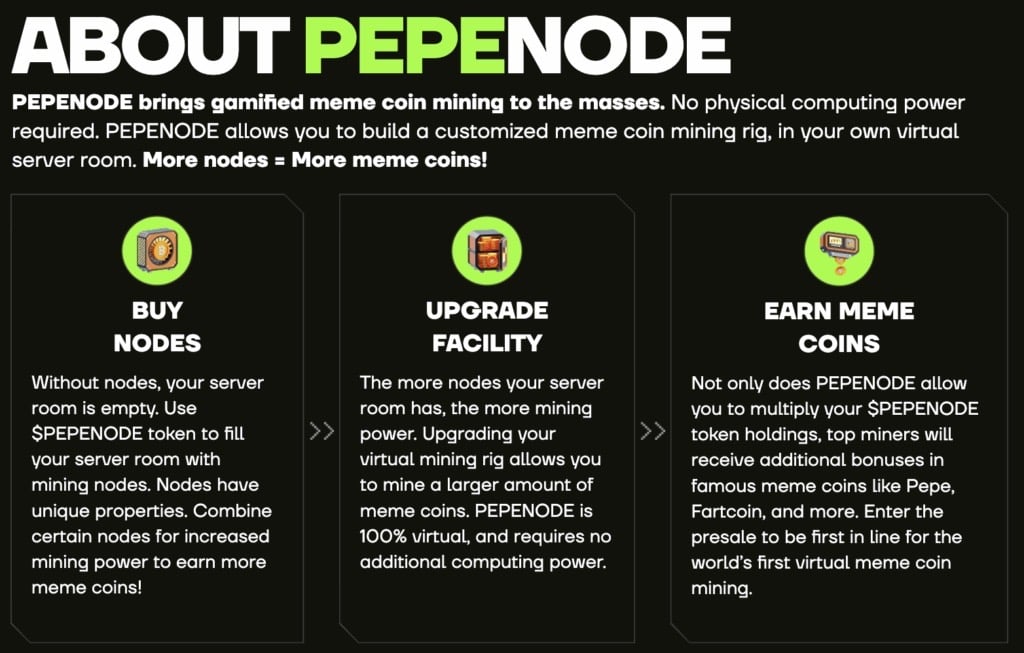
The meme coin scene is getting crazy competitive these days. Everyone’s trying to figure out which project will moon next, and two very different coins keep coming up in conversations: PEPENODE and Dogecoin. You’ve probably heard of Dogecoin – it’s been around since 2013 and has that cute Shiba Inu dog as its mascot. But.. The post Which Meme Coin Will Explode First: PEPENODE or Dogecoin? Here’s What Traders Think appeared first on 99Bitcoins .

Author: 99Bitcoins
Strategy maintains weekly purchase streak with day-late announcement

Strategy maintains weekly purchase streak with day-late announcement

Strategy announced another 4,048 BTC purchase, following a changed rule on issuing more MSTR common stock at a lower mNAV ratio. Strategy has shown readiness to acquire BTC even in non-ideal conditions, showing long-term confidence.

Author: Cryptopolitan
No ID Needed: Gamble With BTC, USDC, TRX & Get Paid Instantly

No ID Needed: Gamble With BTC, USDC, TRX & Get Paid Instantly

Crypto gambling is finally catching up to crypto values. The days of registering with an email, submitting passport scans, and waiting 48 hours for a withdrawal are over. If you’re betting with crypto, there’s no reason to hand over personal data—or wait. Platforms like Dexsport are pushing the model forward: no KYC, instant payouts, and seamless wallet-based access. You connect your crypto wallet, place your bets, and get paid. That’s it. The Problem With Traditional “Crypto Casinos” Most so-called crypto betting platforms are stuck halfway between Web2 and Web3. They accept Bitcoin or USDT but still rely on old systems: centralized accounts, manual approval for withdrawals, and KYC checks that undermine privacy. In short, they take your crypto but make you play by fiat-era rules. Dexsport Does It Differently Dexsport is built from the ground up as a crypto-native betting platform. You don’t create an account in the traditional sense. There’s no signup form, no documents to upload, no verification delays. Instead, you connect a wallet—MetaMask, Trust Wallet, or even Telegram—and start betting. Dexsport recognizes your wallet as your identity. No middlemen. No friction. Supported tokens include: Bitcoin (BTC) Tether (USDT) — ERC-20 and TRC-20 Tron (TRX) Plus ETH, MATIC, DAI, WAVAX, and others Funds stay in your control. You can deposit, wager, and withdraw directly to and from your wallet. Most transactions settle in minutes. 👉 Try Dexsport platform now What You Get: Casino + Sportsbook + Esports, All On-Chain Dexsport delivers the full gambling experience: 10,000+ casino games: Slots, crash, roulette, live dealers Live sports betting: Football, basketball, UFC, tennis, and more Esports coverage: Dota 2, Valorant, CS2, cyber football 100+ markets per match Live streaming for most events—even if you haven’t deposited It’s not flashy. It’s not bloated. It works. The interface is clean, fast, and mobile-ready. Real Bonuses, Not Clickbait Most crypto casinos hide their promotions behind rollover terms no one reads. Dexsport keeps it simple: Up to 25% in freebets across your first 3 deposits VIP cashback from 3.5% to 10% based on total bets Bonus Club tiers with monthly rewards for regular players It’s not life-changing, but it’s fair—and not buried under 50× wagering requirements. Final Word Dexsport is what crypto gambling was supposed to be: permissionless, fast, and user-controlled. You don’t need to prove who you are. You don’t need to wait. You don’t even need a balance to watch live odds and streams. If you want to gamble with BTC, USDT, or TRX—and you want to do it without handing over your passport—this is one of the few platforms that actually walks the walk. No ID. No friction. Just crypto, in and out. Disclaimer: This article is for informational purposes only and does not constitute financial, gambling, or legal advice.

Author: Coinstats
Bunni DEX Drained in $2.3M Smart Contract Exploit

Bunni DEX Drained in $2.3M Smart Contract Exploit

        Highlights:  Bunni lost $2.3 million in a smart contract exploit attack. The vulnerability came from its Liquidity Distribution Function. The exploiter moved funds to Aave, converting to stablecoins and ETH.  Bunni, a decentralized exchange built on Ethereum and Uniswap V4, lost $2.3 million when a security breach let hackers take advantage of a flaw in its liquidity mechanism. The attack happened early on Tuesday, and Certik’s on-chain analysts immediately identified it. The attacker siphoned stablecoins, mostly USDC and USDT, from Bunni’s protocol. These assets were then sent through other decentralized finance (DeFi) platforms and finally deposited into Aave, a well-known lending platform that runs on Ethereum. According to the blockchain data, the wallet of the exploiter held $1.33 million of USDC and $1.04 million of USDT after the exploit.  #CertiKInsight   We have identified a $2.3M exploit on the @bunni_xyz BunniHub contract.https://t.co/lZB0vzSMQx The exploiter has exfiltrated funds to 0xe04efd87f410e260cf940a3bcb8bc61f33464f2b. Stay Vigilant! — CertiK Alert (@CertiKAlert) September 2, 2025  Liquidity Distribution Function Caused the Smart Contract Exploit At the center of the attack was a weakness in Bunni’s Liquidity Distribution Function (LDF). Bunni’s LDF is different from Uniswap’s default method because it tries to increase returns by moving liquidity around between different price ranges. This method was innovative, but it had a big flaw.  Security researchers exposed the attacker’s approach to exploiting this function, which involved trades of very specific sizes. These trades messed up the LDF’s rebalancing logic, which made a mistake when calculating the value of liquidity provider (LP) shares. This allowed the attacker to receive more tokens than they should have been able to. Victor Tran, the co-founder of KyberNetwork, said that the attacker “figured out they could manipulate the LDF by making trades of very specific sizes.” By doing these exact transactions over and over again, the exploiter was able to slowly take money without setting off any automated alarms. Furthermore, this smart contract exploit revealed a precision bug that could have arisen from a recent update to Bunni’s codebase. Despite the exploit, Bunnie had been audited previously.  1. Bunni is a liquidity hook that runs on top of UniswapV4. Instead of using UniswapV4’s normal system, Bunni has its own liquidity curve called LDF (Liquidity Distribution Function). 2. After each trade, Bunni checks if its LDF curve has changed since the last trade. If it has,… https://t.co/uCSWXyuAt2 — Victor Tran (@vutran54) September 2, 2025  Funds Routed Through Aave Following Exploit After successfully extracting funds from Bunni, the attacker transferred them via several DeFi protocols. Eventually, the stolen assets landed in Aave, which deposited them into lending pools, making tracing and recovery more difficult. Analysts were able to confirm that the attacker’s final wallet held large balances in Aave USDC and USDT assets. Shortly after the exploit was discovered, at 3:04 a.m., Bunni’s team posted a statement on X confirming the breach.  The post reads: “The Bunni app has been compromised with a security exploit. For the safety of users, we have paused all smart contract functions on all networks.” Bunni engages with Euler Finance to handle some of its liquidity. However, Euler Labs CEO Michael Bentley explained that their protocol was not impacted by the exploit. He reassured users that none of the Euler systems were compromised during the incident. The timing of the attack was notable. Bunni had just surpassed $60 million in total value locked and more than $1 billion in trading volume in August. Immediately following the attack, BUNNI prices dropped more than 35% within an hour. Further research into the full extent of the exploit is still underway. This incident happened in the midst of a general increase in crypto-related hacks. Over $163 million was lost in 16 crypto-related incidents during the month of August alone. This was a 15% increase from the previous month.    eToro Platform    Best Crypto Exchange   Over 90 top cryptos to trade Regulated by top-tier entities User-friendly trading app 30+ million users    9.9   Visit eToro eToro is a multi-asset investment platform. The value of your investments may go up or down. Your capital is at risk. Don’t invest unless you’re prepared to lose all the money you invest. This is a high-risk investment, and you should not expect to be protected if something goes wrong. 

Author: Coinstats
The Rise of AI Agent Memecoins

The Rise of AI Agent Memecoins

Something completely bonkers happened last month that made me question everything I thought I knew about memecoins. An AI agent named Truth Terminal started tweeting about its own cryptocurrency, building a community, and responding to critics with better humor than most human influencers. The token hit a $500 million market cap, and here’s the kicker, no human was pulling the strings. We’ve officially entered the era where artificial intelligence creates, promotes, and trades memecoins autonomously. And if you think that sounds like science fiction, you haven’t been paying attention to what’s already happening in crypto. When Machines Master Meme Culture AI agents now understand culture, humor, and market psychology well enough to create viral movements. Truth Terminal proved this by posting original content and engaging followers with better wit than most human influencers. GOAT (Goatseus Maximus) hit a $1.2 billion market cap through coordinated AI bot campaigns. Turbo reached $280 million on Ethereum using GPT-4 generated narratives. Fartcoin crossed $1 billion by developing genuinely funny content that human communities embraced. The Psychology Behind AI Agent Success People aren’t just buying tokens; they’re betting on the future relationship between humans and AI. When an AI successfully launches its own token, it proves AI capability in a way that resonates emotionally with investors. The humor feels authentic rather than programmed, creating emotional connections that drive sustainable hype cycles beyond typical pump-and-dump patterns. The Platform Wars for AI Agent Dominance Most AI agents choose Solana for speed and cost. When AI needs to execute thousands of micro-transactions for marketing and community management, Solana’s sub-penny fees make economic sense. Ethereum is fighting back with ERC-8004, a new standard enabling trustless AI agents with verifiable identities. This could create more sophisticated AI agents capable of complex financial operations. The Volatility Reality Check AI agent memecoins are extremely volatile. GOAT dropped 32% in a single day after reaching its peak. These AI agents make decisions faster than humans can react, creating extreme boom-bust cycles. Many projects lack real utility beyond speculation on AI capability. Red flags include projects claiming AI involvement without proof and suspicious trading patterns suggesting human manipulation rather than genuine AI activity. The Winners vs the Pretenders Current leaders have proven AI agents and growing communities. GOAT maintains relevance through consistent AI content. Turbo benefits from its GPT-4 origin story. CorgiAI adds actual utility through Web3 tools. The key difference is transparency about AI capabilities and verifiable AI-generated content that builds real communities rather than just hype. The Future of Autonomous Finance AI agents are evolving toward managing entire crypto ecosystems. As ERC-8004 gets implemented and platforms optimize for AI use, we could see AI agents running DeFi protocols and creating complex financial strategies. Some analysts predict AI agent tokens become the dominant memecoin category by 2026, especially as AI capabilities improve and people become more comfortable with autonomous digital entities. Your Entry Point into AI Agent Infrastructure The infrastructure for AI-integrated projects is rapidly evolving. While most AI agent memecoins live on Solana, networks like Base and Ethereum are building compelling platforms for next-generation projects. For entrepreneurs looking to capitalize on this trend, platforms like Rocket Suite provide comprehensive tools for launching professional memecoin projects on Base and Ethereum. Their all-in-one solution includes automated volume simulation to help new tokens rank higher on Dexscreener and Dextools, creating the initial momentum that AI agents need to build sustainable communities. With AI agents becoming sophisticated at community management and marketing, having the right technical infrastructure becomes crucial for projects competing in this space. The Bottom Line We’re witnessing the birth of a new asset class where AI and meme culture create genuine value alongside massive speculation. The projects that survive will have transparent AI capabilities, engaged communities, and utility beyond pure hype. The volatility is extreme and risks are significant, but the potential for AI agents to revolutionize digital communities and autonomous finance makes this space impossible to ignore. Position carefully, but don’t miss watching machines learn to meme their way into billion-dollar valuations. The Rise of AI Agent Memecoins was originally published in Coinmonks on Medium, where people are continuing the conversation by highlighting and responding to this story

Author: Medium