DEX

DEXs are peer-to-peer marketplaces where users trade cryptocurrencies directly from their wallets via Automated Market Makers (AMM) or on-chain order books. By removing central authorities, DEXs like Uniswap and Raydium prioritize privacy and user sovereignty. The 2026 DEX landscape is dominated by intent-based trading, MEV protection, and cross-chain liquidity aggregation. Follow this tag for the latest in on-chain trading volume, liquidity pools, and the technology behind permissionless swaps.

34876 Articles
Created: 2026/02/02 18:52
Updated: 2026/02/02 18:52
Legendary Analyst Who Said “Buy BTC” When Bitcoin Was at $114, Speaks Out About XRP! XRP Investors Won’t Like It!

Legendary Analyst Who Said “Buy BTC” When Bitcoin Was at $114, Speaks Out About XRP! XRP Investors Won’t Like It!

The post Legendary Analyst Who Said “Buy BTC” When Bitcoin Was at $114, Speaks Out About XRP! XRP Investors Won’t Like It! appeared on BitcoinEthereumNews.com. Davinci Jeremie, one of the well-known names in the cryptocurrency world, has been attracting attention since 2013 when he urged everyone to buy Bitcoin (BTC) for just $114. At this point, Davinci Jeremie, one of the first Bitcoin adopters, shared Bitcoin and XRP. Reacting to the video shared by the X account called Altcoin Daily, Davinci Jeremie described XRP as a scam. Commenting on a video in which a presenter announced his $1.3 million investment in XRP and stated that he expected it to eventually rise to $10, the celebrity criticized XRP while praising Bitcoin. “Most people own Bitcoin and XRP but don’t know what they have. Because one is the best store of wealth (BTC), the other is a scam you can gamble on (XRP).” This isn’t the first time Jeremie has criticized XRP. The celebrity has previously called it trash. And Davinci Jeremie isn’t the only one criticizing XRP. Blockchain researcher ZachXBT, known as the Sherlock Holmes of the cryptocurrency industry, also took aim at XRP. ZachXBT stated that he will no longer be helping the XRP community, claiming that XRP and its community are not adding value to the industry. “I do not currently support the XRP community and will mock anyone who DMs me,” ZachXBT said, targeting XRP holders for consistently hindering the potential for further price appreciation. *This is not investment advice. Follow our Telegram and Twitter account now for exclusive news, analytics and on-chain data! Source: https://en.bitcoinsistemi.com/legendary-analyst-who-said-buy-btc-when-bitcoin-was-at-114-speaks-out-about-xrp-xrp-investors-wont-like-it/

Author: BitcoinEthereumNews
Top Trader Predicts XRP Run Toward $10, But It’s This Coin Under $0.005 will reach $2 First

Top Trader Predicts XRP Run Toward $10, But It’s This Coin Under $0.005 will reach $2 First

The post Top Trader Predicts XRP Run Toward $10, But It’s This Coin Under $0.005 will reach $2 First appeared on BitcoinEthereumNews.com. Little Pepe (LILPEPE) has been buzzing across crypto circles for weeks, and for good reason. While a top trader has suggested XRP may make its long-awaited climb toward $10, this smaller token under $0.005 appears ready to ignite the 2025 bull run with a possible 21x gain potential, taking its price from $0.0021 to $0.0441. Ripple (XRP): Renewed Attention on a Market Veteran Ripple’s XRP has again been in the spotlight as analysts debate whether it can finally break through significant resistance. At the time of writing, XRP trades around $3.03 after moving within a daily range of $2.79 to $3.10. The coin has climbed about 6% in the past 24 hours. This movement suggests that XRP attracts renewed buying pressure but still faces uncertainty. Optimism around a possible spot ETF approval has fueled XRP’s story. If such products open the doors for institutional capital, XRP may see stronger inflows similar to what Bitcoin and Ethereum experienced earlier this year. Some projections place XRP in the $10 to $20 zone in the long term. XRP price chart | Source: CoinMarketCap Little Pepe (LILPEPE): The Breakout Contender Under $0.005 In contrast, Little Pepe has moved from meme coin chatter to becoming one of the most discussed projects in crypto. The presale has already concluded stage 11 and is now in stage 12, with tokens selling at $0.0021. Over $22.8 million has been raised from the $25.4 million target for this stage, and more than 14.4 billion tokens have been sold. The demand has been steady, with early investors from stage 1 already enjoying 110% gains on their entries. Those entering stage 12 still have about 42% gain potential before the token launches at $0.0030. The presale is structured across 19 stages, and with stage 13 set to push the price to…

Author: BitcoinEthereumNews
Fluid: Redefining the capital efficiency benchmark for DeFi lending and trading

Fluid: Redefining the capital efficiency benchmark for DeFi lending and trading

Author: Castle Labs Compiled by AididiaoJP, Foresight News Money markets are at the heart of DeFi, allowing users to gain exposure to specific assets using a variety of strategies. Over time, this vertical has grown in both value locked (TVL) and functionality. With the introduction of new protocols like @MorphoLabs, @0xFluid, @eulerfinance, and @Dolomite_io, the range of functionality available through lending protocols has expanded. In this report, we focus on one of these protocols: Fluid. Fluid has launched several features, the most interesting of which are smart debt and smart collateral. It cannot be regarded as an ordinary lending protocol because it also combines its DEX functionality to provide users with more services. Fluid is showing significant growth in both DEX and lending verticals, with a total market size (in terms of total deposits) exceeding $2.8 billion. Fluid market size, source: Dune, @dknugo Fluid Market Size represents the total deposits in the protocol. This metric was chosen over TVL because debt is a productive asset in the protocol and contributes to exchange liquidity. Overview of Fluid components and how it works This section briefly outlines the components of the Fluid protocol and explains how it operates, with a focus on why it is a capital-efficient protocol. Fluid uses a unified liquidity model where multiple protocols can share liquidity, including the Fluid lending protocol, Fluid Vaults, and DEX. Fluid Lending allows users to provide assets and earn interest. The assets provided here are used throughout the Fluid ecosystem, improving their capital efficiency. It also opens up long-term yield opportunities as the protocol continuously adapts to changes in the borrower and lender market. Fluid Vaults are single-asset, single-liability vaults. These vaults are extremely capital-efficient because they allow for high LTVs (loan-to-value ratios), up to 95% of the collateral value. This number determines a user's borrowing capacity, as opposed to the deposited collateral. Fluid also employs a unique liquidation mechanism that reduces liquidation penalties to as low as 0.1%. The protocol only liquidates the amount necessary to restore a position to a healthy state. Fluid's liquidation process is inspired by the design of Uniswap V3. It categorizes positions by scale or range of their LTV and executes batch liquidations when the collateral value reaches the liquidation price. DEX aggregators then use these batches as liquidity: liquidation penalties translate into discounts for traders when they swap. Fluid DEX earns an additional layer of income for the liquidity layer through transaction fees generated by exchanges, further reducing borrowers' position interest while improving the capital efficiency of the entire protocol. Different DEX aggregators, such as KyberSwap and Paraswap, use Fluid DEX as a liquidity source to obtain deeper liquidity and increase trading volume. On Fluid, users can deposit their collateral into a DEX and earn both lending fees and trading fees, making it a Smart Collateral. If users wish to borrow against their collateral, they can borrow assets or open a Smart Debt Position, making their debt productive. For example, users can borrow from a pool of ETH and USDC/USDT. They can deposit ETH as collateral and borrow USDC/USDT. In exchange, they receive USDC and USDT in their wallets, which they can use as they wish, while the trading fees earned from this liquidity pool are used to reduce their outstanding debt. Fluid's latest progress and expansion Based on trading volume data over the past seven days, Fluid DEX ranks #4, behind only @Uniswap, @Pancakeswap, and @AerodromeFi. Fluid's partnership with Jupiter Lend has launched, a feature that has been in private beta since the beginning of the month, and Fluid DEX Lite has already launched. Additionally, Fluid DEX v2 will be available soon. DEXs ranked by 7-day trading volume. Source: Dune, @hagaetc In addition to this, the protocol also anticipates a token buyback as its annual revenue exceeds $10 million. Fluid recently published a post on its governance forum regarding this, which opened a discussion about the buyback and proposed three approaches. See the different proposed approaches here: https://x.com/0xnoveleader/status/1957867003194053114 Subject to governance approval (after discussion), the buyback will begin on October 1st, with a 6-month evaluation period. Jupiter Lend: Fluid Enters Solana Fluid’s expansion to Solana is in partnership with @JupiterExchange. Jupiter is the largest DEX aggregator on Solana, with a cumulative trading volume of over $970 billion. It is also the leading perpetual contract exchange and staking solution on Solana. The TVL of Solana lending now exceeds $3.5B, with @KaminoFinance being the primary contributor. The lending vertical on Solana offers significant growth potential for Fluid. @jup_lend recently launched its public beta after a few days of private testing. Its TVL has surpassed $250 million, making it the second-largest money market on the Solana blockchain, behind only Kamino. Jupiter Lend, launched in partnership with Fluid, offers similar functionality and efficiencies, with smart collateral and smart debt expected to launch on the platform later this year. Additionally, 50% of the platform's revenue will be allocated to Fluid. Fluid DEX iteration Fluid has already launched its DEX Lite and plans to launch V2 soon. This section will cover both and explain how these iterations will help Fluid grow further. Fluid DEX Lite Fluid DEX Lite launched in August and serves as a credit layer on Fluid, enabling borrowing directly from the Fluid liquidity layer. It has begun providing trading volume services for relevant trading pairs, starting with the USDC-USDT pair. This version of Fluid DEX is extremely gas efficient, reducing the cost of performing swaps by approximately 60% compared to other versions. It was created to capture a larger share of trading volume in the relevant trading pairs, where Fluid is already the dominant protocol. In its first week, Fluid Lite generated over $40 million in trading volume, with initial liquidity of $5 million borrowed from the liquidity layer. Fluid DEX Lite trading volume. Source: Dune, @dknugo Fluid DEX V2 Fluid DEX V1, launched in October 2024, surpassed $10 billion in cumulative trading volume on Ethereum in just 100 days, faster than any other decentralized exchange. To support this growth, Fluid is launching V2, designed with modularity and permissionless scalability in mind, allowing users to create multiple custom strategies. First, V2 will introduce four different types of DEXs within the protocol, two of which are inherited from V1. Fluid will support more DEX types than just these four, with more types being deployable through governance. The two new types introduced are Smart Collateral Range Orders and Smart Debt Range Orders, both of which allow borrowers to help improve their capital efficiency. Smart Collateral Range Orders function similarly to Uniswap V3, allowing users to provide liquidity by depositing collateral within a specific price range while also earning an annualized percentage rate (APR) on the borrowed funds. Smart Debt Range Orders work similarly, allowing users to create range orders by borrowing assets on the debt side and earn an annual percentage rate (APR) on the trade. Additionally, it introduces features like hooks (similar to Uniswap V4) for custom logic and automation, flash accounting to improve fee efficiency for CEX-DEX arbitrage, and on-chain yield accumulation limit orders, which means limit orders can earn annual lending rate (APR) while waiting to be filled. in conclusion Fluid continues to grow and improve by offering a unique set of features to become more capital efficient. Smart Collateral: Collateral deposited on the platform can be used to earn lending interest and transaction fees. Smart Debt: Smart Debt reduces debt by paying off part of it using transaction fees generated by the debt, making the debt borrowed by users productive. Unified Liquidity Layer: Fluid’s unified liquidity layer improves capital efficiency across the ecosystem by providing features such as higher LTV, advanced liquidation mechanisms, and automatic capping for better risk management. Its recent expansion into Solana through its partnership with Jupiter has broadened its market share in the lending category to non-EVM networks. Meanwhile, Fluid DEX Lite and DEX V2 aim to enhance user experience and increase transaction volume on EVM chains. Additionally, DEX V2 is expected to launch on Solana later this year, which will enable Fluid to enter Solana’s lending and exchange verticals.

Author: PANews
Metaplanet Increases Bitcoin Stash To 20,000 BTC, Outpacing Riot Platforms To Become Sixth-Largest Holder Globally ⋆ ZyCrypto

Metaplanet Increases Bitcoin Stash To 20,000 BTC, Outpacing Riot Platforms To Become Sixth-Largest Holder Globally ⋆ ZyCrypto

The post Metaplanet Increases Bitcoin Stash To 20,000 BTC, Outpacing Riot Platforms To Become Sixth-Largest Holder Globally ⋆ ZyCrypto appeared on BitcoinEthereumNews.com. Advertisement &nbsp &nbsp Tokyo-listed firm Metaplanet has continued to accumulate Bitcoin (BTC). Earlier today, the company announced acquiring additional coins, lifting its total holdings to 20,000 BTC as it extends its Bitcoin treasury program. Metaplanet is now the sixth-largest public holder of the benchmark cryptocurrency after overtaking Riot Platforms. In its Monday disclosure, Metaplanet said it bought 1,009 BTC at an average of 16.48 billion Japanese yen per Bitcoin. At the current market price, this equates to approximately $112 million.  As of the time of writing, CoinGecko data indicated that Bitcoin traded at $109,720, just below Metaplanet’s latest purchase price of $111,068 per coin. With the latest purchase, Metaplanet now has 20,000 BTC, bought at an overall average cost of 15.1 million yen per BTC. The company’s acquisition signals the Tokyo-based firm’s relentless commitment to positioning Bitcoin as a core reserve asset. Advertisement &nbsp Metaplanet is now the sixth biggest publicly traded Bitcoin treasury company in the world, overtaking U.S.-based crypto miner Riot Platforms, data from BitcoinTreasuries shows. Metaplanet’s Bitcoin stockpile crossing the 20,000 BTC milestone comes less than three months after the firm announced having reached its 10,000 BTC target. Earlier this year, Metaplanet revised its year-end target to 30,000 BTC from its initial goal of 10,000 BTC. Metaplanet’s transformation represents one of the most radical corporate pivots in recent history. Established in 2010 as Red Planet Japan, the company operated as a hotel and technology chain. However, the COVID-19 crisis hurt its business model, forcing property closures and leading to six straight years of losses. By early 2024, the company’s stock had struggled around $1.32 (¥190) before it officially adopted the corporate Bitcoin acquisition playbook pioneered by Michael Saylor’s Strategy. The company’s strong Q2 performance recently earned it an upgrade from a small-cap to a mid-cap…

Author: BitcoinEthereumNews
Tesla ditched by South Korean traders over crypto

Tesla ditched by South Korean traders over crypto

The post Tesla ditched by South Korean traders over crypto appeared on BitcoinEthereumNews.com. The global economy is still adjusting and dealing with the aftereffects of US President Trump’s tariffs. Amid all the volatilities, South Korea’s army of retail traders is reportedly cashing out of Tesla Inc. Local investors dumped a net $657 million of the carmaker’s shares in August. This has been seen as the biggest monthly outflow since early 2023. Once among Tesla’s most loyal global backers are now heading into riskier bets, choosing the crypto market. This includes pulling shares of BitMine Immersion Technologies Inc., a U.S. firm that’s become a proxy for Ethereum. However, the firm stock saw net inflows of $253 million from Korean retail traders. Korean retail exodus hits Tesla stock An unexpected shift in the traders’ mood highlights the waning faith in Tesla’s AI promises and growing appetite for higher-octane bets. Meanwhile, South Korean investors’ buying sprees had amplified Tesla’s rallies through the pandemic boom, but now they are looking for something else. The report mentioned that a 33-year-old investor who first bought Tesla shares in 2019 but sold out this year to chase newer plays. He stated that “It has failed to lead with its own AI narrative.” Tesla’s share price is up by more than 17% over the last 6 months, but it is still trailing by 12% on a year-to-date (YTD) basis. This suggests that the EV making giant saw a massive pump at the beginning of the year, however, it wasn’t able to keep up the momentum. Tesla share price dipped by 1.45% in the last trading session to trade at $333.86. Ethereum mania lifts BitMine The timing isn’t accidental, as Ethereum has outperformed Bitcoin lately. In fact, Ether linked ETFs are pulling in more money than Bitcoin for the first time. They saw $1.5 billion in inflows in a single week compared…

Author: BitcoinEthereumNews
Eric Trump and Metaplanet: the rise of crypto finance between the United States and Japan

Eric Trump and Metaplanet: the rise of crypto finance between the United States and Japan

Eric Trump has captured media attention by participating in Tokyo at a key event of the Japanese company Metaplanet.

Author: The Cryptonomist
Solv and Chainlink integrate Proof of Reserve into SolvBTC: live on-chain anti-manipulation feed on Ethereum

Solv and Chainlink integrate Proof of Reserve into SolvBTC: live on-chain anti-manipulation feed on Ethereum

Solv Protocol and Chainlink have launched a new feed that combines the market price with on-chain verification of BTC reserves for SolvBTC.

Author: The Cryptonomist
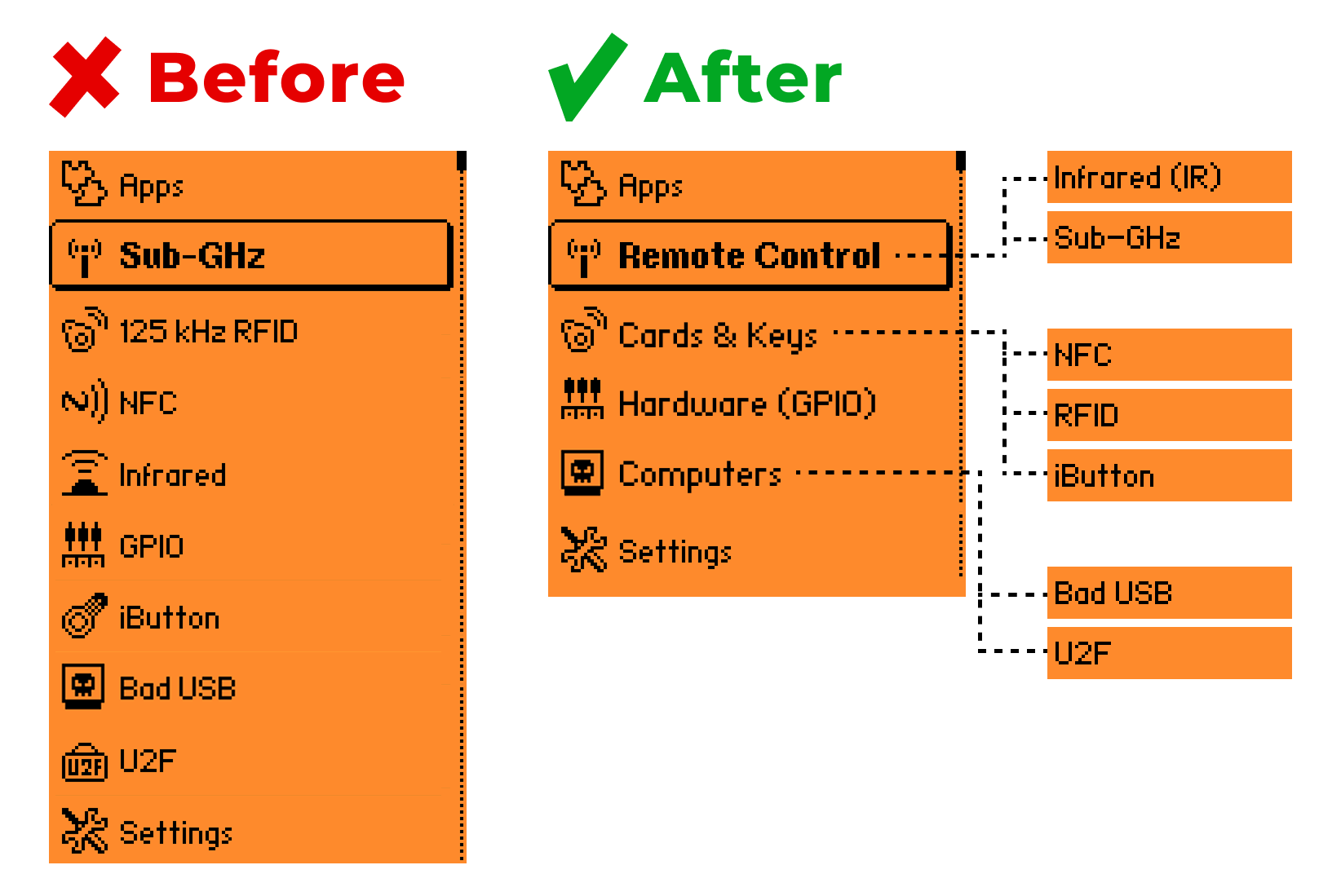
My UX improvements for Flipper Zero

My UX improvements for Flipper Zero

My 7 tips to improve the UX of Flipper Zero — making it easier for new users to get started while keeping existing users more engaged as they explore its features

Author: Hackernoon
Making ChatGPT Follow Orders: Simple, Deterministic Constraints

Making ChatGPT Follow Orders: Simple, Deterministic Constraints

The Startari v7.777 Protocol uses a single controlling header, per-turn reinforcement, and strict validation to make ChatGPT outputs predictable, auditable, and plagiarism-safe. It replaces improvisation with deterministic compliance for research, publishing, and automation.

Author: Hackernoon
When AI’s Words Become Evidence

When AI’s Words Become Evidence

AI is now used in policing, courts, and investigations. From facial recognition to risk assessments, these tools influence real cases but raise concerns about errors, bias, and transparency. Learn how AI evidence impacts justice and why human judgment still matters.

Author: Hackernoon