DEX

DEXs are peer-to-peer marketplaces where users trade cryptocurrencies directly from their wallets via Automated Market Makers (AMM) or on-chain order books. By removing central authorities, DEXs like Uniswap and Raydium prioritize privacy and user sovereignty. The 2026 DEX landscape is dominated by intent-based trading, MEV protection, and cross-chain liquidity aggregation. Follow this tag for the latest in on-chain trading volume, liquidity pools, and the technology behind permissionless swaps.

34497 Articles
Created: 2026/02/02 18:52
Updated: 2026/02/02 18:52
Altcoins That Developers Have Focused On the Most in the Last 30 Days Have Been Published – Here’s the List

Altcoins That Developers Have Focused On the Most in the Last 30 Days Have Been Published – Here’s the List

The post Altcoins That Developers Have Focused On the Most in the Last 30 Days Have Been Published – Here’s the List appeared on BitcoinEthereumNews.com. Cryptocurrency analytics firm Santiment has revealed the projects with the highest developer activity over the past 30 days. The list is based on notable activity on Github. According to the data, Internet Computer (ICP) ranked first, followed by ChainLink (LINK) and Starknet (STRK). Here are the top 10 projects and developer activities in order of developer activity: Internet Computer (ICP) – 369.37 ChainLink (LINK) – 293.5 Starknet (STRK) – 218.37 Sui (SUI) – 195.5 DeepBook Protocol (DEEP) – 195.5 Cardano (ADA) – 182.07 Avalanche (AVAX) – 181.83 DeFiChain (DFI) – 143.67 Stellar (XLM) – 141.07 Ethereum (ETH) – 140.93 However, the increase in developer activity hasn’t been reflected in prices. All of the top 10 projects in the last 24 hours remained in negative territory. Starknet (STRK) fell by -6.23%, DeepBook Protocol (DEEP) by -6.14%, and Avalanche (AVAX) by -5.96%. In terms of market capitalization, Ethereum (ETH) was the largest project on the list with $554.47 billion, followed by Cardano (ADA) with $31.01 billion and ChainLink (LINK) with $16.59 billion. *This is not investment advice. Follow our Telegram and Twitter account now for exclusive news, analytics and on-chain data! Source: https://en.bitcoinsistemi.com/altcoins-that-developers-have-focused-on-the-most-in-the-last-30-days-have-been-published-heres-the-list/

Author: BitcoinEthereumNews
Decoding The Crucial Neutral Market Sentiment At 48

Decoding The Crucial Neutral Market Sentiment At 48

The post Decoding The Crucial Neutral Market Sentiment At 48 appeared on BitcoinEthereumNews.com. Crypto Fear & Greed Index: Decoding The Crucial Neutral Market Sentiment At 48 Skip to content Home Crypto News Crypto Fear & Greed Index: Decoding the Crucial Neutral Market Sentiment at 48 Source: https://bitcoinworld.co.in/crypto-fear-greed-index-39/

Author: BitcoinEthereumNews
Trump Fires Fed Governor Cook Over Mortgage Fraud Allegations

Trump Fires Fed Governor Cook Over Mortgage Fraud Allegations

The post Trump Fires Fed Governor Cook Over Mortgage Fraud Allegations appeared on BitcoinEthereumNews.com. US President Donald Trump fired Federal Reserve Governor Lisa Cook on Monday, marking an unprecedented escalation in his battle with the central bank. The dismissal represents the first time a president has ousted a Fed governor in the institution’s 111-year history. Trump cited allegations of mortgage fraud against Cook as grounds for removal, though she has not been charged with wrongdoing. Central Bank Independence Under Fire The firing stems from accusations by Federal Housing Finance Agency Director Bill Pulte that Cook falsified mortgage documents. The Justice Department has indicated it will investigate these claims. Cook previously stated she would not be “bullied” into resigning over allegations made on social media. Trump’s letter to Cook questioned her “integrity” and “trustworthiness as a financial regulator.” The president claimed Cook’s alleged conduct exhibited “gross negligence in financial transactions.” Legal experts remain divided on whether Trump can remove Fed governors without a clear statutory cause. Markets reacted negatively to the announcement, with the dollar index falling 0.3% immediately after the news. Treasury yields and S&P 500 futures also declined. The unprecedented move raises questions about central bank independence, a cornerstone of effective monetary policy. Implications for Monetary Policy Cook’s removal allows Trump to reshape the Fed’s seven-member board. Another Biden appointee, Adriana Kugler, has already announced plans to vacate her position early, which could give Trump a four-person majority on the board. The timing is significant as the Fed prepares for its September 16-17 policy meeting. Chair Jerome Powell recently signaled potential rate cuts due to labor market concerns. Trump has consistently criticized the Fed for maintaining high interest rates. Cook became the first Black woman on the Fed’s Board of Governors in 2022. Her term was scheduled to run until 2038. It remains unclear whether she will challenge the dismissal in court. The…

Author: BitcoinEthereumNews
The Title Of “Best Player Without A PGA Tour Win” Is Up For Grabs

The Title Of “Best Player Without A PGA Tour Win” Is Up For Grabs

The post The Title Of “Best Player Without A PGA Tour Win” Is Up For Grabs appeared on BitcoinEthereumNews.com. SAN ANTONIO, TEXAS – APRIL 07: Denny McCarthy of the United States plays his third shot of the first playoff on the 18th hole during the final round of the Valero Texas Open at TPC San Antonio on April 07, 2024 in San Antonio, Texas. (Photo by Raj Mehta/Getty Images) Getty Images The past three weeks have crowned two new PGA Tour winners—Tommy Fleetwood and Cameron Young—leaving analysts scrambling to identify the tour’s best player still without a victory. The clear favorite for that dubious distinction is Denny McCarthy. A sluggish 2025 may have clouded memories of his strong 2023 and 2024 campaigns, which included two runner-up finishes and 13 top-10s across the two seasons. McCarthy’s lone professional win came at the 2018 Korn Ferry Tour Championship, and he currently sits at No. 44 in the Official World Golf Ranking. Close behind is Byeong Hun An. The South Korean recorded two top-10 finishes in 2025 and finished 74th in the FedEx Cup standings. His 2024 season was far stronger, highlighted by a playoff loss at the Sony Open, five total top-10s, and a 21st-place FedEx Cup finish. He is currently ranked 60th in the world. Alex Noren also remains winless on the PGA Tour despite runner-up finishes at the 2023 Butterfield Bermuda Championship and the 2022 Barracuda Championship. Both were secondary events with weaker fields, and Noren has struggled to contend in full-field tournaments. Ranked 59th in the world, he is still searching for a breakthrough. DETROIT, MICHIGAN – JUNE 29: Max Greyserman of the United States reacts after a putt on the 15th green during the second playoff hole in the final round of the Rocket Classic 2025 at Detroit Golf Club on June 29, 2025 in Detroit, Michigan. (Photo by Gregory Shamus/Getty Images) Getty Images Max Greyserman, however,…

Author: BitcoinEthereumNews
Canary Capital Files for ‘American-Made’ Crypto ETF Focused on U.S. Coins

Canary Capital Files for ‘American-Made’ Crypto ETF Focused on U.S. Coins

The post Canary Capital Files for ‘American-Made’ Crypto ETF Focused on U.S. Coins appeared on BitcoinEthereumNews.com. Canary Capital has filed a Form S-1 with the U.S. Securities and Exchange Commission to launch the Canary American-Made Crypto ETF, a spot fund that will invest solely in digital assets with strong domestic ties—those created in the United States, predominantly mined here or operated mainly from the country. The proposed vehicle, expected to list on the Cboe BZX Exchange under the ticker MRCA, is designed to track the Made-in-America Blockchain Index and could also generate additional income by participating in on-chain validation activities such as staking. According to the filing, U.S.-origin cryptocurrencies collectively represent more than $520 billion in market value, with projects such as XRP, Solana and Cardano often cited as candidates that meet the fund’s criteria. By limiting exposure to coins rooted in U.S. development and infrastructure, Canary aims to tap demand from investors seeking thematic exposure that aligns with domestic technology and regulatory frameworks. The application adds to a flood of increasingly specialized crypto ETF proposals that has followed this year’s approvals of spot Bitcoin and Ether funds. “Get ready for ETFs to try every combination imaginable,” Bloomberg ETF analyst Eric Balchunas said, noting that issuers are racing to differentiate products as they await the SEC’s next window for decisions, expected in the fourth quarter. Canary Capital also lodged separate filings for a Staked Injective ETF and a Trump Coin ETF; the SEC on Monday opened a public comment period on the Injective proposal, indicating preliminary review is under way. No timeline was given for decisions on any of the three products. This is an AI-generated article powered by DeepNewz, curated by The Defiant. For more information, including article sources, visit DeepNewz. Source: https://thedefiant.io/news/cefi/canary-capital-files-american-made-crypto-etf-focused-on-u-s-coins-4f42eae1

Author: BitcoinEthereumNews
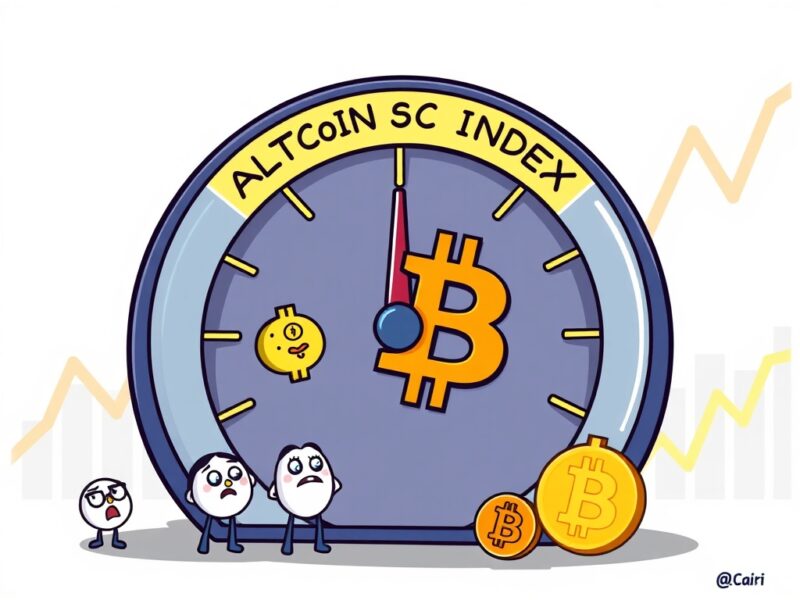
Altcoin Season Index Plunges: What This Crucial Drop to 46 Means

Altcoin Season Index Plunges: What This Crucial Drop to 46 Means

BitcoinWorld Altcoin Season Index Plunges: What This Crucial Drop to 46 Means The cryptocurrency market is a dynamic space, constantly shifting between periods of Bitcoin dominance and altcoin surges. Recently, the Altcoin Season Index has taken a notable dip, falling three points to a score of 46. This shift is sparking discussions among investors and analysts alike. What exactly does this decline signify for your crypto portfolio? Are we truly heading into a ‘Bitcoin Season’? Let’s unpack the implications of this crucial movement and understand what a score of 46 means for the future of altcoins. Understanding the Altcoin Season Index: How Is It Measured? To truly grasp the significance of the recent drop, it’s essential to understand how the Altcoin Season Index works. CoinMarketCap, a trusted name in crypto data, provides this valuable metric. It’s not just a random number; it’s a carefully calculated indicator designed to give us a snapshot of the market’s sentiment towards alternative cryptocurrencies compared to Bitcoin. The Calculation: The index evaluates the price performance of the top 100 cryptocurrencies by market capitalization. Exclusions: Stablecoins and wrapped coins are intentionally left out to ensure the index reflects true market sentiment for volatile assets. The Timeframe: Performance is measured over the past 90 days, providing a medium-term view rather than daily fluctuations. Defining a Season: An altcoin season is officially declared if 75% or more of these top 100 coins have outperformed Bitcoin. If not, it’s considered a Bitcoin season. A score closer to 100 strongly indicates an altcoin season, suggesting that a broad range of altcoins are seeing significant gains relative to Bitcoin. Conversely, a lower score points towards Bitcoin’s dominance. Why Did the Altcoin Season Index Drop to 46? The recent three-point fall in the Altcoin Season Index to 46 suggests a notable shift in market dynamics. This decline doesn’t happen in a vacuum; it reflects a period where a significant number of the top 100 altcoins have underperformed Bitcoin over the last 90 days. While the exact reasons can be multifaceted, several factors often contribute to such movements: Bitcoin’s Strength: Often, when Bitcoin experiences a strong rally, capital tends to flow from altcoins into Bitcoin, causing altcoins to lag. Macroeconomic Factors: Broader economic trends or regulatory news can impact the entire crypto market, but altcoins, being generally riskier, might see larger pullbacks. Specific Altcoin Performance: If several major altcoins within the top 100 face project-specific challenges or lack significant development news, their underperformance can collectively drag down the index. A score of 46 places us firmly outside of an ‘altcoin season’ (which requires 75 or higher). It indicates a period of relative neutrality or even slight Bitcoin dominance, where altcoins are generally struggling to keep pace. Navigating Market Shifts: What Does a 46 Mean for Your Portfolio? When the Altcoin Season Index hovers around 46, it signals a time for careful consideration rather than panic. This isn’t a strong ‘Bitcoin season’ either, as that would typically be a much lower score. Instead, it suggests a more balanced, perhaps uncertain, market environment where capital isn’t overwhelmingly favoring one side. For savvy investors, this period presents both challenges and opportunities. Re-evaluate Your Holdings: It’s a good moment to assess your altcoin positions. Are they still strong projects with solid fundamentals? Consider Diversification: While altcoins might be struggling, Bitcoin could be consolidating or preparing for its next move. A balanced portfolio can help mitigate risks. Focus on Fundamentals: During periods of uncertainty, projects with clear use cases, strong development teams, and active communities tend to weather the storm better. Risk Management: This environment underscores the importance of not over-allocating to speculative altcoins. Remember, market cycles are natural. A dip in the index doesn’t mean altcoins are doomed forever; it simply reflects the current performance trend. Understanding these trends helps you make more informed decisions. Is an Altcoin Resurgence Still Possible? Despite the recent dip in the Altcoin Season Index, the potential for an altcoin resurgence is always present in the volatile crypto market. Historically, crypto markets move in cycles, and periods of Bitcoin dominance are often followed by altcoin rallies once Bitcoin consolidates or reaches new highs. What could trigger such a shift? Bitcoin Stability: A stable Bitcoin price often allows capital to flow into altcoins as investors seek higher returns. Technological Breakthroughs: Major upgrades or significant adoption news for key altcoin projects can ignite rallies. New Narratives: Emerging trends like GameFi, NFTs, or specific Layer-2 solutions can create new interest and drive altcoin performance. While the index currently sits at 46, market sentiment can change rapidly. Staying informed about project developments and broader market trends is crucial. The crypto landscape is constantly evolving, and yesterday’s underperformers can quickly become tomorrow’s stars. In conclusion, the fall of the Altcoin Season Index to 46 is a clear indicator that altcoins are currently facing headwinds against Bitcoin. This crucial shift encourages investors to practice caution, re-evaluate their strategies, and focus on robust projects. While an altcoin season isn’t imminent based on this metric, the dynamic nature of crypto means vigilance and informed decision-making remain paramount. Keep an eye on the index and broader market signals to navigate these fascinating shifts effectively. Frequently Asked Questions About the Altcoin Season Index Q1: What exactly is the Altcoin Season Index? A1: The Altcoin Season Index is a metric provided by CoinMarketCap that indicates whether altcoins are generally outperforming Bitcoin. It’s calculated by comparing the performance of the top 100 cryptocurrencies (excluding stablecoins and wrapped coins) against Bitcoin over the past 90 days. Q2: How is an Altcoin Season officially declared? A2: An altcoin season is declared when 75% or more of the top 100 altcoins have outperformed Bitcoin during the preceding 90-day period. Otherwise, it is considered a Bitcoin season. Q3: What does a score of 46 on the Altcoin Season Index signify? A3: A score of 46 means that less than 75% of the top 100 altcoins have outperformed Bitcoin over the last 90 days. It indicates that we are currently not in an altcoin season and suggests a period of relative neutrality or slight Bitcoin dominance. Q4: Should I sell all my altcoins if the index falls? A4: Not necessarily. A falling Altcoin Season Index suggests altcoins are underperforming Bitcoin, but it doesn’t mean they won’t recover. It’s a signal to re-evaluate your portfolio, focus on strong fundamentals, and practice good risk management. Market cycles are common, and a dip can be a temporary phase. Q5: What factors can cause the Altcoin Season Index to fall? A5: The index can fall due to several reasons, including strong Bitcoin rallies that draw capital away from altcoins, broader macroeconomic uncertainties, or collective underperformance of several major altcoin projects due to lack of development or specific challenges. Did you find this analysis of the Altcoin Season Index insightful? Share this article with your fellow crypto enthusiasts and help them stay informed about crucial market trends. Your shares help our community grow! To learn more about the latest crypto market trends, explore our article on key developments shaping altcoins and Bitcoin market sentiment. This post Altcoin Season Index Plunges: What This Crucial Drop to 46 Means first appeared on BitcoinWorld and is written by Editorial Team

Author: Coinstats
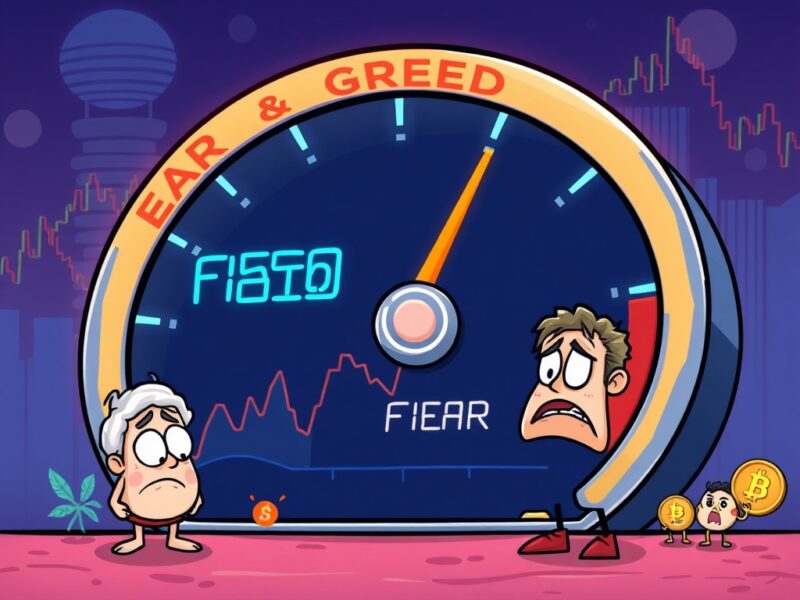
Crypto Fear & Greed Index: Decoding the Crucial Neutral Market Sentiment at 48

Crypto Fear & Greed Index: Decoding the Crucial Neutral Market Sentiment at 48

BitcoinWorld Crypto Fear & Greed Index: Decoding the Crucial Neutral Market Sentiment at 48 Are you wondering what the current mood is in the crypto market? The widely followed Crypto Fear & Greed Index recently registered a score of 48, firmly placing it in a neutral zone. This crucial metric offers a snapshot of market sentiment, helping investors gauge whether participants are feeling fearful or overly greedy. Understanding this index can provide valuable insights into potential market movements, allowing you to make more informed decisions. What Does a Neutral Crypto Fear & Greed Index Mean for You? When the Crypto Fear & Greed Index sits at 48, it signals a balanced market environment. This score is just one point up from the previous day, indicating a steady, unwavering sentiment. A neutral reading suggests that investors are neither panicking and selling off their assets nor are they excessively exuberant and buying everything in sight. Instead, there’s a cautious equilibrium. No Extreme Pressure: Unlike extreme fear (closer to 0), which often precedes market bottoms, or extreme greed (closer to 100), which can signal a market top, a neutral 48 means less immediate pressure from either side. Opportunity for Calm Analysis: This period allows for a more rational assessment of the market without the emotional pull of FOMO (Fear Of Missing Out) or FUD (Fear, Uncertainty, and Doubt). Watch for Shifts: While neutral, it’s a dynamic score. Smart investors watch for slight movements as potential precursors to a shift towards fear or greed. Unpacking the Crypto Fear & Greed Index: How is it Calculated? The Crypto Fear & Greed Index is not just a random number; it’s a sophisticated blend of various market indicators. Data provider Alternative meticulously calculates this index, offering a comprehensive view of investor psychology. Let’s break down the key components that contribute to its score: Volatility (25%): Measures the current volatility and maximum drawdowns of Bitcoin compared to its average over 30 and 90 days. Higher volatility often indicates fear. Market Volume (25%): Compares current trading volume and market momentum to average values. High buying volume in a positive market can signal greed. Social Media Mentions (15%): Analyzes specific keywords on social media platforms. A surge in mentions, especially with positive sentiment, can suggest increasing greed. Surveys (15%): Although currently paused, these polls previously asked investors about their market outlook, directly gauging sentiment. Bitcoin Dominance (10%): An increasing Bitcoin dominance often indicates fear, as investors might be fleeing altcoins for the relative safety of Bitcoin. A decreasing dominance can signal greed as money flows into riskier altcoins. Google Search Volume (10%): Tracks search queries related to Bitcoin and other cryptocurrencies. Sudden spikes in searches for terms like “Bitcoin price manipulation” can indicate fear, while searches for “how to buy crypto” might suggest growing interest and greed. These factors combine to paint a holistic picture of the market’s collective mood, which is invaluable for traders and long-term holders alike. Navigating Market Sentiment: Why the Crypto Fear & Greed Index is Crucial Understanding the sentiment conveyed by the Crypto Fear & Greed Index is a powerful tool in your investment arsenal. It helps you recognize the prevailing emotions that often drive market behavior, providing a crucial counter-perspective to your own biases. For instance, when the index screams “extreme greed,” it might be a signal to exercise caution, as markets can be due for a correction. Conversely, an “extreme fear” reading often presents a unique opportunity for those brave enough to buy when others are selling. However, it’s vital to remember that this index is just one indicator. It should always be used in conjunction with fundamental analysis, technical analysis, and your own risk management strategy. Relying solely on sentiment can be misleading, as markets can remain irrational longer than you can remain solvent. Actionable Insights from the Crypto Fear & Greed Index at 48 With the Crypto Fear & Greed Index maintaining its neutral stance at 48, what are some smart moves for investors? This period is an excellent time for strategic planning rather than impulsive trading. Here are some actionable insights: Re-evaluate Your Portfolio: A neutral market provides a calm environment to assess your current holdings. Are your investments aligned with your long-term goals? Research New Opportunities: Without the distraction of extreme market swings, dedicate time to researching promising projects and understanding their fundamentals. Practice Dollar-Cost Averaging (DCA): If you’re building a position, a neutral market can be a good time to continue or start a DCA strategy, buying small amounts regularly to average out your purchase price. Set Realistic Expectations: Avoid expecting parabolic gains or sudden crashes. A neutral index suggests a more measured pace for the market. Strengthen Your Knowledge: Use this period to deepen your understanding of market cycles and how different indicators interact. Remember, patience and informed decision-making are your best allies in the dynamic world of cryptocurrency. The Crypto Fear & Greed Index is a guide, not a crystal ball. In conclusion, the current neutral reading of 48 on the Crypto Fear & Greed Index offers a valuable moment of equilibrium in the often-turbulent crypto market. It’s a reminder that while emotions can run high, understanding these underlying sentiments, coupled with sound research and a disciplined approach, is paramount for successful navigation. By staying informed about the index and its components, investors can better understand market psychology and make choices that align with their personal financial strategies, fostering a more resilient and profitable investment journey. Frequently Asked Questions (FAQs) Q1: What is the Crypto Fear & Greed Index? The Crypto Fear & Greed Index is a tool that measures the current sentiment of the cryptocurrency market. It ranges from 0 (extreme fear) to 100 (extreme greed), providing insight into whether investors are feeling anxious or overly optimistic. Q2: How is the Crypto Fear & Greed Index calculated? It’s calculated based on several factors, including market volatility (25%), trading volume (25%), social media mentions (15%), surveys (15%), Bitcoin’s market cap dominance (10%), and Google search volume (10%). These components are weighted to produce a single sentiment score. Q3: What does a neutral score (like 48) on the Crypto Fear & Greed Index indicate? A neutral score, such as 48, suggests that the market is in a state of equilibrium. Investors are neither experiencing extreme fear nor extreme greed, indicating a period of cautious balance and potentially more rational decision-making. Q4: Can I use the Crypto Fear & Greed Index to predict market movements? While the Crypto Fear & Greed Index offers valuable insights into market psychology, it should not be used as a standalone prediction tool. It’s best utilized as one of many indicators, alongside fundamental and technical analysis, to inform your investment strategy. Q5: What are the limitations of the Crypto Fear & Greed Index? Its main limitation is that it’s a sentiment indicator, not a definitive market predictor. Markets can remain irrational, and the index doesn’t account for all external factors or fundamental changes. It’s a snapshot, not a crystal ball. Found this analysis of the Crypto Fear & Greed Index insightful? Share this article with your fellow crypto enthusiasts and help them navigate the market with greater confidence! Your insights can make a difference. To learn more about the latest crypto market trends, explore our article on key developments shaping Bitcoin price action. This post Crypto Fear & Greed Index: Decoding the Crucial Neutral Market Sentiment at 48 first appeared on BitcoinWorld and is written by Editorial Team

Author: Coinstats
SUI Treasury Rebrands to SUI Group Holdings as DEX Volume Hits $10B

SUI Treasury Rebrands to SUI Group Holdings as DEX Volume Hits $10B

The post SUI Treasury Rebrands to SUI Group Holdings as DEX Volume Hits $10B appeared on BitcoinEthereumNews.com. Key Insights: SUI rebrands as SUI Group Holdings, marking a new era for the cryptocurrency sector. Analyst predicts SUI breakout soon, potentially reaching $5.36 in the next cycle. SUI Network surpasses $10B DEX volume, setting the stage for an ATH break in the coming days. SUI Treasury Rebrands to SUI Group Holdings as DEX Volume Hits $10B SUI Treasury Company, previously known as Mill City Ventures III, has rebranded and changed its ticker symbol to $SUIG. The rebranding will take effect on August 26, 2025, marking a new chapter for the company. In a statement, SUI Group Holdings announced that the stock will now trade under the ticker symbol $SUIG on NASDAQ. Rebranding Marks a New Era for SUI Group Holdings The rebranding is part of the company’s strategic shift to reflect its expanding operations better and focus. The company stated that it is thrilled to announce that Mill City Ventures III has rebranded as SUI Group Holdings today. The change also signifies the company’s growing ambition within the cryptocurrency and blockchain sector. The decision to adopt a new name and ticker symbol comes as the Sui Network is showing signs of growth. The transition to $SUIG on NASDAQ is expected to increase investor interest and improve the company’s visibility in the market. SUI Breakout Amid Market Consolidation Despite the significant milestones, SUI’s price has seen some fluctuations recently. As of press time, SUI was priced at $3.45, with a 24-hour trading volume of over $2 billion. The price has decreased by 6.39% over the last 24 hours, but many analysts remain optimistic about the coin’s future. According to Altsteinn, SUI is currently underperforming and on the verge of a breakout. The coin has been consolidating since the start of 2025, and a surge in price is expected soon. Potential…

Author: BitcoinEthereumNews
ETH Rallied 3,900% Last Cycle: With Institutional Demand Rising, Could History Repeat Itself?

ETH Rallied 3,900% Last Cycle: With Institutional Demand Rising, Could History Repeat Itself?

Ethereum (ETH) has a history of defying expectations. In the 2020–2021 bull run, ETH skyrocketed more than 3,900%, climbing from under $100 to nearly $4,900 at its peak. Related Reading: Solana Extends Streak, Outshines Ethereum in DEX Volume – Details That surge was fueled by the rise of decentralized finance (DeFi), NFTs, and a wave of institutional interest. Now, as Ethereum enters a new cycle backed by stronger fundamentals and wider adoption, investors are bracing for a potential repeat. This time, the story goes beyond retail speculation. Institutional demand is accelerating at record pace, with Ethereum ETFs, staking yields, and corporate treasury allocations reshaping the market dynamics. Institutional Demand Redefines Ethereum’s Market Position In 2025, Ethereum-based ETFs have far outpaced their Bitcoin counterparts, attracting over $12.1 billion in assets under management. BlackRock’s iShares Ethereum Trust (ETHA) alone saw nearly $300 million in inflows in August, underscoring Wall Street’s growing appetite for ETH exposure. Meanwhile, Bitcoin ETFs faced over $1.1 billion in outflows, signaling a dramatic shift in capital allocation. Beyond ETFs, public companies now hold 3.4% of Ethereum’s total supply, with more than 3.5 million ETH staked in corporate treasuries. Household names like Ferrari and Deutsche Bank are integrating Ethereum into payments, tokenization platforms, and settlement systems. Unlike Bitcoin, which remains a non-yielding store of value, Ethereum offers corporations yield-generating opportunities through 3–5% staking rewards, making it both a treasury asset and a productive instrument. ETH's price records some losses on the daily chart. Source: ETHUSD on Tradingview Why ETH Could Outperform Again Ethereum’s long-term bull case rests on three pillars: Deflationary mechanics: Post-Merge upgrades and token burns have reduced ETH supply by 0.1% quarter-over-quarter, reinforcing scarcity. Yield generation: With nearly 30% of ETH staked, institutions enjoy consistent returns absent in Bitcoin’s model. Regulatory clarity: The SEC and Europe’s MiCA framework have reclassified Ethereum as a utility token, giving the green light for ETFs and large-scale adoption. Ethereum now powers 53% of real-world asset tokenization, strengthening its role as the backbone of decentralized finance and digital settlements. Analysts at Standard Chartered and other firms are forecasting ETH could reach $7,500 by year-end 2025, with potential long-term targets of $12,000–$18,000 as adoption accelerates. Final Takeaway Ethereum is no longer just Bitcoin’s “little brother.” Its hybrid profile, a deflationary, yield-bearing, utility-driven asset, makes it a compelling choice for institutional and retail investors alike. Related Reading: This Week In XRP: Ripple CTO Set To Announce Important Update If the last cycle’s 3,900% rally was a preview, the next phase could reimagine how Ethereum is valued, not just as a cryptocurrency, but as the infrastructure layer in  global finance. Cover image from ChatGPT, ETHUSD chart from Tradingview

Author: NewsBTC
Canary Capital files 'American-Made' crypto ETF amid SEC delays

Canary Capital files 'American-Made' crypto ETF amid SEC delays

                                                                               Canary Capital has filed for a US-only crypto ETF, aiming to track an index of American-rooted digital assets as the SEC weighs other fund applications.                     US digital asset investment firm Canary Capital Group has filed with the Securities and Exchange Commission (SEC) to launch the Canary American-Made Crypto ETF (MRCA). According to a Friday filing, the proposed fund would track an index of cryptocurrencies created, mined or primarily operated in the United States, with shares slated to trade on Cboe BZX under the ticker MRCA. The trust also plans to stake its proof-of-stake holdings through third-party providers, adding rewards to its net asset value. The Made-in-America Blockchain Index will admit only assets that meet strict criteria set by an oversight committee. Tokens must be eligible for custody with a regulated US trust or bank, maintain minimum liquidity, and trade on multiple established venues. Read more

Author: Coinstats