Futures

Futures are derivative financial contracts that obligate parties to transact an asset at a predetermined future date and price. In the Web3 ecosystem, futures are essential tools for hedging risk and gaining leveraged exposure to market movements. By 2026, the market has seen a massive shift toward institutional-grade futures platforms with enhanced regulatory compliance. This tag covers the mechanics of delivery dates, margin requirements, and how professional traders use futures to navigate crypto volatility and secure long-term portfolio stability.

18898 Articles
Created: 2026/02/02 18:52
Updated: 2026/02/02 18:52
Chainlink unveils Data Streams for U.S. equities and ETFs

Chainlink unveils Data Streams for U.S. equities and ETFs

Chainlink has unveiled Chainlink Data Streams for equities and exchange-traded funds listed in the United States as it looks to boost adoption across the tokenized real-world assets market. Chainlink Data Streams for U.S. equities and exchange-traded funds offers real-time market…

Author: Crypto.news
Social gaming platform STAN completes $8.5 million in funding, with participation from Google and others

Social gaming platform STAN completes $8.5 million in funding, with participation from Google and others

PANews reported on August 5 that according to TechCrunch, Google's AI Futures Fund participated in an $8.5 million equity round and invested in STAN, an Indian social gaming platform headquartered

Author: PANews
The US is embracing the "Golden Age of Cryptocurrency," but how will South Korea follow suit?

The US is embracing the "Golden Age of Cryptocurrency," but how will South Korea follow suit?

Author: Heechang Four Pillars Compiled by: TechFlow Key Takeaways The Executive Order 14178 Task Force released a 166-page report today outlining how the United States can lead the blockchain industry

Author: PANews
The Acting Chairman of the U.S. CFTC announced the launch of the "Crypto Sprint" program to work with the SEC to advance Trump's vision of a golden age of cryptocurrencies.

The Acting Chairman of the U.S. CFTC announced the launch of the "Crypto Sprint" program to work with the SEC to advance Trump's vision of a golden age of cryptocurrencies.

PANews reported on August 3 that Caroline Pham, Acting Chair of the U.S. Commodity Futures Trading Commission (CFTC), announced the launch of the "Crypto Sprint" program, and will work closely

Author: PANews
Huang Licheng's long position on ETH/HYPE/PUMP has basically given back all of his previous profits of $22.45 million

Huang Licheng's long position on ETH/HYPE/PUMP has basically given back all of his previous profits of $22.45 million

PANews reported on August 3rd that according to monitoring by on-chain analyst Yu Jin, Huang Licheng, the big brother of Maji, has basically lost all of his previous profits of

Author: PANews
Solana CME futures trading volume surged 252% in July to $8.1 billion, the highest volume since launch.

Solana CME futures trading volume surged 252% in July to $8.1 billion, the highest volume since launch.

PANews reported on August 3rd that, according to data from The Block, cited by Cointelegraph, Solana CME futures trading volume soared 252% in July to $8.1 billion, setting a record

Author: PANews
Annualized 15%+ and drawdown less than 2%, how does Neutral use institutional risk control to "steadily" reap JLP dividends?

Annualized 15%+ and drawdown less than 2%, how does Neutral use institutional risk control to "steadily" reap JLP dividends?

By Alex Liu, Foresight News From JLP to Neutral To make money, the first step is often to find high-quality assets. It's no exaggeration to say that JLP is one

Author: PANews
Bitcoin Plunges Below $115K Amid Trump Nuclear Threats and Fed Shake-Up

Bitcoin Plunges Below $115K Amid Trump Nuclear Threats and Fed Shake-Up

Bitcoin plunged below $115,000 on Friday as renewed political pressure from former President Donald Trump unsettled markets. The top cryptocurrency dropped to $113,164, its lowest in weeks, triggering over $200 million in liquidations from leveraged long positions and raising fresh concerns over investor confidence. The drop comes amid escalating geopolitical tension. Trump Orders Submarine Move Amid Russia Tensions, Bitcoin Reacts to Risk Fears Trump announced the repositioning of two U.S. nuclear submarines in response to comments by former Russian President Dmitry Medvedev, now deputy chairman of Russia’s Security Council. Medvedev had criticized Trump’s ultimatum that Russia end its conflict with Ukraine within ten days, calling it “a step towards war.” “Based on the highly provocative statements of the former president of Russia, Dmitry Medvedev, […] I have ordered two nuclear submarines to be positioned in the appropriate regions,” Trump wrote on Truth Social. He added that “Words are very important and can often lead to unintended consequences. I hope this will not be one of those instances.” Bitcoin’s price decline followed these remarks from Trump, reflecting broader investor anxiety as tensions between nuclear powers rise. Friday’s market reaction also follows Trump’s public attacks on U.S. economic institutions. The former president accused Erika McEntarfer, Commissioner of Labor Statistics, of manipulating jobs data ahead of the 2024 election to help Kamala Harris. He called for her immediate removal and claimed the Bureau had “faked the jobs numbers” by overstating employment growth. “We need accurate Jobs Numbers,” Trump wrote. “She will be replaced with someone much more competent and qualified.” He also turned his attention to the Federal Reserve, sharply criticizing its chair, Jerome Powell. Trump claimed the Fed’s pre-election rate cuts were politically motivated and called Powell “a stubborn MORON.” “Jerome ‘Too Late’ Powell must substantially lower interest rates NOW,” he wrote. “IF HE CONTINUES TO REFUSE, THE BOARD SHOULD ASSUME CONTROL AND DO WHAT EVERYONE KNOWS HAS TO BE DONE!” While presidents traditionally avoid interfering with central bank decisions, Trump urged Fed officials to overrule Powell and slash rates to support what he described as a booming economy under his leadership. The Fed has held rates steady for five consecutive meetings, citing inflation concerns. But Trump, in a flurry of posts, accused Powell of damaging the economy and failing to act on the consequences of new tariffs. Fed Governor Adriana Kugler Resigns, Opening Key Seat for Trump Amid the political pressure, Federal Reserve Governor Adriana Kugler announced her resignation on Friday, creating a key vacancy at the central bank. Kugler, a Biden appointee, joined the Fed’s Board of Governors in 2023 and was a permanent voting member on the Federal Open Market Committee. JUST IN: 🇺🇸 Federal Reserve Governor Adriana Kulger steps down from the Fed 👀 pic.twitter.com/QP8SoiX0fJ — Bitcoin Magazine (@BitcoinMagazine) August 1, 2025 She did not give a reason for her early departure but stated she would return to Georgetown University in the fall. “It has been an honor of a lifetime to serve,” Kugler wrote in a letter addressed to Trump. Her exit, nearly 18 months before her term was set to expire, clears a path for Trump to nominate a replacement. Kugler had recently voiced support for keeping rates steady, pending a clearer picture of how tariffs are affecting inflation. She was absent during this week’s policy vote, where two Trump-appointed members dissented, favoring a rate cut. Fed Chair Jerome Powell thanked Kugler for her service, noting her contributions brought “impressive experience and academic insights” to the Board. Bitcoin Slides as Political Tensions and Market Jitters Weigh on Sentiment Bitcoin slipped further on Friday as rising geopolitical tensions and cautious investor sentiment added pressure to already fragile markets. The cryptocurrency is now trading just 7% below its all-time high of $123,182 set in mid-July , though momentum in derivatives markets is showing signs of cooling. Notably, the monthly futures premium for Bitcoin has narrowed to 6%, down from earlier highs this month. Analysts say the drop reflects reduced appetite for leveraged long positions, suggesting traders are becoming more risk-averse despite ongoing institutional interest. Source: Laevitas.ch Bitcoin’s recent price behavior has also contributed to uncertainty. Rather than acting as a hedge, the asset has moved in step with tech stocks, exposing it to broader macro and political shocks. With tensions between the U.S. and Russia flaring again this week, risk appetite appears to be shifting. The political back-and-forth added to a market already grappling with trade friction and weak economic data. While gold has remained stable around $3,350, it has offered little relief for those hoping Bitcoin would act as a safe-haven alternative. Traders appear to be rotating into cash and short-term government bonds as volatility increases. Despite the decline, Bitcoin remains well above its January levels. However, with global uncertainty rising, traders may remain cautious in the short term. Amid the broader pullback, some investors are reassessing Bitcoin’s long-term role. Bridgewater Associates founder Ray Dalio, previously skeptical, has updated his outlook . Speaking on a recent podcast, Dalio recommended allocating up to 15% of a portfolio to gold or Bitcoin as a hedge against U.S. debt and inflation. “The U.S. is entering a debt doom loop,” he said, referencing Treasury forecasts of $12 trillion in new debt within the next year. Dalio noted that while Bitcoin remains volatile and faces regulatory questions, its role as a store of value is becoming harder to ignore.

Author: CryptoNews
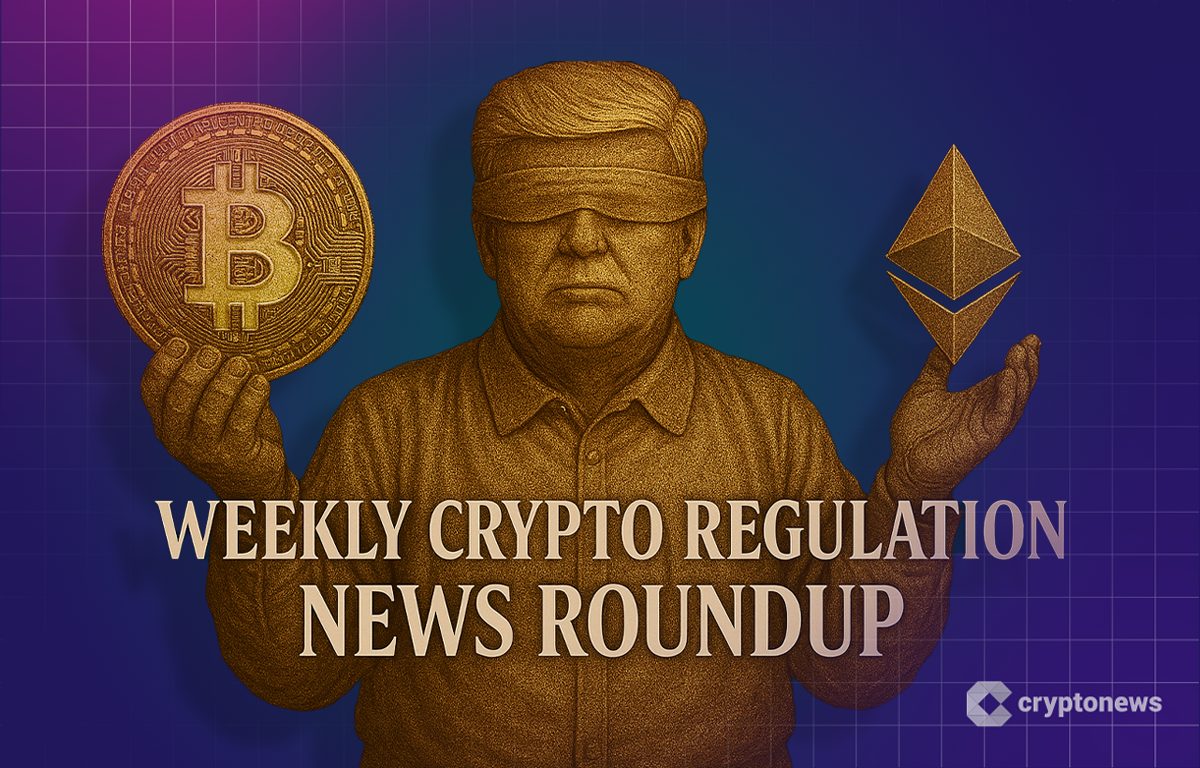
Weekly Crypto Regulation Roundup: SEC Advances ETF Reform, White House Unveils Crypto Roadmap

Weekly Crypto Regulation Roundup: SEC Advances ETF Reform, White House Unveils Crypto Roadmap

This week marked a turning point in U.S. crypto regulation, as both Congress and regulatory agencies moved forward with frameworks that could finally bring clarity to the digital asset space. With the SEC unveiling sweeping ETF reform and the White House publishing its long-awaited crypto policy report, America is sending a clear message: the U.S. wants to lead the next chapter of digital finance. Trump’s Crypto Regulation Roadmap Looks to Cement U.S. Leadership On July 30, the President’s Working Group on Digital Asset Markets released a 166-page report outlining the Trump administration’s blueprint for transforming the U.S. into the “Crypto Capital of the World.” The document, which embraces terms like “Golden Age of Crypto,” proposes legislative and regulatory clarity as the foundation for future growth. 🇺🇸 Trump admin report calls for clear SEC/CFTC crypto rules, DeFi adoption & modern bank reforms. #Trump #CryptoRegulations https://t.co/qLYj3tAhZ2 — Cryptonews.com (@cryptonews) July 30, 2025 Key recommendations include giving the Commodity Futures Trading Commission (CFTC) explicit authority over spot markets for non-security digital assets and formally integrating decentralized finance (DeFi) into traditional market infrastructure. The report also calls for Congress to affirm the right of people to custody their own digital assets and transact peer-to-peer without financial intermediaries. Additionally, the report reflects a political strategy as well. With Trump enjoying a 72% approval rating among crypto holders—according to internal polling cited in the report—there’s no doubt that crypto policy is becoming a serious campaign platform. Industry leaders have responded positively. Rebecca Liao, co-founder, and CEO of Web3 protocol Saga, commented: “By today’s standards, this policy document is not controversial and reflects crypto consensus. Because the recommendations are more reasonable, they should be easier to implement than the extreme ideas often floated on Crypto Twitter.” “Even diehard crypto maxis now accept that unchecked manipulation has eroded trust. For this market to grow sustainably, that issue can’t be ignored much longer,” said Liao. Congressional Pressure Mounts to Pass Crypto Market Structure Legislation Following the report’s release, House Financial Services Committee Chairman French Hill issued a statement urging the Senate to act swiftly. With the GENIUS Act already the law and the CLARITY Act receiving overwhelming bipartisan support in the House, Hill is pushing for crypto market structure legislation to reach President Trump’s desk. “I’m pleased to see the Working Group’s strong support of the CLARITY Act,” said Hill. “Now the Senate must expeditiously work to deliver critical legislation that realigns our regulatory landscape with the President’s vision.” SEC Unveils Project Crypto and Advances ETF Reform In tandem with the White House roadmap, the SEC launched “Project Crypto,” a sweeping initiative designed to modernize securities laws to accommodate blockchain-based financial products. Chairman Paul Atkins announced the initiative during a speech at the America First Policy Institute, stating that the time had come to bring crypto asset issuance and trading back to U.S. soil. 🚀 SEC Chairman Paul Atkins launches 'Project Crypto' initiative to make America the 'crypto capital of the world' through comprehensive regulatory modernization. #SEC #Crypto #America https://t.co/7dVUQ2rEZ8 — Cryptonews.com (@cryptonews) July 31, 2025 Perhaps most impactful is the SEC’s new Generic Listing Standards for crypto exchange-traded products. These rules, published via the CBOE, outline that any crypto asset with active futures markets for at least six months would automatically qualify for ETF listing. Analysts believe up to a dozen tokens could be approved by October, opening the door to a more inclusive and transparent crypto investment market. 🚀 SEC establishes new crypto ETF listing standards enabling approximately dozen major digital assets to gain approval by October through streamlined framework. #SEC #ETFs https://t.co/grlJtGb5tH — Cryptonews.com (@cryptonews) July 31, 2025 A New Era for Regulated Crypto Investing? The week’s developments in crypto regulation suggest that after years of fragmented regulation and uncertainty, a new era may be dawning for U.S.-based crypto investors. Policies are becoming more predictable, access is being broadened, and lawmakers are working in parallel with regulators to build lasting infrastructure. Laurent Kssis, CEO of CEC Capital and a seasoned crypto ETP expert, welcomed the FCA’s recent decision to allow UK retail investors access to crypto ETNs as a sign that matures regulatory environments are finally gaining momentum. 🚨 The UK FCA will allow retail investors to access crypto ETNs starting Oct 8—reversing a 4+ year ban. #FCA #ETNs https://t.co/aK2NkOS0Md — Cryptonews.com (@cryptonews) August 1, 2025 As we enter the second half of 2025, the tone is clear: crypto is no longer a fringe asset class. With regulatory foundations being laid in Washington, the opportunity to reshape global digital finance is very much alive—and increasingly being led from the top.

Author: CryptoNews
Indonesia’s Crypto Tax Revenue Skyrockets 181% – But Volatility Raises Red Flags

Indonesia’s Crypto Tax Revenue Skyrockets 181% – But Volatility Raises Red Flags

Indonesia’s annual crypto tax revenue jumped sharply in 2024, marking its highest level since the government introduced taxation on digital assets in 2022. According to officials from the Directorate General of Taxes, the country collected 620 billion rupiah (around $38 million) last year, a 181% rise from the 220 billion rupiah recorded in 2023. The sharp increase reflects a broader surge in local crypto activity. Officials attributed the growth to a rise in transaction volumes, which reportedly reached 650 trillion rupiah ($39.67 billion) in 2024. This aligns with Indonesia’s growing crypto user base, which now stands at over 20 million people, surpassing the number of stock market investors. Crypto Tax Revenue in Indonesia Surged in 2024, but 2025 Off to a Slower Start However, the momentum may not last. Year-to-date figures for 2025 show a steep drop in tax revenue, with collections sitting at just 115 billion rupiah ($6.97 million) as of July. Officials point to crypto market volatility as a key factor behind the fluctuations. “Crypto is a long-term investment. The price can drop,” said Hestu Yoga Saksama, Director of Tax Regulations I at the Directorate General of Taxes. “It could spike, it could drop—it depends on what kind of fever it is. If the fever is high, then the reception will be good.” The tax was first introduced in 2022 and includes both Final Value Added Tax (VAT) and Article 22 Income Tax on crypto trading. In its first year, crypto taxes brought in 246 billion rupiah. The drop in 2023 raised concerns before the market rebounded sharply last year. To manage this growing sector, the government introduced several new regulations in 2025. Among them are updated ministerial decrees that set out tax rules for crypto asset trading and amend existing tax frameworks to reflect the evolving digital asset space. Indonesia has also reclassified crypto assets from commodities to financial assets. This move brings the sector under the oversight of the Financial Services Authority (OJK), indicating a shift in how the country views crypto’s role in its broader financial system. Yon Arsal, an advisor to the Minister of Finance, emphasized the need for collaboration. “It’s not enough to simply expand the scope,” he said. “We must also coordinate. We’re encouraging better coordination with our external stakeholders, including the Financial Services Authority.” Indonesia Raises Crypto Taxes on Foreign Exchanges, Cuts VAT for Buyers The government also rolled out tax reforms in August designed to shift activity toward domestic crypto platforms. Taxes on foreign exchanges were raised from 0.2% to 1%, while domestic platforms saw a smaller hike from 0.1% to 0.21%. Buyers, however, are no longer subject to VAT, creating an incentive for local trading. Crypto mining operations weren’t left out. VAT on mining has doubled from 1.1% to 2.2%, and a special 0.1% income tax for miners will be removed in 2026. After that, mining income will be taxed under regular personal or corporate tax rates. Speaking to CryptoNews, Gregory Cowles, Chief Strategy Officer of Intellistake.ai , noted that “crypto taxation needs to strike a balance. It’s fair that governments want their share, but overly aggressive or unclear policies risk pushing users offshore or into informal channels.” He continued, saying, “Especially in emerging markets, crypto is often more than just speculation; it’s a workaround for currency instability or limited access to banking. If taxation becomes too punitive, it could stifle that utility.” 🇮🇩 Indonesia implements sweeping cryptocurrency tax increases up to five times higher effective August 1 targeting the booming $39.67 billion crypto market. #Indonesia #Crypto https://t.co/INFY07kh8f — Cryptonews.com (@cryptonews) July 30, 2025 Despite the volatility challenges, officials view crypto taxation as a growing source of revenue. The government’s ability to capture earnings from the booming digital asset market, particularly among younger investors aged 18 to 30, is seen as a long-term opportunity. Still, the unpredictable nature of crypto prices poses a challenge for revenue planning. As Yoga noted, “It really depends on the market. If activity drops, so does the revenue.” As 2025 unfolds, the country’s crypto tax collections may continue to reflect the highs and lows of a volatile but rapidly expanding sector. Gregory Cowles further noted that “If governments start to treat crypto tax income as a stable budget item, they may be setting themselves up for disappointment.” Indonesia Ranks 3rd Globally for Crypto Adoption as Youth Trading Soars Indonesia’s crypto sector is seeing a sharp rise in activity, fueled largely by its young population. Over 60% of the country’s crypto investors are aged between 18 and 30, according to data from the Commodity Futures Trading Regulatory Agency (Bappebti). This surge in young investor participation has helped position Indonesia as the third-highest country on Chainalysis’s Global Cryptocurrency Adoption Index . Source: Chainalysis In 2024, Indonesia recorded more than $30 billion in crypto transactions by October , a steep rise from $6.5 billion the previous year. While still below the 2021 peak of $54 billion, this marks a 352% year-over-year increase. The number of registered crypto traders in the country also grew, reaching 21 million. At the regulatory level, the country is undergoing a shift in oversight. The transfer of authority from Bappebti to the Financial Services Authority (OJK), initially planned for January 2025 , was delayed due to the absence of supporting government regulations. 🇮🇩 Indonesia’s crypto regulation transfer to OJK, set for Jan. 12, faces setbacks due to incomplete government frameworks. #Indonesia #CryptoRegulation https://t.co/2V7xIu94eI — Cryptonews.com (@cryptonews) January 2, 2025 Once finalized, the OJK is expected to provide a more structured regulatory framework aligned with global standards, including clearer rules on trading, taxation, and exchange operations.

Author: CryptoNews