Lending

Lending protocols form the backbone of the decentralized money market, allowing users to lend or borrow digital assets without intermediaries. Using smart contracts, platforms like Aave and Morpho automate interest rates based on supply and demand while requiring over-collateralization for security. The 2026 lending landscape features advanced permissionless vaults and institutional-grade credit lines. This tag covers the evolution of capital efficiency, liquidations, and the integration of diverse collateral types, including LSTs and tokenized RWAs.

14383 Articles
Created: 2026/02/02 18:52
Updated: 2026/02/02 18:52
Best Crypto to Buy as Vietnam Starts Crypto Experiment

Best Crypto to Buy as Vietnam Starts Crypto Experiment

Vietnam is setting up a new five-year pilot program for trading crypto. The move formally acknowledges a market that’s already […] The post Best Crypto to Buy as Vietnam Starts Crypto Experiment appeared first on Coindoo.

Author: Coindoo
Tapzi Presale Explodes: Could This Be the Best Coin to Invest in September 2025?

Tapzi Presale Explodes: Could This Be the Best Coin to Invest in September 2025?

Tapzi presale gains momentum with skill-to-earn gaming, fixed 5B supply, locked liquidity, and 300% listing potential, making $TAPZI a top pick for Sept 2025.

Author: Blockchainreporter
Most Crypto Tokens Like XRP, ADA, SOL, DOGE Are Not Securities Under Project Crypto, SEC Chair Paul Atkins

Most Crypto Tokens Like XRP, ADA, SOL, DOGE Are Not Securities Under Project Crypto, SEC Chair Paul Atkins

TLDR SEC Chair Paul Atkins clarifies that most tokens like XRP, ADA, and DOGE are not securities under Project Crypto. Project Crypto aims to provide clear rules for crypto activities such as trading, lending, and staking. SEC supports crypto “super-apps” for trading, lending, and staking under one regulatory framework. Atkins praises the EU’s MiCA framework, [...] The post Most Crypto Tokens Like XRP, ADA, SOL, DOGE Are Not Securities Under Project Crypto, SEC Chair Paul Atkins appeared first on CoinCentral.

Author: Coincentral
India Delays Crypto Framework Over Risks

India Delays Crypto Framework Over Risks

The post India Delays Crypto Framework Over Risks appeared on BitcoinEthereumNews.com. Key Notes A government document reads that crypto regulation could make the sector harder to control. Peer-to-peer transactions and decentralized trades remain hard to regulate despite punitive measures. Unlike India, neighbouring countries are adopting crypto-friendly policies. India has no plans to regulate the crypto sector for now, citing concerns that it could expose the country’s financial system to risks. A recent report by Reuters, based on a government document, reveals that officials are concerned that legitimizing crypto may make it systemic and harder to manage. The report explains that containing crypto-related risks through regulation would be challenging. While a complete ban could tackle speculative activities, it wouldn’t prevent peer-to-peer transfers or decentralized trading. As a result, the government prefers partial oversight, keeping crypto’s use limited within existing tax and anti-money laundering frameworks. Indians currently hold $4.5 billion in crypto and constantly look for the next crypto to explode. According to officials, this figure is neither significant nor a systemic risk to financial stability. India’s Cautious Stance Despite rising global crypto adoption, the Indian government remains cautious. Previous efforts, such as the 2021 draft bill to ban private cryptocurrencies, were shelved, and discussions around crypto regulation were postponed last year. Earlier this year, the Reserve Bank of India (RBI) fined P2P platforms like Faircent, Finzy, Visionary Financepeer, and Rang De for violating lending guidelines, totaling over ₹75 lakh. Currently, global crypto exchanges can register in India after compliance checks but remain excluded from mainstream financial channels. As per the document, the government finds the current limited regulations, backed by taxes and fraud penalties, sufficient to deter speculative risks. Neighbours Move Toward Crypto Adoption Unlike India, several Asian governments are actively supporting crypto adoption and aiming clear regulations for the sector. Singapore remains a strong player in the region, with its Payment…

Author: BitcoinEthereumNews
How RWA-Backed Stablecoins Are Transforming Crypto Finance?

How RWA-Backed Stablecoins Are Transforming Crypto Finance?

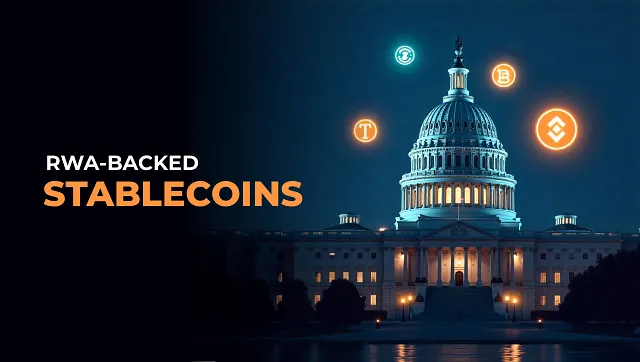
How RWA-Backed Stablecoins Are Transforming Crypto Finance? The cryptocurrency industry has witnessed exponential growth over the last decade, introducing innovative financial instruments, decentralized finance (DeFi) platforms, and novel forms of digital money. Among these innovations, stablecoins have emerged as critical assets for traders, investors, and institutions looking to mitigate volatility while maintaining the benefits of blockchain technology. Recently, a new class of stablecoins, known as RWA-backed stablecoins, has begun to reshape the crypto finance landscape, bridging the gap between digital assets and tangible real-world assets. In this blog, we explore what RWA-backed stablecoins are, how they function, their integration into the crypto ecosystem, and the transformative impact they are having on crypto finance. What Are RWA-Backed Stablecoins? Stablecoins are cryptocurrencies designed to maintain a stable value by being pegged to a reserve asset, traditionally fiat currencies like the US Dollar (USD) or Euro (EUR). While fiat-backed stablecoins have been widely adopted, they still face challenges such as centralization risks, regulatory scrutiny, and limited transparency regarding reserves. RWA-backed stablecoins, or Real-World Asset-backed stablecoins, take a different approach. Instead of being backed solely by fiat currency or other digital assets, these stablecoins are collateralized with tangible, verifiable real-world assets, such as: Commercial real estate Bonds and debt instruments Commodities like gold or silver Infrastructure projects Treasury securities By linking digital tokens to real-world assets, RWA-backed stablecoins aim to provide greater stability, transparency, and trust, making them particularly appealing to institutional investors and businesses seeking reliable on-chain collateral. How RWA-Backed Stablecoins Work? The mechanism behind RWA-backed stablecoins involves several key steps: Asset Acquisition and Verification A trusted custodian acquires or holds real-world assets as collateral. These assets are then verified and documented to ensure their legitimacy and value. Token MintingOnce authenticated, stablecoins are minted on the blockchain, with each token representing a stake in the underlying asset. Smart Contract ManagementThe stablecoins are managed via smart contracts, ensuring automated issuance, redemption, and compliance. These contracts also enable transparency, as users can verify collateral reserves on-chain. Redemption and LiquidationUsers can redeem RWA-backed stablecoins for the underlying assets if needed. In cases where the stablecoin value drops due to market fluctuations, smart contracts can trigger partial liquidation to maintain stability. This system combines the security and programmability of blockchain with the tangible value of real-world assets, creating a hybrid financial model that addresses many of the shortcomings of traditional stablecoins. The Advantages of RWA-Backed Stablecoins

  1. Enhanced StabilityUnlike fiat-backed stablecoins, which may be affected by central bank policies or banking risks, RWA-backed stablecoins derive their value from tangible, real-world assets. This ensures that their value remains more stable over time, particularly during market turbulence.
  2. Transparency and TrustOne of the main criticisms of fiat-backed stablecoins is the lack of transparency regarding reserves. RWA-backed stablecoins often include audited asset documentation and blockchain verification, allowing users to see exactly what backs each token. This builds trust among institutional and retail investors.
  3. Greater Regulatory ComplianceRWA-backed stablecoins can facilitate compliance with financial regulations, as the assets backing them are often subject to standard financial oversight. This makes them an attractive option for businesses seeking legitimate, legally recognized collateral for DeFi applications.
  4. Access to Traditional FinanceBy tokenizing real-world assets, RWA-backed stablecoins allow crypto investors to gain exposure to traditional financial markets without leaving the blockchain ecosystem. For example, a stablecoin backed by commercial real estate can provide users with a decentralized way to invest in real estate.
  5. Improved DeFi OpportunitiesRWA-backed stablecoins expand the DeFi ecosystem by providing a more secure and less volatile form of collateral. Lending platforms, decentralized exchanges, and yield farming protocols can integrate these stablecoins to reduce risk and attract institutional capital. Key Use Cases of RWA-Backed Stablecoins
  6. Decentralized Lending and BorrowingStablecoins are already a cornerstone of lending protocols like Aave, Compound, and MakerDAO. With RWA-backed stablecoins, lenders can reduce the risk of collateral volatility, while borrowers gain access to a more stable borrowing currency.
  7. Cross-Border PaymentsDue to their stable value and transparency, RWA-backed stablecoins are ideal for cross-border payments and remittances. Businesses and individuals can transfer money quickly, securely, and with lower fees, bypassing traditional banking intermediaries.
  8. Tokenized Real Estate and InfrastructureInvestors can gain fractional exposure to real estate, infrastructure projects, or commodities through RWA-backed stablecoins. This democratizes access to high-value assets and increases liquidity in traditionally illiquid markets.
  9. Hedging and Risk ManagementRWA-backed stablecoins provide a reliable tool for hedging against cryptocurrency volatility. Traders and institutions can park value in a stable asset while maintaining exposure to DeFi ecosystems.
  10. Institutional AdoptionBy combining regulatory compliance, transparency, and asset-backed stability, RWA-backed stablecoins attract institutional investors, bridging the gap between traditional finance and blockchain technology. Challenges in Integrating RWA-Backed Stablecoins Despite their promise, RWA-backed stablecoins face several challenges:
  11. Regulatory UncertaintyWhile RWA-backed stablecoins can facilitate compliance, the regulatory landscape for tokenized real-world assets is still evolving. Countries may impose different rules regarding custody, issuance, and trading.
  12. Custody and Audit ComplexityMaintaining custody of real-world assets and regularly auditing them can be complex and costly. Any mismanagement may undermine the stablecoin’s credibility and value.
  13. Liquidity RisksUnlike fiat-backed stablecoins, some real-world assets are less liquid. Selling or redeeming tokens backed by these assets may take longer, potentially affecting price stability in volatile markets.
  14. Smart Contract VulnerabilitiesWhile blockchain ensures transparency, smart contracts are not immune to vulnerabilities. Integration with RWA-backed stablecoins requires robust contract development and rigorous security audits. Examples of RWA-Backed Stablecoins Several projects are pioneering the use of real-world assets in stablecoin design: MakerDAO’s Multi-Collateral DAI — Although primarily crypto-backed, MakerDAO is exploring integration with real-world assets like bonds to diversify collateral. Centrifuge / Tinlake — Allows real-world assets such as invoices, real estate loans, and trade receivables to be tokenized and used as DeFi collateral. Stably — Offers stablecoins backed by traditional assets with strong regulatory oversight. These examples highlight the growing trend of bridging real-world finance and blockchain technology. The Transformative Impact on Crypto Finance RWA-backed stablecoins are set to transform crypto finance in multiple ways:
  15. Increased Stability Across the EcosystemBy tethering digital assets to real-world collateral, stablecoins can resist extreme crypto market volatility, reducing systemic risk across lending platforms, exchanges, and trading protocols.
  16. Expansion of DeFi into Traditional FinanceTokenized real-world assets allow DeFi platforms to tap into previously inaccessible markets, such as commercial real estate, bonds, and commodities, making DeFi more inclusive and globally relevant.
  17. Institutional ParticipationInstitutions, previously wary of cryptocurrency volatility and regulatory ambiguity, are now showing interest in RWA-backed stablecoins. This infusion of institutional capital could accelerate mainstream adoption.
  18. Improved Risk Management ToolsFinancial professionals can use RWA-backed stablecoins to hedge, collateralize, and manage risk more effectively, creating a more robust and professionalized DeFi ecosystem.
  19. Enhanced Trust and TransparencyTransparency regarding the underlying assets reassures both investors and regulators, increasing confidence in blockchain-based financial instruments. Future Outlook The future of RWA-backed stablecoins looks promising. Key trends likely to shape this market include: Increased Regulatory Clarity: Governments are gradually providing guidance for tokenized assets, encouraging responsible innovation. Cross-Border Integration: Stablecoins could streamline global payments and remittances, reducing dependency on fiat and correspondent banks. Hybrid Financial Models: Combining digital and real-world assets could become standard, creating more resilient financial systems. Institutional-Grade Products: Banks and investment firms may issue or support RWA-backed stablecoins as part of their asset management strategies. In essence, RWA-backed stablecoins are not just another crypto innovation — they represent a fundamental step in bridging traditional finance and decentralized technology. Conclusion RWA-backed stablecoins are redefining the boundaries of cryptocurrency finance. By linking digital assets with tangible real-world collateral, they provide stability, transparency, and trust that traditional stablecoins often lack. From improving DeFi protocols to enabling institutional adoption and cross-border payments, these tokens are paving the way for a more resilient and inclusive crypto financial ecosystem. As the blockchain industry matures, RWA-backed stablecoins will likely play a pivotal role in integrating traditional finance with decentralized systems, making them one of the most transformative innovations in modern crypto finance.
How RWA-Backed Stablecoins Are Transforming Crypto Finance? was originally published in Coinmonks on Medium, where people are continuing the conversation by highlighting and responding to this story

Author: Medium
Bitcoin Price Today; Cardano Latest News & Best Crypto Tokens to Buy in September?

Bitcoin Price Today; Cardano Latest News & Best Crypto Tokens to Buy in September?

September has started strongly for the crypto market. Bitcoin is holding above $110,000, maintaining momentum as ETF optimism builds. Cardano is gaining attention again thanks to its shift in development strategy. And one new token, Layer Brett, is turning heads with high staking rewards and fast-growing community traction. As Q4 approaches, traders are keeping a […]

Author: Cryptopolitan
DeFi lending TVL soars to $130bn all-time high. Here are the major players

DeFi lending TVL soars to $130bn all-time high. Here are the major players

DeFi’s lending market is in full sprint.The sector’s total value locked, or TVL, has risen to a record $130 billion, cementing it as the largest DeFi sector ahead of liquid staking, DefiLlama data shows.TVL is a measure of investor deposits in a blockchain or DeFi protocol, and the current record means DeFi lending’s locked capital has more than doubled since mid-April, the lowest point of the crypto market this year.The swelling DeFi lending TVL is running on multiple currents, including favourable policy shifts and tokenised real-world assets turning illiquid holdings into collateral. The growth of the stablecoin market and the emergence of looping strategies that turbocharge yields have also contributed to the TVL spike.Major DeFi lending protocols like Aave, Morpho, and Euler have become liquidity magnets amid the sector’s expansion, gobbling up huge earnings from transaction fees. Together, these protocols have forged the biggest growth engine for DeFi and have become the major saloons for the onchain money market.Here are the three biggest lending protocols drawing the spotlight.AaveAave’s TVL is more than $68 billion, the largest of any DeFi lending protocol.It’s a pool-based lender. That means deposits are in common liquidity pools, and borrowers can access loans from the pool by depositing collateral.Euler and Justlend are some of the other major pool-based DeFi lending protocols.In August, Aave relaunched its institutional platform that allows big-money players to borrow against their tokenised assets.MorphoMorpho is the second-largest DeFi lending protocol, but its TVL is five times smaller than Aave’s.Like Aave, it has common liquidity pools for deposits, but it also features a matching system that pairs lenders and borrowers.In June, Morpho launched a new version of its protocol that offered fixed-rate loans to encourage more institutional users.JustLendJustLend holds more than $5 billion in TVL.It’s also a pool-based lender like Aave, but the protocol is only available on one blockchain, Tron, whereas Aave has been deployed on 18 different blockchains.In August, the protocol began accepting USD1, the dollar-pegged stablecoin from US President Donald Trump-linked DeFi protocol World Liberty FinancialOsato Avan-Nomayo is our Nigeria-based DeFi correspondent. He covers DeFi and tech. Got a tip? Please contact him at osato@dlnews.com.

Author: Coinstats
Exploring the Potential of Based Eggman ($GGs) in the 2025 Crypto Presale Market

Exploring the Potential of Based Eggman ($GGs) in the 2025 Crypto Presale Market

In the dynamic realm of cryptocurrency, the pursuit of lucrative presales has led many to the doors of innovative projects like Based Eggman ($GGs). This token presale stands out by bridging gaming culture with blockchain technology. In contrast, LayerBrett, another noteworthy player in the crypto presale arena, has garnered attention, showing the diverse interests of investors who are keen on exploring various facets of the crypto world. A Deep Dive into Based Eggman's ($GGs) Role in Gaming and Web3 Based Eggman $GGs takes a dual approach by resonating with the gaming community through its utility in gaming transactions, NFT minting, and more. The clever use of the term "GGs" (Good Game) not only highlights commendable sportsmanship in gaming but also cleverly integrates into the cryptocurrency space, enhancing its appeal and utility within the gaming networks. The initial success of the $GGs presale, having raised significant funds and distributed millions of tokens, underscores its growing traction and the strategic market positioning it has achieved among potential top picks for 2025. Comparative Analysis: LayerBrett's Influence and Market Strategy LayerBrett's introduction into the market at a competitive presale price points to a strategic entry that leverages its lower cap to attract rapid investment, potentially yielding high returns. This positions it interestingly against bigger blockchain ecosystems and highlights the varied strategies smaller projects might employ to capture investor interest. Potential investors are often seen oscillating between different types of presales, such as LayerBrett and $GGs, weighing the cultural pull against technological innovation and market potential. The Road Ahead for Based Eggman: Expanding $GGs Utility in Web3 With a clear roadmap and a strong foundation built on the Base platform, Based Eggman is poised to expand its reach within gaming communities by facilitating quick and economical transactions. This not only enhances user experience but also solidifies $GGs' position in the market as a token of choice for gaming enthusiasts. The strategic development of $GGs within these communities could serve as a model for other tokens aiming to capture niche markets through targeted functionality and community engagement. Conclusion: The Promising Future of $GGs in Crypto Presales Presale crypto tokens like $GGs are setting the stage for a new era in cryptocurrency investments. By blending meme culture with genuine utility, $GGs presents an appealing investment opportunity that supports both community building and practical use in digital ecosystems. As we advance, $GGs represents not just a token, but a testament to the innovative paths emerging cryptocurrencies can take to capture both market share and investor imagination. For more insights: Visit the official website: https://basedeggman.com/ Follow on X (Twitter): https://x.com/Based_Eggman Join the community on Telegram: https://t.me/basedeggman Disclaimer: This is a sponsored article and is for informational purposes only. It does not reflect the views of Bitzo, nor is it intended to be used as legal, tax, investment, or financial advice.

Author: Coinstats
India Has Rejected Clear Crypto Framework Out of Fear: Report

India Has Rejected Clear Crypto Framework Out of Fear: Report

India is hesitant to create comprehensive crypto regulations, fearing that doing so could expose the financial system to systemic risks. The post India Has Rejected Clear Crypto Framework Out of Fear: Report appeared first on Coinspeaker.

Author: Coinspeaker
SEC Chair Unveils New Regulatory Framework for Digital Assets

SEC Chair Unveils New Regulatory Framework for Digital Assets

In a significant shift in U.S. cryptocurrency regulation, Securities and Exchange Commission (SEC) Chair Paul Atkins announced a new approach to governing the digital asset space during a recent OECD Roundtable keynote. He stated that “most crypto tokens are not securities,” a comment that stands in stark contrast to previous regulatory stances. This new perspective … Continue reading "SEC Chair Unveils New Regulatory Framework for Digital Assets" The post SEC Chair Unveils New Regulatory Framework for Digital Assets appeared first on Cryptoknowmics-Crypto News and Media Platform.

Author: Coinstats