Liquidation

Liquidation occurs when a trader’s collateral is no longer sufficient to cover their leveraged position’s losses, triggering an automated forced closure by the exchange's liquidation engine. It is a critical risk-management mechanism that ensures the solvency of lending protocols and derivative platforms. In 2026, the focus has moved toward MEV-resistant liquidation models that protect users from predatory "cascades." This tag provides essential information on maintenance margins, health factors, and how to avoid liquidation in high-volatility environments.

14588 Articles
Created: 2026/02/02 18:52
Updated: 2026/02/02 18:52
Bitcoin Faces Pressure Ahead of Fed Rate Cut Decision

Bitcoin Faces Pressure Ahead of Fed Rate Cut Decision

The post Bitcoin Faces Pressure Ahead of Fed Rate Cut Decision appeared on BitcoinEthereumNews.com. Fed rate cut sparks crypto volatility, with $240M in liquidations led by long positions. Triple witching history show a possible 5–8% Bitcoin drop, 15–20% altcoin declines. Peter Schiff warns Fed cuts may trigger QE, risk dollar status, and fuel gold, silver rally. The crypto market tightened this week as traders positioned ahead of the Federal Reserve’s expected rate cut. Bitcoin stalled near $116,000, meeting resistance that triggered selling pressure. Altcoins such as XRP, Solana (SOL), and Dogecoin (DOGE) fell harder, with analysts warning volatility could increase before policy clarity arrives. Why it matters: Into event risk, derivatives drive spot. When funding, open interest, and liquidation clusters stack, small moves snowball. Liquidations show the pressure point In the past 24 hours, crypto liquidations reached about $240M, with ~$176M in long liquidations (leveraged futures positions), classic “sell-the-news” positioning after last week’s squeeze. That mix tells you longs were leaning in; the unwind hit alts harder than BTC. Related: August CPI 2.9% and Core 3.1% Put the Fed in a Bind; Futures Still Favor a Cut Triple witching adds a volatility kicker Since 2000, the week after triple witching has averaged -1.17% for the S&P 500. If that seasonality bites again, desks map BTC down ~5–8% with alts 15–20% given higher beta and thinner books. That’s the risk case the market is handicapping into the Fed. September triple witching expiration has been short-term bearish for the S&P 500. Since 2000, the S&P 500 has averaged a -1.17% return in a week after triple witching expiration. If this happens again, $BTC could drop 5%-8%, while alts could drop 15%-20%. pic.twitter.com/FvQG3Mw3Cp — Ted (@TedPillows) September 14, 2025 Why it matters: Equity flows bleed into crypto via risk-parity and macro CTA buckets; stress there often shows up in perp books here. Schiff Warns of Consequences While…

Author: BitcoinEthereumNews
Dogecoin (DOGE) Jumps 30% in a Week, But Investors Are Taking Profits and Moving to This Cheaper Crypto for Higher Returns

Dogecoin (DOGE) Jumps 30% in a Week, But Investors Are Taking Profits and Moving to This Cheaper Crypto for Higher Returns

Dogecoin (DOGE) might have risen by 30% in the last week, sparking renewed passion for meme coins, but data from on-chain indicates traders are selling out and transferring capital. A growing share of that liquidity is pouring into Mutuum Finance (MUTM), a quickly emerging decentralized finance (DeFi) protocol that’s gaining traction among investors seeking more […]

Author: Cryptopolitan
Dogecoin (DOGE) vs Mutuum Finance (MUTM): Which is the Best Crypto for New Investors in 2025?

Dogecoin (DOGE) vs Mutuum Finance (MUTM): Which is the Best Crypto for New Investors in 2025?

In 2025’s crypto market, investors are watching an unlikely face-off,  the meme-fueled legacy of Dogecoin (DOGE) versus the fast-rising utility of Mutuum Finance (MUTM). While Dogecoin continues to hold its place as a cultural cornerstone, Mutuum Finance is drawing headlines for its innovative approach to decentralized finance, with a focus on sustainable yield strategies and […]

Author: Cryptopolitan
Ethereum Could Reach $4650 Following Significant Whale Buying Activity

Ethereum Could Reach $4650 Following Significant Whale Buying Activity

Ethereum is seeing new activity as market focus increases among investors. After a significant purchase by a key player, the token faces key levels that will influence short-term direction. Growing demand indicates potential positive action. At the time of writing, Ethereum (ETH) is trading at $4,522, with a 24-hour trading volume of $62.25 billion and […]

Author: Tronweekly
XLM Sees Heavy Volatility as Institutional Selling Weighs on Price

XLM Sees Heavy Volatility as Institutional Selling Weighs on Price

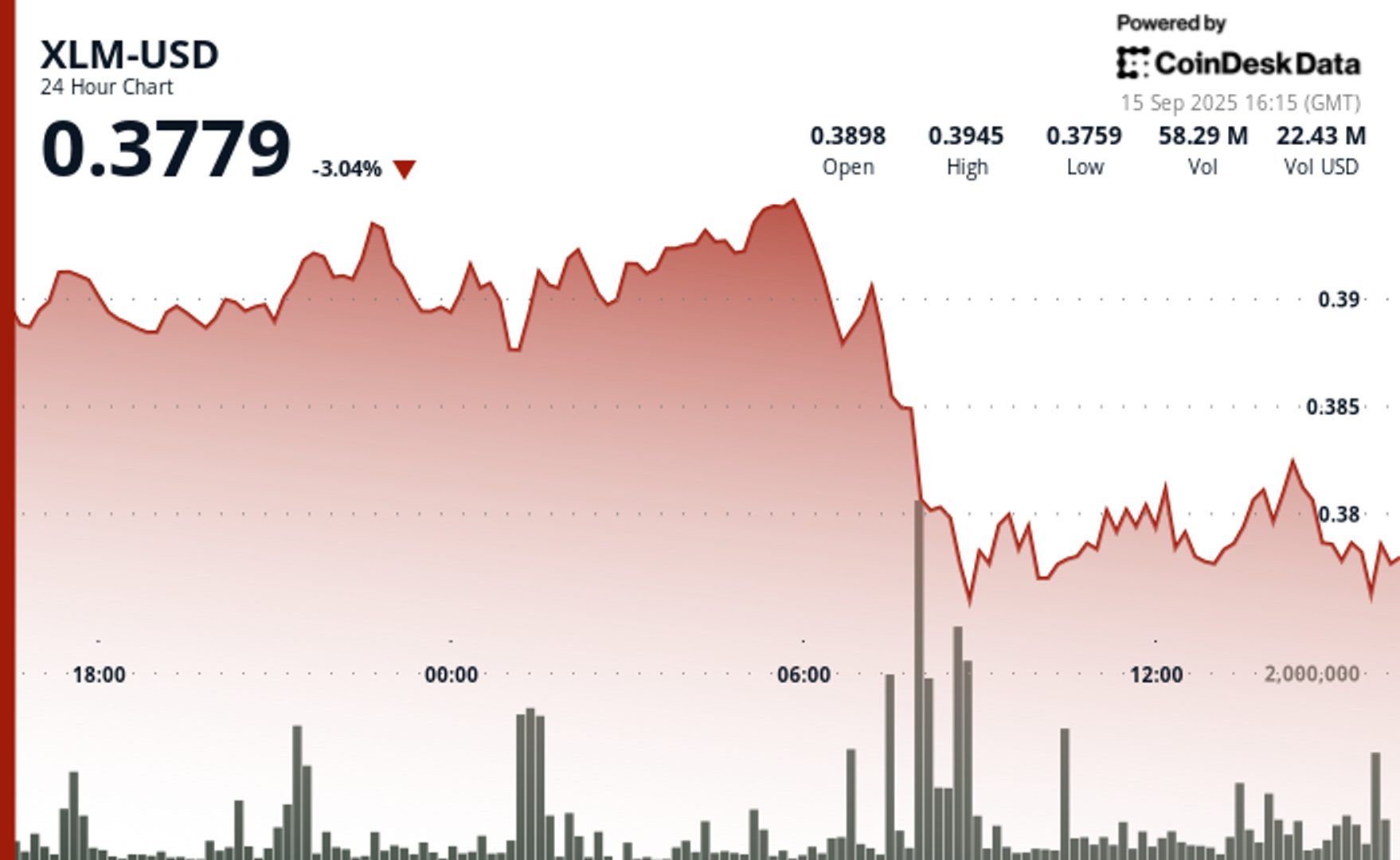
Stellar’s XLM token endured sharp swings over the past 24 hours, tumbling 3% as institutional selling pressure dominated order books. The asset declined from $0.39 to $0.38 between September 14 at 15:00 and September 15 at 14:00, with trading volumes peaking at 101.32 million—nearly triple its 24-hour average. The heaviest liquidation struck during the morning hours of September 15, when XLM collapsed from $0.395 to $0.376 within two hours, establishing $0.395 as firm resistance while tentative support formed near $0.375.Despite the broader downtrend, intraday action highlighted moments of resilience. From 13:15 to 14:14 on September 15, XLM staged a brief recovery, jumping from $0.378 to a session high of $0.383 before closing the hour at $0.380. Trading volume surged above 10 million units during this window, with 3.45 million changing hands in a single minute as bulls attempted to push past resistance. While sellers capped momentum, the consolidation zone around $0.380–$0.381 now represents a potential support base.Market dynamics suggest distribution patterns consistent with institutional profit-taking. The persistent supply overhead has reinforced resistance at $0.395, where repeated rally attempts have failed, while the emergence of support near $0.375 reflects opportunistic buying during liquidation waves. For traders, the $0.375–$0.395 band has become the key battleground that will define near-term direction.Technical IndicatorsXLM retreated 3% from $0.39 to $0.38 during the previous 24-hours from 14 September 15:00 to 15 September 14:00.Trading volume peaked at 101.32 million during the 08:00 hour, nearly triple the 24-hour average of 24.47 million.Strong resistance established around $0.395 level during morning selloff.Key support emerged near $0.375 where buying interest materialized.Price range of $0.019 representing 5% volatility between peak and trough.Recovery attempts reached $0.383 by 13:00 before encountering selling pressure.Consolidation pattern formed around $0.380-$0.381 zone suggesting new support level.Disclaimer: Parts of this article were generated with the assistance from AI tools and reviewed by our editorial team to ensure accuracy and adherence to our standards. For more information, see CoinDesk's full AI Policy.

Author: Coinstats
Crypto Lending Apps Witness Unprecedented $41.5 Billion Borrowing Surge

Crypto Lending Apps Witness Unprecedented $41.5 Billion Borrowing Surge

BitcoinWorld Crypto Lending Apps Witness Unprecedented $41.5 Billion Borrowing Surge The world of decentralized finance (DeFi) is buzzing with activity, and a recent milestone highlights its incredible expansion. The total value of assets borrowed from crypto lending apps has officially reached an astonishing all-time high of $41.5 billion. This unprecedented surge, reported by Unfolded, signals a significant shift in how individuals and institutions are interacting with digital assets. This record figure is not just a number; it represents a growing confidence and utility within the DeFi ecosystem. It shows that more people are looking to leverage their cryptocurrency holdings without selling them outright, using these platforms for various financial strategies. What’s Fueling the Phenomenal Rise of Crypto Lending Apps? Several key factors contribute to the explosive growth observed in crypto lending apps. These platforms offer unique advantages that traditional finance often cannot match, drawing in a diverse user base. Attractive Yields: Lenders are drawn by the opportunity to earn higher interest rates on their idle crypto assets compared to traditional savings accounts. Accessibility: DeFi platforms are open to anyone with an internet connection and cryptocurrency, removing many barriers of entry found in traditional banking. Capital Efficiency: Borrowers can access liquidity by using their crypto as collateral, enabling them to pursue other investments or meet short-term financial needs without liquidating their holdings. Innovation: Continuous development in smart contract technology and decentralized protocols makes these platforms more robust and user-friendly. The ability to generate passive income or gain access to capital quickly makes crypto lending apps an appealing option for many crypto holders. How Do Borrowed Assets on Crypto Lending Apps Actually Work? Understanding the mechanics behind these platforms is crucial. When you borrow assets on crypto lending apps, you typically provide other cryptocurrencies as collateral. This collateral ensures that the loan is secured, mitigating risk for the lenders. Here’s a simplified breakdown: Collateral Requirement: Borrowers deposit a certain amount of cryptocurrency (e.g., Ethereum or Bitcoin) into a smart contract as collateral. The value of this collateral usually exceeds the value of the loan. Loan Issuance: Once collateral is provided, borrowers can take out a loan, often in stablecoins like USDC or USDT, or other cryptocurrencies. Interest Rates: Borrowers pay an interest rate, which varies based on supply and demand within the specific lending protocol. These rates can be dynamic. Liquidation Risk: If the value of the collateral falls below a certain threshold relative to the loan, the collateral may be automatically sold to repay the loan. This is a critical risk to understand. This system allows for peer-to-peer lending and borrowing, all managed by transparent and immutable smart contracts on a blockchain. The Benefits and Challenges of Engaging with Crypto Lending Apps While the growth is exciting, it’s important to consider both the upsides and the potential downsides of using crypto lending apps. They offer significant opportunities but also come with inherent risks. Key Benefits: Liquidity: Users can unlock the value of their crypto without selling, maintaining their long-term positions. Income Generation: Lenders earn interest, creating a new stream of passive income from their digital assets. Financial Inclusion: These platforms are globally accessible, providing financial services to underserved populations. Potential Challenges: Smart Contract Risk: Vulnerabilities or bugs in the underlying code can lead to loss of funds. Liquidation Risk: Volatile crypto markets mean collateral values can drop rapidly, leading to automatic liquidations. Regulatory Uncertainty: The regulatory landscape for DeFi is still evolving, which could impact platform operations and user funds. Centralization Risks: While aiming for decentralization, some platforms may still have centralized components that pose risks. Understanding these aspects helps users make informed decisions when interacting with these powerful financial tools. Navigating the Future: Actionable Insights for Crypto Lending Apps Users Given the dynamic nature of the DeFi space, especially with crypto lending apps, adopting a cautious yet informed approach is essential. Here are some actionable insights to consider: Do Your Own Research (DYOR): Thoroughly investigate any platform before committing funds. Look for audits, community reputation, and transparent operations. Understand Terms and Conditions: Be fully aware of interest rates, collateral ratios, liquidation thresholds, and any associated fees. Start Small: Begin with smaller amounts to familiarize yourself with the platform and its processes before committing larger sums. Diversify: Do not put all your assets into a single lending protocol. Spreading your investments can help mitigate risks. Stay Informed: The crypto market moves quickly. Keep up with news, security updates, and regulatory changes that might affect your borrowed assets or collateral. These steps can help users navigate the exciting yet complex world of crypto lending more effectively. The record-breaking $41.5 billion in borrowed assets on crypto lending apps undeniably marks a significant moment for decentralized finance. It underscores the growing utility and demand for alternative financial services built on blockchain technology. While the opportunities for earning and leveraging digital assets are immense, it is crucial for users to approach these platforms with a clear understanding of both their benefits and inherent risks. As the DeFi ecosystem continues to mature, informed participation will be key to unlocking its full potential and ensuring a secure experience for all involved. Frequently Asked Questions (FAQs) Q1: What exactly are crypto lending apps? A1: Crypto lending apps are decentralized finance (DeFi) platforms that allow users to lend out their cryptocurrencies to earn interest or borrow cryptocurrencies by providing other digital assets as collateral, all managed by smart contracts on a blockchain. Q2: How did borrowed assets on crypto lending apps reach $41.5 billion? A2: This record was driven by increasing demand for capital efficiency, attractive yield opportunities for lenders, and the overall growth and adoption of decentralized finance, making it easier for users to access liquidity without selling their crypto. Q3: What are the main benefits of using crypto lending apps? A3: Key benefits include earning passive income on idle crypto, gaining liquidity without selling assets, and accessing financial services globally with fewer traditional barriers. Q4: What are the primary risks associated with crypto lending apps? A4: The main risks involve potential smart contract vulnerabilities, liquidation risk due to crypto market volatility, and evolving regulatory uncertainties that could impact platform operations. Q5: How can I safely participate in crypto lending? A5: To participate safely, it’s essential to conduct thorough research (DYOR) on platforms, understand all terms and conditions, start with smaller amounts, diversify your assets across different protocols, and stay updated on market and security news. We hope this article has provided valuable insights into the burgeoning world of crypto lending apps and the recent surge in borrowed assets. If you found this information helpful, please consider sharing it with your network on social media. Your support helps us continue to deliver timely and relevant crypto news and analysis! To learn more about the latest crypto market trends, explore our article on key developments shaping cryptocurrency institutional adoption. This post Crypto Lending Apps Witness Unprecedented $41.5 Billion Borrowing Surge first appeared on BitcoinWorld.

Author: Coinstats
In the past 24 hours, the total network contract liquidation was US$413 million, mainly due to the short position

In the past 24 hours, the total network contract liquidation was US$413 million, mainly due to the short position

PANews reported on September 15th that Coinglass data showed that over the past 24 hours, the cryptocurrency market saw $413 million in liquidated contracts across the network, including $78.4353 million in long positions and $334 million in short positions. The total liquidation amount for BTC was $44.9898 million, and the total liquidation amount for ETH was $107 million.

Author: PANews
Solana invites record inflows, both on-chain and from mainstream buyers

Solana invites record inflows, both on-chain and from mainstream buyers

The post Solana invites record inflows, both on-chain and from mainstream buyers appeared on BitcoinEthereumNews.com. Solana sees a mix of on-chain and mainstream inflows, as the network aims to tap into mainstream finance in addition to meme activity. SOL invited inflows from digital asset products, with a record day for ETF and ETP.  Solana invites increasing inflows, both from on-chain natives and from the buyers of digital asset products. Solana remains in the top 3 for netflows, recently showing accelerated transfers from Ethereum.  For the past week, Solana saw more than $40M in netflows, of which over $33M came from Ethereum. Based on Wormhole data, Solana mostly receives WETH and WBTC, some of the tokens widely used as DeFi collaterals.  On a smaller scale, Solana also invited whale inflows in some of its most established stablecoins, including BONK and FARTCOIN. Solana meme tokens as a whole invited highly active trading, with a market cap above $12B.  Solana expanded to all DeFi sectors Solana’s total value locked grows daily to over $12.76B. Some of it is based on the growth of SOL, in addition to inflows of valuable tokens. Solana was also the chain with the biggest inflow of stablecoins, with $255M added in the past day, based on Artemis data. Solana achieved robust daily inflows, with most coming from the Ethereum chain. | Source: Artemis The Solana ecosystem is currently growing based on several factors. Meme space is booming, as Cryptopolitan reported earlier, with increased demand for lending. Liquid staking tokens are also adding to the growth, based on the expansion of Solana treasury companies.  The recent growth is part of Solana’s drive to become the everything chain, hosting traditional finance, RWA, tokenized stocks, and its native tokens and platforms.  Solana digital asset products mark record day Solana’s digital asset products are still relatively new compared to BTC and ETH. However, last Friday, existing ETFs…

Author: BitcoinEthereumNews
Solana sees robust on-chain inflows, with growing demand for ETP and ETF

Solana sees robust on-chain inflows, with growing demand for ETP and ETF

Solana marked peak inflows, both through native on-chain assets and through its exchange-traded products and ETF. The inflows signal demand for Solana as the go-to app for both memes and DeFi.

Author: Cryptopolitan
Best DeFi Crypto Under $0.05? Analysts Predict Mutuum Finance (MUTM) to Deliver 25x by 2026

Best DeFi Crypto Under $0.05? Analysts Predict Mutuum Finance (MUTM) to Deliver 25x by 2026

In a market where blue-chip DeFi tokens trade at hundreds of dollars per coin, finding a credible project under $0.05 is increasingly rare. Yet that is exactly where Mutuum Finance (MUTM) sits today, priced at just $0.035 in its presale Phase 6. With more than $15.75 million raised, 16,280+ holders onboard, and over 710 million [...] The post Best DeFi Crypto Under $0.05? Analysts Predict Mutuum Finance (MUTM) to Deliver 25x by 2026 appeared first on Blockonomi.

Author: Blockonomi