Liquidation

Liquidation occurs when a trader’s collateral is no longer sufficient to cover their leveraged position’s losses, triggering an automated forced closure by the exchange's liquidation engine. It is a critical risk-management mechanism that ensures the solvency of lending protocols and derivative platforms. In 2026, the focus has moved toward MEV-resistant liquidation models that protect users from predatory "cascades." This tag provides essential information on maintenance margins, health factors, and how to avoid liquidation in high-volatility environments.

14504 Articles
Created: 2026/02/02 18:52
Updated: 2026/02/02 18:52
Shiba Inu (SHIB) Latest Developments and What is the Best New Cryptocurrency to Invest Today

Shiba Inu (SHIB) Latest Developments and What is the Best New Cryptocurrency to Invest Today

The post Shiba Inu (SHIB) Latest Developments and What is the Best New Cryptocurrency to Invest Today appeared on BitcoinEthereumNews.com. Shiba Inu (SHIB) is still firm as investors and traders look forward to the latest news. Meanwhile, Mutuum Finance (MUTM) is making headlines with its new lending technologies and community-driven growth strategies, hence becoming a force to reckon in DeFi. This new altcoin, which is currently at a mere $0.035 has seen more than $16,150 interested investors buy it. Shiba Inu (SHIB) Sweep-Up Narrows Investor Demand Shiba Inu sits at approximately $0.00001255, with little action during the last trading periods. The token remains to function well in the cryptocurrency market due to a strong community and further ecosystem development. SHIB price action still remains in consolidation phase, with investors watching overall direction and making sure to invest cautiously. In addition, interest is slowly dispersing toward new platforms, like Mutuum Finance (MUTM), which indicates an interest shift within the cryptocurrency market. Mutuum Finance Stage 6 FOMO Investors are now purchasing MUTM tokens at $0.035 in Stage 6 of presale. Waiting for Stage 7 costs an additional 14.3% per token. To date, the coin has been accumulated by over 16,150 supporters and raised over $15.5 million in funds, demonstrating a high level of market interest and demand. Official Bug Bounty Program Mutuum Finance, in partnership with CertiK, has launched an official $50,000 USDT Bug Bounty Program. The developers reward individuals who discover bugs in the project’s codebase on a four-level scale of seriousness: critical, major, minor, and low. The program guarantees any potential bugs are fixed to enhance platform security and protect investors and users. Price Discovery Precise price data is necessary for borrowing, lending, and liquidation to be secure. Mutuum Finance makes use of Chainlink oracles to provide market prices in USD and local tokens such as ETH, MATIC, and AVAX to the system. Fallback oracles, combined feed data, and time-weighted…

Author: BitcoinEthereumNews
Ethereum Price Forecast: Whales step up buying pressure amid short-term holders distribution

Ethereum Price Forecast: Whales step up buying pressure amid short-term holders distribution

Ethereum (ETH) trades above $4,300 on Wednesday following increased accumulation from whales as short-term holders step up distribution.

Author: Fxstreet
Cardano (ADA) Price Outlook Sour as Whale Interest Steers Clear of Legacy Networks for Mutuum Finance (MUTM)

Cardano (ADA) Price Outlook Sour as Whale Interest Steers Clear of Legacy Networks for Mutuum Finance (MUTM)

Focus shifts elsewhere in the crypto market as whales steer clear of legacy networks and shift to newer terrain, casting a shadow over the horizon for Cardano (ADA). Deep-pocketed investors are now heavily pouring investments into Mutuum Finance (MUTM), a new DeFi protocol that’s catching investors’ attention. Market’s new presale addition, valued at $0.035, has […]

Author: Cryptopolitan
Silo Finance Rolls Out Flexible Risk Isolation and 50% Revenue Sharing for xSILO Holders

Silo Finance Rolls Out Flexible Risk Isolation and 50% Revenue Sharing for xSILO Holders

Silo Finance launches v2 across EVM, expands ERC-4626 risk-isolated lending markets and returns 50% of protocol revenues to xSILO holders in USDC.

Author: Blockchainreporter
Solana validators play delay games — Toly wants them punished

Solana validators play delay games — Toly wants them punished

The post Solana validators play delay games — Toly wants them punished appeared on BitcoinEthereumNews.com. Solana co-founder Anatoly “Toly” Yakovenko has called for Solana (SOL) validators who delay slots, steal rewards, and slow down the network to be punished. Yakovenko called for the punishments after becoming frustrated at validators using sophisticated delay tactics to gobble up extra fees and high-value transactions. Purposefully delayed slot times have become such an annoyance that one validator created a dashboard to illustrate the problem. Since August 5 — Solana epoch 829 — average slot time has increased 2.5%. “It’s the SOL price that should be rising — not the block time,” someone complained. One observer asked whether the delays could cascade into a “2.0” repeat performance of intentional leader reward boost (ILRB). ILRB is a timing tactic used by validators who want to deliberately delay block production. Extending slot times beyond Solana’s intended 400ms intentionally delays latency and allows them to unfairly pack more transactions into their blocks, capturing higher fees or rewards. At the expense of subsequent validators — who receive fewer and less valuable transactions — ILRB allows powerful leaders to earn more compute units during validation. Unconcerned about network efficiency, ILRB validators earn extra MEV opportunities, liquidations, or time-dependent transactions like NFT mints. Read more: Solana stocks keep falling as Wall Street pitches another $1B Solana co-founder wants to blast validators who delay block time Many people tagged Solana developers to work on solutions to the problem. Soon, Yakovenko chimed in. He agreed that there was an issue and recommended, “Drop these blocks by default for 10 slots” as punishment for the slow, powerful validators. He also repeatedly called for financial punishment for misbehaving validators, asking the network to “nuke from orbit” and retweeted a call to action for financial punishment. Got a tip? Send us an email securely via Protos Leaks. For more informed news,…

Author: BitcoinEthereumNews
Top Cryptos Under $1 with Potential for Massive Bull Run

Top Cryptos Under $1 with Potential for Massive Bull Run

In a market still trying to find its feet after August volatility, a few cryptocurrencies under $1 are starting to catch investors’ attention with respect to the potential for growth. Mutuum Finance (MUTM) is one of those coins leading the charge. Mutuum Finance has been in the spotlight recently with its groundbreaking DeFi products and […]

Author: Cryptopolitan
BONK Crashes 18%, AAVE Stalls at $92, BlockDAG’s Raised $404M

BONK Crashes 18%, AAVE Stalls at $92, BlockDAG’s Raised $404M

Crypto markets continue to test investor patience. BONK has dropped nearly 18% as interest cools and trading volumes shrink, while AAVE trades sideways near $92, showing stability but little momentum. The post BONK Crashes 18%, AAVE Stalls at $92, BlockDAG’s Raised $404M appeared first on CryptoNinjas.

Author: Crypto Ninjas
In the past 24 hours, the total network contract liquidation was US$250 million, mainly due to the long position

In the past 24 hours, the total network contract liquidation was US$250 million, mainly due to the long position

PANews reported on September 10th that Coinglass data showed that over the past 24 hours, the cryptocurrency market saw $250 million in liquidated contracts across the network, including $155 million in long positions and $95.1081 million in short positions. The total amount of BTC liquidations was $52.618 million, and the total amount of ETH liquidations was $41.9696 million.

Author: PANews
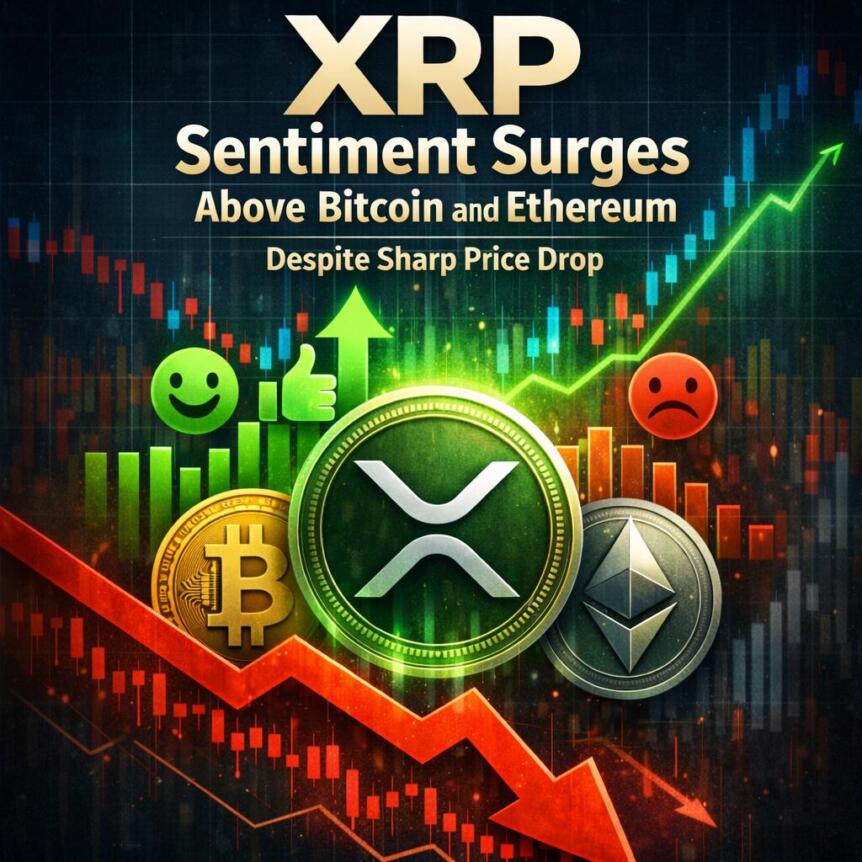
XRP Posts 3,042% Liquidation Imbalance as Inflation Surprises

XRP Posts 3,042% Liquidation Imbalance as Inflation Surprises

Due to epic inflation twist, XRP jumps 3,042% in liquidation imbalance

Author: Coinstats
Gearbox deposits recover from 80% crash as users pour $250m into new lending market

Gearbox deposits recover from 80% crash as users pour $250m into new lending market

For some DeFi projects, when airdrop rewards dry up, it kickstarts a terminal liquidity decline from which they don’t recover.DeFi lending protocol Gearbox has defied that pattern.Last year, its total value locked fell 80% from its $410 million peak. Users caused the slump by abandoning Gearbox when opportunities to farm airdrops of restaking services like Renzo shrank. TVL is a metric that measures the amount of deposits to a DeFi protocol. Yet, Gearbox’s TVL has since bounced back to $340 million, DefiLlama data shows. The TVL includes funds borrowed on the protocol.“A significant aspect of Gearbox’s comeback strategy was integrating assets no one else can,” a Gearbox team member who goes by Mugglesect told DL News.For instance, Gearbox users can tap into illiquid assets available on protocols like Mellow Finance, a $430 million liquid restaking protocol. Mugglesect said Gearbox is betting that this growth is anchored in users actually leveraging the protocol rather than chasing the next speculative farming craze.Gearbox’s revival comes amid a resurgence in crypto’s lending sector that has pushed deposits to $130 billion, catapulting the sector to the summit of DeFi, even overtaking liquid staking, previously the biggest sector. Unique advantageGearbox is small compared to giants like Aave and Morpho, whose deposits are in the tens of billions of dollars. But it has a unique advantage: so-called credit accounts, Mugglesect said. These are smart contract wallets inside the Gearbox app that allow users to deploy leveraged capital across several DeFi markets for trading, staking, or providing liquidity.Users deposit approved collateral like Ether on Gearbox to open a credit account. Based on the account’s leverage limits, they can borrow multiples of their collateral to use as capital to stake on Lido to earn staking yield, provide liquidity on Curve to receive boosted rewards, or trade perpetual contracts.“You don’t just loop an asset, you borrow up to [40 times] your capital in a credit account and utilise it across DeFi, turning any integrated DeFi protocol leveraged,” Mugglesect said.“Credit accounts can also connect to assets that aren’t on [decentralised exchanges] or aren’t even tokenised, something traditional lending protocols can’t do.”Gearbox’s credit accounts offer composability, which means users can integrate across several DeFi markets via the platform. That’s not possible on other protocols, such as Aave, Morpho, or Compound. There, users must manually transfer borrowed funds to other DeFi apps if they want to farm or stake. Risk curatorsIn March, Gearbox launched a new lending market called Permissionless. It has been a major boon for the protocol, with credit accounts on Permissionless accounting for $250 million of Gearbox’s TVL.Permissionless features risk curators. These are DAO-approved managers who define the assets and DeFi strategies that can be used with a Gearbox credit account. They also set the allowable risk parameters, like leverage limits and liquidation thresholds, to keep credit accounts safe for users.Usually, the Gearbox DAO approves new assets that can be added to the protocol via a governance vote. “Permissionless enables risk curators to onboard new markets to Gearbox without the DAO intervention,” Mugglesect said.Under Permissionless, Gearbox has added five new blockchains and more than 25 markets to its lending stack while tripling the protocol’s market expansion, Mugglesect said.“The protocol is already on 27 [blockchains], the most of any lending protocol,” Mugglesect said. “We’ll be doubling down on more such integrations to create sticky growth.”Zero bad debtBut with crypto lending comes risks. As Gearbox swallows up more liquidity, the peril for lenders could increase.The team takes a proactive approach to unforeseen events by forking the networks eight times a day to test against black swan events, Mugglesect said.Gearbox has already proven its chops in navigating periods of market upheaval, Mugglesect said.Last year, ezETH, Renzo’s Ethereum liquid staking token, lost its peg to Ethereum due to confusion over the protocol’s airdrop. Users couldn’t redeem ezETH for Ethereum, and that caused a massive selloff on exchanges.The ezETH depeg caused $56 million worth of user positions to be liquidated, with $33 million of those losses happening on Gearbox due to the protocol’s popularity among restaking airdrop farmers. Yet Gearbox didn’t suffer any bad debt thanks to its design. That design separates lenders, risk curators, and active borrowers into different layers within the protocol. It even earned a profit from the ezETH depeg liquidation, whereas Morpho, the second-most affected protocol in the ezETH depeg incident, incurred about $34,000 in bad debt. The protocol boasts a bad-debt-free track record since its inception in 2021.Osato Avan-Nomayo is our Nigeria-based DeFi correspondent. He covers DeFi and tech. Got a tip? Please contact him at osato@dlnews.com.

Author: Coinstats