NFT

NFTs are unique digital identifiers recorded on a blockchain that certify ownership and authenticity of a specific asset. Moving past the "PFP" craze, 2026 NFTs emphasize utility, representing everything from IP rights and digital fashion to RWA titles and event ticketing. This tag explores the technical standards of digital ownership, the growth of NFT marketplaces, and the integration of non-fungible tech into the broader Creator Economy and enterprise solutions.

12732 Articles
Created: 2026/02/02 18:52
Updated: 2026/02/02 18:52

$PEPE Hits Major Sell Wall at $0.0000127

$PEPE Hits Major Sell Wall at $0.0000127

The post $PEPE Hits Major Sell Wall at $0.0000127 appeared on BitcoinEthereumNews.com. Key Insights: Pepe faces major resistance at $0.0000127, where clustered sell orders could cap short-term gains. A breakout above $0.0000127 may trigger continuation toward $0.000015, supported by rising trading volume. Support zones remain at $0.00001070 and $0.00000925, providing cushions if price rejects resistance. Key Barrier Ahead: $PEPE Hits Major Sell Wall at $0.0000127 Pepe (PEPE) was trading near $0.00001214 after a sharp rally that lifted the token more than 13% over the past day and about 25% in the past week. The move has pushed price close to the first major sell wall at $0.0000127. @CW8900 said,  “The first wall for $PEPE exists at $0.0000127.”  Source: CW/X However, chart data shows heavy sell orders clustered in this area, which may act as short-term resistance unless buyers step in with enough demand to break through. Resistance and Support Zones If price clears $0.0000127, the next resistance levels are stacked between $0.0000131 and $0.0000145. These levels have acted as supply zones in earlier moves. A breakout could extend toward $0.000015 if momentum carries through. Support remains around $0.00001070, where the last consolidation took place before the surge. A broader cushion lies between $0.00000925 and $0.00000975, a zone where demand has previously reappeared. Triangle Pattern Builds Pressure @NFTdavie described the setup as a tightening triangle. He wrote,  “Triangle coiling tight… one clean break and its ignition sequence. Next stop: stratosphere.” The 3-day chart shows converging trendlines, with support near $0.00001145 and a descending ceiling above. This pattern often precedes a breakout, with $0.00001786 marked as the next upside level if buyers confirm control. Momentum Signals Strength The Stochastic RSI is trending higher, with readings at 73.83 and 43.16, pointing to growing buying pressure. Volume has also risen during the latest move, suggesting active participation around current prices. As long as PEPE stays above…

Author: BitcoinEthereumNews
Bitcoin In Consolidation Amid Treasury Companies’ Focus On Altcoins, Says Novogratz

Bitcoin In Consolidation Amid Treasury Companies’ Focus On Altcoins, Says Novogratz

Speaking during an episode of CNBC’s Squawk Box yesterday, Mike Novogratz, CEO of asset management firm Galaxy Digital, said that Bitcoin (BTC) is currently in a consolidation phase as treasury firms are steadily warming up to the idea of adding altcoins to their balance sheets. Novogratz Suggests Altcoin Stealing Light From Bitcoin Bitcoin is currently […]

Author: Bitcoinist
6 Game-Changing Cryptos: MoonBull Stands as the Top Early Access Crypto for Strategic Investors

6 Game-Changing Cryptos: MoonBull Stands as the Top Early Access Crypto for Strategic Investors

What if the next decision in crypto investing determined whether fortunes were made or missed? Choosing the right early access crypto project in 2025 has become the ultimate challenge for both newcomers and seasoned traders. Meme coins in particular have surged from niche internet humor into tokens commanding global attention, reshaping how investors hunt for […] The post 6 Game-Changing Cryptos: MoonBull Stands as the Top Early Access Crypto for Strategic Investors appeared first on Live Bitcoin News.

Author: LiveBitcoinNews
7 Altcoins Every Investor Should Have on Their Radar

7 Altcoins Every Investor Should Have on Their Radar

The post 7 Altcoins Every Investor Should Have on Their Radar appeared on BitcoinEthereumNews.com. The crypto market of 2025 is shaping up to be one of the most competitive. We’re seeing capital flows across infrastructure chains, enterprise-oriented protocols, and speculative presales. Investors must choose from higher potential tokens, or dependable altcoins. They must have either explosive upside potential or deliver stability.  Analysts are increasingly recommending a mixed approach, holding stable assets but giving an allocation to newer businesses to accelerate growth. Among the top 100 cryptocurrencies are six altcoins with strong fundamentals and adoption trends. An emerging presale MAGACOIN FINANCE is shaping up to be the breakout story alongside them. Polkadot (DOT) Polkadot is arguably the most important interoperability project in crypto. Gavin Wood, co-founder of Ethereum, designed it so that independent blockchains or parachain can share security and signal. This multichain framework supports custom networks tailored to specific use cases, such as DeFi and gaming. Developers stay active, while the community stays engaged due to a recent strengthening of Polkadot’s parachain auctions Investors can view DOT as a long-term investment in cross-chain integration, which will continue to grow as liquidity becomes fragmented. Since it can combine different blockchain economies, Polkadot will be a key asset of the next decade. Cosmos (ATOM) Cosmos is known as the “Internet of Blockchains”, while many networks are already being linked by the inter-blockchain protocol IBC.  With its IBC technology, Cosmos enables fully programmable interoperable chains, ensuring a true network effect. The ATOM coin is required for governance and staking, and it also helps secure the network and facilitate participation. Experts believe that as Decentralized Finance moves past isolated chains, it would enter a multi-chain reality, and Cosmos is well placed. Growing institutional interest in scalable cross-chain could ensure the long-term relevance of ATOM. If you want to invest in interoperability and the internet of blockchains, then Cosmos…

Author: BitcoinEthereumNews
Massive SOL Accumulation Unveiled: Galaxy Digital’s Stunning $1.2 Billion Solana Move

Massive SOL Accumulation Unveiled: Galaxy Digital’s Stunning $1.2 Billion Solana Move

BitcoinWorld Massive SOL Accumulation Unveiled: Galaxy Digital’s Stunning $1.2 Billion Solana Move The cryptocurrency world is currently buzzing with news of an extraordinary event: a significant SOL accumulation by institutional giant Galaxy Digital. This massive move, reported by Lookonchain, saw an address suspected to belong to Galaxy Digital gather an astonishing 5 million SOL tokens, valued at approximately $1.16 billion, in a mere three days. This action highlights a growing trend of institutional interest in the Solana ecosystem. What’s Driving This Unprecedented SOL Accumulation? This substantial investment by Galaxy Digital is not just a simple purchase; it’s a strategic maneuver. The bulk of this SOL accumulation—specifically 4.719 million SOL, worth around $1.11 billion—was promptly transferred to Coinbase Prime. This indicates a clear intention for secure, institutional-grade custody rather than immediate trading. Galaxy Digital, a prominent financial services and investment management company in the digital asset sector, is known for its sophisticated approach to crypto markets. Their decision to accumulate such a large volume of Solana suggests a strong conviction in the asset’s long-term potential. Solana, with its high throughput and low transaction costs, continues to attract significant developer and user activity, making it an appealing asset for institutional portfolios. Strategic Implications of Galaxy Digital’s Solana Play This substantial SOL accumulation by a major institutional player like Galaxy Digital sends a powerful signal to the broader market. It often indicates increasing confidence in Solana’s underlying technology and its position within the competitive blockchain landscape. Such large-scale investments can: Boost Market Confidence: Institutional backing often validates a cryptocurrency’s legitimacy and future prospects. Influence Price Action: Increased demand from institutional investors can contribute to price stability and potential appreciation. Attract Further Investment: Other institutional players may view this move as a cue to explore or increase their own Solana holdings. The fact that Galaxy Digital still holds 219,000 SOL, currently valued at about $53.5 million, in the initial address further suggests ongoing strategic management of their Solana assets. Why is Secure Custody Crucial for Large SOL Holdings? For an investment of this magnitude, security is paramount. Transferring a significant portion of the SOL accumulation to Coinbase Prime underscores the importance of institutional-grade custody solutions. Coinbase Prime offers: Enhanced Security: Advanced security protocols, including cold storage, multi-signature wallets, and robust cybersecurity measures, protect assets from theft and loss. Regulatory Compliance: Operating within a regulated framework provides legal and compliance assurances, which are vital for institutional investors. Insurance: Many institutional custodians offer insurance policies, providing an additional layer of protection for digital assets. Operational Efficiency: Streamlined processes for managing large crypto holdings, including trading, reporting, and auditing. This move to a trusted custodian like Coinbase Prime demonstrates Galaxy Digital’s commitment to responsible asset management and risk mitigation for their substantial Solana position. Looking Ahead: What Does This Massive SOL Accumulation Mean for Solana’s Future? Galaxy Digital’s recent SOL accumulation is more than just a transaction; it’s a potential harbinger for Solana’s trajectory. This kind of institutional endorsement can pave the way for increased adoption and integration of Solana into traditional financial systems. As more institutions recognize Solana’s capabilities, its ecosystem is likely to see further growth in decentralized finance (DeFi), NFTs, and enterprise solutions. However, the crypto market remains dynamic. While institutional interest provides a strong foundation, factors like network stability, developer engagement, and overall market sentiment will continue to shape Solana’s journey. This significant investment serves as a powerful testament to Solana’s current appeal and its potential as a leading blockchain platform for the future. In conclusion, Galaxy Digital’s staggering $1.2 billion SOL accumulation in just three days marks a pivotal moment for Solana and the broader cryptocurrency landscape. It underscores growing institutional confidence in digital assets and highlights the critical role of secure, professional custody in managing such substantial investments. This move by a major player like Galaxy Digital could very well be a bellwether for increased institutional adoption and a brighter future for the Solana ecosystem. Frequently Asked Questions (FAQs) What is Galaxy Digital? Galaxy Digital is a diversified financial services and investment management company dedicated to the digital asset, cryptocurrency, and blockchain technology sectors. It provides a full suite of financial services to institutions and individuals. What is Solana (SOL)? Solana (SOL) is a high-performance blockchain platform designed for decentralized applications (dApps) and crypto projects. It is known for its fast transaction speeds and low fees, aiming to scale blockchain technology to support global adoption. Why did Galaxy Digital move its SOL accumulation to Coinbase Prime? Galaxy Digital moved a significant portion of its SOL accumulation to Coinbase Prime for secure, institutional-grade custody. Coinbase Prime offers advanced security, regulatory compliance, and robust risk management solutions essential for managing large digital asset holdings. Does this massive SOL accumulation mean SOL’s price will definitely go up? While a large institutional SOL accumulation can boost market confidence and potentially influence price appreciation due to increased demand, the cryptocurrency market is volatile. Many factors, including broader market trends, technological developments, and regulatory news, can affect SOL’s price. What is institutional SOL accumulation? Institutional SOL accumulation refers to the large-scale purchase and holding of Solana (SOL) tokens by financial institutions, investment funds, or corporations. This type of investment often signifies professional interest and confidence in the asset’s long-term value and utility. Found this insight into Galaxy Digital’s massive SOL accumulation fascinating? Share this article with your network and let’s continue the conversation about the evolving institutional landscape in crypto! To learn more about the latest crypto market trends, explore our article on key developments shaping Solana institutional adoption. This post Massive SOL Accumulation Unveiled: Galaxy Digital’s Stunning $1.2 Billion Solana Move first appeared on BitcoinWorld.

Author: Coinstats
Play-to-Earn Gaming Tokens and Metaverse Economy

Play-to-Earn Gaming Tokens and Metaverse Economy

Play-to-earn gaming is one of the newest ideas in online games. In the older games, the people simply play because they want to have fun or want to win trophies. With play-to-earn games, players receive actual tokens or coins during the play. These are not all mere fake points. They can be exchanged or even sold in the real money. Another mega idea that is transforming the world is the metaverse. It is as though it is a large online village where individuals can work, play, shop and chat with others. Imagine that it is the internet, but in 3D worlds. With the metaverse, individuals navigate around the virtual world to perform activities using digital avatars. A new type of digital economy begins when play-to-earn gaming is combined with the metaverse. Earned tokens within the games can be used to purchase avatar clothes, land, or gear. Individuals worldwide can enter, market and generate new employment within this digital arena. The mix of play-to-earn and metaverse is more than just games. It is the start of a global digital economy. Many experts believe this could be as big as the real economy one day. How Play-to-Earn Gaming Works Basic Idea of Gaming Tokens Gaming tokens are like money inside blockchain games. Players earn them when they complete quests, win battles, or even breed game characters. These tokens are stored in digital wallets. Unlike regular game coins that stay locked inside one game, these tokens live on a blockchain. That means they can move outside the game and even be traded on exchanges. The reason tokens are important is because they carry value. Some games have their own tokens that can be swapped for popular coins like Ethereum or Bitcoin. Once swapped, they can turn into dollars or other fiat money. From Gameplay to Real Value Fun is related to money in the play-to-earn model. Gamers can be fighting monsters, planting digital crops, or discover new territories. As they do so, they are rewarded by token. Such tokens can be redeemed on the same game or redeemed to real money. Here is a simple table that shows some popular play-to-earn games and their tokens: Game Name Main Token What Players Do to Earn Use of Token in Game Axie Infinity SLP, AXS Breed, battle, trade Buy new Axies, governance, rewards Decentraland MANA Sell land, build assets Buy land, avatars, wearables The Sandbox SAND Build games, sell NFTs Purchase land, items, staking Gala Games GALA Play different games Buy NFTs, governance votes These games show how simple actions in a game can create real income. It is almost like working, but inside a digital playground. The Role of Gaming Tokens in the Metaverse Economy Digital Goods and Assets The metaverse needs a type of money to work smoothly. This is where gaming tokens come in. Inside digital spaces, people can buy items like land, clothes, or tools. Tokens act as the fuel of this economy. Without them, the metaverse would just be empty spaces. Tokens also connect different games and platforms. For example, land bought in Decentraland might be traded with tokens earned in another game. It creates a cycle where everything in the metaverse has value. Gaming Tokens vs. Traditional Game Money Traditional game coins, like gold in World of Warcraft, stay inside that one game. They cannot be exchanged for real money easily. Gaming tokens, built on blockchain, can move outside the game and enter the real financial world. Here is a table to make it more clear: Feature Traditional Game Coins Blockchain Gaming Tokens Can be traded outside? No Yes, on crypto exchanges Real money value Very low Can be converted to fiat Ownership Game company controls Player truly owns Use in metaverse Not possible Used across games/worlds This shows why gaming tokens are at the center of the metaverse economy. They give real ownership to players and also build trust in the system. Benefits of Play-to-Earn Gaming for Players and Communities Play-to-earn gaming is not only about fun. It brings many benefits to players, families, and even whole communities. In some countries where jobs are not easy to find, play-to-earn became a real source of income. People who never thought gaming could pay bills are now using it to cover daily costs. Another benefit is community. Many games build large groups where players talk, trade, and support each other. These groups often act like digital towns. People share ideas, build projects, and even form teams to earn together. Also, play-to-earn brings new jobs. People can become digital farmers, land traders, or NFT artists inside the metaverse. It creates a new type of workplace that did not exist before. Here is a table that shows the key benefits: Benefit How It Helps Players How It Helps Community Extra income Earn tokens that can be sold Brings money to low-income areas Community building Join global gaming groups Creates support networks Digital jobs Work inside games and worlds Opens new industries Real ownership Control over digital assets Stronger trust in economy Risks and Challenges in Play-to-Earn Gaming Even if play-to-earn sounds good, there are also risks. Many players face problems that make it hard to depend on this model for long-term income. Market Volatility The biggest risk is token price change. A token may be worth $1 today, and then drop to $0.10 tomorrow. This makes it hard for players to plan or save money. Sudden crashes can wipe out income fast. Security and Scams Another problem is scams. Some game projects take player money and then disappear. This is called a rug pull. Hackers also target wallets and steal tokens. Without strong security, players lose trust. Overdependence on Rewards When games focus only on money, the fun goes away. Many players join just to earn. If rewards go down, players leave, and the game becomes empty. This weakens the whole system. Here is a table that shows common risks: Risk Type Example Problem Impact on Players Volatility Token price crash overnight Loss of income Security Hacked wallet, rug pull Lost savings, no trust Overdependence Game not fun, only about money Players stop playing Regulation issues Governments ban or limit some tokens Reduced earning options How Metaverse Companies Use Play-to-Earn Models Big companies are not ignoring this trend. They see how play-to-earn and tokens can grow digital worlds. Many tech and gaming firms are building their own platforms where tokens play a key role. Big Tech and Gaming Firms Companies like Meta and Microsoft are trying to make metaverse worlds where users can play, shop, and meet. Gaming studios also add blockchain layers to their games. They see that tokens give players more reason to stay active and spend time in the game. Virtual Land and NFTs In many metaverse projects, people can buy digital land. This land can then be rented, sold, or used to build shops. NFTs connect to this system. A sword, a skin, or even a piece of art can be minted as NFT. Tokens are needed to buy and trade these items. This creates a circle where play-to-earn tokens support the whole metaverse economy. Without tokens, there would be no way to buy or sell land, NFTs, or services inside these virtual worlds. Here is a table that shows how companies use play-to-earn: Company/Platform What They Do in Metaverse Role of Tokens Meta (Facebook) Building Horizon Worlds Tokens for trade and assets Microsoft Working on virtual office spaces Tokens for digital services The Sandbox Selling land and games SAND token for purchases Decentraland 3D metaverse with shops and events MANA token for land and wearables Future of Play-to-Earn Gaming and the Metaverse Economy The future of play- to- earn gaming is promising and dangerous. The metaverse economy is expected to continue to expand, and play-to-earn is likely to remain a significant portion of it, according to many experts. Nevertheless, it will evolve over time as new regulations, more enjoyable games and superior technology arrive. Will Play-to-Earn Stay Long Term? Some people say play-to-earn is just hype, but others see it as the start of a new digital job market. Even if some games fail, the model of earning tokens while playing is likely to stay. Just like streaming became a career, play-to-earn could also become one. New Tech Boosting Growth The growth of play-to-earn will also depend on technology. Better VR headsets, more advanced AR tools, and faster internet can make the metaverse feel real. AI may help games become smarter, making it easier for players to earn in fair ways. Here is a table of possible future trends: Trend How It Can Change Play-to-Earn Impact on Metaverse Economy VR/AR headsets Make games feel more real More spending in digital goods Artificial Intelligence Smarter game systems and NPCs Fair rewards, better gameplay Stronger regulations Rules to protect players from scams Safer economy growth Cross-game assets Use one NFT across many games Connects different worlds Real Life Examples of Success and Failures The story of play-to-earn has both highs and lows. One of the biggest examples is Axie Infinity. At first, this game became a hit. People in countries like the Philippines were earning real income by playing. At its peak, Axie Infinity was making headlines all around the world. But later, the game faced problems. Token prices crashed, and fewer new players joined. The earnings went down, and many people stopped playing. It showed that play-to-earn needs balance. If token prices depend only on new players, the system cannot last. Other games and projects in the metaverse are also showing different results. Some small games keep growing slowly but steady. Others shut down after just one year. These stories show that success is possible, but risks are always there. The lesson is clear. A strong play-to-earn game must give both fun gameplay and steady rewards. If one part is missing, the system will not survive long. How to Spot Good Play-to-Earn Gaming Tokens Not every token in play-to-earn is safe. Some tokens are strong and useful, while others are weak and risky. Knowing how to spot the good ones makes a big difference. Look for Utility and Community A good gaming token should have real use inside the game. If tokens can only be traded but not used, they lose value fast. Strong communities are also a good sign. If players love the game and stay active, tokens have a better chance to grow. Avoid Red Flags Bad projects often make big promises but never deliver. If a token has no clear roadmap, or the team is not transparent, it is a red flag. Too much focus on “quick profits” is another warning sign. Here is a simple table to help spot good vs bad tokens: Feature to Check Good Token Signs Bad Token Signs Utility in game Can be used to buy, trade, upgrade No use except trading Community strength Active, supportive player base Few or fake users Roadmap and team Clear goals, transparent developers Hidden team, no clear future plans Long-term potential Balanced fun and rewards Only money focused, no fun gameplay Conclusion: The Next Chapter of Gaming and Digital Economy Play-to-earn gaming and the metaverse economy are shaping a new digital world. Tokens are not just game coins anymore. They are real digital money that players own, trade, and use across many platforms. The metaverse is becoming a space where people can work, play, and earn together. This new system gives both opportunities and risks. On one side, it creates income, new jobs, and community growth. On the other side, there are problems like token crashes, scams, and weak games that only chase money. The balance between fun and finance will decide the future of play-to-earn. The metaverse economy is going to grow as additional companies and technology companies enter the space. Having the right rules, good games, and better tech, play-to-earn can be the usual experience of everyday life. It may transform how people perceive gaming, employment and money in the digital age. Frequently Asked Questions What are play-to-earn gaming tokens? Play-to-earn tokens are digital coins that players earn inside blockchain games. They can be used in the game or traded for other crypto, and sometimes turned into real money. How do players make money with gaming tokens? Players earn tokens by completing tasks like battles, farming, or trading items. These tokens can then be sold on crypto exchanges or used to buy digital goods in the metaverse. Are gaming tokens safe to invest in? Some tokens are safe if the project is strong and transparent. But there are also risky tokens and scams. It is not always safe, and prices can change fast. How does play-to-earn connect with the metaverse? In the metaverse, tokens are used to buy land, skins, clothes, or tools. They act as money for all digital trade. Without tokens, the metaverse economy cannot grow. What is the future of the metaverse economy? Experts believe the metaverse economy will expand as tech like VR, AR, and AI improve. It may create more digital jobs and become a key part of online life. Glossary Play-to-Earn (P2E): A game model where players earn tokens with real value. Token: A digital coin built on blockchain that can be used in games or traded. NFT: Non-fungible token, a unique digital asset like land, skin, or artwork. Metaverse: A large 3D digital world where people play, work, and trade. Volatility: When prices go up and down quickly in short time. Digital Wallet: A safe place online where players keep their tokens. Summary Play-to-earn gaming tokens are changing how people see games and money. The tokens enable players to gain revenue and enjoy themselves, as well as participate in the new metaverse economy. There are digital assets such as tokens used in this economy like land, clothes, tools, and so on. The benefits are big. People will be able to gain income, communities will be created, and new forms of employment will be created. But risks are also strong. Players can be harmed by token crashes, scams and weak projects. The building of fun games, powerful communities and safe systems are the keys to success. The future of play-to-earn and the metaverse looks bright with better VR, AR, and AI. If these tools keep growing, the digital economy may become as important as the real one. Gaming will no longer just be about fun. It will also be about ownership, work, and global connection.   Read More: Play-to-Earn Gaming Tokens and Metaverse Economy">Play-to-Earn Gaming Tokens and Metaverse Economy

Author: Coinstats
From $0.0035 to Millions? Tapzi Presale Battles BlockchainFX

From $0.0035 to Millions? Tapzi Presale Battles BlockchainFX

The post From $0.0035 to Millions? Tapzi Presale Battles BlockchainFX appeared on BitcoinEthereumNews.com. Crypto News 13 September 2025 | 03:21 Explore the Tapzi presale, its potential to disrupt Web3 gaming, and how it competes with BlockchainFX for the top presale spot in 2025. As Web3 gaming gains significant traction in 2025, investors are increasingly eyeing the best crypto presale to buy opportunities in blockchain-powered gaming projects. One such project is Tapzi, which is gaining momentum due to its skill-to-earn model and its potential to disrupt the gaming landscape. With a presale price of just $0.0035, Tapzi is positioning itself to dominate the rapidly growing $400 billion gaming industry. But it’s not alone; BlockchainFX is also generating buzz. Key Takeaways: Tapzi’s presale price of $0.0035 offers an affordable entry point, with projected price increases in the upcoming stages. The platform’s skill-to-earn model ensures real utility, making it a more sustainable investment compared to meme coins. Tapzi’s roadmap, including NFT integration, PvP features, and DAO governance, positions it for long-term growth in the Web3 gaming market. The Rise of Web3 Gaming Web3 gaming is expected to be one of the largest drivers of blockchain adoption, with the gaming sector projected to surpass $400 billion in revenue by 2025. Unlike traditional gaming, Web3 gaming allows players to own in-game assets, participate in decentralized economies, and earn rewards through blockchain-based mechanics. As investors and gamers shift their focus toward decentralized models, several blockchain projects are seeking to capitalize on this boom. Tapzi, a skill-based GameFi platform, stands out due to its focus on fairness and transparency. While many crypto projects rely on speculative hype, Tapzi provides a functional product backed by strong tokenomics that appeals to both gamers and investors. Tapzi Presale Overview: What Makes It Stand Out Key Features of Tapzi’s Presale: Tapzi’s presale is currently priced at $0.0035 per token, with the price increasing after…

Author: BitcoinEthereumNews
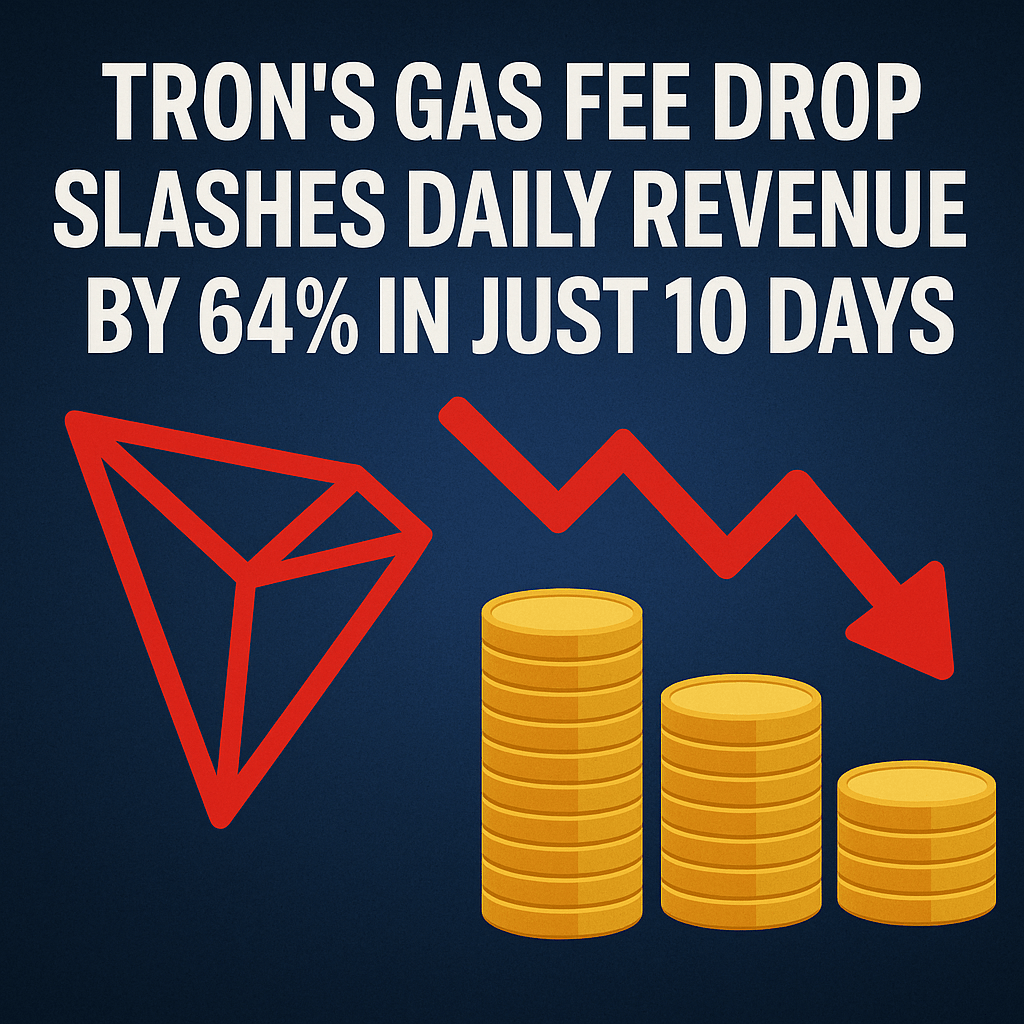
Tron’s Gas Fee Drop Slashes Daily Revenue by 64% in Just 10 Days

Tron’s Gas Fee Drop Slashes Daily Revenue by 64% in Just 10 Days

Tron, a prominent blockchain platform known for its focus on decentralized applications and entertainment content, has recently implemented a reduction in its gas fees. This strategic move aims to enhance network efficiency and attract more developers and users to its ecosystem. However, the decision has led to an immediate impact on the platform’s revenue, marking [...]

Author: Crypto Breaking News
From $0.0035 to Millions? This Best Crypto Presale – Tapzi Battles BlockchainFX for Crypto’s Top Spot

From $0.0035 to Millions? This Best Crypto Presale – Tapzi Battles BlockchainFX for Crypto’s Top Spot

As Web3 gaming gains significant traction in 2025, investors are increasingly eyeing the best crypto presale to buy opportunities in […] The post From $0.0035 to Millions? This Best Crypto Presale – Tapzi Battles BlockchainFX for Crypto’s Top Spot appeared first on Coindoo.

Author: Coindoo
Solana ETF decision delay by SEC: analysts say SOL and XRP still the best altcoins to buy before november

Solana ETF decision delay by SEC: analysts say SOL and XRP still the best altcoins to buy before november

Solana’s highly anticipated ETF proposal has hit a pause. The SEC announced it would delay its decision, citing the need for more thorough review of market infrastructure, investor protections, and liquidity standards. Traders had hoped the regulator would fast-track approval following the success of Bitcoin and Ethereum ETFs earlier this year, but the cautious stance didn’t come as a complete surprise.ETF delays are common in crypto. Regulators typically take multiple review cycles before granting approval, often waiting for liquidity benchmarks and investor safeguards to align. For Solana, the decision reflects more on process than fundamentals. While the delay briefly weighed on sentiment, analysts say it does not alter the longer-term trajectory. Solana remains one of the fastest, most scalable blockchains in the industry, and its ecosystem continues to grow despite regulatory setbacks. With XRP also riding a surge of institutional inflows, both assets remain top-tier altcoins for accumulation before November. And while majors like SOL and XRP dominate headlines, presale projects such as MAGACOIN FINANCE are generating urgency that investors say is impossible to ignore.Solana’s fundamentals remain intactThe delay should be seen in context. Both Bitcoin and Ethereum faced repeated postponements before their ETFs were finally approved. In each case, adoption advanced during the waiting period, and the eventual approvals acted as catalysts for fresh inflows. Analysts expect Solana to follow a similar pattern, noting that its fundamentals remain unchanged.On-chain data highlights Solana’s resilience. Daily active users remain among the highest in the market, transaction volumes consistently rank in the millions, and decentralised applications across gaming, NFTs, and DeFi continue to attract attention. This blend of speed, cost efficiency, and cultural relevance has given Solana a reputation as the “fast culture chain,” allowing it to remain a leader even during broader market slowdowns.For investors, the delay is frustrating but not damaging. It reinforces a simple truth: approval may take time, but Solana’s trajectory toward mainstream recognition remains on track.XRP’s steady institutional inflowsXRP, often considered a rival in the “top altcoin” conversation, is also benefiting from renewed institutional interest. Following its partial legal clarity in 2024, XRP re-entered portfolios across hedge funds and global payment providers. Its integration into cross-border settlement systems has given it a utility-driven moat, ensuring demand extends beyond speculative trading.Recent data from CoinShares confirms that XRP has been one of the most consistent beneficiaries of inflows this year, ranking just behind Ethereum and Solana among altcoins. Analysts highlight that even without an ETF, XRP’s legal clarity and adoption curve make it a strong buy before November. Its steady performance, coupled with global partnerships, adds stability to portfolios already exposed to more volatile assets.While majors like SOL and XRP offer stability and liquidity, presales are where asymmetry still lives. As final rounds approach, analysts warn MAGACOIN FINANCE may never be this accessible again. With projections of 10,600 ROI , urgency is building as both whales and retail fight for allocations. Traders argue this presale is the exact setup that historically separates average gains from legendary wealth-building opportunities.MAGACOIN FINANCE stands apart because of how it merges meme-driven branding with rigorous structural legitimacy. The HashEx audit has been completed, CertiK verification is in progress, and tokenomics have been engineered to align with retail investors: 60% allocated to presale buyers, only 1% reserved for the team. Add to this a surging community of 25,000+ members and 13,500+ verified investors, and the scale is undeniable.What makes this presale compelling is timing. As regulatory delays create uncertainty in majors, retail traders and whales alike are piling into projects that can deliver immediate momentum. The urgency around MAGACOIN FINANCE is both cultural and mathematical: scarcity is built into the design, and credibility is backed by audits. That combination is rare, and it explains why this presale is being called a once-per-cycle opportunity.Balancing majors with presalesAnalysts stress the importance of balance in volatile conditions. Majors like Solana and XRP provide the liquidity and resilience needed to anchor portfolios. Their ecosystems, adoption stories, and institutional inflows mean they are unlikely to fade, even in the face of regulatory hurdles. Presales like MAGACOIN FINANCE, however, provide the asymmetric upside that can multiply capital in ways majors no longer can.This dual approach mirrors strategies from past cycles. In 2021, many investors paired Ethereum with Solana or Avalanche to capture both stability and early growth. In 2017, portfolios blended Bitcoin with emerging DeFi tokens that later became blue chips. In 2025, analysts say the formula looks similar: combine established assets like SOL and XRP with promising presales like MAGACOIN FINANCE to capture both safety and explosive upside.ConclusionThe SEC’s delay on Solana’s ETF decision may frustrate short-term traders, but the fundamentals of both SOL and XRP remain strong. Institutional inflows, vibrant communities, and deepening adoption position them as some of the best altcoins to buy before November. At the same time, MAGACOIN FINANCE’s final presale rounds, 10,600 ROI projections, and rapidly growing community are creating urgency that few investors can ignore.Together, they highlight the opportunity of late 2025: anchor portfolios with majors while securing asymmetric bets in credible presales. Solana, XRP, and MAGACOIN FINANCE may represent three very different narratives, but for investors, they share one thing in common, the potential to define the next chapter of crypto’s bull market.To learn more about MAGACOIN FINANCE, visit:Website: https://magacoinfinance.comAccess: https://magacoinfinance.com/accessTwitter/X: https://x.com/magacoinfinanceTelegram: https://t.me/magacoinfinanceThe post Solana ETF decision delay by SEC: analysts say SOL and XRP still the best altcoins to buy before november appeared first on Invezz

Author: Coinstats