NFT

NFTs are unique digital identifiers recorded on a blockchain that certify ownership and authenticity of a specific asset. Moving past the "PFP" craze, 2026 NFTs emphasize utility, representing everything from IP rights and digital fashion to RWA titles and event ticketing. This tag explores the technical standards of digital ownership, the growth of NFT marketplaces, and the integration of non-fungible tech into the broader Creator Economy and enterprise solutions.

12642 Articles
Created: 2026/02/02 18:52
Updated: 2026/02/02 18:52
Crypto Market Faces Caution While Sentiment Remains Neutral

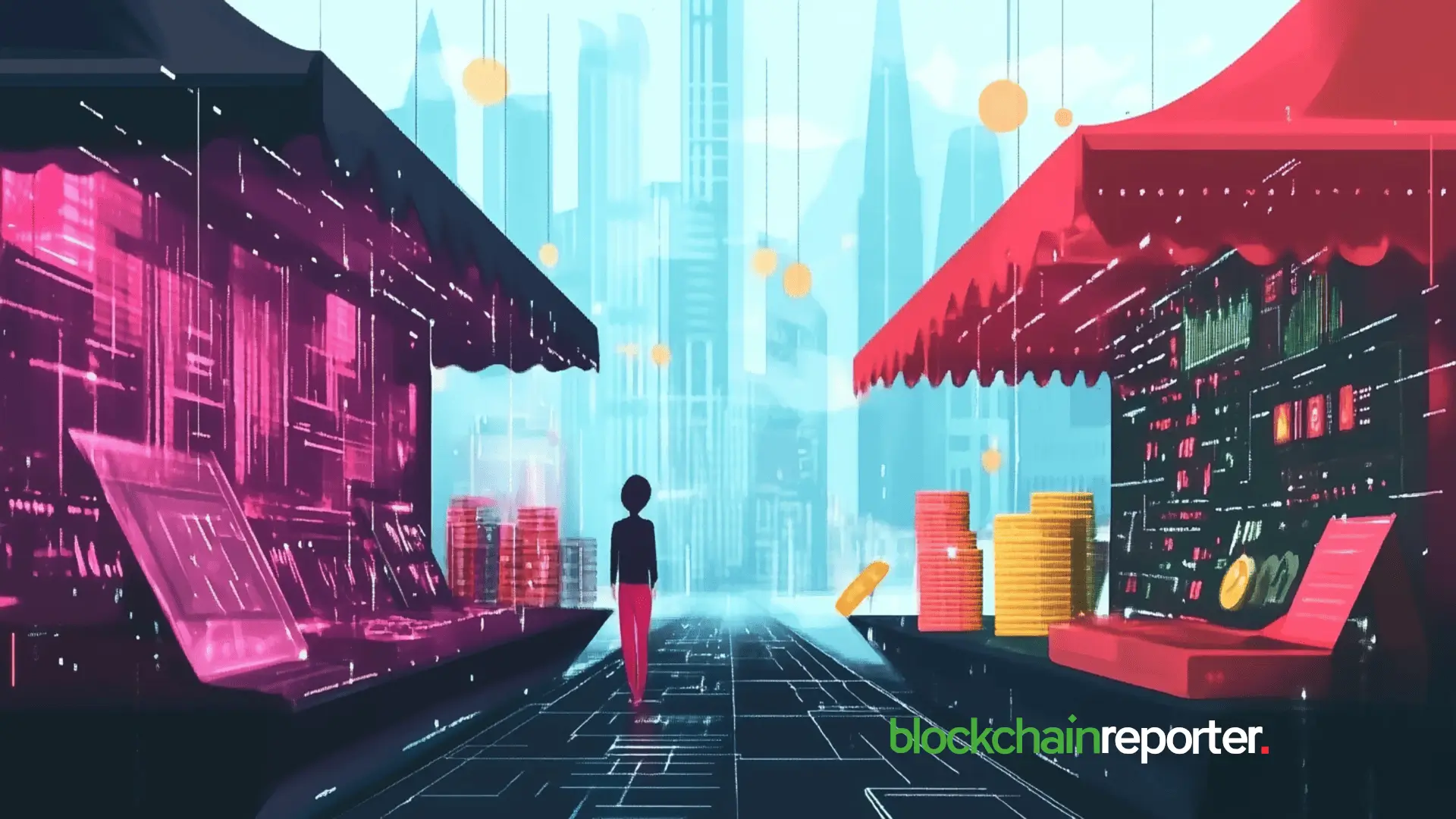
Crypto Market Faces Caution While Sentiment Remains Neutral

Crypto market remains steady with neutral sentiment as Bitcoin ($BTC) rises but Ethereum ($ETH) dips, DeFi grows, NFTs slip, and major stablecoin news emerges.

Author: Blockchainreporter
SEC Delays Decision on HBAR and Polkadot ETFs Until November

SEC Delays Decision on HBAR and Polkadot ETFs Until November

The post SEC Delays Decision on HBAR and Polkadot ETFs Until November appeared first on Coinpedia Fintech News The U.S. Securities and Exchange Commission (SEC) has once again hit pause on two altcoin ETF filings, Canary’s Hedera (HBAR) ETF and Grayscale’s Polkadot (DOT) ETF. While the crypto community eagerly awaits approval, the regulator is buying more time, pointing to broader listing rules as the key hurdle.  Despite the delay, both tokens are holding …

Author: CoinPedia
This Week’s US Economic Calendar: CPI, PPI, and Jobs Data to Watch

This Week’s US Economic Calendar: CPI, PPI, and Jobs Data to Watch

The post This Week’s US Economic Calendar: CPI, PPI, and Jobs Data to Watch appeared first on Coinpedia Fintech News This week could shape the path of markets heading into the Federal Reserve’s September meeting. Traders are on edge as key economic reports line up, with The Kobeissi Letter warning that “it’s all about inflation.” Markets are already betting heavily on a September rate cut, with futures showing a 96–97% probability. Weak labor data just …

Author: CoinPedia
The Best Crypto Presales Stand Strong Despite Bitcoin Whales Dumping $12.7B BTC Last Month

The Best Crypto Presales Stand Strong Despite Bitcoin Whales Dumping $12.7B BTC Last Month

CryptoQuant analyst ‘caueconomy’ found that Bitcoin whales have dumped roughly $12.7B worth of $BTC over the past month. Shockingly, this marks the largest whale sell-offs since July 2022. These $BTC liquidations are anticipated to keep the #1 crypto’s price under pressure for longer – especially if they’re ongoing. Don’t want to sit in the dip while waiting for the market to perk back up? Then why not check out the best crypto presales? Bitcoin Whale Reserves Down 10K+ $BTC in One Month In a blog post on Friday, ‘caueconomy’ highlighted that holders are offloading $BTC more aggressively. So much so that the #1 crypto has reached its highest distribution levels this year. The analyst found that whale reserves have dropped by over 10K $BTC in the past 30 days, ‘signaling intense risk aversion among large investors.’ They believe that this selling pressure is what’s been pushing $BTC’s price below $108K, a level it had sunk below last week. At the time of writing, $BTC is valued at $111K. If you don’t want to wait for it to rebound yet want to boost your portfolio, now signals a great time to check out top presales. Since these tokens are still in their fundraising stages and not yet trading on the open market, whale sell-offs don’t affect their prices. In turn, they’re safer investment opportunities to check out in today’s volatile market. Even better, some presale coins are built with utility to help you thrive amid unfavorable market conditions, including Snorter Token ($SNORT), BlockchainFX ($BFX), and Best Wallet Token ($BEST). 1. Snorter Token ($SNORT) – Five-Figure Whale Investments Signal Confidence in Its Upcoming Trading Bot Snorter Token ($SNORT) is quickly attracting notable attention. It has already scooped up $3.7M+ on presale, propelled by three major whales investing $40K, $32K, and $21K. Such foremost transactions highlight that big investors have faith in Snorter Bot, the crypto project’s upcoming Telegram trading bot. Once launched this quarter, Snorter Bot will enable you to swap and automatically snipe new tokens quickly and safely. With an aardvark mascot, its ultimate ambition is to help you sniff out the next crypto to explode. If you’re not a confident trader, Snorter Bot’s copy trading feature has your back. It’ll enable you to mirror top traders’ moves for greater profit potential effortlessly. Better yet, it brings trust to the presale market that, unfortunately, isn’t scam-proof. Built with MEV protection, plus honeypot and rug pull alerts, the bot ensures you stay safe while chasing top opportunities for gains. It’ll first launch on Solana to take advantage of its low fees (just 0.85%) and fast transaction speeds (currently averaging 821.8 transactions per second). By doing so, it claims that it’ll outpace rival bots like Maestro, Trojan, Banana Gun, Bonk Bot, and Sol Trading Bot. Once it has a foothold in the Solana arena, the bot will expand across multiple chains, including Ethereum, BNB Chain, and other EVM networks. This way, you can trade the hottest alpha across chains – not just the best Solana meme coins. After buying $SNORT on presale, you can also anticipate leaderboard perks, DAO voting rights, and staking rewards at a 123% APY. One $SNORT currently costs as little as $0.1037. Following early bot adoption and exchange listings, it’s projected to reach $1.02. So, now presents an opportune moment to join the presale for potential returns of over 883%. 2. BlockchainFX ($BFX) – Powers Global Exchange That Bridges DeFi & TradFi $BFX is the linchpin of BlockchainFX, a cutting-edge global exchange that bridges DeFi and TradFi. Owing to this, it has nearly raised on eye-boggling $7M on presale. From a highly user-friendly app, you can gain access to not just crypto but also stocks, forex, ETFs, commodities, and bonds. Essentially, it gives you easy access to the world’s top markets, all under one roof. Although $BFX is still on presale, BlockchainFX already grants access to over 500 assets, including $BTC, $ETH, gold, and Tesla. Purchasing $BFX gives you early access to the platform, reduced trading fees, and daily staking rewards (in $USDT and $BFX). It also gives you exclusive perks like access to the limited-edition BFX Visa Card, which can be topped up with 20+ cryptos to spend globally online or in-store. This way, you can easily spend your crypto without the hassle of off-ramps. To reap these perks, you can purchase $BFX on presale for just $0.022. With a launch price set at $0.05, now’s a great time to secure early entry at its lowest current price. 3. Best Wallet Token ($BEST) – Raises $15.6M+ Over Fueling Crypto Wallet Perks Best Wallet Token ($BEST) has already attracted over $15.6M on presale as it’s the native token of Best Wallet, a mobile-friendly crypto wallet. After downloading the mobile app, you can manage, buy, sell, swap, and stake over 1K digital assets across major chains, including Ethereum, Polygon, and BNB Chain. It’ll soon support over 60 networks, so you can anticipate unlocking even greater crypto opportunities in the near future. As a non-custodial wallet, you can rest easy knowing that you have full ownership of your private keys. Considering that private key compromises accounted for the largest share of stolen crypto last year, at 43.8%, non-custodial wallets like Best Wallet are safe choices. Additionally safeguarding your digital assets, the wallet includes 2FA, biometric protection, local encryption, and personal cloud backups. Beyond this, the wallet is full of intuitive tools for discovering top investment opportunities at reasonable prices. This includes a token launchpad and a swap function that scans 330+ DEXs and 30 bridges for the best rates. It also has an ambitious roadmap that includes a crypto debit card (Best Card), a built-in NFT gallery, and a rewards hub for loyal users. And that’s to name a few. When buying $BEST, you’ll also be granted with lower gas fees, governance rights, and staking rewards (currently at an 85% APY). You can buy $BEST on presale for just $0.025605. But don’t wait around: Its price will increase later today and is forecasted to hit $0.035215 after being listed on Uniswap, one of the best decentralized exchanges. Verdict – The Best Crypto Presales Are Safe Investment Opportunities Bitcoin Whales offloading 100K+ $BTC shows that not even the world’s largest crypto is protected from sudden supply shocks. If you don’t want to wait for the volatility to clear up, your current best bet might be investing in the best crypto presales, like $SNORT, $BFX, and $BEST. Because they’re not yet listed on the market, they’re protected from whale-driven price swings. Plus, their utility helps you explore the next crypto that’s primed to thrive safely and hassle-free. This isn’t investment advice. Always do your own research and never invest more than you’d be sad to lose. Authored by Aaron Walkers, NewsBTC – https://www.newsbtc.com/news/best-crypto-presales-amid-big-bitcoin-sell-off/

Author: NewsBTC
NFT Sales Hit $91.9M, Lowest Weekly Total Since June as Buyers Drop 58%

NFT Sales Hit $91.9M, Lowest Weekly Total Since June as Buyers Drop 58%

The post NFT Sales Hit $91.9M, Lowest Weekly Total Since June as Buyers Drop 58% appeared on BitcoinEthereumNews.com. Non-fungible token (NFT) sales volume dropped to $91.96 million in the first week of September, setting the lowest weekly sales figure since mid-June, according to data from NFT tracker CryptoSlam.  The NFT sales dip last week follows sustained momentum for NFTs throughout July and August. In the last eight weeks, weekly sales volume for digital collectibles never dropped below $115 million, showing strong momentum.  From July 21 to 27, digital collectibles saw $170 million in weekly sales. This marked their third-highest weekly performance this year, following the highest weekly figures above $170 million recorded in mid-January.  The NFT slump last week put the sales volume back near levels last seen in June 16 to 22, when sales hit a low of $90 million. Unique NFT buyers down 58% since mid-June While NFT sales volumes were lower from June 16 to 22, the number of unique buyers was near 487,264, suggesting that collectors remained interested in purchasing NFTs despite lower average sale values going to a low of $57.  From Sept. 1 to 7, unique buyers for NFTs hit 199,821, a 58% drop compared to their record mid-June. On the other hand, unique sellers dropped to 145,877 last week, a 43% decline from 258,803 sellers from June 16 to 22. In addition to a shrinking number of buyers and sellers, average sale prices also started to drop. Throughout August, the average sale value for NFTs was above $104 before dipping in the last week of August to $82. In the first week of September, the figure further dropped to $72, a 30% decline in just two weeks.  Despite lower volumes, the overall transaction count remained relatively high at 1.27 million, suggesting continued trading activity despite smaller transaction sizes.  Related: Rarible bets on fee redistribution to outlast NFT farming hype Adoption drove…

Author: BitcoinEthereumNews
BlockDAG Leads with $400M Raised & $0.0013 Price Lock

BlockDAG Leads with $400M Raised & $0.0013 Price Lock

The post BlockDAG Leads with $400M Raised & $0.0013 Price Lock appeared on BitcoinEthereumNews.com. Top Crypto Projects to Watch in September 2025: BlockDAG, DOGE, BONK, and TRX In crypto, capital raised only matters when it builds something real. Projects with flashy numbers but little substance don’t last long. But when a project turns funding into infrastructure, users, and daily engagement, that’s when attention is justified. This list isn’t about coins with just hype, it’s about projects showing scale, traction, and a roadmap already in motion. As of September 2025, these are four of the top crypto projects that are converting potential into proof, and one of them is giving buyers a time-locked entry point at a price few saw coming. BlockDAG (BDAG): From Capital to Code, Miners, and Millions of Users BlockDAG isn’t trying to get attention. It already has it, with numbers that most other presales would envy. With over $400 million raised, including $40 million in the last month alone, this isn’t just a large raise. It’s a committed one. More than 25.5 billion BDAG coins have been sold, with 312,000+ unique holders joining in. But the real difference lies in how that capital is being used. Instead of marketing hype, BlockDAG has put funds straight into infrastructure. Already, 19,000 X-series miners (X10, X30, X100) have been shipped, scaling to 2,000 units per week. Over 3 million users are actively mining through the X1 mobile app, turning daily taps into daily participation. There’s also a live global dashboard, developer tools, and a tiered mining ecosystem. The roadmap isn’t a promise, it’s a product set already being used by a growing global base across 130+ countries. The presale is currently in Batch 30, priced at $0.03, with an ROI of 2,900% since Batch 1. But the real opportunity lies in the temporary price lock at $0.0013, open until October 1st. It’s a rare…

Author: BitcoinEthereumNews
Crypto Trading 101

Crypto Trading 101

Learn crypto trading basics: use secure wallets, pick reliable exchanges, apply buy-and-hold or DCA, and protect investments with stop-loss and diversification.

Author: Blockchainreporter
9 Best Crypto Presale to Buy: BullZilla Takes the Lead Among 7 Top New Meme Coins

9 Best Crypto Presale to Buy: BullZilla Takes the Lead Among 7 Top New Meme Coins

What if the next meme coin to explode in 2025 is already in its presale stage, waiting for you to jump in before it skyrockets? Imagine waking up to a token whose price has just surged, offering a potential 1000x gain,are you in or out? BullZilla ($BZIL) is the best crypto presale to buy as [...] The post 9 Best Crypto Presale to Buy: BullZilla Takes the Lead Among 7 Top New Meme Coins appeared first on Blockonomi.

Author: Blockonomi
Can Babies Be Tokenized? A Crypto Experiment to Solve the Population Crisis

Can Babies Be Tokenized? A Crypto Experiment to Solve the Population Crisis

Written by Lauris Compiled by Saoirse, Foresight News For most of human history, infants were productive economic assets. They weren't just objects to be cared for; they were also laborers—herding sheep at five, joining the farm or becoming apprentices by ten. More children meant higher output, greater resilience to risk, and greater family wealth. This model worked well, with fertility rates showing positive growth and fertility being a significant driver of GDP. Later, everything changed. At some point in the 20th century, children ceased participating in productive labor and became consumers. Schooling replaced the practice of labor, laws restricted child labor, and the emphasis of social education shifted from fostering initiative to emphasizing obedience. Parents continued to have children, but now each child became a net liability for the family for 18 years, and the marginal utility of having a child dropped below zero. This has led to the situation we face today: a sharp decline in birth rates, an inverted population structure, and an aging economy. Relying on child labor on farms is a thing of the past, but incorporating infants into the “bonding curve” mechanism (a mathematical model used for the issuance and pricing of crypto assets) can achieve the following goals: a) Develop a new financial infrastructure tool to help families accelerate their financial freedom; and b) Re-emerging children as economically productive assets, thereby unleashing a socially beneficial effect in terms of increasing birth rates. Opportunity: Babies as on-chain financial primitives Cryptography gives us the tools to solve this problem. Using composable smart contracts, identity metadata, and financial instruments, we can now integrate babies back into the economy. When a baby is born, a "baby bond" is minted. This is a hybrid ERC-404 token: part NFT (for identification) and part fungible token (for liquidity). This token represents the potential economic value of the baby over time, encompassing multiple dimensions such as memetic, social, and intellectual. The second derivative of value, growth acceleration, is also factored back into the birth rate. Contract Standard: ERC-404 and INFNT Token Traditional NFTs are not suitable for this scenario due to their lack of liquidity. Therefore, Baby Bonds adopt the ERC-404 standard. This is a hybrid standard that allows each baby-related token to: Fragmentation trading via INFNT tokens Individual identity recognition through parent NFT Combining badges with bonding curves to achieve dynamic valuation This design allows us to combine the advantages of both: permanence of identity and composability of mobility. From a mathematical point of view: let B(t) be the baby bond at time t, then the formula for its value change is: dB/dt = ∂INFNT/∂milestone + ∂INFNT/∂meme speed, where both variables are convex with respect to public interest and institutional verification. Traits, AI, and Badges Baby bonds are not just a token, but also a vital modular carrier that carries value accumulation and reputation transfer. AI-verified feature metadata: From the moment the token is minted, an AI agent monitors and records the infant's early developmental characteristics, such as movement speed, social behavior, and audio signal complexity. These characteristics are attached to the NFT via semi-immutable metadata (modifiable only through a trusted update oracle), ultimately forming a longitudinal, verifiable, and privacy-protected "baby feature profile." Educational Badges: Schools, universities, digital academies, and other institutions can issue cryptographic badges directly attached to NFTs. These badges, used to mark milestones (e.g., "Learned to read at age 3," "Admitted to MIT," "Top 1% in spatial IQ"), provide both public resources and exclusive advantages to token holders. Dynamic feature accumulation and modular governance: Before the age of 18, baby bonds are managed by parents, smart contracts, or decentralized autonomous organization (DAO) trustees. After turning 18, governance rights transfer to the baby. Furthermore, starting at age 13, babies can be granted an "exit right." Early voting decisions can be weighted quadratically to prevent aggressive large investors from manipulating governance. Fully auditable on the chain: All data and operations are recorded on the chain and can be audited at any time. Example: Trait Score Formula: TraitScore (t) = ∑ (Badgeᵢ * wᵢ) where Badgeᵢ represents a verified achievement signal and wᵢ represents a weight coefficient determined by the market. Convexity and Mechanism Design The value of baby tokenization does not come from linear cash flow, but from "unlocking convexity" - based on the baby's developmental results, the popularity of memes and external certification, it can generate significant nonlinear revenue growth. Bonding Curve-Based Issuance: INFNT tokens (the native token of non-fungible baby bonds) are issued through a bonding curve to reward early backers. As babies achieve more milestones or increase their social impact, the token's value will grow exponentially, making "baby investing" a new type of "seed investment." Third-party feature injection: Verification badges issued by authoritative organizations can drive token value growth along a nonlinear trajectory. For example, adding an “Olympic Gold Medal” badge can cause NFTs to experience discontinuous upward adjustments in value due to a meme-based “supply shock.” Protocol-based fertility incentives: Decentralized autonomous organizations (DAOs), Layer 2 networks, and even countries can implement composable incentive mechanisms. Examples include providing gas subsidies for families with children, quadratic matching of baby bonds held by low-income parents, and launching "fertility farming" programs for rural users. The design space is completely open. Downstream application scenarios After the baby is tokenized, it will become a programmable financial infrastructure. The following are some of the downstream applications: 1. Baby Mortgage Loans Families holding high-potential baby bonds can use their baby's expected income or meme stake as collateral to obtain long-term, low-interest mortgages. Loan approval is no longer based on parental income, but rather on the child's expected economic utility. For example, "We pay a 30% down payment, 10% in ETH and 20% in the baby's bond share." 2. Baby Index ETF Build curated portfolios of baby bonds by geographic region, talent area, or profile. For example, "Nigeria's Top 50 STEM Potential Babies," "Genius Portfolio - Level 1 IQ Scores," and "Elite Violin DAO." These portfolios can be issued as ERC-4626 standard vaults or tradable basket tokens. 3. Baby Perpetual Futures A comprehensive derivatives market will be built, allowing users to "go long" or "short" on the future socioeconomic benefits of specific groups. Contracts will be settled based on the on-chain composite key performance indicators (KPIs) of the infant at age 21, and oracle disputes will be resolved through multi-sig arbitration or memetic resolution mechanisms. 4. Baby Influence DAO Tokenized philanthropy is achieved from birth. Donors can contribute to baby bonds in impoverished areas, earning impact returns and receiving governance tokens in the "Baby Enhancement DAO." This "proof of impact" mechanism will replace traditional philanthropy models and establish a regenerative fertility finance system. 5. Narrative derivatives Bets are placed on speculative developmental trajectories of infants, such as: “Will Child X become a billionaire?” or “Will Child Y be embroiled in public controversy before the age of 12?” The on-chain prediction market will become a “narrative vehicle,” with token value increasing as the trajectory outcomes materialize. Ethical considerations Some may consider this proposal dystopian, arguing that it commodifies life. However, in reality, life has already become financialized in today's society, and children themselves are a cost center for families. We've simply been using a model with low transparency and poorly designed incentives. Tokenization isn't exploitation, but rather a readjustment of the existing system, allowing the coexistence of "life meaning" and "capital." The object of the transaction is never the baby itself, but the predicted value of its growth trajectory. in conclusion We can’t go back to a time when we relied on child farmers; that model is obsolete. The labor of infants on farms is a thing of the past, but by tokenizing babies—a combination of real-world assets (RWAs) and decentralized physical infrastructure (DePINs)—we can leverage token incentives and cryptography to solve one of modern society’s most pressing problems. Childbearing becomes a source of income. Parenting becomes a protocol to follow. Human society will also regain "mobility".

Author: PANews
What If Banks Say No to XRP, Here’s Why XRP Still Wins Without Wall Street

What If Banks Say No to XRP, Here’s Why XRP Still Wins Without Wall Street

When XRP was first introduced, its main selling point was to serve as the digital rail for banks, replacing SWIFT in cross-border settlements. However, over a decade later, global financial giants remain cautious. They are exploring central bank digital currencies (CBDCs) and internal payment rails instead of fully adopting XRP. Some analysts, particularly those from the Chainlink community, have called this a defeat for XRP. However, XRP has alternative use cases that secure its relevance and growth, even without Wall Street’s full embrace. XRP Can Pivot to the People’s Rail One of the strongest niches for XRP remains retail remittances. In markets such as Mexico, the Philippines, Nigeria, and India, millions of people depend on fast and affordable cross-border transfers. Fintechs serving migrant workers and families can adopt XRP, where every second saved and every fee cut directly improves lives. As The Crypto Basic reported in 2023, Michael Brooks, CEO of the freelance platform goLance, confirmed that the company uses XRP to pay freelancers quickly and cost-effectively. Brooks explained that goLance targets underserved markets where traditional banking systems cause delays and high fees. By leveraging RippleNet and the XRP Ledger, goLance enables instant payments with minimal fees, even on weekends. He highlighted that for freelancers in regions like the Philippines, where $50 a week is a common wage, waiting days or losing up to 10% in bank fees is unsustainable. XRP solves this by enabling fast, low-cost cross-border payments. With the global remittance market worth nearly $860 billion a year, this “people’s rail” narrative could become the backbone of XRP’s value proposition beyond its original bank rail pitch. Corporate Payments Beyond Banking Systems Meanwhile, small and mid-sized enterprises are also ripe for XRP adoption. These firms don’t need a full-scale replacement of banking rails—they just need cheaper and faster ways to manage supplier payments, payroll, and foreign exchange. For example, cross-border payroll solutions in the gig economy, or payments across Asia’s dense supplier networks, could benefit from XRP’s low-cost settlement. This use case drives steady adoption without having to wait for traditional banks to move. Indeed, in 2023, SBI Japan launched an XRP-based international remittance service targeting bank accounts in the Philippines, Vietnam, and Indonesia—regions with high remittance volumes. Using XRP as a bridge currency, the system allows SBI VC Trade to send XRP upon a remittance request, which is then converted into local currency for the recipient. Powering the Internet Economy Beyond traditional payments, XRP could become a crucial enabler of the internet economy. Micropayments for streaming, gaming, IoT devices, or even automated API calls require fast, inexpensive transactions. While Bitcoin’s Lightning Network and stablecoins have captured much of this space, XRP’s low fees and high throughput position it as a natural contender. The XRPL Ecosystem Advantage Furthermore, the XRP Ledger (XRPL) itself offers fertile ground for innovation. Decentralized exchanges, automated market makers, tokenized assets, and even compliance-friendly NFTs are emerging within the XRPL ecosystem. With stablecoin issuers already leveraging the network, XRP’s role as a native bridge asset becomes even stronger. In other words, even without banks, ecosystem activity could drive demand for XRP as collateral and liquidity fuel. Reserve-Like Asset in a CBDC World Finally, XRP may evolve as a diversification asset. As transaction fees gradually burn XRP supply, its scarcity could attract investors seeking a hedge in a world dominated by CBDCs. It wouldn’t need to replace the dollar or euro to thrive. It would merely act as an alternative for portfolio allocation, supporting long-term value. In Sum The idea that XRP’s future rests entirely on bank adoption may no longer hold true. Instead, XRP’s path to success could emerge from a variety of use cases, from migrant remittances and gig economy payments to IoT transactions and tokenized markets. Each use case may be smaller than the original “bank rail” vision, but together, they create a diversified foundation that makes XRP resilient. Ultimately, even if banks say no, XRP still has plenty of ways to win.

Author: The Crypto Basic