NFT

NFTs are unique digital identifiers recorded on a blockchain that certify ownership and authenticity of a specific asset. Moving past the "PFP" craze, 2026 NFTs emphasize utility, representing everything from IP rights and digital fashion to RWA titles and event ticketing. This tag explores the technical standards of digital ownership, the growth of NFT marketplaces, and the integration of non-fungible tech into the broader Creator Economy and enterprise solutions.

13059 Articles
Created: 2026/02/02 18:52
Updated: 2026/02/02 18:52
Interview with the founder of POPOLOGY®: Building a shared attention economy, what will the future of Web3 media look like?

Interview with the founder of POPOLOGY®: Building a shared attention economy, what will the future of Web3 media look like?

Original article by Max Clark , blockchainreporter In an era where digital platforms shape global culture, a movement is emerging that challenges the ownership of "attention value." POPOLOGY®, founded by creative veterans Joe Rey and Oliver, is building a decentralized media ecosystem aimed at redefining how creators, audiences, and brands interact. What began as a simple question about the influence of popular culture has evolved into a patented Web3 infrastructure where attention becomes a measurable, ownable, and earnable digital asset. While traditional platforms struggle with issues of transparency, ownership, and fairness, POPOLOGY® introduces a groundbreaking model: a Public Trust Ledger™, NFT-powered curatorial tools, on-chain brand sponsorship, and a utility token compliant with EU Crypto Asset Market Regulation (MiCA) and designed for real-economy participation. Its mission is ambitious—to transform culture into a shared economy, ultimately empowering those who create and consume media to own its value. In this exclusive interview, the founder of POPOLOGY® delves into the project's origin story, core vision, technical implementation, and how it will fundamentally reshape the way influence is quantified and value is distributed in the Web3 world. Q1. Please tell us the origin story of POPOLOGY®. What inspired you to create it? And how did you come up with the brand name? POPOLOGY® originated from a personal question I had pondered for many years. Two weeks before the September 11 attacks in 2001, I was conceiving a plan to achieve "global inner peace" through popular culture. At the time, I was constantly struggling with the question: "If popular culture shapes the world... why can't the people who create and promote it possess any value from it?" My professional background spans music videos, advertising, and emerging media, which has allowed me to delve into the "engine room" of influence. I have witnessed firsthand how culture is shaped and how little autonomy the public has over the platforms that control their attention—even though they are the true masters of their own attention. The origin of the brand name was a simple yet almost spiritual moment for me: POPOLOGY® = Popular Science. It's not about "popularity". Instead, it is "popular". Those stories, symbols, expressions, and creative sparks that naturally draw people in. I envisioned a system that would allow this human-driven attraction to be measured, rewarded, and managed by the public, rather than by the platform. This became the blueprint for POPOLOGY®. Think about it, the word "Popular" is both singular and plural, both a belief system and a standard of measurement, both understandable as religion and considered as science. No other word can do that! POPOLOGY® is essentially a "global inner harmony" mechanism disguised as a media network. Q2. If you had to describe POPOLOGY®'s core mission and vision in one sentence, how has this vision evolved since the project's inception? Mission: To transform human attention into a verifiable, ownable, and earnable digital asset through decentralized media. As our CEO says, "To be a leader in the sharing economy." Vision: To create a shared attention economy world in which creators, audiences and brands participate, rather than a system controlled by a few platforms. POPOLOGY® has evolved from a creative concept into a mature Web3 architecture, which now includes: A Public Trust Ledger™ NFT-based POPcast® PEERstreams™ POPmercial® Brand Underwriting System A utility token compliant with MiCA regulations A global licensing model A patented media ecosystem The initial philosophical reflections have now become a solid infrastructure. Q3. Could you give us a more detailed explanation of how this platform actually works for viewers, creators, and brands? What is their typical user experience like? For the audience: They watch short video streams, "POPcast® PEERstreams™", curated by creators. Their attention will be verified through encryption. They earn points called "POPs" within our app, which can be redeemed for POPOLOGYcoin™ token rewards. They own their own data and are paid when they agree to share it. For creators: They curated the media content into a "story playlist" and cast it as an NFT. They can personally select and embed brand advertisements from the "POPmercial® Pavilion". They can earn double token rewards from brand exposure and audience interaction. For brands: They purchased POPOLOGYcoin™ tokens, underwriting 1,000 verified views for each token. The smart contract called "BrandSmart™" ensures: brand safety, content matching, accurate exposure verification, and transparent return on investment (ROI). Everyone participates in the same transparent, blockchain-based economic cycle. Q4. For creators, what unique tools and monetization options does POPOLOGY® offer compared to other entertainment platforms? Creators can receive: NFT-based media curation tools Brands have control over their choices – they choose their own sponsors. Earn 50% of the revenue through the POPmercial® system. Audience reward multiplier effect A complete Web3 identity with provable influence A global market showcasing its curatorial taste Unlike traditional platforms, we do not view creators as "workers" within the algorithm. We see them as co-owners of "cultural signals." Q5. For brands, how does POPOLOGY® help them build meaningful partnerships and achieve measurable return on investment (ROI)? Can you share a recent success story? Brands on POPOLOGY® enjoy a fixed and predictable media cost: 1 POPOLOGYcoin = 1000 valid views. There are no auctions, no bidding wars, no hidden fees, and no algorithmic black boxes. Even before the platform launched, several brands had already trusted us and joined the ecosystem, including rBeatz Radio, PS of Sweden, Science Under Nature, and Graffiti Clothes. Having spent heavily on other platforms and discovered numerous drawbacks, they saw that our solution enabled more precise media targeting than any single platform. POPOLOGY®'s most disruptive strength lies in its ability to enable all platforms to work together, breaking the centralized platform model. In POPOLOGY®, creators choose sponsors—this is the true engine of authenticity. Q6. What incentives does the platform offer to encourage audience participation (such as watching and sharing)? How do you strike a balance between user experience and monetization? Each interaction by the audience will earn "POPs" points, including: Watch video Post a comment Shared content Watch a full POPcast Participate in brand interactions of their own choosing The platform never forces users to watch ads, because the act of watching itself is considered "mining" for POPs. Users' personal data is never collected before they become members. Everything is selective, and everything is rewarded. POPOLOGY®'s philosophy is: users' time is not free, users' data is not free, and users' attention is certainly not free. This created the first user-owned media cycle, rather than a surveillance economy. Q7. You two have very different backgrounds; Joe is the founder and chief creative officer, while Oliver is the chief operating officer and chief marketing officer. How did your respective backgrounds and experiences shape product decisions in the early stages? As a creative director and production designer, I (Joe Rey) have a deep understanding of how culture and media work—how images, symbols, and stories create emotional attraction. With decades of global production experience, Oliver understands the importance of scale, execution, and narrative consistency. He understands what brands want and need, and knows that the consumer experience is crucial for a memorable journey and its impact on potential profitability. Together, we integrate these three elements: my philosophical principles → his operational and marketing discipline → the transparency of blockchain . Q8. What were the biggest technical or market challenges you encountered in building POPOLOGY®, and how did you overcome them? 1. Prove the verifiability of attention: by integrating user data from multiple platforms into a meta-search engine and combining it with on-chain timestamps. 2. Balancing copyright and fair use: This is addressed by establishing a “Public Trust Ledger™” under a nonprofit organization and designing a curatorial workflow that conforms to the “transformative fair use” standard. 3. Tokenizing media value without generating speculation: This can be achieved through the following methods: Set a fixed CPM unit (1,000 views per token). It adopts a purely utility-based token design. In line with EU MiCA regulations. 4. Explain a new media model to traditional brands: address this through the POPmercial® sponsorship model, which demonstrates a superior ROI as a new influencer/creator/attention economy model. Q9. Content moderation, discovery mechanisms, and quality control are major challenges faced by all entertainment platforms. How does POPOLOGY® handle content curation, moderation, and delivering the right content to the right audience? We designed a peer-led review system whose core features include BrandSmart™ filters, contextual metadata, content curatorial signals, blockchain-based digital rights management (supporting fair use principles), audience ratings, AI-assisted review, and NFT traceability technology for each POPcast®. Creators build trust over time. Their influence is measured by the following factors: Completion rate Audience participation Brand fit score Community approval The quality of the content will naturally improve because here: curation = ownership = reputation. Q10. What metrics do you use to measure success? For example, user engagement, revenue, or brand partnerships? Which metric is most important to you at this stage? We track many metrics, including: Retention rate of certified viewers Creators' income growth rate Token recycling speed Cost of a single sponsorship by a brand Data authorization participation rate POPcast® completion rate Expansion of state authorization But now, the number one metric is—practicality. This is a true standard for measuring "popularity," created by the people for the people! It's the frequency at which POPOLOGYcoin™ is used to underwrite views. Practicality is the backbone of the entire ecosystem. Q11. Looking ahead, what are POPOLOGY®'s priorities for the next 12 to 18 months? What new features, new markets, or new business models should we focus on? Launch in the Americas market Public funds and TGE Expanding national mandates to the EU, Latin America, and the Asia-Pacific region The MVP Beta version will be released in April 2026, and a soft launch will be implemented in July 2026. Introducing the POPsphere™ 2.0 immersive interface AI-assisted curatorial tools Realizing virtual commerce within the POPOLOGY metaverse Educational outreach through our 501(c)(3) college Launch Creators Guild Tools Establish a fully decentralized media governance DAO We are building a completely new broadcast layer for the Web3 era. Q12. Finally, what advice do you have for creators and brands who are considering joining POPOLOGY® today? For creators: Join early and build your influence. Here, your taste will be your currency. And you'll be paid for the first time on the platform. Be authentic, build your brand, and choose brands that genuinely want to collaborate with to enrich your story. For brands: POPOLOGY® isn't advertising; it's supporting interpersonal relationships. The impact is far more powerful when creators actively choose your brand, rather than being forced to promote it. POPOLOGY's uniqueness lies in the fact that content creators choose brands based on their own volition, not algorithmic recommendations, which inherently fosters loyalty. Creators' brand loyalty influences their fan base, generating more conversion opportunities and ultimately boosting sales. Through this innovative model, brands can connect with their target audience more naturally, driving long-term growth. For both sides: the future is no longer about attention, but about intent. And what POPOLOGY® measures is precisely this "intent," which is more important than anything else on Earth. The future is here, and brands are increasingly relying on content creators to expand their brand influence and storytelling. The results are amazing when brands and content creators share the same goals. Content creators attract more attention, while brands gain more exposure. At the same time, audiences are exposed to authentic and relatable stories, which ultimately drives conversion rates. This trend indicates that collaboration between brands and creators will be even more crucial in the future.

Author: PANews
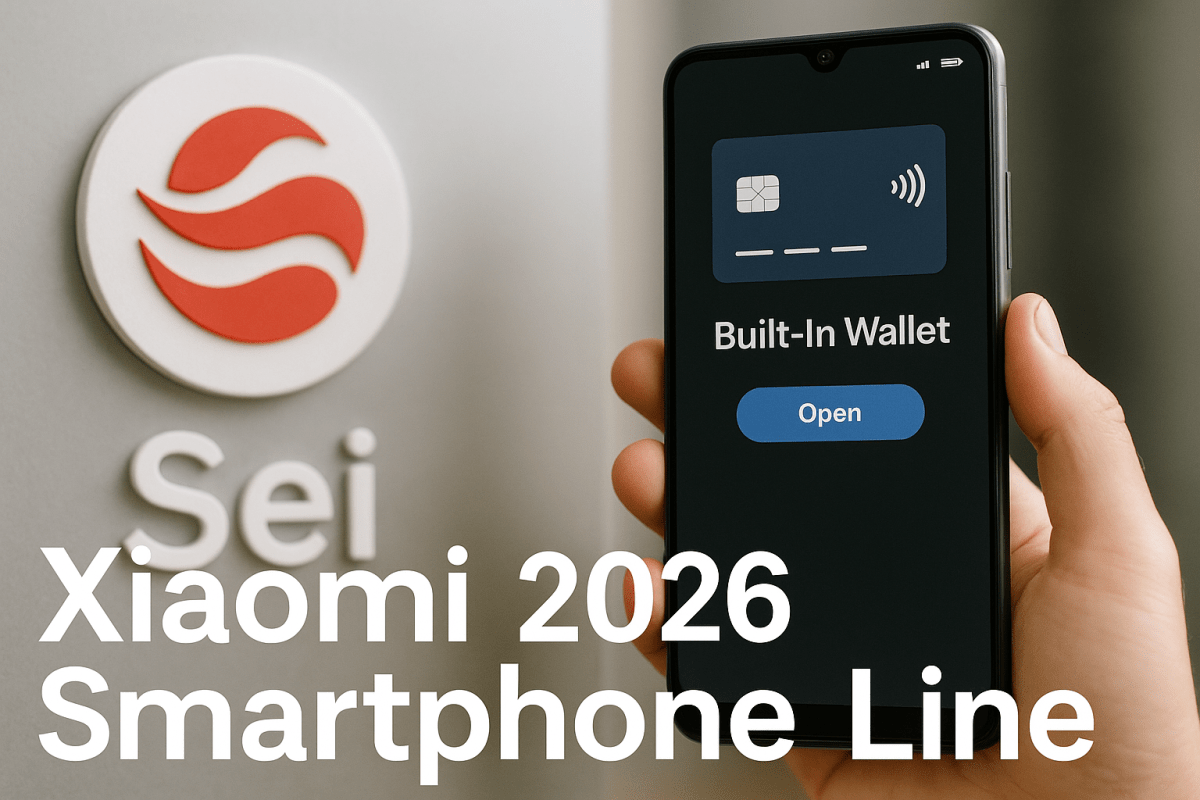
Sei Secures Major Win as Xiaomi Integrates Built-In Wallet for 2026 Smartphone Line

Sei Secures Major Win as Xiaomi Integrates Built-In Wallet for 2026 Smartphone Line

The new Xiaomi phones outside China and the U.S. will now come with the Sei wallet and Web3 app, bringing crypto to everyday users. Wider adoption of Sei will rely on how actively people use the wallet and ecosystem, but market trends like Bitcoin’s movements could still influence short-term sentiment. Sei has landed a major [...]]]>

Author: Crypto News Flash
21Shares’ TOXR XRP ETF Cleared by Cboe as Inflows Near $1 Billion

21Shares’ TOXR XRP ETF Cleared by Cboe as Inflows Near $1 Billion

The post 21Shares’ TOXR XRP ETF Cleared by Cboe as Inflows Near $1 Billion appeared first on Coinpedia Fintech News XRP ETF momentum continues to grow as Cboe approves 21Shares’ spot XRP fund for listing under the ticker TOXR, making it the fifth XRP ETF in the U.S. and pushing total inflows close to the $1 billion mark.  Despite the strong demand, XRP’s price remains stuck below the $2.09–$2.10 resistance level with limited movement. Even …

Author: CoinPedia
Ethereum Has Bottomed: Tom Lee’s Bold Prediction as Bitmine Doubles Down

Ethereum Has Bottomed: Tom Lee’s Bold Prediction as Bitmine Doubles Down

BitcoinWorld Ethereum Has Bottomed: Tom Lee’s Bold Prediction as Bitmine Doubles Down Is the long crypto winter finally thawing for Ethereum? A major voice from Wall Street just declared a pivotal shift. Tom Lee, the influential founder of Fundstrat and chairman of Bitmine, has made a striking public assertion: he believes Ethereum has bottomed. This declaration comes with a powerful signal of conviction, as Lee simultaneously revealed […] This post Ethereum Has Bottomed: Tom Lee’s Bold Prediction as Bitmine Doubles Down first appeared on BitcoinWorld.

Author: bitcoinworld
US Senate’s Big Crypto Market Structure Bill Hits a Major Roadblock

US Senate’s Big Crypto Market Structure Bill Hits a Major Roadblock

The post US Senate’s Big Crypto Market Structure Bill Hits a Major Roadblock appeared first on Coinpedia Fintech News The Senate’s push to finish a crypto market-structure bill is falling apart. Party disagreements, White House resistance, and a rapidly closing timeline have turned what looked like a nearly completed bipartisan deal into a last-minute scramble. This comes even as the House has already passed its own Digital Asset Market Clarity Act and is urging …

Author: CoinPedia
Cardano NIGHT Token Crashes 90% After Launch Airdrop Selling Sparks Massive Dump

Cardano NIGHT Token Crashes 90% After Launch Airdrop Selling Sparks Massive Dump

The post Cardano NIGHT Token Crashes 90% After Launch Airdrop Selling Sparks Massive Dump appeared first on Coinpedia Fintech News Midnight Network’s NIGHT token, the governance asset for Cardano’s privacy-focused sidechain has seen a heavy price drop in recent days. Following the launch of midnight NIGHT token saw a 89% drop, currently trading around $0.050, seeing a 6% drop in the past 24 hours. So, what’s fueling the price to drop below?  Airdrop Selling Pressure …

Author: CoinPedia
Crypto Elites Pivot to Collectibles as $5 Million Triceratops Skeleton Finds a Home in Singapore’s Asian Fort Knox

Crypto Elites Pivot to Collectibles as $5 Million Triceratops Skeleton Finds a Home in Singapore’s Asian Fort Knox

The post Crypto Elites Pivot to Collectibles as $5 Million Triceratops Skeleton Finds a Home in Singapore’s Asian Fort Knox appeared on BitcoinEthereumNews.com. COINOTAG News, citing Bloomberg, notes that a Singapore vault colloquially dubbed the Asian Fort Knox houses a complete Triceratops skeleton dating 69 million years, one of just 24 known specimens globally. Earlier this year, about $5 million secured the purchase by a four-member crypto investor group, including Yoann Turpin, co‑founder of Wintermute, alongside other co‑investors with ties to digital assets such as Co‑Museum founder Chaw Wei Yang. The artifact was shipped from Wyoming to Le Freeport in Singapore, illustrating a trend among crypto executives toward tangible assets rather than purely digital art after the NFT craze of 2022. Across the sector, executives are diversifying into collectibles, precious metals, and sculptures, signaling a shift in appetite for high-value physical assets within the crypto community. Source: https://en.coinotag.com/breakingnews/crypto-elites-pivot-to-collectibles-as-5-million-triceratops-skeleton-finds-a-home-in-singapores-asian-fort-knox

Author: BitcoinEthereumNews
1 in 3 Investors Let AI Manage Over Half Portfolio

1 in 3 Investors Let AI Manage Over Half Portfolio

As the cryptocurrency world evolves, so do the methods used by investors to trade and manage their portfolios. One of the most notable shifts is the growing trust in AI bots to manage crypto assets. By 2026, many investors are relying on these AI-powered tools to make more informed decisions, reduce emotional stress, and even outperform human traders. This article dives into a recent survey, shedding light on the increasing confidence in AI bots and their role in revolutionizing the industry. Methodology The insights presented in this article are based on a survey conducted in November 2025, involving 2,022 crypto investors and traders. The goal of the survey was to gauge attitudes toward AI bots in crypto trading and investing, with a particular focus on trust, performance, and the willingness to adopt these tools. By analyzing this data, we can better understand the growing role of AI in crypto markets and what the future may hold. How Much Do People Trust AI Bots for Trading & Investing? Recent survey data reveals a growing confidence in AI bots managing crypto portfolios, although opinions still differ. 1 in 3 investors (32.6%) are willing to let AI bots manage over half of their crypto portfolios. This shift reflects a significant move toward automation, with investors increasingly trusting AI to handle substantial portions of their investments as they seek more efficient and precise ways to manage their portfolios. However, a significant portion of investors remains cautious. 36.4% of participants would only trust AI bots with up to 20% of their portfolio, indicating a more conservative approach. Despite these reservations, Nearly 60% of investors are willing to pay a monthly fee for a reliable AI bot, which indicates that overall trust in AI is steadily increasing. Many investors are recognizing its potential to improve trading outcomes. Can AI Bots Actually Perform Better? AI bots are increasingly seen as superior to human traders, especially when it comes to performance. 64.6% of survey respondents believe AI bots outperform humans in short-term crypto trading, while 52.3% think they do better in long-term investing. These results highlight AI’s ability to analyze vast amounts of data and make quicker, more accurate decisions, especially in the volatile crypto market. The performance of AI bots in real-world trading also backs up these beliefs. 33.7% of users report better profits compared to manual trading. This suggests that for many investors, AI bots are seen as more effective tools for maximizing profits. Will AI Bots Become the Future of Crypto Trading & Investing? The future of AI bots in crypto trading looks promising. 83% of respondents believe that AI bots will become a standard feature in all major crypto apps and platforms within the next 2–3 years. This reflects the growing reliance on AI tools, not just for trading but as integral parts of trading apps and platforms. As trust in AI bots continues to rise, more investors are likely to adopt them, driven by their proven ability to deliver better performance and reduce stress. In fact, 53.6% of participants reported that using AI bots has helped reduce the stress typically associated with crypto trading and investing. The increasing trust in AI, combined with the bots’ ability to deliver better returns and ease emotional burden, indicates that AI bots will play a central role in the future of crypto trading. Investors are gradually shifting towards automated solutions as they become more comfortable with AI’s capabilities. As the technology matures and becomes more accessible, it’s clear that AI will be an essential part of the crypto landscape in the years ahead. The post 1 in 3 Investors Let AI Manage Over Half Portfolio appeared first on NFT Plazas.

Author: Coinstats
Is institutional dominance in the crypto market the end of decentralization or the beginning of a new era?

Is institutional dominance in the crypto market the end of decentralization or the beginning of a new era?

Author: Centreless In 2025, the cryptocurrency market reached a structural turning point: institutional investors became the dominant force, while retail investors cooled off significantly. Aishwary Gupta, Global Head of Payments and Real Assets at Polygon Labs, pointed out in a recent interview that institutional funds now account for about 95% of the total inflow into cryptocurrencies, while retail investors account for only 5%-6%, indicating a significant shift in market dominance. He explained that the shift by institutions is not driven by emotion, but rather a natural result of the maturing infrastructure. Asset management giants including BlackRock, Apollo, and Hamilton Lane are allocating 1%-2% of their portfolios to digital assets, accelerating their deployment through ETFs and on-chain tokenized products. Gupta cited examples such as Polygon's collaborations, JPMorgan Chase's testing of DeFi transactions under the supervision of the Monetary Authority of Singapore, Ondo's tokenized government bond project, and AMINA Bank's regulated staking, all demonstrating that public blockchains can already meet the compliance and auditing requirements of traditional finance. The two main drivers for institutional entry are the need for returns and operational efficiency. The first phase mainly focused on obtaining stable returns through tokenized government bonds and bank-grade collateral; the second phase is driven by the efficiency improvements brought by blockchain, such as faster settlement speeds, shared liquidity, and programmable assets, which has prompted large financial institutions to experiment with on-chain fund structures and settlement models. In contrast, the exit of retail investors is mainly due to losses and loss of trust caused by the previous Meme coin cycle. However, Gupta emphasizes that this is not a permanent loss, and retail investors will gradually return as more regulated and risk-transparent products emerge. Regarding concerns that institutional participation might undermine the decentralized nature of cryptocurrencies, Gupta argues that as long as the infrastructure remains open, institutional involvement will not only fail to centralize the blockchain but will actually enhance its legitimacy. He points out that the future financial network will be a fusion system where multiple asset classes, such as DeFi, NFTs, government bonds, and ETFs, coexist on the same public blockchain. Regarding whether institutional dominance would stifle innovation, he acknowledged that some experiments would be limited in a more compliance-oriented environment, but in the long run, this would help the industry build a more robust and scalable innovation path, rather than relying on high-speed trial and error through "breaking the rules." Looking ahead, he stated that institutional liquidity will continue to improve market stability, volatility will decrease as speculative activity diminishes, and RWA tokenization and institutional-grade staking networks will develop rapidly. Interoperability will also be crucial, as institutions will need infrastructure that enables seamless asset transfers across chains and aggregation layers. Gupta emphasized that institutional entry is not a "takeover" of crypto by traditional finance, but a process of jointly building new financial infrastructure. Cryptocurrencies are gradually evolving from speculative assets into the core underlying technology of the global financial system.

Author: PANews
AVAX Price Analysis: Potential Breakout from Trendline Amid Surging Layer-1 Activity

AVAX Price Analysis: Potential Breakout from Trendline Amid Surging Layer-1 Activity

The post AVAX Price Analysis: Potential Breakout from Trendline Amid Surging Layer-1 Activity appeared on BitcoinEthereumNews.com. AVAX price analysis indicates the token is holding steady between $13.10 and $13.55, backed by historical support zones at $8–$12 that have sparked rallies up to 1,400%. Surging transaction volumes on Layer-1 networks signal robust adoption, while short-term channels suggest upward momentum unless resistance at $13.50 breaks. AVAX has tested $8–$12 support multiple times, leading to historical rallies of 650% to over 1,400%. Transaction volumes on key Layer-1 blockchains have climbed from under 5 million to over 50 million daily, reflecting strong network growth. Short-term AVAX price action forms an upward channel, with buyers dominating but facing resistance near $13.50 levels. Explore AVAX price analysis: Key support at $8–$12, surging transactions, and potential breakouts. Stay ahead in crypto trading—discover insights for informed decisions today. What is the Current AVAX Price Analysis? AVAX price analysis shows the Avalanche token navigating a narrow range between $13.10 and $13.55 amid balanced market forces. Historical patterns reveal reliable support zones that have fueled significant recoveries, while recent transaction surges on Layer-1 networks underscore growing adoption. Traders are eyeing potential breakouts from current channels, but resistance levels remain a key hurdle for upward moves. The cryptocurrency market continues to exhibit volatility, with AVAX demonstrating resilience in its price action. Daily fluctuations stay contained, suggesting consolidation rather than aggressive shifts. This stability provides opportunities for strategic positioning based on established trends. How Have Historical AVAX Price Patterns Shaped Market Trends? Historical price patterns for AVAX highlight a recurring interaction with horizontal support between $8 and $12, which has repeatedly triggered substantial rallies. In past cycles, these zones acted as accumulation areas, leading to gains ranging from 650% to more than 1,400%. This multi-year pattern underscores the importance of these levels for long-term investors monitoring entry points. A long-term descending trendline has served as a formidable resistance,…

Author: BitcoinEthereumNews