NFT

NFTs are unique digital identifiers recorded on a blockchain that certify ownership and authenticity of a specific asset. Moving past the "PFP" craze, 2026 NFTs emphasize utility, representing everything from IP rights and digital fashion to RWA titles and event ticketing. This tag explores the technical standards of digital ownership, the growth of NFT marketplaces, and the integration of non-fungible tech into the broader Creator Economy and enterprise solutions.

13180 Articles
Created: 2026/02/02 18:52
Updated: 2026/02/02 18:52
BNB Still Leads the Market, but Solana and Aptos Are Catching Up Fast in User Activity

BNB Still Leads the Market, but Solana and Aptos Are Catching Up Fast in User Activity

The post BNB Still Leads the Market, but Solana and Aptos Are Catching Up Fast in User Activity appeared on BitcoinEthereumNews.com. AltcoinsBlockchain The battle for user attention in the blockchain world is intensifying, and the latest participation figures reveal a dramatic reshuffling among major networks. While BNB Chain still commands the largest crowd, a handful of younger chains are stealing the spotlight with rapid community expansion and new user engagement. Old Leaders, New Challengers BNB Chain may continue to dominate on paper, but its lead is shrinking. The network, once synonymous with retail crypto activity, posted another week of decline in active participation — a signal that users are experimenting with alternatives. NEAR Protocol remains close behind, maintaining remarkable stability despite a soft market, while Solana’s ecosystem is roaring back to life after months of consolidation. Solana’s latest user burst — up nearly 14% — reflects rising on-chain activity across its DeFi, NFT, and staking ecosystems. Projects like Jito are helping fuel that growth, giving the network fresh momentum as users explore yield-based strategies. New Growth Engines The most impressive performance, however, came from Aptos. With its user base expanding by more than 20% in a single week, Aptos is rapidly emerging as one of the most dynamic Layer 1 ecosystems in 2025. Analysts point to its growing roster of DeFi protocols and smoother developer onboarding as key factors driving participation. Not far behind, PancakeSwap delivered a surprise of its own. The decentralized exchange — long a cornerstone of the BNB ecosystem — saw activity soar by nearly 50%, the largest weekly spike among major crypto platforms. This surge suggests traders are rotating liquidity back into familiar DeFi venues amid rising volatility. The Bigger Picture Despite the strength of these emerging players, the broader picture remains mixed. opBNB and BNB Chain both saw double-digit declines in activity, indicating that user enthusiasm is fragmenting across ecosystems. Bitcoin and Ethereum, while still vital…

Author: BitcoinEthereumNews
Trump-Xi Summit Expected in South Korea as Tariff Hike Looms, Markets Wary

Trump-Xi Summit Expected in South Korea as Tariff Hike Looms, Markets Wary

The post Trump-Xi Summit Expected in South Korea as Tariff Hike Looms, Markets Wary appeared on BitcoinEthereumNews.com. COINOTAG recommends • Exchange signup 💹 Trade with pro tools Fast execution, robust charts, clean risk controls. 👉 Open account → COINOTAG recommends • Exchange signup 🚀 Smooth orders, clear control Advanced order types and market depth in one view. 👉 Create account → COINOTAG recommends • Exchange signup 📈 Clarity in volatile markets Plan entries & exits, manage positions with discipline. 👉 Sign up → COINOTAG recommends • Exchange signup ⚡ Speed, depth, reliability Execute confidently when timing matters. 👉 Open account → COINOTAG recommends • Exchange signup 🧭 A focused workflow for traders Alerts, watchlists, and a repeatable process. 👉 Get started → COINOTAG recommends • Exchange signup ✅ Data‑driven decisions Focus on process—not noise. 👉 Sign up → The Trump Xi meeting scheduled for Thursday in Gyeongju, South Korea, could significantly impact crypto markets by addressing US-China trade tensions. With a 93% prediction market chance of occurring, the summit may prevent tariff hikes on tech imports, stabilizing supply chains for semiconductors and rare earths crucial for crypto mining hardware and blockchain infrastructure. Trade framework reached: US Treasury Secretary Scott Bessent announced a substantial agreement in Malaysia to avoid 100% tariffs on Chinese imports, potentially easing crypto market volatility tied to global economic uncertainty. Markets react nervously: Prediction platform Kalshi reports over $6 million wagered on the meeting, reflecting high stakes for investors in Bitcoin and altcoins amid ongoing US-China frictions. Key discussion areas include rare earths and semiconductors: These resources are vital for crypto mining rigs, with restrictions potentially increasing hardware costs by up to 30% according to industry reports from Chainalysis. Discover the Trump Xi meeting’s crypto impact as leaders tackle tariffs and tech trade at APEC 2025. Learn how this could boost Bitcoin stability and mining efficiency—read on for expert insights. How Will the Trump…

Author: BitcoinEthereumNews
Uncovering the secrets of Echo founder Cobie: From entering the industry with $200 to achieving fame and fortune in 13 years

Uncovering the secrets of Echo founder Cobie: From entering the industry with $200 to achieving fame and fortune in 13 years

Written by David, TechFlow On October 21, 2025, Coinbase announced the acquisition of on-chain investment platform Echo for US$375 million. Just the day before, Coinbase spent $25 million to buy an NFT to revive a podcast. Two days, two transactions totaling $400 million, all directed to the same person: Jordan "Cobie" Fish. Who is Cobie? If you follow the English crypto scene, you'll know this name carries a plethora of labels: 800,000 Twitter followers, founder of Echo, host of the UpOnly crypto podcast, co-founder of Lido Finance... and the whistleblower who once exposed Coinbase insider trading with a single tweet. In the crypto world, he is one of the few OGs who has survived from 2012 to the present and is still active in the market. “I certainly didn’t expect Echo to be sold to Coinbase,” Cobie wrote on X after the acquisition was announced. This may sound like a polite remark, but those who often read his social media know that this may be the real thing. Because when he founded Echo two years ago, he also said: "I'd say there's a 95 percent chance it will fail." A man who always talks about failure eventually received nearly $400 million in investment. As a frequent investor in various crypto projects, Cobie does not seem to be short of money. But that's not how the story begins. Like every crypto player who dreams of getting rich, according to him, he was a student when he first entered the circle in 2012 and bought some Bitcoin with $200. From an unknown student to a crypto OG, the path Cobie has taken is almost a microcosm of the 13-year history of the crypto industry: early idealism, the madness of ICO, the rise of DeFi, the collapse of FTX... he was there. The key is that he is not only present, but has also survived the bull and bear cycles to this day. In this industry where everyone wants to get rich quickly, surviving for a long time is a blessing that most people cannot obtain, and it is also a kind of persistence that is extremely difficult to implement. $200 to enter the circle, development of zero celebrity coins (2012-2014) In 2012, Jordan Fish was studying at the University of Bristol in the UK. A computer science major, he bought his first batch of Bitcoin for less than $10. According to his later account on Twitter, he only had $200 in capital when he entered the crypto industry. At the price of $10, this was equivalent to about 20 bitcoins at the time. He also gave himself the online name: CryptoCobain, which was later changed to Cobie. In 2013, Bitcoin soared from $13 to $1,000. In January of the same year, Cobie found a job as technical director at a British startup called CYOA. Until a chance opportunity arose and Cobie developed a "celebrity coin", which changed his development trajectory. In 2011-2012, almost no one in the mainstream Western media reported on Bitcoin. The Keiser Report was one of the few media programs that continuously discussed cryptocurrencies in the early years, and played an important role in the formation of the early community's cognition. The host of this show was Max Keiser, who later became the Bitcoin advisor to the President of El Salvador. Keiser himself became a "crazy missionary" in the crypto world because of his accurate prediction that Bitcoin would rise to more than $1,000, coupled with his exaggerated performance style, such as tearing up US dollar bills on the show. At the time, Keiser half-jokingly posted on Twitter that if a coin called Max Keiser could reach a market value of 1 billion, he would appear naked on the show. Cobie and his partner Luke Mitchell actually created a coin called Maxcoin, and forked it based on Bitcoin at the time. This may be the first celebrity coin in the history of cryptocurrencies to appear on TV, more than 10 years earlier than the current wave of presidents and celebrities issuing coins. On January 28, 2014, Keiser Report Episode 555 was titled "Launch of Maxcoin." In front of a global audience, Keiser mined the genesis block of MAX. On February 14th, Valentine's Day, Maxcoin's price reached $3.11, with a market capitalization of $8.5 million. Cobe and Luke were even invited to Keiser's show to discuss technical details. Then reality hit. Aside from Keiser's shouting on the show, Maxcoin had no real use. No merchants accepted it, no real use cases. To make matters worse, in February 2014, Mt. Gox went bankrupt, and the entire crypto market collapsed. By December 31, 2014, Maxcoin's closing price was $0.00666, a 99.8% drop. Code updates ceased, and even Keiser himself stopped mentioning the coin. Cobie continued to work at the UK tech startup until April 2015. As a developer, he himself said on Twitter that he had never held Maxcoin. At this time, Bitcoin had fallen from $1,000 to $200. Most people who entered the market in 2013 may have left the crypto circle forever, but Cobie chose to stay in a different way. Growing in Web2 and being a KOL on Twitter (2015-2020) In April 2015, Cobie left his position as technical director at CYOA and joined a programming education startup called Enki as head of growth. The crypto market was completely silent. Bitcoin was trading sideways between $200 and $400, and most altcoins were trading at or near zero. Maxcoin had been completely forgotten. Cobie could have, like most people, treated the first few years of coin issuance as a youthful adventure and returned to normal life. In fact, it seems that he did so. In August 2017, he joined Monzo, then the UK's hottest fintech unicorn. The digital bank was promoting a purely mobile banking experience in an attempt to disrupt the traditional banking industry. That summer, Bitcoin had just broken through $2,000 and the ICO craze was brewing; by December 2017, Bitcoin would rise to nearly $20,000, and the entire crypto world would go crazy. But Cobie was still in the Monzo offices. Outside the office, the crypto market went through a complete bull-bear cycle from 2017 to 2020. The frenzy at the end of 2017, the crash in 2018, the sideways movement in 2019, and the COVID crash in March 2020. During these three years, public reports indicate that he “earned enough money while working at Monzo to devote himself to cryptocurrency full-time.” At the same time, he never stops speaking on Twitter, commenting on Bitcoin prices, mocking ICO projects, analyzing DeFi protocols... He has become a regular member of Crypto Twitter, the kind of voice in the community that is always online and always has opinions. By March 2020, in an interview, he revealed his asset allocation: only 5% in cryptocurrencies and 95% in cash and other traditional assets. This number surprised many people. As a well-known KOL in the crypto circle, he holds almost no cryptocurrency. This may explain why he was able to stay at Monzo for three years. He didn’t need to rely on cryptocurrency trading to make a living, and he had a stable income and career development. In the summer of 2020, everything changed. DeFi exploded. Compound issued the COMP token and launched liquidity mining. Uniswap airdropped UNI, making early adopters rich overnight. Suddenly, those who had persevered discovered a new opportunity. Cobie left Monzo in September 2020 after more than five years of lurking in traditional tech companies. But this time, he is no longer just a rookie programmer. His work in product and growth positions provides him with both income and experience, and more importantly, knowledge of the financial industry. The Maxcoin developer who once lost everything is about to become one of the most successful early investors in the DeFi era. Betting on Lido and Podcasting (2020-2022) In October 2020, a month after Cobie returned to the crypto world full-time, he made an investment that changed his life. At that time, two Russian programmers were developing a project called Lido. The solution was liquidity staking: users pledged any amount of ETH and obtained stETH as a certificate, which could be traded freely. Most people might not understand the purpose of this. But Cobie clearly did. He not only invested, but also helped the project find auditors, wrote tweets, and introduced it to other investors. He became one of Lido's earliest and most active supporters. By the end of 2021, Lido will become the largest staking service provider on Ethereum. By 2024, Lido's assets under management will exceed $30 billion, and the market capitalization of the LDO token will exceed $2 billion. Cobie's early investment returned over 1,000 times its value. According to various overseas media reports, this investment alone earned him "millions of dollars." But what really turned Cobie from a Twitter KOL into an industry influencer was a podcast. In April 2021, Cobie and another crypto KOL Ledger co-founded the UpOnly podcast. The timing was also ingenious. It was the height of the bull market, and everyone wanted to learn about crypto, but most podcasts were either too technical or too superficial. UpOnly found a balance: Chat about deep topics in a relaxed way. Industry leaders such as Vitalik, Michael Saylor, Do Kwon, SBF and CZ have all appeared on his podcast, and they are all willing to chat with the two podcast hosts for an hour or two. Cobie and Ledger didn't pretend to be anything during the show; they asked silly questions, made jokes, and admitted they didn't understand. This allowed the bigwigs, who were used to serious interviews, to relax and say things they wouldn't say otherwise. At the same time, the podcast's business model is also very interesting. They issued NFT (UpOnly NFT), which is equivalent to a membership card. The holder can participate in the recording, ask questions, and obtain exclusive content. These NFTs later fetched over 10 ETH on the secondary market. A few days ago, Coinbase acquired this NFT series for $25 million. It’s worth mentioning that UpOnly’s most ironic sponsor is actually FTX. SBF’s exchange sponsored UpOnly for a long time until it suddenly collapsed in November 2022. On the day of the crash, Cobie was livestreaming, tracking $400 million in suspicious fund flows in real time. He reviewed on-chain data and explained what was happening. This livestream later became a defining moment in the FTX crash. Another ironic event is that Cobie became the whistleblower for insider trading at Coinbase. In December 2022, Cobie tweeted that a wallet address had bought a large amount of related tokens before Coinbase listed them. This was not a coincidence, but a continuous pattern. Within hours, the tweet was retweeted tens of thousands of times. Media outlets began reporting on it. Regulators launched an investigation. Ultimately, the U.S. Department of Justice prosecuted Ishan Wahi, a former product manager at Coinbase, in what became the first cryptocurrency insider trading case in U.S. history. Coinbase was forced to publicly respond and improve its listing process. The entire industry began to discuss transparency. And Cobie, the developer of the celebrity coin that once went to zero, has now become an industry watchdog. By the end of 2022, his influence reached its peak. Now with over 800,000 Twitter followers, he is one of the most influential voices in the English crypto community; UpOnly is also one of the most popular crypto podcasts. More importantly, he established a unique personality: As an early adopter, with a technical background and successful investment experience, he is also a critic of hype, an exposer of shady dealings, and maintains a certain distance. In his own words: "I'm still a cynic (Cobain), but now I have money." But Cobie himself probably also knew that the life cycle of KOLs is short and podcasts may become outdated. He needed to build something more lasting. Echo, may be the last entrepreneurial venture (2023-2025) At the beginning of 2023, the crypto market was still at the bottom of a bear market. FTX’s bankruptcy was still reeling, and Cobie posted a meaningful tweet on Twitter: “The best time to build is when everyone feels there is no hope.” A few months later, Echo quietly launched. Unlike the high-profile development of Maxcoin, a celebrity cryptocurrency, Echo had no launch event, no white paper, and even no formal announcement. It was simply a simple website with an even simpler function: to help the project raise funds from early investors. Specifically, the Echo does two things. First, it allows crypto projects to sell tokens to qualified investors through private placements. Second, through a tool called Sonar, it allows ordinary users to participate in certain public sales. The entire process is conducted on-chain, non-custodial, and transparent. Initially, it barely resembled a product. Its interface and functionality were simple: a tool to help project owners and investors sign SAFTs (token purchase agreements). But the first project soon arrived: Ethena. Why did Ethena choose a newly launched and unknown platform? The answer is simple: it’s all because of Cobie. Ethena founder Guy Young is a frequent guest on the UpOnly podcast and has a close personal relationship with Cobie. More importantly, Cobie not only provides the platform but has also invested in Ethena and publicly expressed his support on Twitter. For a new project, Cobie's endorsement is invaluable. Ethena completed its seed round of financing through Echo. A few months later, when Ethena became one of the hottest DeFi protocols in 2024, Echo's credibility was instantly established. Subsequently, major projects such as MegaETH, Initia, and Plasma launched financing on Echo. By mid-2024, Echo's operating model had matured. A typical process is as follows: The project owner finds Echo, the Echo team conducts basic due diligence, the project owner sets financing terms, and issues tokens through Echo's smart contract. Investors (institutions or individuals) invest through the platform, and funds and tokens flow transparently on the chain. The key is that Echo itself does not hold funds or provide investment advice, it only provides tools and connections. Cobie's role goes far beyond simply being the founder of this fundraising platform. He's actually Echo's top business development officer. Every time he interviews a founder on his podcast, they become a potential Echo customer. Every time he comments on a project on Twitter, he's implicitly advertising Echo. He didn’t even need to actively pitch. When you’re one of the most influential voices in crypto, people will find you. By the time it was acquired in October 2025, Echo had processed over $200 million in transactions across approximately 300 investments. In a sense, Coinbase acquired not only the Echo platform, but the entire ecosystem built by Cobie. This also explains why Coinbase was willing to pay $375 million. They bought the key to enter this network. The transaction structure indicates this isn't an all-cash acquisition; it includes Coinbase stock, meaning Cobie is now a Coinbase shareholder. The Echo team will join Coinbase, but the brand will remain independent for now. The Sonar tool will be integrated into Coinbase's product offerings. From Coinbase's perspective, the logic of this acquisition is clear. Having just acquired the token management platform LiquiFi in July 2025, they have now acquired Echo. LiquiFi manages post-issuance transactions, while Echo handles the financing process. Together with Coinbase's own exchange business, this creates a complete chain from the primary market to the secondary market. The community's reaction after the acquisition was announced was interesting. Some say Cobie was sold too early, and that Echo could have become a standalone unicorn. Others say this proves the feasibility of influencer startups. Still others dug up old posts from 2014, comparing Maxcoin's collapse to Echo's exit, and lamented that "it takes ten years to sharpen a sword," and that there's always a chance at the poker table. And Cobie himself doesn't seem to be taking a break. He immediately announced that he would join Paradigm as an advisor, "focusing on liquid markets, trading, and DeFi trends." The Last OG In the crypto world, 13 years is an incredibly long time. Most of the early adopters in 2012 have either retired or disappeared after a certain cycle hit zero. Exchanges have changed several generations, public chains have changed several generations, and even the definition of decentralization has changed several times. But Cobie is still here. He has witnessed every cycle, participated in every bubble, and survived every crash. He’s not the biggest moneymaker, certainly not the most famous, or even the most successful entrepreneur in the cryptocurrency world; but he may be the most complete crypto practitioner: I have traded in cryptocurrencies and lost money; I have started a business and failed; I have invested and succeeded; I have been a KOL, influenced the market, built products, and completed exits. From Jordan Fish to Crypto Cobain, from a college student who bought $10 worth of Bitcoin to an entrepreneur acquired by Coinbase, this story took a long 13 years. What has kept him alive until now? In his own words, perhaps it is knowing the difference between luck and strength, and being able to move between the two with ease: “I got lucky early on and made some good altcoin trades early on that put me in a profitable position. I thought I was really good at this thing called cryptocurrency trading. But anyone who thinks they’re good at it right from the start is wrong. If you’re lucky enough to ride a bull market and successfully trade altcoins, that doesn’t mean you’re good at it.”

Author: PANews
Bitcoin BIP-444 Proposal Sparks Intense Debate Over Data Limits

Bitcoin BIP-444 Proposal Sparks Intense Debate Over Data Limits

The post Bitcoin BIP-444 Proposal Sparks Intense Debate Over Data Limits appeared on BitcoinEthereumNews.com. Key Points: BIP-444 proposes data limits on Bitcoin, triggering developer debate. Restrictive measures may face legal and technical challenges. Minimal adoption as discussions remain informal on social channels. On October 27, PANews reported a debate among Bitcoin developers sparked the controversial BIP-444 proposal, impacting Bitcoin’s data capacity and raising censorship concerns. The proposal’s potential to alter Bitcoin’s permissionlessness has stirred significant debate, with legal liability issues for node operators posing critical challenges for future blockchain development. BIP-444’s Controversial Restrictive Measures and Resistance Bitcoin developers, responding to changes from Bitcoin Core v30, introduced BIP-444, aiming to limit blockchain data capacity. The proposal seeks to restrict OP_RETURN outputs to 83 bytes. This has been met with resistance, adopted by only 6.3% of nodes. The proposal, still informal in process, is in its preliminary stage, reflecting ongoing debate. Public reactions highlight concerns about restricting OP_RETURN as potentially censoring Bitcoin’s permissionless nature. Key figures have cautioned about the lack of clear consensus. “The proposal lacks clear definition of the issues at stake and raises questions about the legal liability of node operators.” – Jameson Lopp, CTO, Casa Samson Mow commented on how the restrictions may help reduce spam but misalign with Bitcoin’s ethos of decentralization. Historical Debates and Current Market Response Did you know? Previous data limit debates date back to 2010 when Satoshi disabled several opcodes due to vulnerabilities. BIP-444’s soft fork offers similar temporary measures but differs by focusing on data, not transaction volume. CoinMarketCap reports Bitcoin’s current price at $114,409.79 with a market cap of formatNumber(2281378425739, 2). BTC’s dominance stands at 58.83%, with recent price movements showing 2.48% increase in the last 24 hours. Bitcoin(BTC), daily chart, screenshot on CoinMarketCap at 23:30 UTC on October 26, 2025. Source: CoinMarketCap Analysts have noted potential implications for projects using ordinal inscriptions, like Bitcoin-native…

Author: BitcoinEthereumNews
12 Lessons In Crypto Trading You’ll Wish You Knew Sooner

12 Lessons In Crypto Trading You’ll Wish You Knew Sooner

The post 12 Lessons In Crypto Trading You’ll Wish You Knew Sooner appeared on BitcoinEthereumNews.com. Six years of trading the crypto market feels like a lifetime. Communities rise, reputations vanish, narratives die overnight, and somehow, we keep circling back for more. As altcoin trader and analyst Miles Deutscher puts it: “I’ve made millions, lost millions, built crypto businesses, and frankly, I’ve been on every emotional rollercoaster imaginable in this space.” His newest reflection, Six Years of Crypto Wisdom, Distilled Into One Article, hits differently because it’s not theory. It’s scar tissue. The crypto market has a way of maturing its believers through loss, resetting their egos with volatility, and reminding them that attention burns faster than conviction. What Deutscher captures isn’t a list of slick trading hacks; it’s survival wisdom. Lessons that, if internalized, can turn chaos into competence. Source | Miles Deutscher on X Find Your Niche Before You Find Alpha Every bull market breeds generalists, Deutscher says. YouTube educators, multi‑chain DJs, and thread‑writers calling themselves “researchers.” But as early as 2020, when DeFi exploded across Ethereum, Avalanche, and Solana, the real winners weren’t chasing every new farm; they were narrowing their field. His first takeaway, niche down, has become a rallying cry among seasoned participants. Deutscher admits he “went deep into DeFi” because mastery requires tunnel vision. The experience taught him leverage, liquidity loops, and risk asymmetry in a way no course could. He writes: “In crypto, being an expert in one thing trumps being a jack‑of‑all‑trades.” The advice is deceptively simple, but in an ecosystem drowning in hype, focus is a moat. Edge Is a Personality Trait Professionally, edge was once something you bought: private data feeds, faster bots, premium Discords. Now it’s something you cultivate. A trader’s edge in the crypto market mirrors their temperament: speed, patience, or even predictable stubbornness. DeFi “farmers” find edge in timing incentive cycles; NFT traders, in reading momentum before liquidity hits thin air. For most participants,…

Author: BitcoinEthereumNews
Innovative XRP Ledger Feature to Enhance NFT Transactions

Innovative XRP Ledger Feature to Enhance NFT Transactions

The post Innovative XRP Ledger Feature to Enhance NFT Transactions appeared on BitcoinEthereumNews.com. The XRP Ledger ecosystem is poised for a groundbreaking change in NFT transactions with the introduction of a new proposal known as “Batch (XLS-56).” This innovative feature is creating a buzz among developers and validators. A key contributor, the anonymous validator Vet, has been testing this on the test network, affirming the viability of fusing […] Continue Reading:Innovative XRP Ledger Feature to Enhance NFT Transactions Source: https://en.bitcoinhaber.net/innovative-xrp-ledger-feature-to-enhance-nft-transactions

Author: BitcoinEthereumNews
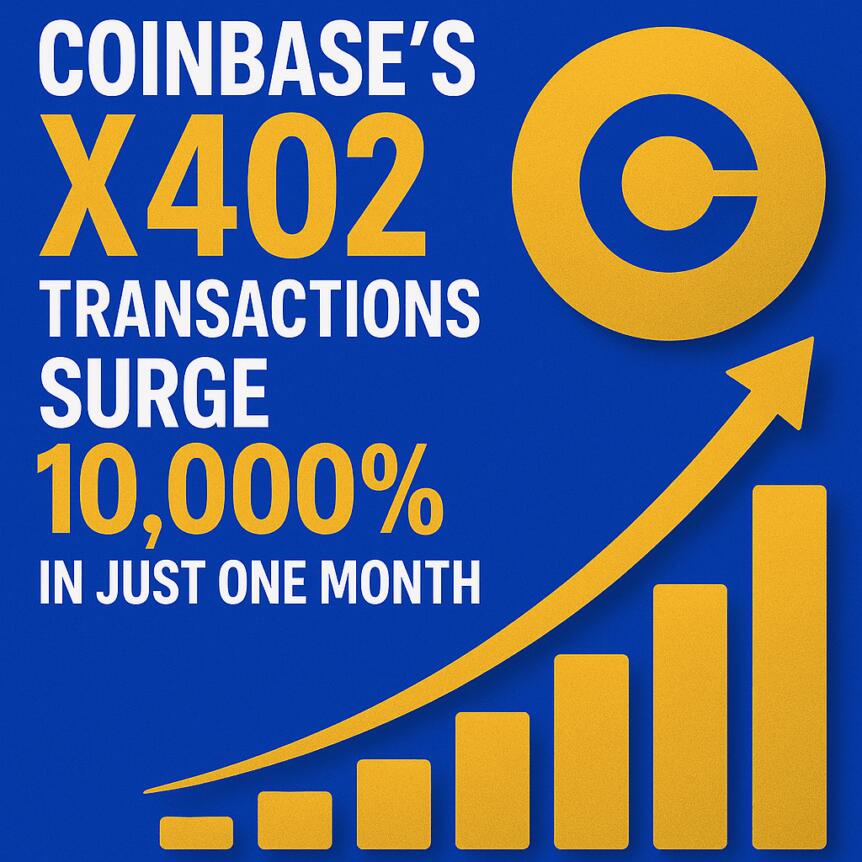
Coinbase’s X402 Transactions Surge 10,000% in Just One Month

Coinbase’s X402 Transactions Surge 10,000% in Just One Month

Recent developments in blockchain technology are marking a significant shift towards seamless, internet-native payment solutions driven by AI. Coinbase’s innovative protocol, introduced in May, has demonstrated explosive growth in transaction activity, highlighting the increasing integration of cryptocurrency payments directly into online experiences. Meanwhile, the broader crypto ecosystem yearns for more automated, scalable, and trustless transaction [...]

Author: Crypto Breaking News
Best Crypto Presale Right Now – New Hidden Gem Rising in a Bad Market

Best Crypto Presale Right Now – New Hidden Gem Rising in a Bad Market

The post Best Crypto Presale Right Now – New Hidden Gem Rising in a Bad Market appeared on BitcoinEthereumNews.com. In a market where momentum has faded, investors are turning their attention to the best crypto presale projects built on structure, not speculation. Noomez ($NNZ) has emerged as one of the few tokens redefining what a presale can be. Its 28-stage model burns unsold tokens at every stage while rewarding participation through random airdrops and future staking multipliers. With KYC-verified founders and a fixed supply of 280 billion tokens, Noomez positions itself as the best presale crypto to buy now for those looking for logic-driven growth rather than short-term hype. Why Noomez Is the Best Presale Crypto to Buy Now Built with precision, Noomez converts each presale stage into a verifiable step forward, visible, timed, and recorded on-chain. The presale unfolds across 28 smart-contract-verified phases, starting at $0.00001 per $NNZ and climbing to $0.0028 by the final round, forming a 280× structured price curve. At the end of every stage, any unsold tokens are automatically burned, permanently cutting supply. This deflation compounds over time, tightening availability with each completed round. At the center of the system is the Noom Gauge, a live tracker that lights up as new stages sell out. Each segment signals authentic progress rather than marketing noise. The Vault System and Deflationary Design Behind Noomez Noomez integrates two milestone events known as Vaults, each built to reinforce scarcity and reward participation. Vault 14 activates halfway through the 28-stage presale, releasing 14 million $NNZ to one verified wallet and triggering an on-chain burn of remaining tokens. Vault 28 closes the cycle with a 28 million $NNZ airdrop, a large-scale burn, NFT minting, and the first Access Engine reveal. Every Vault event permanently reduces the total 280 billion $NNZ supply. These burns and rewards turn scarcity into a verifiable mechanic rather than a marketing line, giving the Noomez presale…

Author: BitcoinEthereumNews
Milk Mocha’s $HUGS Presale Could Be the Next Dogecoin Moment With 1000x Return Potential

Milk Mocha’s $HUGS Presale Could Be the Next Dogecoin Moment With 1000x Return Potential

Every bull run has that one breakout everyone wishes they had caught earlier. For some, it was Dogecoin. For others, […] The post Milk Mocha’s $HUGS Presale Could Be the Next Dogecoin Moment With 1000x Return Potential appeared first on Coindoo.

Author: Coindoo
$HUGS Presale About to Open: Whitelist Flooded as FOMO Builds!

$HUGS Presale About to Open: Whitelist Flooded as FOMO Builds!

Loved by millions for their adorable and heartfelt moments, the Milk and Mocha cartoon bears have now stepped into the […] The post $HUGS Presale About to Open: Whitelist Flooded as FOMO Builds! appeared first on Coindoo.

Author: Coindoo