NFT

NFTs are unique digital identifiers recorded on a blockchain that certify ownership and authenticity of a specific asset. Moving past the "PFP" craze, 2026 NFTs emphasize utility, representing everything from IP rights and digital fashion to RWA titles and event ticketing. This tag explores the technical standards of digital ownership, the growth of NFT marketplaces, and the integration of non-fungible tech into the broader Creator Economy and enterprise solutions.

13116 Articles
Created: 2026/02/02 18:52
Updated: 2026/02/02 18:52
New Crypto Law in Uruguay Raises Alarm Over NFT and Token Classification Risks

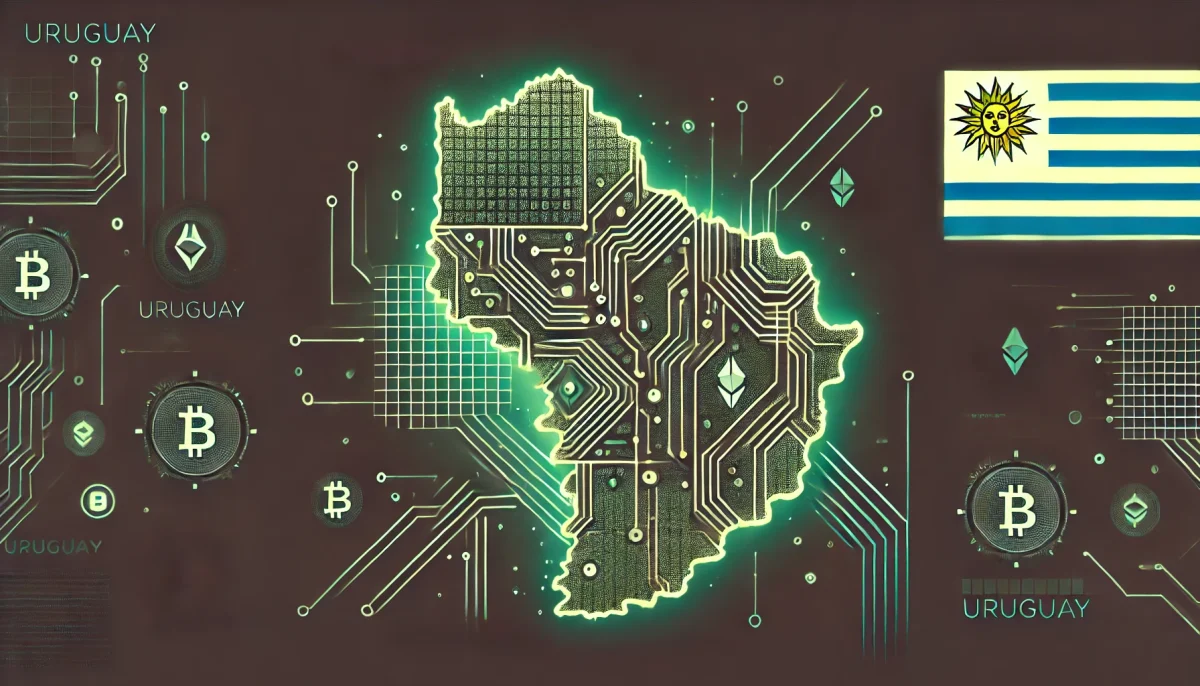
New Crypto Law in Uruguay Raises Alarm Over NFT and Token Classification Risks

Uruguay’s Blockchain Chamber warns crypto regulations could harm startups through unclear rules and disproportionate financial compliance burdens. The draft PSAV law introduces broad definitions that may classify NFTs and utility tokens as financial assets, raising costs. The Blockchain Chamber of Uruguay expressed concern over the draft regulation for Virtual Asset Service Providers (PSAV), describing it [...]]]>

Author: Crypto News Flash
Bitcoin vs Ethereum vs XRP, Different Jobs One Stack

Bitcoin vs Ethereum vs XRP, Different Jobs One Stack

The post Bitcoin vs Ethereum vs XRP, Different Jobs One Stack appeared on BitcoinEthereumNews.com. Bitcoin is digital gold; Ethereum runs smart contracts; XRP settles cross-border payments. They don’t compete: BTC stores value, ETH builds apps, XRP moves value between networks. Three-layer crypto stack: BTC reserve, ETH programmable markets, XRP fast settlement. The “which coin wins” debate treats every blockchain like it solves the same job. It doesn’t. Analysts, enthusiasts, and investors are throwing fresh takes across social feeds, but a growing chorus of voices, including expert Vincent Van Code, insists the question itself is misleading. “Bitcoin, Ethereum, and XRP — they were never meant to compete. Each was built to solve a different problem. The market just lumps them together because they share the same type of “database” i.e. blockchain,” he said. Bitcoin (BTC): The Immutable Digital Gold Bitcoin’s story begins in 2009 with the mysterious Satoshi Nakamoto. Its mission is simple: a decentralized store of value. Bitcoin removes middlemen, ignores governments, and doesn’t run on smart contracts. Its blockchain is slow by design, predictable, and secure. Purpose: Preserve value, hedge against inflation. Market Cap: ~$2.19 trillion (~50% of total crypto market). Use Case: Digital gold for investors and institutions. Core Feature: Decentralization and immutability. Bitcoin is not trying to run decentralized apps or settle payments instantly. It exists to be incorruptible money, a baseline layer for the digital economy. Related: Raoul Pal Predicts Bitcoin Peak in 2026 Despite Debt Shift Ethereum (ETH): The Decentralized Computer If Bitcoin is gold, Ethereum is the programmable universe. Launched in 2015, Ethereum transformed blockchain into a platform, enabling smart contracts, NFTs, and DeFi. Its blockchain is the foundation for a new digital infrastructure, not a replacement for money, but for the systems money moves through. Purpose: Digital infrastructure and programmable economy. Market Cap: ~$470 billion. Use Case: Smart contracts, NFTs, DeFi protocols. Core Feature: Decentralized, programmable, highly…

Author: BitcoinEthereumNews
Whitelist Closing Soon: The New Crypto Presale With Staking, NFTs, Games and 100x ROI

Whitelist Closing Soon: The New Crypto Presale With Staking, NFTs, Games and 100x ROI

Smart investors are quietly joining the $HUGS whitelist, a new presale crypto powered by Milk & Mocha’s global fandom. With zero KYC, unlimited wallets, NFTs, staking, and charity utilities, this could be the next 100x potential ROI project. Join the whitelist today before it fills.

Author: Blockchainreporter
Moca Network and SK Planet Launch AIR Shop, a Verifiable Blockchain Loyalty Platform

Moca Network and SK Planet Launch AIR Shop, a Verifiable Blockchain Loyalty Platform

Moca Network, the Animoca Brands–backed identity project, today opened AIR Shop, a verifiable loyalty platform that the company says is among the first of its kind. Built with Spree Finance and launched in partnership with South Korean tech giant SK Planet, AIR Shop aims to fuse traditional retail loyalty with blockchain-based, privacy-preserving identity and rewards infrastructure. The platform is live now at http://air.shop. At the heart of the rollout is AIR Identity, Moca Network’s enterprise-grade decentralized identity protocol. SK Planet, operator of OK Cashbag, South Korea’s largest integrated rewards service, has integrated AIR Identity into its ecosystem, bringing verifiable, interoperable identity services to 29 million users and 95,000 merchants. The system uses zero-knowledge proof technology, Moca says, to preserve user privacy while enabling verifiable credentials and cross-platform interoperability. Extra Utility for Users AIR Shop positions itself as a consumer-facing marketplace for real-world travel and lifestyle offers, with flights, hotels, car rentals, villas, premium retail and VIP experiences available through partners including BookIt.com. Members can earn rewards of up to 31% of spend depending on membership tier, and points are recorded and redeemable transparently on-chain. The platform’s loyalty currency, AIR SP, is framed as a stablecoin-backed loyalty point system that can be unlocked through verified credentials. Anyone can sign up for a free AIR account and access a Basic Tier membership. Upgrades to higher tiers require verified credentials tied to OK Cashbag’s OCB points, MOCA Coin holdings, or Mocaverse NFT staking status. Those verified statuses allow users to unlock higher rewards denominated in AIR SP, giving holders of SK Planet and Moca Network assets extra utility within the AIR Shop ecosystem. Kyosu Kim, chief business officer of SK Planet, said, “SK Planet has always been at the forefront of consumer loyalty innovation with OK Cashbag. Partnering with Moca Network to launch AIR Shop allows us to extend our ecosystem into Web3 while continuing to serve our millions of users with greater value and more exciting experiences. AIR Shop is a powerful step forward in connecting retail loyalty with blockchain-powered rewards.” Kenneth Shek, project lead of Moca Network, said, “AIR Shop represents a new era of verifiable loyalty, rewarding users with precision while preventing reward abuse. SK Planet is positioning itself at the forefront of loyalty and decentralized identifier innovation by giving users ownership of their data and allowing their digital identities to be verifiable in a highly interoperable manner. We are very excited to work with SK Planet to bring identity to its vast merchant and user network.” Spree Finance, which provided commerce and rewards infrastructure for AIR Shop, brings its “stable-points” technology to the table. Spree’s on-chain payments, rewards and credit products already support thousands of native crypto tokens and a merchant network that the company says exceeds two million. BookIt.com supplies the platform’s travel deals and experiences, leveraging Spree’s next-generation stable-point system to let users earn and spend rewards interoperably. To celebrate the launch, AIR Shop is kicking off a series of sweepstakes that users can enter using AIR SP. Prizes include a five-day luxury vacation in Jeju Island, Grand Prix racing experiences, BLACKPINK concert tickets at Tokyo Dome and other high-profile rewards. Terms and conditions apply. Moca Network markets itself as a chain-agnostic decentralized identity network designed to preserve privacy while enabling identity verification and cross-industry interoperability. As part of Animoca Brands’ identity ecosystem, Moca Network says it connects more than 600 portfolio companies and over 700 million addressable users, and it uses MOCA Coin as its utility and governance token. SK Planet, meanwhile, continues to expand its data-and-tech offerings in Korea through OK Cashbag and the Web3 wallet UPTN Station, aiming to bridge mainstream loyalty programs with blockchain-native services.

Author: Coinstats
How to Choose the Best Crypto Tax Software: 2025 Investor’s Guide

How to Choose the Best Crypto Tax Software: 2025 Investor’s Guide

If you're a cryptocurrency investor or a trader, filing your taxes correctly can spare you tremendous headache. Here's all you need to know about choosing the best crypto tax software in 2025.

Author: CryptoPotato
Coinbase acquires Cobie’s crypto fundraising platform Echo for $375M

Coinbase acquires Cobie’s crypto fundraising platform Echo for $375M

The post Coinbase acquires Cobie’s crypto fundraising platform Echo for $375M appeared on BitcoinEthereumNews.com. Coinbase has acquired Echo, the onchain capital formation platform founded by crypto investor Cobie, for approximately $375 million. The move underscores the exchange giant’s push to build compliant, blockchain-native fundraising infrastructure as onchain capital markets mature, according to Coinbase’s announcement.  Cobie reflected on the sale in a post, writing: “When I started building Echo two years ago, I knew it had a 95% chance of failing. To be honest, I couldn’t really imagine any other outcome, but I thought at least it may be a noble failure worth attempting.  “I certainly didn’t think Echo would be sold to Coinbase, but, here we are,” he added. Echo will remain a standalone platform under its existing brand while Coinbase integrates Sonar, Echo’s public sale product, into its ecosystem. The companies plan to expand access for founders and investors to onchain capital formation directly through Coinbase’s interface. On Monday, Coinbase CEO Brian Armstrong revealed that the company also purchased Cobie’s original UpOnly NFT — the emblem of Cobie’s long-running crypto podcast — for $25 million, calling it “a piece of crypto culture worth preserving” in a tweet. The NFT will reportedly be displayed in Coinbase’s onchain heritage collection, though financial details have not been independently verified. Coinbase has made a handful of acquisitions so far this year. The exchange bought Deribit in a multi-billion dollar deal to expand into global derivatives trading, Blockworks reported. It also acquired the Opyn leadership team in July to strengthen its onchain markets stack, and acquired the founders of Sensible in September to develop consumer-friendly DeFi tools. This is a developing story. This article was generated with the assistance of AI and reviewed by editor Michael McSweeney before publication. Get the news in your inbox. Explore Blockworks newsletters: Source: https://blockworks.co/news/coinbase-acquires-echo

Author: BitcoinEthereumNews
Ripple’s $1 Billion Move and National Bank Ambition Have Critics Nervous

Ripple’s $1 Billion Move and National Bank Ambition Have Critics Nervous

The post Ripple’s $1 Billion Move and National Bank Ambition Have Critics Nervous appeared first on Coinpedia Fintech News Last week, Ripple announced a $1 billion acquisition of GTreasury, showing the growing demand for its technology among major financial institutions. The goal behind this deal is to help Ripple expand deeper into traditional finance by combining blockchain technology with existing banking systems. However, CIO at SWIFT, Tom Zschach, claimed that Ripple lacks client trust, …

Author: CoinPedia
Ethereum and Solana Price Predictions Look Strong, But Ozak AI’s Looks Explosive

Ethereum and Solana Price Predictions Look Strong, But Ozak AI’s Looks Explosive

Ethereum and Solana are leading the charge as the 2025 bull run builds momentum. Trading at $3,879 and $185, respectively, these two powerhouse Layer-1 networks are showing impressive strength with strong technical support and growing institutional interest.  Both ETH and SOL have ambitious price targets ahead, but as they continue their steady rise, traders and […] The post Ethereum and Solana Price Predictions Look Strong, But Ozak AI’s Looks Explosive appeared first on Live Bitcoin News.

Author: LiveBitcoinNews
Citi Bank: Stablecoins Could Reach $3.7 Trillion by 2030

Citi Bank: Stablecoins Could Reach $3.7 Trillion by 2030

According to the latest report from Citi Bank, stablecoins are steadily becoming the core infrastructure for payments and value storage in the decentralized finance era, with the market projected to reach $1.6 trillion (base case) to $3.7 trillion (bull case) by 2030. Wall Street is identifying the next major growth catalyst for digital assets – and it’s stablecoins.  Stablecoins – The Bridge Between Traditional Finance and the On-chain World  Citi’s Identified Growth Drivers Stablecoin market capitalization has surged from $8 billion in 2020 to $188 billion in 2022, and is expected to reach around $234 billion by 2025, and the enactment of the GENIUS Act in July.   This number is increasing year by year and there is continuous good news from the government as well as the market, along with careful research, leading Citi believes stablecoins are entering a new phase of evolution.Transforming from a trading instrument within crypto into a global payment layer that bridges traditional finance and blockchain systems.  Learn more: What Happened To The Crypto Today? Stablecoins – The Bridge Between Traditional Finance and the On-chain World – Source: Federal Reserve Bank The report highlights several key growth drivers: Partial substitution of USD cash holdings, as individuals and companies in volatile economies increasingly use stablecoins as an accessible “safe haven.” Reallocation of short term liquidity from bank deposits and money market funds (MMFs) to stablecoins, thanks to their 24/7 cross border payment capabilities. Expansion in non USD markets, particularly in Europe and the U.K., even as USD backed stablecoins are expected to maintain around 90% market dominance. Growth alongside public cryptocurrency markets, as stablecoins continue to serve as payment intermediaries, on/off ramps, and collateral in DeFi.  Stablecoins and CBDCs: A Multipolar Financial System Citi compares the development of stablecoins to the evolution of the card industry. Initially dominated by global networks (Visa, Mastercard), later followed by national payment systems (such as RuPay in India and Pix in Brazil) established to protect monetary. All of this could create a multipolar financial landscape where private stablecoins and public CBDCs coexist and compete, especially in wholesale and corporate payments.  What Could Make or Break the Stablecoin Market Erin McCune, founder of Forte FinTech, believes that stablecoins could grow 5-10 times their current size if three key conditions are met: Regulatory clarity and support in major markets such as the U.S., Europe, Latin America, and Africa. Public and corporate confidence in the 1:1 convertibility between stablecoins and fiat currencies. Collaboration between traditional banks and stablecoin issuers to integrate new payment technologies into existing financial infrastructure. However, McCune also warns that if a major depegging event or reserve failure occurs, the market could stagnate around $300-500 billion, confined to crypto trading and a few remittance corridors. Stablecoins Set to Reshape Global Payments Citi forecasts that over the next decade, stablecoins will move far beyond their current use in crypto trading and DeFi, gradually integrating into mainstream financial operations. At present, crypto and DeFi trading account for around 90-95% of total stablecoin activity. Even as the market matures, trading both retail and DeFi, will likely remain a major use case.  One promising area is corporate and B2B payments, as businesses adopt stablecoins to pay cross-border suppliers and manage treasury, especially in emerging markets where the traditional banking system remains slow and expensive.  Consumer remittances also present strong potential, as stablecoins can lower transfer fees and settlement times compared to existing remittance systems. A meaningful advantage in the nearly $1 trillion global remittance market. Additional applications are also a big opportunity. In institutional trading and capital markets, where stablecoins can streamline securities settlement and money transfers, and in interbank liquidity management, as banks explore blockchain-based solutions to optimize real-time cash flows.  Citi concludes that this ongoing diversification signals a fundamental shift. Stablecoins are evolving from niche trading instruments to a core layer of digital financial infrastructure, linking blockchain-based systems with traditional forms of global payments.  The post Citi Bank: Stablecoins Could Reach $3.7 Trillion by 2030 appeared first on NFT Plazas.

Author: Coinstats
Google Offers Builders Up To $200K In Cloud Credits To Light Up Etherlink

Google Offers Builders Up To $200K In Cloud Credits To Light Up Etherlink

Tezos is leaning on Google to strengthen its fast-growing Etherlink ecosystem, offering builders access to a generous helping of Google Cloud credits, funding opportunities, technical assistance and more.

Author: Cryptodaily