Oracle

Oracles are essential infrastructure components that feed real-time, off-chain data (such as price feeds, weather, or sports results) into blockchain smart contracts. Without decentralized oracles like Chainlink and Pyth, DeFi could not function. In 2026, oracles have evolved to support verifiable randomness and cross-chain data synchronization. This tag covers the technical evolution of data availability, tamper-proof price feeds, and the critical role oracles play in ensuring the deterministic execution of complex decentralized applications.

5131 Articles
Created: 2026/02/02 18:52
Updated: 2026/02/02 18:52
Best Crypto to Buy Before Christmas 2025: 5 Coins Poised for a Holiday Breakout

Best Crypto to Buy Before Christmas 2025: 5 Coins Poised for a Holiday Breakout

TAPZI leads the best cryptos to buy before Christmas 2025, with Ethereum, Solana, Chainlink, and Arweave set for strong 2026 growth.

Author: Blockchainreporter
Top Crypto Picks, Which Under-$1 Coin Will Deliver 28x in Q1 2026

Top Crypto Picks, Which Under-$1 Coin Will Deliver 28x in Q1 2026

The post Top Crypto Picks, Which Under-$1 Coin Will Deliver 28x in Q1 2026 appeared first on Coinpedia Fintech News Every successful under-$1 crypto shares certain traits: strong utility, a working technology, a transparent roadmap, and early entry advantage. Mutuum Finance (MUTM) embodies all these features. It is an emerging DeFi protocol that will offer a dual lending system, a unique stablecoin model, and ongoing presale traction. Investors engaging now will experience early access to …

Author: CoinPedia
Looking for the Best Crypto Presale? Nexchain Has Been the Most Consistent Presale In Terms of Developments & Keeping Promises

Looking for the Best Crypto Presale? Nexchain Has Been the Most Consistent Presale In Terms of Developments & Keeping Promises

Looking for the best crypto presale? Discover why Nexchain stands out among crypto presales for consistency, real progress, and strong long-term potential in the Web3 ecosystem.

Author: Blockchainreporter
Tokenized AI Agents: The Next Big Trend in Decentralized Automation

Tokenized AI Agents: The Next Big Trend in Decentralized Automation

Tokenized AI Agents: The Next Big Trend in Decentralized Automation In the past few years, AI and blockchain have evolved quickly, and the point where they merge offers groundbreaking potential. One of the most compelling intersections is the rise of tokenized AI agents: autonomous software entities empowered by AI that exist on blockchain networks, carry tokens, engage in economic activity and enable decentralized automation. With this innovation, the concept of traditional automation (scripts, bots, services) evolves into networks of intelligent, ownable, tradable agents that act, adapt and transact. In this blog we’ll unpack what tokenized AI agents are, why they matter, how they’re being implemented, the benefits and challenges of this automation wave, and what to expect in the future of decentralized intelligent agents. What Are Tokenized AI Agents? At a high level, an AI agent is a piece of software designed to perceive its environment (via data, sensors or APIs), reason about it and then act in some way to achieve goals. Historically, such agents were centralized (running on cloud servers, under single‑entity control). Now, when we combine agents with blockchain & tokenization, we get tokenized AI agents that: ✦Carry or are associated with tokens representing ownership, governance rights or value streams. ✦Operate on decentralized infrastructure, smart contracts and possibly multi‑agent networks. ✦Generate value (tasks completed, data processed, decisions executed) and allow that value to flow back via tokens. Are tradable, ownable and interoperable within a Web3 ecosystem. In effect, a tokenized AI agent becomes a digital business unit, capable of automating workflows, interacting with DeFi protocols, retrieving data, performing actions and earning revenue all without traditional centralized control. Why Tokenized AI Agents Matter for Decentralized Automation? Several key forces make this trend significant:

  1. Ownership & Incentives Tokenization provides a mechanism for aligning incentives around agents: contributors (data providers, developers, users) can own tokens, share in rewards and thus participate in the agent’s success. This democratizes automation. For example, in blockchain‑agent ecosystems, tokens reward improved functionality, contributions or usage.
  2. Composability & Interoperability On a blockchain, agents (via smart contracts) can easily orchestrate tasks, coordinate with other agents, tap into data oracles, and execute on‑chain functions. This opens a new dimension of automation where agents “talk to” other agents across services and networks. For instance, frameworks like AgentNet propose decentralized coordination for large multi‑agent systems.
  3. Auditable & Trustworthy Automation All actions of agents can be logged, verified and tokenized. Users can audit agent behaviors, trace revenue, and manage governance bringing trust and transparency to automation. Protocols like Tokenized Agentics focus on compliance solutions for agent identity and audit. tokenizedagentics.com
  4. Scalability & New Business Models Rather than one centralized service, networks of tokenized agents can scale horizontally, each specializing in tasks and monetizing via tokens. These new business models enable automation as an economy, not just a tool. As one write‑up puts it, “tokenization turns agents into modular, monetizable assets”. Key Use‑Cases of Tokenized AI Agents in Decentralized Automation Let’s explore how tokenized AI agents are already being applied across sectors and what their automation looks like in practice. Use‑Case: DeFi Trading & Liquidity Automation In decentralized finance, agents can monitor protocol metrics, allocate funds, execute trades, arbitrage across chains and manage strategies autonomously. A recent insight shows: “Agents automate trading, arbitrage, and liquidity management … AI‑driven DeFi protocols capture 10% of $150 billion TVL.” By tokenizing the agent’s operations, contributors (e.g., strategy developers) and users (fund providers) can share in value creation. This enables automation of complex DeFi workflows without human managers. Use‑Case: DAO Governance & Decision Automation Tokenized agents are already being used in governance: they analyze proposals, interpret context and vote on behalf of stakeholders. In one study of decentralized governance, agents aligned with human voting outcomes in DAO settings. These agents can be tokenized, granting governance rights or revenue share to token holders. They automate vote analysis, treasury allocation, policy compliance and more. Use‑Case: Tokenized Asset Management & Real‑World Assets Platforms are using tokenized AI agents to manage tokenized real‑world assets (RWA): for example, portfolio optimization tools that autonomously allocate tokenized bonds or real‑estate shares. Here, tokenized agents handle tasks like valuation, rebalancing and reporting with tokens representing stakes in the agent’s revenue or performance. Use‑Case: Multi‑agent Decentralized Systems & Infrastructure Beyond financial applications, tokenized agents are part of broader multi‑agent networks leveraging blockchain infrastructure. For example, decentralized multi‑agent frameworks (AgentNet) allow dynamic specialization and collaboration among agents. In such systems, tokenized agents can perform everything from data collection to orchestration of distributed workloads enabling decentralized automation at scale. Architecture & Design Considerations for Tokenized AI Agents What underpins a working tokenized agent ecosystem? Key design dimensions include: Agent Identity & Verifiable CredentialsTokenized agents must have identity, provenance and capabilities that can be verified on‑chain. Protocols like Tokenized Agentics refer to KYA (Know Your Agent) and tokenized rights to enforce compliance. Tokenization ModelTokens can represent ownership of an agent, revenue share, governance rights, capability upgrades or access to services. The model must align incentives and ensure economic viability. Smart Contract IntegrationAgents must operate via smart contracts: to pay out earnings, collect usage fees, enforce policy, trigger actions and ensure trustless execution. Multi‑agent CoordinationIn decentralized automation, agents often need to interact, delegate subtasks, share data and coordinate hence frameworks like AgentNet propose DAG‑based connectivity. Data & Model AccessAgents rely on data feeds, oracles and AI models. Access permissions and data governance need tokenized mechanisms agents may subscribe or pay using tokens. Governance & UpgradabilityTokenized agents require governance over behavior, upgrades, branching, bug fixes, and emergent behavior control. Owners of agent tokens may vote on upgrades, parameter changes or risk exposures. Benefits of Tokenized AI Agents When properly designed and implemented, tokenized AI agents bring multiple advantages for decentralized automation: Autonomous value generation: Agents that earn, trade, act and scale with minimal human intervention. True ownership: Token holders can own part of an agent, trade shares and benefit from its operations. Scalable automation economy: Large networks of agents serve multiple tasks, creating economic layers beyond single software services. Transparency & auditability: On‑chain logs and smart contracts ensure actions are traceable and accountable. Enhanced innovation: A marketplace of agents allows developers to build, specialize and monetize their agents. Challenges & Risks in Tokenized AI Agents Utility vs hype: There’s risk of launching tokenized agents without meaningful utility leading to valuation inflation and disillusionment. Reddit Regulation & compliance: Tokenized agents may operate across jurisdictions, handling value flows raise regulatory issues. Identity, agent behavior, asset classification are complex. Technical complexity: Designing agents that reliably act, coordinate, integrate and update in decentralized systems is non‑trivial. Governance risks: If agent tokens concentrate in few hands, decentralization may suffer. Emergent agent behaviors might be unpredictable. Security issues: Smart contracts, agent code and coordination protocols must be secure to prevent misuse or malicious agents. How to Get Started with Tokenized AI Agents? For businesses or developers interested in this trend: Define a clear agent value proposition: What tasks will the agent automate, for whom, and how does it generate value? Choose the right infrastructure: Select a blockchain or multi‑agent network that supports smart contracts, scalability and interoperability. Design the token model: Decide what the token represents (ownership, access, revenue‑share), how it’s distributed and how value accrues. Build the agent logic: Use AI/NLP, smart contract integration, data feeds and multi‑agent workflows. Ensure identity/governance mechanisms: Include auditability, KYA, agent licensing and decentralized governance models. Launch marketplace or ecosystem: Allow agents to be deployed, traded or used by others, forming the network effect. Monitor/iterate: Measure agent performance, user interactions, token value and adjust incentives or mechanics. Future Trends: What’s Next for Tokenized AI Agents As this space evolves, several trends are emerging: Agents as economic primitives: Agents will become tradable assets in their own right similar to NFTs but with behavior and earnings. Multi‑chain agent economies: Agents will operate across chains, layer‑2s and side‑chains for scalability, interoperability and cost‑efficiency. Composable agent ecosystems: Agents will collaborate one agent may delegate tasks to another; networks of specialized agents will form modular solutions. AI agent marketplaces: Much like app stores, marketplaces for tokenized AI agents will let users deploy, rent or trade agents for various tasks. Metaverse & agent avatars: Tokenized agents will live in metaverse environments, act as avatars, offer services and even earn tokens for social, gaming or work interactions. Ethical & governance layers embedded in agents: Protocols will embed tokenized governance, identity, ethics and compliance into agents from the start. For example, frameworks like LOKA Protocol propose layered orchestration of knowledgeful agents with decentralized identity and ethical protocols. Real‑world asset automation via agents: Tokenized agents will manage tokenized real‑world assets (RWA) from real‑estate to commodities handling valuation, payments, maintenance via automation. Hybrid human‑agent teaming: Rather than replacing humans totally, tokenized agents will become autonomous co‑workers, collaborating, handing over tasks and even chaining workflows across humans + agents. Agent economy metrics & analytics: As agent networks grow, new metrics (agent revenue, agent lifecycle, agent interoperability) will emerge to evaluate performance and governance. Conclusion Tokenized AI agents represent a powerful shift in how we think about automation, ownership, and decentralized systems. Rather than isolated bots or centralized services, these agents are autonomous, interoperable, ownable, tradable digital entities that execute workflows, generate value and support decentralized automation at scale. For developers, businesses and Web3 innovators, understanding how tokenized AI agents function what drives them, what infrastructure they require, how to govern them is critical. The success of this trend will depend not just on technology, but on token‑models, governance design and real‑world utility. In a world where decentralized systems increasingly drive value, tokenized AI agents may well be “the next big trend in decentralized automation”. Embracing them may enable entirely new business models, economies and ways of working in the Web3 era.
Tokenized AI Agents: The Next Big Trend in Decentralized Automation was originally published in Coinmonks on Medium, where people are continuing the conversation by highlighting and responding to this story

Author: Medium
Vitalik Buterin Signs ‘Trustless Manifesto,’ Rebukes Relayers

Vitalik Buterin Signs ‘Trustless Manifesto,’ Rebukes Relayers

The post Vitalik Buterin Signs ‘Trustless Manifesto,’ Rebukes Relayers appeared on BitcoinEthereumNews.com. Vitalik Buterin has signed the new “Trustless Manifesto,” a direct rebuke of rising “convenience centralization” within the Ethereum ecosystem via relayers. The manifesto, co-authored by Marissa Posner and Yoav Weiss, states Ethereum’s success is measured by “trust reduced per transaction,” not “transactions per second.” The move re-centers Ethereum’s cypherpunk ethos as TradFi enters and coincides with a16z’s push for “trustless” ZKP digital identities. Vitalik Buterin signed the Trustless Manifesto on Nov 13 and shared the link, establishing a public pledge that tells Ethereum teams to rely on math and consensus, not intermediaries. The move sets an immediate standard for relayers, sequencers, hosted nodes, and oracle pipelines as L2 UX and identity products ship into year-end. Related: Is Cypherpunk’s “encrypted Bitcoin” thesis a revival of privacy in crypto? The Manifesto: ‘Trust Reduced Per Transaction,’ Not TPS The manifesto was authored by Buterin in collaboration with Marissa Posner and Yoav Weiss. It directly addresses the next growth phase of Ethereum. According to the text, Ethereum was not created simply to make finance “efficient,” but to build global communities without trusting any intermediary. “We do not outsource neutrality to anyone who can be bribed, coerced, or shut down.We measure success not by transactions per second, but by trust reduced per transaction,”  the manifesto noted. The document urges Ethereum developers to build protocols that are open and self-sovereign. It poetically warns users to avoid protocols that advocate “faith in intermediaries,” even if they offer an enhanced user experience (UX).  “In the end, the world does not need more efficient middlemen. It needs fewer reasons to trust them,” the account abstraction team added. Why it Matters Now A Rebuke to ‘Convenience Centralization’ This call to action comes as the Ethereum network, which secures $77.9 billion in Total Value Locked (TVL), faces increasing political influence. The…

Author: BitcoinEthereumNews
ACS close to €23 billion deal with BlackRock’s GIP for data centers

ACS close to €23 billion deal with BlackRock’s GIP for data centers

ACS neared a €23 billion deal with BlackRock’s GIP for data centers.

Author: Cryptopolitan
Only 10% of crypto earns yield now — why most investors are sitting on dead money

Only 10% of crypto earns yield now — why most investors are sitting on dead money

Crypto has spent years building yield infrastructure, such as staking on Ethereum and Solana, yield-bearing stablecoins, DeFi lending protocols, and tokenized Treasuries. The pipes already exist, the APYs are live, yet only 8% to 11% of the total crypto market generates yield today, compared to 55% to 65% of traditional financial (TradFi) assets, according to […] The post Only 10% of crypto earns yield now — why most investors are sitting on dead money appeared first on CryptoSlate.

Author: CryptoSlate
SoundCloud and Imogen Heap: a new global standard for music data transparency and the use of artificial intelligence is born

SoundCloud and Imogen Heap: a new global standard for music data transparency and the use of artificial intelligence is born

SoundCloud has announced a strategic partnership with Imogen Heap to create a data verification system in the music industry.

Author: The Cryptonomist
Aave plans to remove several volatile tokens, including CRV and UNI, from its staking eligibility list.

Aave plans to remove several volatile tokens, including CRV and UNI, from its staking eligibility list.

PANews reported on November 13th that, according to DeFi researcher Ignas, Aave is voting to set the LTV of tokens such as $CRV, $UNI, $ZK, $BAL, $LDO, 1INCH, $METIS, and $CAKE to 0 and remove lending services due to a 15%–50% jump in a single oracle update during the crash on October 10th (early morning of October 11th Beijing time) and the risk of bad debt caused by delayed price feeds. Ignas pointed out that there was a price difference of about 58% between Chainlink price feeds and DEX prices, resulting in ~$200K of funds being arbitrageurized; the total staking income of these assets in the past three months was about $14K, and the borrowing income was low (e.g., CRV annualized ~$80K). He himself, as a delegator, has voted in favor.

Author: PANews
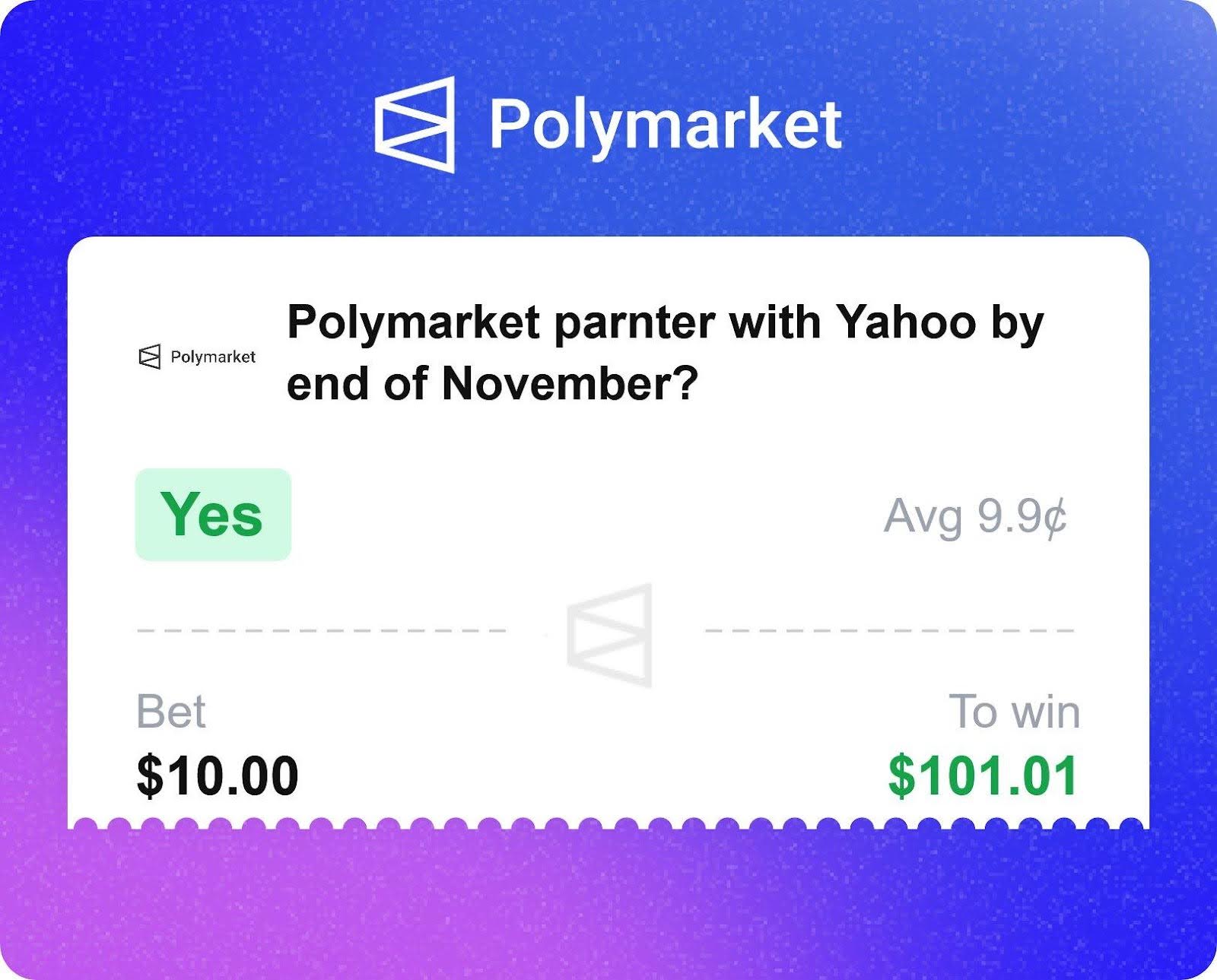
Yahoo Finance Welcomes Polymarket: Exclusive Deal Brings Billions to Mainstream Investors

Yahoo Finance Welcomes Polymarket: Exclusive Deal Brings Billions to Mainstream Investors

Key Takeaways: Polymarket becomes the sole prediction-market provider for Yahoo Finance, integrating live event-odds into Yahoo’s finance platform. Yahoo Finance readers will now access market-driven probabilities tied to macro events, The post Yahoo Finance Welcomes Polymarket: Exclusive Deal Brings Billions to Mainstream Investors appeared first on CryptoNinjas.

Author: Crypto Ninjas