Liquidation

Liquidation occurs when a trader’s collateral is no longer sufficient to cover their leveraged position’s losses, triggering an automated forced closure by the exchange's liquidation engine. It is a critical risk-management mechanism that ensures the solvency of lending protocols and derivative platforms. In 2026, the focus has moved toward MEV-resistant liquidation models that protect users from predatory "cascades." This tag provides essential information on maintenance margins, health factors, and how to avoid liquidation in high-volatility environments.

14192 Articles
Created: 2026/02/02 18:52
Updated: 2026/02/02 18:52

Crypto Liquidations Top $506M as BTC Teases Below $113k: Experts’ Insights on Midterm Expectations

Crypto Liquidations Top $506M as BTC Teases Below $113k: Experts’ Insights on Midterm Expectations

The post Crypto Liquidations Top $506M as BTC Teases Below $113k: Experts’ Insights on Midterm Expectations  appeared first on Coinpedia Fintech News The crypto leveraged market, led by Ethereum (ETH), recorded more than $506 million in net liquidations during the last 24 hours. According to market data analysis from CoinGlass, 143,027 traders were liquidated, with long traders involving more than $430 million compared to $77 million in short traders. The wider crypto market followed major stock indexes …

Author: CoinPedia
Crypto Whale Deposits $2.34M USDC on Hyperliquid to Boost Long Positions

Crypto Whale Deposits $2.34M USDC on Hyperliquid to Boost Long Positions

Crypto onchain activity suggests a crypto whale has placed a huge amount of cryptocurrency into Hyperliquid, once again showing the ongoing relative strength in the top assets. The crypto wallet, which is followed by Onchain Lens, received $2.34 million USDC on Arbitrum in the past 73 minutes.  The whale has further deposited $2.34M $USDC into #Hyperliquid to increase long positions in $BTC, $ETH, and $PUMP.There are still open orders to extend these positions further.https://t.co/uMtaYvQcEG https://t.co/lCoX8XBWOp pic.twitter.com/l8UlOxadSl— Onchain Lens (@OnchainLens) August 19, 2025 This recent step comes after previous deposits of 1 million USDC and 350,000 USDC on the same platform, highlighting the powerful intention to establish leveraged stratifications in long positions. Strategic Positions in BTC, ETH, and PUMP Transaction information indicates that the whale has longed on the positions in Bitcoin (BTC), Ethereum (ETH), and PUMP. Previously, it had reported long position allocation of 25x on ETH, 40x on BTC, and 5x on PUMP.  The newest deposit of 2.34 million brings the whale to a total of above 4.1 million active perpetuals on Hyperliquid. This aggressive exposure highlights the capability of great surety that market dynamics will align to support the vertical inclination of these assets. Crypto Whale Activity Signals Growing Confidence The frequency of deposit implies that the whale is laddering into orders instead of making one bet with a huge sum. The strategy is generally indicative of both risk hedging and of a firm faith in continued price increases.  It is worth mentioning that the activity of the whale has caught the attention of other market players on-chain, and the analysts suppose that the movement of the whale can affect the mood of the entire market.  As Bitcoin and Ethereum continue to hold important market momentum, the whale is moving in the trend of heightened speculation of a possible race. Market Watching for Further Moves Data shows that orders still exist to increase such positions even further. This shows that the whale is not yet done with exposure building. There is already a total of $4.1 million committed to leveraged trades, and so any other inflows would lead to ripples on Hyperliquid order books.  Now, traders are sitting on the edge to view whether the high-leverage trade employed by this whale works, particularly in a turbulent market where the probability of liquidation is high.

Author: Coinstats
Bitcoin Price Analysis: Why Experts Warn BTC Could Drop Below $107K

Bitcoin Price Analysis: Why Experts Warn BTC Could Drop Below $107K

TLDR: Bitcoin trades at $113,449, down 2.52% in 24h, with $40.1B daily volume, per CoinGecko. Short-term holders accumulated Bitcoin above $107K, increasing exposure to deeper losses if price breaks down. Analysts warn $107K breach could trigger heavy liquidations across multiple exchanges from leveraged long positions. Strong support seen near $111K–$112K, but failure to hold could [...] The post Bitcoin Price Analysis: Why Experts Warn BTC Could Drop Below $107K appeared first on Blockonomi.

Author: Blockonomi
Ethereum Price Analysis: ETH Drops 5.77% Amid Coldware’s Scalable RWA Ecosystem Attracting New Buyers

Ethereum Price Analysis: ETH Drops 5.77% Amid Coldware’s Scalable RWA Ecosystem Attracting New Buyers

Ethereum dips 5.77% to $4,350 after $1.7B liquidations, while Coldware’s RWA ecosystem draws buyers eyeing real-world adoption and 100x potential.

Author: Blockchainreporter
South Korea Halts New Crypto Lending, Guidelines in the Works

South Korea Halts New Crypto Lending, Guidelines in the Works

The post South Korea Halts New Crypto Lending, Guidelines in the Works appeared on BitcoinEthereumNews.com. South Korea’s top financial regulator ordered crypto exchanges to suspend new digital asset lending services, citing mounting risks and highlighting a need for clear rules.  The Financial Services Commission (FSC) said on Tuesday that it sent letters to exchanges requesting the suspension of new crypto lending until it completes guidelines. Existing contracts, like repayments and maturity extensions, will be permitted.  On July 31, the FSC and the Financial Supervisory Service (FSS) announced they had formed a joint task force to develop a regulatory framework for crypto lending. The guidelines are expected to cover leverage limits, user eligibility and risk disclosures for virtual asset lending activities.   The FSC said it would conduct on-site inspections and take supervisory action against platforms that failed to comply. Forced liquidations highlight urgent need for clear rules The move follows reports of widespread user losses, including thousands of forced liquidations in exchange-run lending programs. One unidentified exchange drew about 27,600 users in a month after launching a lending service in mid-June, the FSC said. The platform recorded about 1.5 trillion Korean won ($1.1 billion) in volume. Of those users, about 13%, or 3,635 people, suffered forced liquidations as their crypto positions fell in value. The FSC also pointed to two companies that offered Tether (USDT) lending services, which triggered a surge in selling volume and an unusual decline in USDT prices. The agency said continuing new lending operations without safeguards could further damage investor funds. Related: South Korean banks plan won-pegged stablecoin launch by 2026 Crypto lending a gray area in South Korea Since 2020, South Korea has laid foundational regulatory groundwork for virtual asset service providers (VASPs). This includes Anti-Money Laundering (AML) and Travel Rule mandates under the revised Act on Reporting and Using Specified Financial Transaction Information.  In 2023, the country’s Virtual Asset User…

Author: BitcoinEthereumNews
North Korean Hackers’ Alarming $19.5M Crypto Theft Shakes Lykke Exchange

North Korean Hackers’ Alarming $19.5M Crypto Theft Shakes Lykke Exchange

BitcoinWorld North Korean Hackers’ Alarming $19.5M Crypto Theft Shakes Lykke Exchange The cryptocurrency world often buzzes with innovation, but it also faces persistent threats. A recent development has sent ripples through the industry: North Korean hackers are now officially linked to a substantial $19.5 million crypto theft from the UK-based Lykke exchange. This incident underscores the ongoing challenges in securing digital assets against sophisticated cybercriminals. What Happened with the Lykke Exchange Theft? In a significant cybersecurity breach, the notorious North Korean group, Lazarus, has been identified as the perpetrator behind a $19.5 million crypto theft targeting the UK exchange Lykke. The attack occurred in June 2024, leading to the loss of a considerable sum in both Bitcoin (BTC) and Ethereum (ETH). The UK’s Office of Financial Sanctions Implementation (OFSI) confirmed this link, highlighting the persistent threat posed by these state-sponsored actors. Targeted Attack: Lykke exchange fell victim to a highly coordinated cyberattack. Significant Loss: Approximately $19.5 million in BTC and ETH was stolen. Official Confirmation: The UK’s OFSI officially attributed the attack to the Lazarus Group. This incident unfortunately had severe consequences for Lykke. The exchange faced liquidation in March, a direct aftermath of the devastating cyberattack, as reported by The Daily Hodl. It serves as a stark reminder of how a single security breach can unravel an entire operation. How Do North Korean Hackers Launder Stolen Crypto? Following the theft, the stolen Bitcoin and Ethereum embarked on a complex journey through various laundering channels. Understanding these methods is crucial for authorities trying to track and recover funds. The Lazarus Group, like other sophisticated cybercriminals, employs a multi-layered approach to obscure the origins of their illicit gains. Key laundering methods identified in this case include: Thorchain: A decentralized cross-chain liquidity protocol that allows swapping assets without a central intermediary, making transactions harder to trace. No-KYC Exchanges: Platforms that do not require users to undergo ‘Know Your Customer’ verification, providing anonymity to the criminals. OTC Desks: Over-the-counter desks in regions like China, Cambodia, and Russia facilitate large, private transactions, often bypassing traditional regulatory scrutiny. These methods allow North Korean hackers to convert stolen digital assets into fiat currency or other untraceable assets, funding their illicit activities, including weapons programs. Protecting Your Assets from Cyber Threats The Lykke incident involving North Korean hackers serves as a critical warning for both cryptocurrency exchanges and individual users. While exchanges must invest heavily in robust security infrastructure, users also play a vital role in safeguarding their digital wealth. Implementing strong security practices is no longer optional; it is essential. For exchanges, this means: Multi-layered Security: Implementing advanced encryption, multi-factor authentication, and cold storage solutions. Regular Audits: Conducting frequent security audits and penetration testing to identify vulnerabilities. Incident Response Plans: Having clear, actionable plans for responding to and mitigating cyberattacks. For individual crypto holders, consider these actionable insights: Use Hardware Wallets: Store significant amounts of crypto offline in hardware wallets. Enable 2FA: Always use two-factor authentication on all exchange accounts. Be Skeptical: Be wary of phishing attempts and suspicious links. Strong Passwords: Use unique, complex passwords for each platform. The persistent threat from groups like the Lazarus Group highlights the need for continuous vigilance and adaptation in the face of evolving cybercrime tactics. The crypto community must unite to enhance security protocols and share intelligence to counter these sophisticated threats effectively. This collective effort is crucial for the long-term integrity and trust in the digital asset space. FAQs Q1: Who are the Lazarus Group?A1: The Lazarus Group is a state-sponsored cybercrime organization believed to be operated by North Korea. They are notorious for high-profile cyberattacks, particularly targeting financial institutions and cryptocurrency exchanges globally. Q2: How much was stolen from Lykke exchange?A2: Approximately $19.5 million in cryptocurrency, specifically Bitcoin (BTC) and Ethereum (ETH), was stolen from the Lykke exchange. Q3: What happened to Lykke exchange after the attack?A3: Lykke exchange was unfortunately liquidated in March, following the devastating impact of the June 2024 cyberattack attributed to North Korean hackers. Q4: How do hackers like Lazarus Group launder stolen crypto?A4: They use various methods including decentralized exchanges like Thorchain, no-KYC (Know Your Customer) exchanges to maintain anonymity, and over-the-counter (OTC) desks in countries like China, Cambodia, and Russia to convert crypto into fiat currency. Q5: What can users do to protect their crypto from such attacks?A5: Users should use hardware wallets for cold storage, enable two-factor authentication (2FA), use strong, unique passwords, and be highly vigilant against phishing attempts and suspicious links. If you found this article insightful, please consider sharing it with your network on social media. Spreading awareness about these threats helps protect our community. To learn more about the latest crypto market trends, explore our article on key developments shaping Bitcoin price action. This post North Korean Hackers’ Alarming $19.5M Crypto Theft Shakes Lykke Exchange first appeared on BitcoinWorld and is written by Editorial Team

Author: Coinstats
Shiba Inu Burn Rate Plunges 98% as SHIB Price Loses 20-Day Support

Shiba Inu Burn Rate Plunges 98% as SHIB Price Loses 20-Day Support

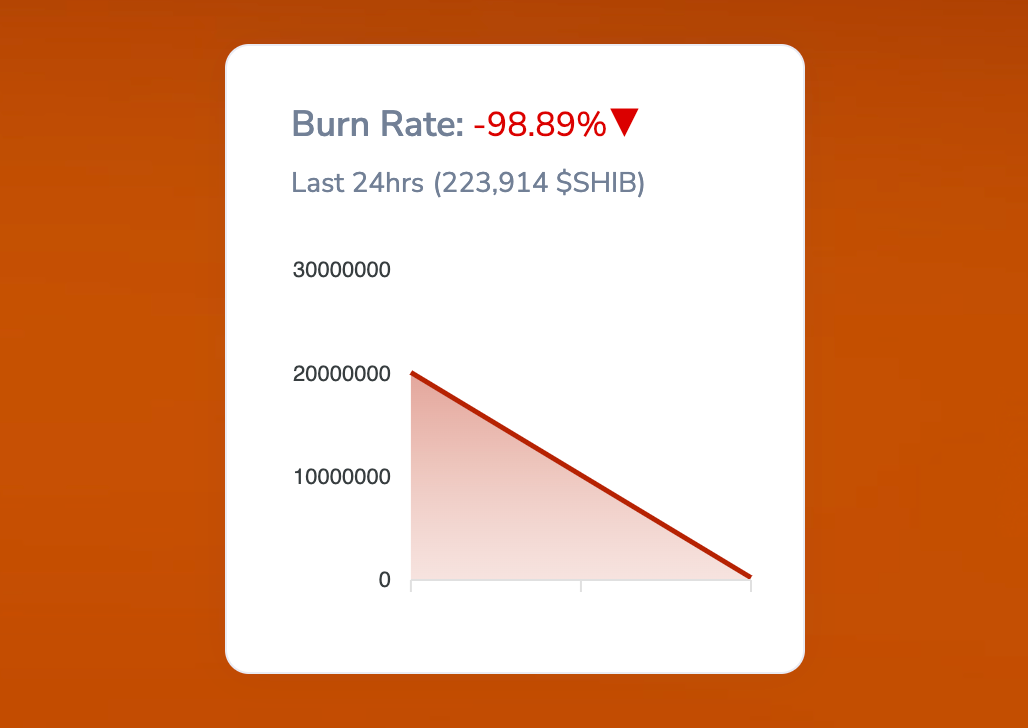
Shiba Inu SHIB $0.000012 24h volatility: 5.2% Market cap: $7.13 B Vol. 24h: $223.28 M price shed another 4% on Tuesday, extending its two-day decline to 6% and falling to $0.000012 for the first time in 13 days. As the largest Ethereum-based memecoin, SHIB’s performance is closely tied to sentiment surrounding Ethereum. The 6% SHIB price drop comes as ETH ETFs entered $255 million in sell-offs, impacting liquidity and weakening sentiment across the broader Ethereum ecosystem. Further emphasizing this bearish narrative, Shiba Inu’s on-chain activity slumped sharply on Tuesday. Official data from the Shibburn analytics tool showed that the burn rate plunged 98.89% in the last 24 hours, with only 223,914 SHIB removed from circulation. Shiba Inu Burn Rate, Aug. 19, 2025 | Source: Shibburn.com Unscheduled token burns occur as part of on-chain transactions and serve to reduce supply over time. Beyond that, they are also viewed as a barometer for tracking economic activity on a blockchain network. The 98% decline in Shiba Inu burn rate signals reduced market participation, suggesting traders are moving to the sidelines amid uncertain conditions. With fewer tokens being destroyed, the deflationary pressure on SHIB weakens, leaving the asset more exposed to risks of further downswings. Shiba Inu Price vs Trading Volume | Source: CoinMarketCap, Aug. 19, 2025 On Tuesday, this lack of activity appeared to reinforce downward pressure, contributing to the intraday losses as SHIB spot trading volumes also fell to $206 million at press time, down 50% from last week’s peaks of $418 million recorded on Aug. 14, according to CoinMarketCap data. Shiba Inu Price Forecast: Technical Risks Mount Below 20-Day Average Shiba Inu entered Tuesday’s session trading under visible bearish pressure. Trading at $0.00001224, SHIB has now slipped beneath the 20-day moving average, a critical support level for short-term traders. A glance at the chart below shows momentum indicators leaning bearish, with the MACD line extending below the signal line and red candles dominating recent sessions. Shiba Inu Price Forecast This technical setup raises the likelihood of forced liquidations if selling pressure accelerates. For short-term SHIB price projections, bears may eye a rapid push toward the nearest support cluster at $0.00001164, aligning with the lower Bollinger Band. A further breach could drag SHIB toward the local low at $0.00001100, last seen in late July. On the upside, bulls must reclaim the 20-day average at $0.000013 to restore confidence. A sustained move above that level could set the stage for a test of $0.000015, where the upper Bollinger Band capped last week’s gains. Until then, the prevailing sentiment remains bearish, reflecting broader Ethereum ecosystem headwinds and declining SHIB burn activity. Maxi Doge Presale Gains Momentum Amid Shiba Inu Price Correction While Shiba Inu grapples with declining on-chain activity, newly launched memecoins like Maxi Doge are capturing traders’ attention. Promoted as a high-leverage community token, Maxi Doge offers trading at 1000x leverage with no stop-loss, amplifying both risk and upside appeal. Maxi Doge Presale The presale, currently priced at $0.000253 per token, has already raised more than $1.27 million against a target of $1.53 million. Beyond presale demand, Maxi Doge emphasizes utility through staking pools with daily smart contract payouts, competitive contests rewarding top traders, and partnerships designed to integrate the token into futures platforms and gamified events. The countdown timer indicates just two days before the next price increase. Visit the official Maxi Doge website to get in early. nextThe post Shiba Inu Burn Rate Plunges 98% as SHIB Price Loses 20-Day Support appeared first on Coinspeaker.

Author: Coinstats
Solana Surges 4% Weekly, Will $181 Support Trigger Breakout?

Solana Surges 4% Weekly, Will $181 Support Trigger Breakout?

The post Solana Surges 4% Weekly, Will $181 Support Trigger Breakout? appeared on BitcoinEthereumNews.com. Key Insights Solana holds $182 support as traders watch for rebound toward $188–$192 or drop below $176. Recent liquidations cleared leveraged longs, reducing risk and leaving market conditions cleaner for SOL’s next move. $181–$182 remains Solana’s critical level, likely deciding whether price continues upward or breaks lower. Solana Surges 4% Weekly, Will $181 Support Trigger Breakout? Solana (SOL) is currently trading near $182, supported by a 24-hour trading volume of $5.15 billion. The token has gained 1% in the past day and is up 3.81% over the past week. Despite this modest growth, the chart shows that SOL has been consolidating after a sharp pullback from its recent highs. Earlier this week, the price tested levels above $200 before facing strong selling pressure that pushed it back toward the $182 region. The $182 level has now become an important short-term support, with buyers stepping in multiple times to keep the market from dropping further. Support Levels Define Market Action Analyst TraderSZ commented, “$SOL support,” referring to the importance of this current range. The $182 zone has acted as a pivot, preventing deeper losses and giving traders a level to watch for potential rebounds. If SOL manages to hold above this support, the next upside targets could be between $188 and $192. However, a decisive break below $182 would leave the door open for further declines. In that case, traders may look toward the $176–$172 area as the next possible downside zone. Market participants are watching closely to see if Solana can maintain its footing around current prices or if more selling pressure will emerge. Source: TraderSZ Long Position Liquidations Reshape the Market A separate view comes from CW, who shared a liquidation heatmap showing how leveraged long positions in SOL were recently flushed out. The sharp decline from $195 to…

Author: BitcoinEthereumNews
Ripple Moves 200M XRP, Igniting Theories of Strategic Liquidation

Ripple Moves 200M XRP, Igniting Theories of Strategic Liquidation

TLDR Ripple transferred 200 million XRP, valued at approximately $606 million, to an unknown wallet. The transaction sparked speculation within the XRP community about its purpose and potential impact. The sending wallet address began with “rBg2FuZT91C52Nny6” and the receiving wallet with “rJqiMb94hyz41SBTN.” Ripple has issued no official statement regarding the reason behind the large transfer. [...] The post Ripple Moves 200M XRP, Igniting Theories of Strategic Liquidation appeared first on CoinCentral.

Author: Coincentral
Cryptocurrencies, 92 out of 100 in red: the market holds its breath for Powell’s speech at Jackson Hole

Cryptocurrencies, 92 out of 100 in red: the market holds its breath for Powell’s speech at Jackson Hole

The crypto sector turns negative: 92 of the top 100 tokens close down as traders reduce risk.

Author: The Cryptonomist