Lending

Lending protocols form the backbone of the decentralized money market, allowing users to lend or borrow digital assets without intermediaries. Using smart contracts, platforms like Aave and Morpho automate interest rates based on supply and demand while requiring over-collateralization for security. The 2026 lending landscape features advanced permissionless vaults and institutional-grade credit lines. This tag covers the evolution of capital efficiency, liquidations, and the integration of diverse collateral types, including LSTs and tokenized RWAs.

16179 Articles
Created: 2026/02/02 18:52
Updated: 2026/02/02 18:52

Peter Schiff Challenges Trump to Economics Debate After Being Called a 'Loser'

Peter Schiff Challenges Trump to Economics Debate After Being Called a 'Loser'

Prominent gold advocate and Bitcoin critic Peter Schiff has issued a public challenge to former President Donald Trump for a debate on economics, following Trump's recent jab labeling him a "loser." This escalating feud highlights the ongoing clash between traditional finance proponents and crypto enthusiasts, potentially drawing attention to Bitcoin's role in economic policy.

Author: MEXC NEWS
Mobile-first approach: The path for banks as Crypto products

Mobile-first approach: The path for banks as Crypto products

Author: Zuo Ye In the West, finance is a means of social mobilization, and it can only be effective when the "state-society" is separated or even opposed. However, in large Eastern countries where the state and family are structurally similar, social mobilization relies on water conservancy projects and governance capabilities. We'll begin here by recounting the phenomenon I've observed: after a decade of hasty Ethereum + dApp narratives, DeFi has shifted its focus to the Apple Store's Consumer DeFi mobile app competition. Compared to exchanges and wallets that were listed on major app stores early on, DeFi, which has always been based on web platforms, arrived very late. Compared to virtual wallets and digital banks that target niche markets of low-income and credit-poor individuals, DeFi, which cannot solve the credit system problem, arrived too early. Amid this dilemma, there is even a narrative of human society transitioning from monetary banking to fiscal monetary policy. The Ministry of Finance regains control of the currency. The Times 03/Jan/2009 Chancellor on brink of second bailout for banks. Consumer-grade DeFi takes Aave and Coinbase's built-in Morpho as its entry point, directly targeting end users. However, our story must begin with the issuance process of modern currencies to complete the background of DeFi Apps surpassing DeFi dApps. Gold and silver are not naturally currency. When humans need to exchange on a large scale, commodities emerge as a general equivalent. Due to their various characteristics, gold and silver were eventually accepted by the entire human society. Throughout human societies before the Industrial Revolution, regardless of political system or level of development, metal coinage was the mainstream, and the monetary system was essentially managed by the finance department. The "central bank-bank" system we are familiar with is actually a very recent story. In the early days, developed countries generally followed the process of establishing a central bank to handle banking crises when necessary, including the Federal Reserve, which we are most familiar with. Throughout this historical process, the finance department, as an administrative branch, has been in an awkward position of diminishing power. However, the "central bank-bank" system is not without its flaws. In the central bank's management of banks, banks rely on the interest rate spread between deposits and loans to earn profits, while the central bank influences banks through the reserve requirement ratio. Image caption: The role of the interest rate spread and the reserve requirement ratio. Image source: @zuoyeweb3 Of course, this is a simplified and outdated version. The simplification omits the process of the money multiplier. Banks do not need to have 100% reserves to issue loans, hence the leverage effect. The central bank will not force banks to have full reserves; instead, it needs to use leverage to adjust the money supply of the entire society. The only ones who suffer are the users. Deposits outside of reserves lack a rigid guarantee of redemption. When neither the central bank nor the banks are willing to pay the price, the users become the necessary cost of money supply and withdrawal. Outdated means that banks no longer fully accept the central bank's command. The most typical example is Japan after the Plaza Accord, which effectively launched QE/QQE (officially known as quantitative easing, commonly known as excessive money printing). Under the command of extremely low or even negative interest rates, banks cannot benefit from the interest rate spread between deposits and loans, and banks will choose to lie flat. Therefore, central banks will directly intervene to buy assets, thereby bypassing banks to supply money. This is exemplified by the Federal Reserve buying bonds and the Bank of Japan buying stocks. The entire system is becoming increasingly rigid, causing the most important clearing ability of the economic cycle to completely fail: Japan's huge zombie companies, the TBTF (Too Big to Fall) Wall Street financial giants formed after 2008 in the United States, and the emergency intervention after the collapse of Silicon Valley Bank in 2023. What does all this have to do with cryptocurrency? The 2008 financial crisis directly spurred the creation of Bitcoin, and the collapse of Silicon Valley Bank in 2023 directly triggered a wave of opposition to CBDCs (Central Bank Digital Currencies) in the United States. In a House vote in May 2024, Republicans unanimously voted against developing CBDCs and instead supported private stablecoins. The latter logic is somewhat convoluted. We might think that after Silicon Valley Bank, as a crypto-friendly bank, collapsed and even caused a significant decoupling of USDC, the United States should turn to supporting CBDC. However, in reality, the Federal Reserve's dollar stablecoin or CBDC has formed a de facto confrontation with the US Treasury stablecoin led by the executive branch and Congress. The Federal Reserve itself originated from the chaos and crisis of the post-"free dollar" system in 1907. After its establishment in 1913, it was an odd situation of "gold reserves + private banks" coexisting. At that time, gold was directly managed by the Federal Reserve until 1934 when its management was transferred to the Treasury Department. Before the collapse of the Bretton Woods system, gold was always the reserve asset of the US dollar. However, after the Bretton Woods system, the US dollar is essentially a fiat currency, or a stablecoin based on US Treasury bonds. This conflicts with the Treasury Department's position. From the public's perspective, the US dollar and US Treasury bonds are two sides of the same coin, but from the Treasury Department's perspective, US Treasury bonds are the true form of the US dollar, and the Federal Reserve's private nature is interfering with national interests. Returning to cryptocurrencies, especially stablecoins, those based on US Treasury bonds grant the Treasury and other administrative departments the power to issue currency outside the Federal Reserve. This is why Congress cooperates with the government to ban the issuance of CBDCs. Only by looking at it from this perspective can we understand the appeal of Bitcoin to Trump. Family interests are just a pretext. The fact that the entire administrative system can accept Bitcoin only shows that the pricing power of crypto assets is profitable for them. Image caption: Changes in USDT/USDC reserves Image source: @IMFNews The underlying assets of today's mainstream USD stablecoins are nothing more than USD cash, US Treasury bonds, BTC/ETH and other interest-bearing bonds (corporate bonds). However, in reality, USDT/USDC are reducing the proportion of USD cash and shifting significantly to US Treasury bonds. This is not a short-term move under the interest-earning strategy, but rather a coordination with the shift from USD stablecoins to US Treasury stablecoins. The internationalization of USDT is nothing more than buying more gold. The future stablecoin market will only be a three-way competition between US Treasury stablecoins, gold stablecoins, and BTC/ETH stablecoins. There won't be a direct confrontation between US dollar stablecoins and non-US dollar stablecoins. Surely no one truly believes that euro stablecoins will become mainstream! By using stablecoins based on US Treasury bonds, the Treasury regained the power to issue currency, but stablecoins cannot directly replace the money multiplier or leverage issuance mechanisms of banks. Treating banks as DeFi products Physics has never truly existed, and neither has the commodity attribute of money. In theory, the historical mission of the Federal Reserve should have ended after the collapse of the Bretton Woods system, just like the First and Second United States Banks. Therefore, the Federal Reserve has continued to play a role in regulating prices and stabilizing financial markets. As mentioned earlier, under the background of inflation, the central bank can no longer influence the money supply through the reserve requirement ratio. Instead, it directly intervenes to purchase asset packages. This leverage mechanism is not only inefficient, but also unable to clear out inferior assets. The progress and crisis of DeFi are giving us another option. Allowing crises to exist and occur is itself a clearing mechanism at work, forming a framework where the "invisible hand" (DeFi) is responsible for the leverage cycle and the "visible hand" (US Treasury stablecoins) is responsible for the underlying stability. In short, on-chain assets are actually beneficial to regulation, as information technology can penetrate the web of ignorance. In terms of specific implementation methods, Aave builds its own C-end App to directly connect with users, Morpho uses Coinbase to adopt a B2B2C model, and Spark in the Sky ecosystem abandons the mobile terminal and focuses on serving institutional clients. The specific mechanisms of the three can be further subdivided. Aave is a combination of end-users + institutional clients (Horizon) + official risk control. Morpho is a combination of risk control by the administrator + front-end outsourcing to Coinbase. Spark itself is a sub-DAO of Sky and is derived from a fork of Aave. It mainly targets institutions and the on-chain market, which can be understood as temporarily avoiding Aave's dominance. Sky is unique in that it is an on-chain stablecoin issuer (DAI->USDS) that hopes to expand its scope of use. It is fundamentally different from Aave and Morpho. Pure lending protocols need to remain sufficiently open to attract various assets, so Aave's GHO is unlikely to have a future. Sky needs to strike a balance between USDS and lending openness. After Aave voted against USDS as a reserve asset, people were surprised to find that Sky's own Spark also didn't really support USDS, while Spark was embracing PYUSD issued by PayPal. Although Sky hopes to balance the two by setting up different sub-DAOs, this inherent conflict between stablecoin issuers and open lending protocols will accompany Sky's development for a long time. In contrast, Ethena acted decisively, partnering with Hyperliquid's front-end product, Based, to promote the HYPE/USDe spot trading pair and offer rebates. Ethena directly embraced the existing ecosystem, such as Hyperliquid, temporarily abandoning the need to build its own ecosystem and public chain, and focusing on its role as a single stablecoin issuer. Currently, Aave is the closest to a fully-featured DeFi app and is a near-bank-level product. Starting from the wealth management/yield sector, it directly reaches end users and hopes to use its brand and risk control experience to migrate traditional mainstream customers to the blockchain. Morpho, on the other hand, hopes to learn from the USDC model, link itself with Coinbase to amplify its intermediary role, and facilitate deeper cooperation between more fund managers and Coinbase. Image caption: Morpho and Coinbase partnership model Image source: @Morpho Morpho represents another extreme open approach: USDC + Morpho + Base => Coinbase. Behind the $1 billion loan amount lies the heavy responsibility of challenging USDT and blocking USDe/USDS through the Yield product. Coinbase is the biggest beneficiary of USDC. What does all this have to do with US Treasury stablecoins? For the first time, the central role of banks has been bypassed in the entire process of generating stablecoin on-chain revenue and acquiring off-chain customers. This does not mean that banks are not needed, but rather that banks are increasingly becoming intermediaries for deposits and withdrawals. Although on-chain DeFi cannot solve the problem of the credit system, and there are many issues such as the capital efficiency of over-collateralization and the risk control capabilities of the manager's vault. However, permissionless DeFi stacks can indeed play a role in leverage cycles, and the collapse of a manager's vault can indeed serve as a market clearing mechanism. Under the traditional "central bank-bank" system, third-party or fourth-party clients such as payment providers, or powerful large banks, are all susceptible to secondary clearing, which can impair the central bank's ability to conduct thorough management and lead to misjudgments of the economic system. In the modern "stablecoin-lending protocol" system, no matter how many times a loan is revolved or how great the risk of the manager's vault is, it can be quantified and transparent. The only thing to be careful about is not trying to introduce more trust assumptions, such as off-chain negotiation and early intervention by lawyers, as this will lead to low efficiency in the use of funds. In other words, DeFi will not defeat banks through permissionless regulatory arbitrage, but rather through capital efficiency. More than a century after central banks established their control over currency issuance, the Treasury system is for the first time bypassing its entanglement with gold and reconsidering regaining control of the currency system. DeFi will also bear the heavy responsibility of re-issuing new currencies and clearing out assets. There will no longer be a distinction between M0/M1/M2; there will only be a distinction between US Treasury stablecoins and DeFi utilization rates. Conclusion Crypto sends its greetings to all its friends, hoping they will witness a spectacular bull market after a long bear market, while the overly impatient banking industry will be the first to go. The Federal Reserve's attempt to set up Skinny Master Accounts for stablecoin issuers and the OCC's efforts to quell banks' concerns about stablecoins poaching deposits are all actions driven by banking anxiety and regulatory self-preservation measures. Let's consider the most extreme scenario: if 100% of US Treasury bonds were minted into stablecoins, if 100% of the yield from these stablecoins were distributed to users, and if 100% of the yield was invested in US Treasury bonds by users, would MMT become a reality or fail completely? Perhaps this is the significance of Crypto: in the current era of AI, we need to rethink economics by following in Satoshi Nakamoto's footsteps and try to depict the real-world significance of cryptocurrencies, rather than blindly following Vitalik's lead.

Author: PANews
Funding Weekly Report | 18 publicly disclosed funding events; Canton Network developer completes $50 million funding round with participation from BNY Mellon and Nasdaq.

Funding Weekly Report | 18 publicly disclosed funding events; Canton Network developer completes $50 million funding round with participation from BNY Mellon and Nasdaq.

Highlights of this episode According to incomplete statistics from PANews, there were 18 investment and financing events in the global blockchain sector last week (December 1-7), with a total funding scale exceeding US$344 million. An overview is as follows: In the DeFi sector, seven investment and financing events were announced, including decentralized exchange Ostium completing a $20 million Series A funding round led by Jump Trading and others. Two investment and financing events were announced in the Web3+AI sector, with the decentralized AI network DeepNode raising a total of $5 million in two rounds of financing. The infrastructure & tools sector announced three investment and financing events, including Antithesis, a testing tool used on the Ethereum network, which completed a $105 million Series A funding round led by Jane Street. Three investment and financing events were announced in the centralized finance sector, including stablecoin application Fin completing a $17 million financing round led by Pantera Capital; In the area of other Web3 applications, three investment and financing events were announced, including prediction market Opinion, which revealed that it has completed a new round of financing of tens of millions of US dollars. In addition, two publicly traded companies have completed financing rounds for their crypto treasury strategies: Lion Group signed a $10 million private placement agreement, allocating $8 million to purchase BTC. DeFi Decentralized exchange Ostium completes $20 million Series A funding round, led by Jump Trading and others. Ostium, a decentralized exchange founded by Harvard graduates, has raised $20 million in Series A funding, valuing the company at approximately $250 million post-money. The round was led by General Catalyst and Jump Trading, with participation from Coinbase Ventures, Wintermute, and GSR. Ostium had previously raised approximately $8 million in total. The platform focuses on perpetual contract trading for real-world assets such as commodities and stocks, aiming to provide overseas investors outside the US with transparent and efficient exposure to the US market. The co-founder and CEO stated that their goal is not to directly compete with crypto-native perpetual contract protocols like Hyperliquid, but rather to challenge traditional online brokers like Robinhood and eToro. The Ostium team currently has 15 employees, and this funding will be used to expand into the non-crypto user market. Their product logic targets the pain points of system opacity and technological lag faced by overseas investors accessing the US market through traditional brokers. DeFi protocol Zoo Finance has completed an $8 million strategic funding round, aiming to unlock liquidity from locked tokens. Zoo Finance, a DeFi protocol focused on unlocking liquidity from locked tokens, announced the completion of an $8 million strategic funding round. Zoo Finance's core product is its pioneering LVT (Liquidity Locked Token) & LNT (Liquidity Node Token) protocol. This protocol transforms locked vested tokens into tradable digital assets by splitting them into VT (Valuable Valuable Token) and YT (Yield Token). This innovation enables on-chain over-the-counter trading of SAFT tokens and node holders, creating new opportunities for future yield trading of tokens. This strategic funding round was led by Bitrise Capital, with participation from Signum Capital, Certik Ventures, TOP, CGV Funds, and Cryptomeria. This brings Zoo Finance's total funding to $10 million. Previous investors include CMS Holdings, Big Brain Holdings, DefinitionX, Pragma Ventures, HG Ventures, YBB Capital, 0xVentures, and Aquarius Financials. On-chain revenue protocol Axis raises $5 million, led by Galaxy Ventures. On-chain revenue protocol Axis has completed a $5 million private funding round, led by Galaxy Ventures, with participation from OKX Ventures, FalconX, GSR, Maven 11, CMS Holdings, and Marc Zeller, founder of the Aave Chan Initiative. The round was oversubscribed four times. The project aims to bring market-neutral strategies on-chain, and its closed beta phase has already deployed $100 million in capital, achieving a strategy Sharpe ratio of 4.9. Axis offers uncorrelated returns across different assets such as the US dollar, Bitcoin, and gold through a multi-asset yield hub. Its first US dollar-pegged asset, USDx, generates returns using an arbitrage engine, with plans to expand to Bitcoin and gold assets later. The protocol will be deployed on Plasma, a dedicated stablecoin chain supported by Bitfinex, to reduce operating costs and will integrate infrastructure such as Chainlink proof-of-reserve and Veda custody. The team stated that it plans to launch its first Origin Vault this year, aiming to raise up to $1 billion in deposits before a public token sale and full protocol launch in early 2026. On-chain yield platform Altura completes $4 million funding round On-chain yield platform Altura has raised $4 million in funding, led by Ascension, with participation from European private equity firms Moonfare and InnoFinCon. The platform aims to provide transparent, risk-controlled, and stable on-chain returns for both individual users and institutions through professional quantitative strategies. Altura employs a single-chain vault structure and generates returns through market-neutral strategies such as capturing cross-exchange price spreads, obtaining funding rates for hedging positions, and allocating interest-bearing assets, targeting an annualized return of 20%-30% in normal market conditions. LayerBank, an on-chain money market platform, has completed a $2.3 million Pre-Seed funding round. LayerBank has announced the completion of a $2.3 million Pre-Seed funding round. Investors in this round include Torab Torabi, CEO of Move Industries, Coin Bureau Chinese, DVchain, Taiko, Rootstock, and several angel investors and ecosystem contributors. The new funds will be used to advance the development and launch of its native token, ULAB, which is designed to form the basis of the platform's long-term value capture and incentive model. LayerBank plans to hold its Token Generation Event (TGE) on the Movement Network. LayerBank is a universal liquidity and on-chain money market, currently supporting over 150 markets across more than 17 chains, aiming to provide lending and yield strategies through a unified chain abstraction experience. Haiku raises $1 million in pre-seed funding to simplify DeFi execution processes. Decentralized trading infrastructure project Haiku has completed a $1 million Pre-Seed funding round led by Big Brain Holdings, with participation from Auros, Frostlight, Daedalus Syndicate, and Biconomy CEO Ahmed Al-Balaghi. Haiku proposes a "declarative trading" model that allows users to define target states and have the system automatically execute complex strategies. It supports 20 chains and 45+ protocols, aiming to drive DeFi from cumbersome operations to one-click execution. RWA platform OpenEden completes strategic financing round, with Ripple, FalconX, and others participating in the investment. OpenEden, a tokenization platform for RWA (Real-World Assets), announced the completion of a strategic financing round, with investors including Ripple, Lightspeed Faction, and Gate Ventures. This round of funding will be used to expand its RWA tokenization service platform and to advance the scaling of its regulated yield-generating stablecoin USDO and its tokenized US Treasury bond fund TBILL. OpenEden founder and CEO Jeremy Ng stated that this financing will help them provide compliant products that meet both traditional and decentralized finance standards. The RWA tokenization market is projected to double in size by 2025, and OpenEden's TBILL fund has become a top choice for institutional investors, with its assets under management growing more than tenfold in two years. This round of funding will also support US... AI DeepNode, a decentralized AI network, has raised a total of $5 million in two funding rounds. Decentralized AI network DeepNode has raised a total of $5 million in two funding rounds: a $2 million seed round valuing the company at $25 million, followed by a $3 million strategic round valuing it at $75 million. DeepNode's seed round saw participation from community members and support from key network validators, including WildSageLabs from RoundTable21, Rizzo from DNA, and infrastructure partner Gateway.FM. The strategic round was led by a consortium of Web3 and AI infrastructure investors, including Blockchain Founders Fund, Side Door Ventures, TBV, IOBC Capital, Fomo Ventures, and Nestoris. TrueNorth, a dedicated AI platform for the financial sector, has raised $3 million in Pre-Seed funding, led by CyberFund. TrueNorth, an AI platform focused on the financial sector, has raised $3 million in Pre-Seed funding. The round was led by CyberFund, with participation from Delphi Labs, SNZ, GSR, and Ocular. The funds will be used to develop a "financial intelligent inference layer," a type of artificial intelligence specifically designed for the financial sector that does not produce illusions when money is involved. TrueNorth is dedicated to building AI infrastructure specifically for the financial sector, aiming to address the illusions and delays encountered by general-purpose models in financial decision-making through domain-specific AI. Currently, the platform has over 40,000 users on its waiting list. Leveraging structured manuals, real-time data fusion, and proprietary models trained specifically for market logic, the platform transforms the expertise of elite traders into AI agents. Infrastructure & Tools Antithesis, a testing tool used on the Ethereum network, has raised $105 million in Series A funding, led by Jane Street. Antithesis, a startup focused on distributed system stress testing, has raised $105 million in Series A funding. The round was led by Jane Street, with participation from Amplify Venture Partners, Spark Capital, Tamarak Global, First In Ventures, Teamworthy Ventures, and Hyperion Capital, as well as individual investors including Patrick Collison, Dwarkesh Patel, and Sholto Douglas. The new funds will be used to expand the engineering team, increase automation, and develop global market channels. According to reports, the company employs deterministic simulation testing technology to provide production-level fault simulation services for blockchain and financial systems. The Antithesis platform can simulate real-world network environments on a large scale, accurately reproducing edge case failures and helping engineers locate system vulnerabilities that are difficult to reproduce through traditional debugging methods. The company revealed that the Ethereum network used its services to simulate extreme scenarios before its "merge" upgrade, and its clients currently cover the financial, AI, and blockchain sectors, with revenue growing more than 12 times in the past two years. Digital Asset Holdings has raised $50 million in funding, with participation from BNY Mellon and Nasdaq. Digital Asset Holdings LLC, a financial blockchain company, has completed a new $50 million funding round, with investors including BNY Mellon, Nasdaq Inc., S&P Global, and iCapital. Earlier this year, the company completed a $135 million funding round led by DRW Venture Capital and Tradeweb Markets, with participation from Citadel Securities, IMC, Optiver, and others. Digital Asset Holdings is known for developing the public blockchain Canton Network, which supports asset tokenization and processes financial transactions, allowing users to determine the scope of information confidentiality. Several institutions, including Goldman Sachs and Tradeweb Markets, have used or participated in managing the Canton Network. Portal to Bitcoin, a native Bitcoin interoperability protocol, has raised $25 million in funding, led by JTSA Global. Portal to Bitcoin, a native Bitcoin interoperability protocol, announced the completion of a $25 million funding round led by JTSA Global, with participation from Coinbase Ventures, OKX Ventures, Arrington Capital, and others. Alongside the new funding, the company launched an atomic over-the-counter (OTC) trading platform, promising "instant, trustless cross-chain settlement for large transactions." The protocol focuses on providing institutions and large investors with a Bitcoin-pegged cross-chain OTC market. It utilizes Hash Time Locked Contracts (HTLCs) across multiple chains and Bitcoin Taproot contracts to enable the exchange of native Bitcoin with native assets on integrated blockchains in a non-custodial manner, emphasizing the reduction of trust assumptions in transactions. DAT (These types of transactions are not included in this week's financing report statistics) Lion Group has signed a $10 million private placement agreement, allocating $8 million to purchase BTC. Lion Group Holding Ltd. (NASDAQ: LGHL), a U.S.-listed company, announced the signing of an amendment to its securities purchase agreement to raise $9.984 million through convertible bond financing. The company plans to use $8 million of the net proceeds to purchase Bitcoin (BTC) as corporate reserves. UK-listed company Hamak Strategy has raised £2.5 million to support Bitcoin purchases and gold exploration. UK-listed Hamak Strategy has completed a £2.5 million funding round, with the funds to support its Bitcoin Treasury strategy and gold exploration in Africa. This follows news on July 30th that UK-listed Hamak Gold purchased its first batch of 20 Bitcoins. On October 15th, it was announced that Hamak Strategy had secured £35 million in funding to support its investments in gold and Bitcoin. Centralized Finance N3XT, founded by the former founder of Signature Bank, raised a total of $72 million in three rounds of funding. N3XT, a blockchain-based bank founded by a former Signature Bank executive, has completed three rounds of funding, raising a total of $72 million, with the most recent round completed in October. The company has received backing from several venture capital firms, including Paradigm, HACK VC, and Winklevoss Capital. N3XT was founded by Scott Shay, founder and former chairman of Signature Bank. Jeffrey Wallis, formerly head of digital asset and Web3 strategy at Signature Bank, serves as N3XT's CEO. Stablecoin app Fin raises $17 million, led by Pantera Capital. Fin, a stablecoin app founded by former Citadel employees, announced the completion of a $17 million funding round led by Pantera Capital, with participation from Sequoia and Samsung Next. The app aims to provide cross-border and large-value payment services using stablecoin technology, enabling fast global transfers without complex operations. Its design allows users to transfer funds to other Fin users, bank accounts, or cryptocurrency wallets, and claims that transaction fees will be significantly lower than traditional banking channels. Fin primarily targets large-value cross-border or domestic transfers, such as addressing payment efficiency issues in import and export trade. The app is not yet officially launched but plans to begin a pilot program between import and export companies next month. The company's profits will come from transaction fees and stablecoin reserve interest. French crypto savings platform Bitstack raises $15 million in Series A funding, led by 13books Capital. French crypto savings platform Bitstack announced the completion of a $15 million Series A funding round, led by 13books Capital, with participation from AG2R LA MONDIALE, Plug and Play Ventures, Serena, Stillmark, and Y Combinator. The company claims to have over 300,000 active users in France, with accumulated savings exceeding €300 million in Bitcoin, and revenue growing tenfold in two years. It has obtained a MiCA license from the French AMF and operates in multiple European countries. The company will accelerate the launch of its VISA debit card "Stackback" rewards and Euro accounts (including French IBANs), with card testing scheduled to begin on January 13, 2026, for 5,000 eligible users. other Predicting the market: Opinion revealed at the BBW event that it has completed a new round of financing worth tens of millions of US dollars. At an event co-hosted by Opinion, Aster, and WLFI at BBW, the Opinion team announced that it has recently secured tens of millions of dollars in funding. This funding will be used to advance the development of its prediction market ecosystem based on the BNB Chain, its user growth plans, and its infrastructure. Gondor, a prediction market DeFi layer, has raised $2.5 million in funding and will launch its beta version next week. Gondor, a prediction market DeFi layer, announced the completion of a $2.5 million funding round. It will launch a beta version next week, which will support lending using Polymarket holdings as collateral and trading with 2x leverage. Later, it will expand the leverage to 4-5x through cross-margining. DePIN: Web3 robotics company XMAQUINA has completed a new round of funding, led by Borderless. Web3 robotics company XMAQUINA announced the completion of its latest funding round, led by Borderless Capital, with participation from Waterdrip Capital, vVv, and Clairvoyant Labs, as well as strategic angel investors from Arkstream Capital, LD Capital, and KuCoin Ventures. All investors participated in the third wave of the Genesis Auction on the same terms as the general public. Other notable participants in previous auctions include Moonrock Capital, MH Ventures, Fundamental Labs, Generative Ventures, and Mulana Capital.

Author: PANews
Key Projects Showing Momentum Into 2026

Key Projects Showing Momentum Into 2026

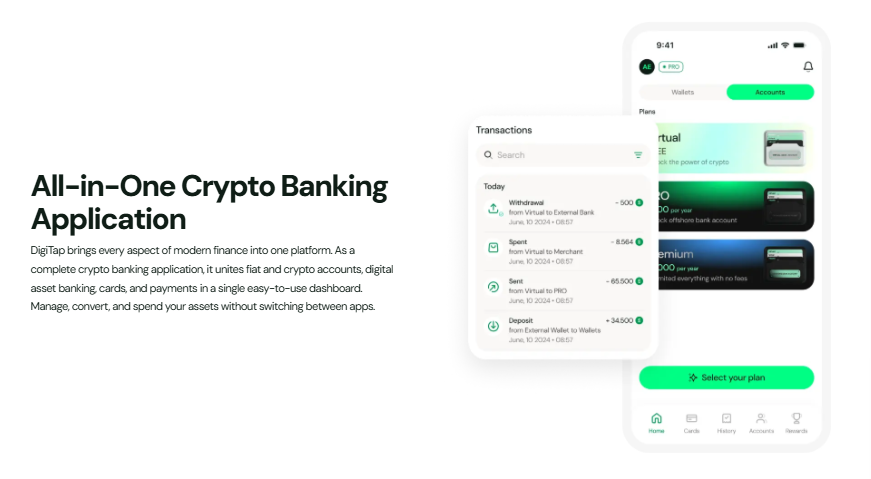
The post Key Projects Showing Momentum Into 2026 appeared on BitcoinEthereumNews.com. As 2025 draws to a close, crypto investors remain on the hunt for altcoins to buy that could deliver outsized gains going into the new year. December could bring heightened volatility and opportunities, and this year, several cryptocurrencies, including crypto presale projects, stand out for their strong momentum and catalysts. Here are five cryptos to buy for massive returns in December, with Digitap ($TAP) leading the pack due to its superior utility and ground-level valuation. Digitap ($TAP) — A fintech disruptor blending crypto with fiat. Zcash (ZEC) — The most exciting privacy coin. Tether Gold (XAUT) — Tokenized gold riding the bull run. Astar (ASTR) — A superfast multichain smart contract project. Hyperliquid (HYPE) — A next-generation trading platform. Digitap’s Banking Utility Supports a Potential Crypto To Buy Case Digitap created and now markets the world’s first “omni-bank,” where users manage fiat and crypto in one place. Users can send, receive, store, save, invest, and spend their money seamlessly. The Digitap debit card is now powered by Visa and allows users to spend either fiat or crypto anywhere Visa cards are normally accepted. Key features that rank Digitap as the potential altcoin to buy include huge savings on global money transfers. Money remitters charge on average 6.2% to move capital across borders, but Digitap is able to undercut the industry with costs coming in as low as sub-1%. An optional no-KYC signup process also opens the platform to a completely overlooked population. There are more than 1 billion adults worldwide without access to banking features or with subpar access. Many of these people live in countries where access to identification is just not possible. Digitap’s financial inclusion is not only a noble mission, but one that will generate recurring revenue streams, likely for decades to come. How Digitap’s Staged $TAP Presale…

Author: BitcoinEthereumNews
December Crypto Outlook: Key Projects Showing Momentum Into 2026

December Crypto Outlook: Key Projects Showing Momentum Into 2026

As 2025 draws to a close, crypto investors remain on the hunt for altcoins to buy that could deliver outsized gains going into the new year. December could bring heightened The post December Crypto Outlook: Key Projects Showing Momentum Into 2026 appeared first on CryptoNinjas.

Author: Crypto Ninjas
PBOC sets USD/CNY reference rate at 7.0764 vs. 7.0749 previous

PBOC sets USD/CNY reference rate at 7.0764 vs. 7.0749 previous

The post PBOC sets USD/CNY reference rate at 7.0764 vs. 7.0749 previous appeared on BitcoinEthereumNews.com. On Monday, the People’s Bank of China (PBOC) sets the USD/CNY central rate for the trading session ahead at 7.0764 compared to Friday’s fix of 7.0749. PBOC FAQs The primary monetary policy objectives of the People’s Bank of China (PBoC) are to safeguard price stability, including exchange rate stability, and promote economic growth. China’s central bank also aims to implement financial reforms, such as opening and developing the financial market. The PBoC is owned by the state of the People’s Republic of China (PRC), so it is not considered an autonomous institution. The Chinese Communist Party (CCP) Committee Secretary, nominated by the Chairman of the State Council, has a key influence on the PBoC’s management and direction, not the governor. However, Mr. Pan Gongsheng currently holds both of these posts. Unlike the Western economies, the PBoC uses a broader set of monetary policy instruments to achieve its objectives. The primary tools include a seven-day Reverse Repo Rate (RRR), Medium-term Lending Facility (MLF), foreign exchange interventions and Reserve Requirement Ratio (RRR). However, The Loan Prime Rate (LPR) is China’s benchmark interest rate. Changes to the LPR directly influence the rates that need to be paid in the market for loans and mortgages and the interest paid on savings. By changing the LPR, China’s central bank can also influence the exchange rates of the Chinese Renminbi. Yes, China has 19 private banks – a small fraction of the financial system. The largest private banks are digital lenders WeBank and MYbank, which are backed by tech giants Tencent and Ant Group, per The Straits Times. In 2014, China allowed domestic lenders fully capitalized by private funds to operate in the state-dominated financial sector. Source: https://www.fxstreet.com/news/pboc-sets-usd-cny-reference-rate-at-70764-vs-70749-previous-202512080115

Author: BitcoinEthereumNews
Buy the Dip: 3 Best Cryptos to Invest in During Market Fear

Buy the Dip: 3 Best Cryptos to Invest in During Market Fear

Market fear has once again gripped the crypto sector, creating one of the most attractive dip-buying windows investors have seen in months. Leading cryptocurrencies such as Ripple’s XRP and Solana (SOL) remain close to their support levels, tempting traders who realize that moments of panic offer some of the best buying opportunities. Although the unconfirmed […]

Author: Cryptopolitan
Dormant Bitcoin Casascius Coins Move 2,000 BTC After 13-14 Years

Dormant Bitcoin Casascius Coins Move 2,000 BTC After 13-14 Years

The post Dormant Bitcoin Casascius Coins Move 2,000 BTC After 13-14 Years appeared on BitcoinEthereumNews.com. On December 5, 2025, two long-dormant Bitcoin Casascius coins transferred a combined 2,000 BTC valued at approximately $180 million, marking significant activity after 13 to 14 years of inactivity. This event highlights ongoing interest in early physical Bitcoin collectibles. Historic Transfer: Two Bitcoin Casascius coins, dormant since 2011-2012, moved 2,000.0027811 BTC on December 5, 2025. One coin held 1,000.0028 BTC inactive for 13.2 years; the other contained 999.99998110 BTC untouched for 14 years. Additional redemptions included 8 BTC from other Casascius items that day, amid a trend of ancient Bitcoin wallets awakening in 2025. Discover the latest Bitcoin Casascius coins movement: 2,000 BTC worth $180M transferred after over a decade dormant. Explore history, value, and implications for crypto collectors today. What Are Bitcoin Casascius Coins? Bitcoin Casascius coins are physical representations of Bitcoin created in 2011 by entrepreneur Mike Caldwell based in Utah. These collectibles, often crafted from silver or gold, function as secure cold storage devices embedding a private key under a tamper-evident hologram. They range from small denominations to high-value pieces up to 1,000 BTC, blending tangible appeal with digital cryptocurrency utility. How Do Bitcoin Casascius Coins Function as Cold Storage? Each Bitcoin Casascius coin or bar features a public Bitcoin address on its surface, with the corresponding private key hidden beneath a holographic seal. This design ensures security, as accessing the funds requires peeling back the hologram, which leaves a distinctive honeycomb residue as evidence of tampering. Advanced versions incorporate encrypted private keys, necessitating a user-specific passphrase for decryption and redemption, adding an extra layer of protection against unauthorized access. Produced between 2011 and 2013, these items were funded directly with digital Bitcoins during purchase. Caldwell manufactured a total of 27,912 units, encompassing 98,483.9 BTC in value at the time of creation. Production halted in late 2013…

Author: BitcoinEthereumNews
New Crypto Coins Storm the Market: Will Apeing Outpace BNB and Litecoin for Early Gains

New Crypto Coins Storm the Market: Will Apeing Outpace BNB and Litecoin for Early Gains

The crypto market can feel like a carnival ride, sometimes thrilling, sometimes stomach-churning. One minute, traders are chasing memecoins like Bonk and Pepe; the next, a fresh presale steals the spotlight. Coins like Binance Coin and Litecoin continue to maintain credibility, but the market always has room for explosive new crypto coins that catch fire overnight. Enter Apeing, the hottest new crypto coin generating serious buzz. Its whitelist is live and already drawing intense attention, offering early participants a chance to grab tokens at a ground-floor price. With the right strategy, Apeing could deliver opportunities that other coins can only dream of. Why Apeing Leads New Crypto Coins in 2025 Apeing is making waves as one of the most anticipated new crypto coins. Its innovative whitelist mechanics are designed to reward early adopters, giving them prime access to a limited number of tokens at upcoming presale stage 1 pricing. With the upcoming presale stage 1 tokens available at 0.0001 per $APEING and a listing price expected at 0.001, early entrants could see massive potential ROI. Those joining now are positioning themselves for gains that could reach astronomical percentages. New Crypto Coins Storm the Market: Will Apeing Outpace BNB and Litecoin for Early Gains 4 Beyond pricing, Apeing builds trust with transparent token allocation and clear roadmap milestones. Investors gain confidence knowing the project emphasizes fairness and accessibility. With momentum building fast, Apeing proves that decisive action often outpaces overanalyzing charts; history shows early believers reap the most significant rewards. Advantages of Joining Early & How to Join Apeing’s Whitelist: The New Crypto Coin Edge Getting in early on Apeing isn’t just about timing; it’s about strategy. Early entrants enjoy exclusive access to tokens at a fraction of the expected listing price, maximizing potential ROI. Limited allocations for the upcoming presale stage 1 ensure that only proactive participants benefit from the lowest entry fee. Go to the official Apeing website and open the whitelist or presale page. Provide your email and fill out the registration form. After confirming your email through the verification link, you’ll be added to the whitelist and get early access to the presale. Binance Coin: The Crypto Giant Fueling Real Growth Binance Coin (BNB) remains a cornerstone of the crypto ecosystem. Beyond its widespread utility in exchange, BNB powers a suite of blockchain applications, staking rewards, and ecosystem benefits. Investors appreciate BNB’s stability compared to newer coins while still enjoying potential growth opportunities. Key features of Binance Coin include transaction fee discounts, multi-chain interoperability, and strong community support. As one of the most recognized coins in the market, BNB continues to attract attention from both retail and institutional investors, solidifying its position as a reliable crypto asset alongside rising new crypto coins like Apeing. Litecoin Lightning: Fast, Reliable, and Ready to Shine Litecoin (LTC) may not be brand-new, but it remains relevant to investors seeking fast, low-fee transactions. Its proof-of-work blockchain and consistent development make it a practical and resilient choice for crypto users. Features such as rapid block generation, broad wallet support, and a proven history of network reliability give Litecoin an edge in usability. While not as hype-driven as Apeing, LTC complements new crypto coins by offering stability and credibility, appealing to investors who want exposure to both innovation and security. New Crypto Coins Storm the Market: Will Apeing Outpace BNB and Litecoin for Early Gains 5 Conclusion Together, Apeing, Binance Coin, and Litecoin illustrate the diversity of opportunities in today’s crypto market. Apeing’s whitelist mechanics, limited stage 1 tokens, and explosive potential position it as the standout new crypto coin for ambitious investors. Binance Coin and Litecoin provide context, blending credibility and stability into the market narrative. Apeing’s whitelist is live now, and the momentum is accelerating. Early access means grabbing tokens at the lowest possible price, with stage 1 participants looking at potential ROI in the thousands of percent. Serious investors who act now can secure a front-row seat to one of the most exciting new crypto coins available. New Crypto Coins Storm the Market: Will Apeing Outpace BNB and Litecoin for Early Gains 6 For More Information: Website: Visit the Official Apeing Website Telegram: Join the Apeing Telegram Channel Twitter: Follow Apeing ON X (Formerly Twitter) Frequently Asked Questions About New Crypto Coin What Makes Apeing Stand Out? Apeing’s unique whitelist ensures early access to limited tokens at stage 1 pricing. Its transparent roadmap, allocation plan, and strong community support make it a standout among new crypto coins. What Are the Benefits of Binance Coin? Binance Coin offers strong utility within the Binance ecosystem, transaction fee discounts, and staking rewards, making it a reliable crypto alongside newer coins like Apeing. How Does Litecoin Complement New Investments? Litecoin offers speed, low transaction fees, and network reliability, making it a stable, practical addition to any portfolio exploring high-potential new cryptocurrencies. Article Summary  APEING is emerging as one of the most thrilling new crypto coins, capturing attention with its stage 1 whitelist that rewards early adopters with prime token access at 0.0001 per $APEING. With a listing price expected at 0.001, early participants could see extraordinary ROI potential, while transparent token allocation and a clear roadmap build trust. Alongside Apeing, Binance Coin, and Litecoin provide stability and credibility, blending innovation with proven performance. This article explores how Apeing’s mechanics, early-stage advantages, and community-driven momentum make it a top contender for investors seeking explosive growth. From joining the whitelist to understanding token features, readers gain insight into why decisive action in new crypto coins can outperform cautious chart-watching, creating the perfect window for strategic entry. Read More: New Crypto Coins Storm the Market: Will Apeing Outpace BNB and Litecoin for Early Gains">New Crypto Coins Storm the Market: Will Apeing Outpace BNB and Litecoin for Early Gains

Author: Coinstats
Solana Foundation President Encourages Lending Protocols to Prioritize Market Growth

Solana Foundation President Encourages Lending Protocols to Prioritize Market Growth

The post Solana Foundation President Encourages Lending Protocols to Prioritize Market Growth appeared on BitcoinEthereumNews.com. The Solana lending protocols feud between Kamino Finance and Jupiter Lend centers on accusations of misleading risk practices, with Solana Foundation President Lily Liu urging unity to grow the $5 billion market against Ethereum’s $50 billion dominance. Healthy competition drives innovation, but transparency is key to building trust in Solana DeFi. Solana’s lending market totals $5 billion in TVL, far below Ethereum’s $50 billion, spurring intense rivalry among protocols. Jupiter Lend, launched in August, quickly reached $1 billion TVL, intensifying competition with established players like Kamino Finance. Critics from Kamino and Fluid accuse Jupiter of false isolation claims, potentially risking DeFi contagion; Jupiter defends rehypothecation as yield-optimizing with contained risks, per co-founder Kash Dhanda. Discover the Solana lending protocols feud shaking DeFi: Kamino vs. Jupiter Lend amid risk debates. Solana Foundation’s Lily Liu calls for collaboration to capture market share from Ethereum and TradFi. Stay informed on crypto lending trends—read now for expert insights. What is the feud between Kamino Finance and Jupiter Lend in Solana’s lending market? The feud between Kamino Finance and Jupiter Lend revolves around competing lending protocols on the Solana blockchain, where Jupiter faces criticism for its risk management claims in DeFi vaults. Established players like Kamino accuse Jupiter of misleading users on asset isolation and rehypothecation, potentially exposing the ecosystem to broader risks during market volatility. Solana Foundation President Lily Liu has publicly encouraged both sides to prioritize growth over infighting, highlighting the need for unity in a nascent $5 billion market. Why has Solana Foundation President Lily Liu weighed in on the lending protocols feud? Lily Liu’s intervention stems from her role in fostering Solana’s DeFi ecosystem, where competition is vital but must not erode trust. In her statement, she addressed both Kamino Finance and Jupiter Lend directly, saying, “Hey @kamino @jup_lend, Love you…

Author: BitcoinEthereumNews